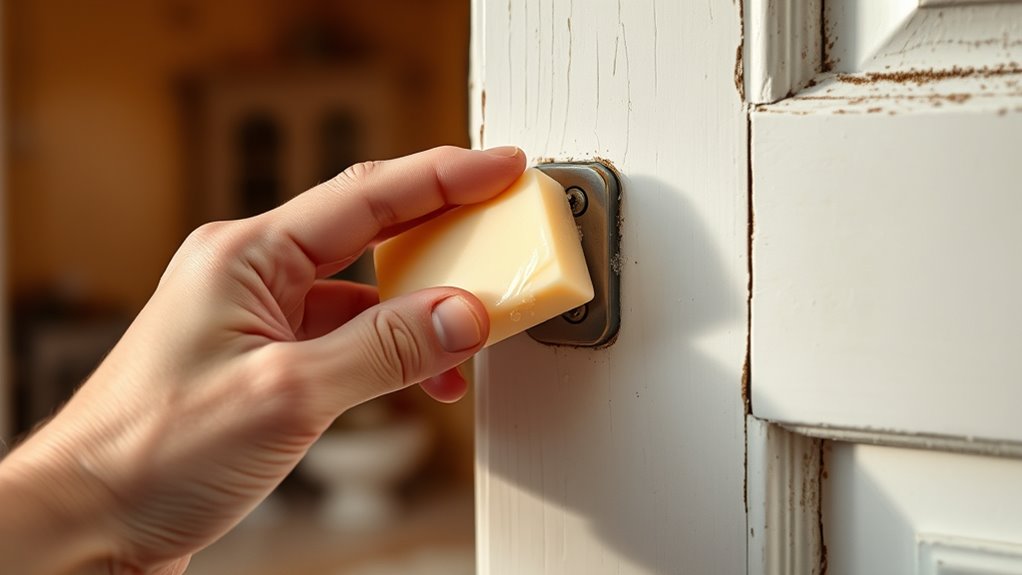

To fix a squeaky door with a bar of soap, first open and close the door to identify which hinge squeaks. Rub the soap along the hinge pin and plates, applying a generous amount to reduce friction. As you work the soap into the hinge, open and close the door slowly to distribute it evenly. If the squeak persists, there are additional tips to keep your hinges quiet—keep exploring for more solutions.
Key Takeaways
- Rub a bar of soap along the hinge pin and plates to act as a dry lubricant.
- Open and close the door slowly to evenly distribute the soap on the hinges.
- Focus on the hinge pin and plates where the squeak originates for targeted application.
- Repeat the process if necessary, adding more soap for persistent squeaks.
- Use this inexpensive, quick fix as a temporary solution or maintenance step before other lubricants.

A squeaky door can be both annoying and disruptive, but fixing it is usually straightforward. One simple method involves using a bar of soap to silence those squeaks. Before diving into that fix, it helps to understand why doors squeak in the first place. Most often, the noise comes from the door hinges, which need proper door hinge lubrication to operate quietly. Over time, hinges can accumulate dirt, dust, or rust, causing metal parts to grind against each other and produce that high-pitched squeal. To prevent this problem from recurring, incorporating squeak prevention tips can save you time and effort in the future.
Start by opening and closing the door a few times to identify which hinge is squeaking. Once pinpointed, you can apply your solution. Using a bar of soap is an old-school trick that works surprisingly well. Simply take the soap and rub it along the hinge pin and the hinge plates. The soap acts as a dry lubricant, reducing friction between moving parts. As you work the soap into the hinge, open and close the door slowly to help distribute the soap evenly. You’ll notice the squeak diminishes almost immediately.
While soap is a quick fix, it’s wise to also consider more lasting solutions like applying a dedicated lubricant or WD-40 if the squeak persists. But if you’re looking for an inexpensive, readily available option, soap can do the job. To truly prevent future squeaks, regular door hinge lubrication is recommended. This means periodically checking your hinges and applying a suitable lubricant—whether it’s soap, silicone spray, or a light machine oil—when needed. Keep hinges clean and free from dust, dirt, or rust, which can exacerbate squeaking.
In addition, some squeak prevention tips include tightening loose hinge screws, ensuring the door is properly aligned, and avoiding excessive force when opening or closing. These small steps can make a significant difference in maintaining smooth operation and quiet hinges. If you notice persistent squeaks despite lubrication, consider removing the hinge pin, cleaning it thoroughly, and then re-lubricating before reinstalling. This can help remove any built-up grime or corrosion that might be causing friction.
Furthermore, understanding the contrast ratio of your door hinges can help you choose the right type of lubricant, as some materials are more compatible with certain products than others.

WD-40 Specialist Silicone Lubricant with SMART STRAW SPRAYS 2 WAYS, 11 OZ
Use on a variety of surfaces – metal, rubber, vinyl, plastic and more. Use on 100s of items…
As an affiliate, we earn on qualifying purchases.
As an affiliate, we earn on qualifying purchases.
Frequently Asked Questions
Can Soap Actually Fix All Types of Door Squeaks?
Soap can effectively help with some door squeaks, especially those caused by friction in hinges. It acts as a household remedy for door lubrication, reducing squeaking noise temporarily. However, soap isn’t a universal fix for all types of door squeaks, such as those from loose hinges or structural issues. For persistent problems, consider proper lubrication or professional repairs to guarantee long-term silence and smooth operation.
How Often Should I Reapply Soap for Squeaky Doors?
For squeaky doors, you’ll want to reapply soap regularly to maintain silence. Generally, a lubrication frequency of every few months works well, but if squeaks persist, consider more frequent soap reapplications. Follow a simple soap reapplication schedule—every 1-3 months, depending on usage and weather conditions. Consistent lubrication keeps hinges smooth and squeak-free, ensuring your door stays silent and secure without needing costly repairs or replacements.
Is Soap Effective on Metal or Plastic Door Hinges?
Soap works better on metal hinges because it provides effective door hinge lubrication. When you use household remedies like soap, it helps reduce friction and silence squeaks. However, soap isn’t ideal for plastic hinges, as it may not stick well or provide lasting lubrication. For best results, reapply soap as needed, and consider using a proper lubricant if the squeak persists.
Are There Better Alternatives to Soap for Squeaky Hinges?
You might wonder if there’s a better way to silence that squeak. While soap can work, alternative lubricants like WD-40 or silicone spray often deliver quicker, longer-lasting results. Household remedies such as petroleum jelly or cooking oil can also help, but they may attract dirt or gum up over time. For a dependable fix, try a commercial lubricant—you’re likely to notice the difference immediately and keep your hinges whisper-quiet longer.
Will Soap Damage My Door’s Finish Over Time?
Soap might temporarily quiet your squeaky hinges, but it can damage your door’s finish over time. Instead, using a dedicated door lubricant ensures better soap longevity and protects your door’s surface. Lubricants like silicone spray or graphite powder won’t stick dirt or cause buildup, keeping your hinges smoothly functioning longer. Relying on proper door lubricant rather than soap helps maintain your door’s appearance and prevents potential damage.
WD-40 Specialist Silicone Lubricant with SMART STRAW SPRAYS 2 WAYS, 11 OZ
Use on a variety of surfaces – metal, rubber, vinyl, plastic and more. Use on 100s of items…
As an affiliate, we earn on qualifying purchases.
As an affiliate, we earn on qualifying purchases.
Conclusion
Now that you’ve silenced that squeak, remember it’s more than just a door—it’s a symbol of harmony in your space. Like a gentle whisper of peace, your quick fix restores quiet and balance, reminding you that small actions can bring big serenity. With each silent swing, you nurture a home where every moment flows smoothly, free from unnecessary noise. Embrace this simple repair as a quiet reminder that even minor adjustments can restore harmony in your everyday life.

Keze Door Hinge Lubricant Door Squeaky Fix Lubricating Oil for Noise Synthetic Knife Oil Lube for Lock Hinge Hair Trimmers Knife Pivot Machine Tools Watch Keyhole with Needle Oiler 1 oz, 1 Pcs
Versatile & Multi-Purpose Hinge Oil: Perfect for door locks, chains, keyholes, knife pivot, sewing machines, razors, clocks, and…
As an affiliate, we earn on qualifying purchases.
As an affiliate, we earn on qualifying purchases.
WD-40 Specialist Silicone Lubricant with SMART STRAW SPRAYS 2 WAYS, 11 OZ
Use on a variety of surfaces – metal, rubber, vinyl, plastic and more. Use on 100s of items…
As an affiliate, we earn on qualifying purchases.
As an affiliate, we earn on qualifying purchases.