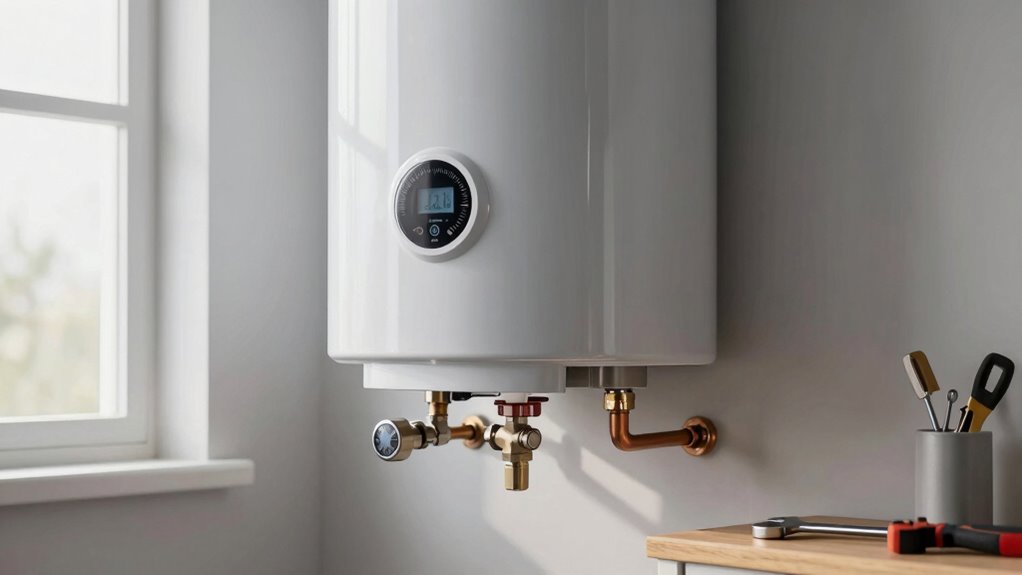

Before replacing your water heater, consider your household’s hot water needs, the right size, and the most efficient type for your budget. Look into energy ratings like EF or UEF to find models that save money over time. Factor in installation costs, which vary based on your home’s setup, and check for rebates or incentives. Upgrading to newer, energy-efficient units may cost more initially but can pay off long-term. If you want to make an informed choice, stay with us for more helpful details.

Get the little things that make your day delivered free with Prime
- Fast, free delivery on millions of items
- Prime Video, Amazon Music and more included
- Member-only deals all year
Key Takeaways
- Assess your household hot water needs to choose the right size and type of water heater.
- Compare energy efficiency ratings to select a model that reduces long-term operating costs.
- Consider installation costs, including plumbing, electrical work, and potential modifications.
- Explore available rebates, incentives, and financing options to offset purchase and installation expenses.
- Decide between tank, tankless, heat pump, or solar systems based on your budget, space, and energy goals.
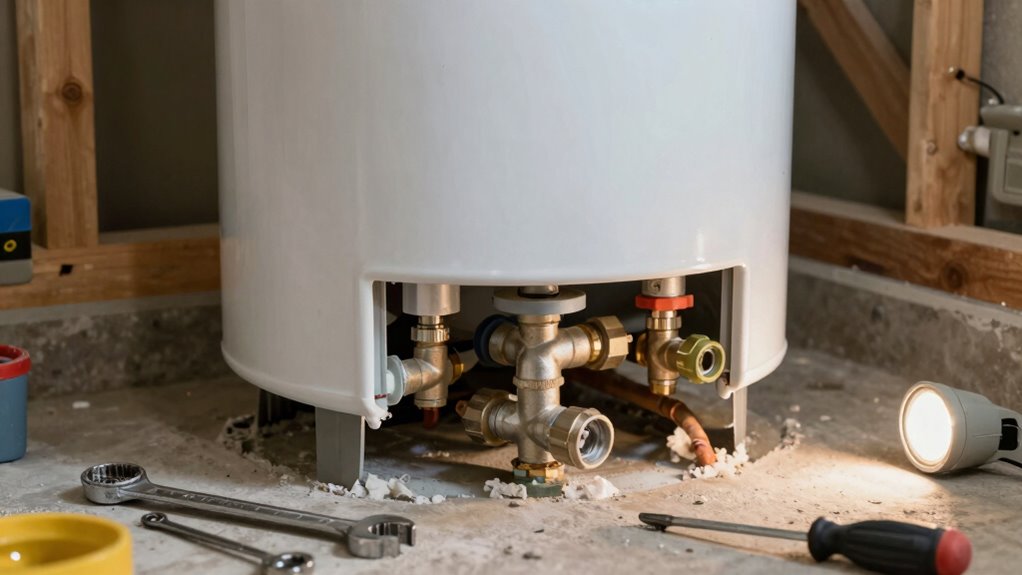
Replacing a water heater is a significant decision that can impact your home’s comfort and efficiency. When you’re considering a replacement, one of the first things you’ll want to evaluate is energy efficiency. An energy-efficient water heater can reduce your monthly utility bills and lessen your carbon footprint. Modern models offer better insulation, advanced heating elements, and innovative technology that help maximize energy savings. Investing in a unit with high energy efficiency might cost more upfront, but it pays off over time through lower operating expenses. Be sure to compare the energy factors (EF) or uniform energy factors (UEF) of different models, as these ratings indicate how effectively a water heater converts energy into hot water. Higher ratings typically mean better efficiency, which can be an essential factor when balancing installation costs against long-term savings. Additionally, understanding the technology behind different water heater types can help you choose the most suitable model for your home’s needs.
Furthermore, paying attention to energy efficiency ratings can guide you toward models that provide optimal performance and savings. Proper sizing is also crucial, as selecting a unit that is too small or too large can lead to inefficiencies and higher costs over time. To make an informed decision, researching credit card insights related to rebates or incentives for energy-efficient appliances can potentially reduce your upfront costs. Exploring rebate programs available in your area may help offset the initial investment. Speaking of costs, installation expenses are another critical consideration. While the purchase price of a water heater varies based on size, type, and features, installation costs can sometimes be just as significant. These costs depend on factors such as the complexity of the job, the need for additional plumbing or electrical work, and whether you’re upgrading from an older model or installing a new type of heater altogether. For example, switching from a traditional tank model to a tankless system may require more extensive modifications, increasing installation costs. It’s wise to get estimates from professional installers so you can accurately budget for both the unit and the labor involved. Keep in mind that a higher-quality, energy-efficient water heater might have a higher initial price but could save you money in the long run by reducing energy consumption and requiring less maintenance.
Additionally, consider the size of the unit you need. A tank that’s too small won’t meet your household’s hot water demands, leading to inconvenience, while an oversized tank wastes energy. Proper sizing ensures you’re not overpaying for capacity you don’t need. You should also evaluate the type of water heater best suited for your home—tankless, traditional tank, heat pump, or solar—each comes with its own set of benefits, costs, and installation requirements. Considering the long-term savings potential can help justify a slightly higher initial investment, especially when energy-efficient models are involved.
energy efficient tankless water heater
As an affiliate, we earn on qualifying purchases.
As an affiliate, we earn on qualifying purchases.
Frequently Asked Questions
How Long Does a Typical Water Heater Installation Take?
A typical water heater installation takes about 2 to 4 hours, depending on the installation timeline and plumbing considerations. You’ll want to make certain your space is prepared and the old unit is properly disconnected beforehand. If your plumbing setup is straightforward, the process speeds up. However, complex plumbing or electrical work might extend the timeline. Overall, plan for a few hours, and your professional will handle the rest efficiently.
Can I Replace My Water Heater Myself?
They say, “A little knowledge is a dangerous thing,” so you might wonder if you can replace your water heater yourself. While DIY safety is important, replacing a water heater requires plumbing tools, electrical skills, and knowledge of local codes. If you’re comfortable with plumbing and electrical work, you can attempt it, but otherwise, it’s best to call a professional. Safety should always come first.
What Are the Signs My Water Heater Needs Replacing?
You’ll know your water heater needs replacing if you notice inconsistent water temperatures, strange noises, or leaks. Sediment buildup and rusty water are common issues signaling it’s time for a change. Regular maintenance tips, like flushing the tank, can prolong its life, but when problems persist despite these efforts, it’s best to replace your unit. Recognizing these signs early helps avoid unexpected breakdowns and costly repairs.
How Much Does a New Water Heater Usually Cost?
Imagine your water heater as the heart of your home’s comfort, and replacing it costs between $800 and $2,500, depending on size and efficiency. You’ll find a wide cost comparison among brand options like Rheem, Bradford White, and AO Smith, offering reliable choices at different price points. Investing in a quality model guarantees long-term savings and comfort, making your home’s warmth and water flow a seamless experience.
Are There Energy-Efficient Options Available for Replacement?
Yes, energy-efficient options are available for replacement. You can choose eco-friendly units like tankless water heaters or models with high Energy Star ratings, which offer significant energy savings. These systems use less electricity or gas, helping you cut costs and reduce your carbon footprint. By upgrading to an energy-efficient water heater, you’ll enjoy reliable hot water while benefiting from lower utility bills and a more environmentally friendly home.
best water heater with high UEF rating
As an affiliate, we earn on qualifying purchases.
As an affiliate, we earn on qualifying purchases.
Conclusion
Replacing your water heater might seem intimidating, but with the right preparation, it’s manageable. Imagine stepping into your warm, cozy shower knowing everything’s set for reliable hot water. Don’t let the idea of plumbing fears hold you back—trust that with the right tools and guidance, you can handle it smoothly. Soon, you’ll enjoy the comfort of a fresh, efficient water heater, making every morning a little easier and a lot more comfortable.
As an affiliate, we earn on qualifying purchases.
As an affiliate, we earn on qualifying purchases.
Fall Picks
fall essentials
As an affiliate, we earn on qualifying purchases.