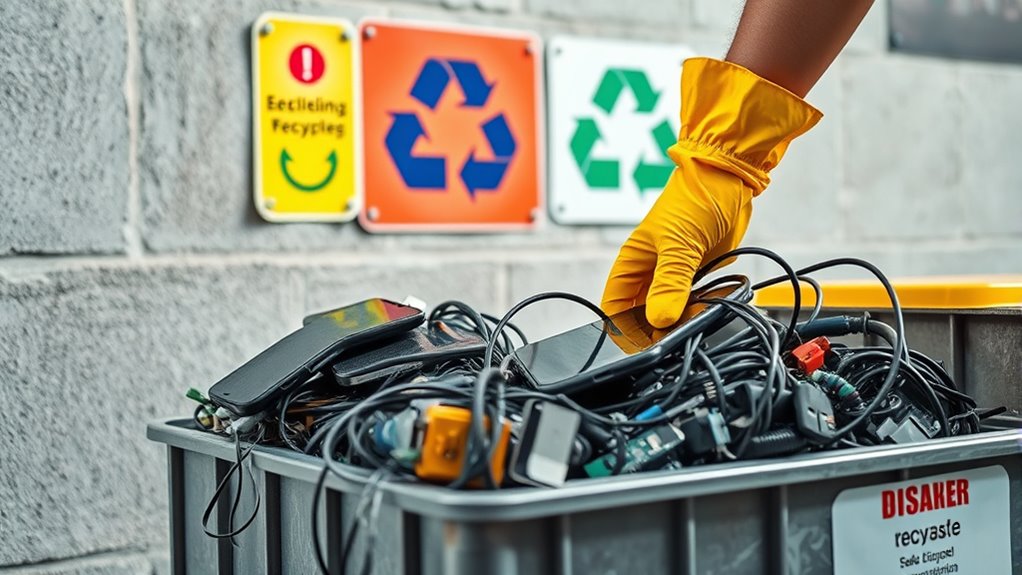

To safely dispose of old electronics, first securely erase all personal data to protect your privacy. Then, find a certified recycling center or donation program that accepts your devices, ensuring they’re handled responsibly to prevent environmental harm. Recycling centers recover valuable materials and properly dispose of hazardous substances, while donation programs extend the lifespan of working gadgets. If you want to learn more about responsible e-waste disposal and options available, keep exploring the key steps involved.

Get the little things that make your day delivered free with Prime
- Fast, free delivery on millions of items
- Prime Video, Amazon Music and more included
- Member-only deals all year
Key Takeaways
- Securely erase personal data before donating or recycling devices.
- Use certified e-waste recycling centers to ensure safe and proper disposal.
- Consider donating functional devices to extend their lifespan and support communities.
- Follow local regulations and utilize designated drop-off points or scheduled pickups.
- Avoid trashing electronics to prevent environmental pollution and potential fines.

Disposing of old electronics is an essential step in protecting both your privacy and the environment. When your devices become outdated or broken, you want to make sure they’re handled responsibly. One of the best ways to do this is by taking your electronics to recycling centers. These facilities are specially equipped to safely break down and process e-waste, ensuring hazardous materials like lead, mercury, and cadmium don’t pollute the environment. Recycling centers follow strict protocols to recover valuable materials such as gold, copper, and plastics, reducing the need to mine new resources. Before dropping off your gadgets, it’s wise to wipe all your personal data securely. This prevents any sensitive information from falling into the wrong hands during the recycling process.
In addition to recycling centers, donation programs offer another responsible option for disposing of old electronics. Many charities, schools, and community organizations accept working devices to reuse or refurbish. Donating your electronics extends their life and helps bridge the digital divide by providing technology to those who need it most. Before donating, verify your device is functional and remove any personal data. If the device isn’t working, some donation programs will still accept it for parts or repair, but always confirm their requirements first. This option not only keeps electronics out of landfills but also benefits others in your community or beyond.
When considering whether to recycle or donate, evaluate the condition of your device. If it’s still operational and your data has been securely erased, donation might be the more impactful choice. If it’s broken or outdated beyond repair, recycling at a certified center is the responsible route. Many communities offer designated drop-off points or scheduled pickups for e-waste, making it convenient to dispose of old electronics properly. Always check local regulations and guidelines, as improper disposal can lead to fines or environmental harm. Remember, handling e-waste correctly is vital to preventing toxic substances from contaminating soil and water sources. Additionally, understanding the importance of e-waste recycling can motivate more responsible disposal practices.
secure data wiping software for electronics
As an affiliate, we earn on qualifying purchases.
As an affiliate, we earn on qualifying purchases.
Frequently Asked Questions
Are There Any Items That Shouldn’t Be Disposed of as E-Waste?
Yes, you shouldn’t discard hazardous materials or medical devices as e-waste. Hazardous materials like batteries with chemicals or certain chemicals in electronics need special handling to prevent environmental harm. Medical devices, especially those containing sharps, batteries, or sensitive components, require proper medical waste disposal. Always check local regulations and take these items to appropriate recycling or disposal centers to guarantee safety for everyone and the environment.
Can I Recycle Broken or Damaged Electronics?
Did you know that nearly 20% of electronic waste globally is improperly disposed of? Yes, you can recycle broken or damaged electronics, but remember to handle them carefully. Recycling damaged devices helps prevent hazardous waste considerations, like toxic chemicals leaking into the environment. Always check if your local recycling center accepts damaged electronics and follow their guidelines to guarantee safe and eco-friendly disposal.
How Do I Erase All Personal Data Before Disposal?
To erase all personal data before disposal, you should perform a factory reset on your device. This process wipes your data and restores the device to its original settings. Make sure to back up important information first. For added security, use a data wipe tool if available. Once completed, verify that your data is gone. This guarantees your personal information stays protected when you dispose of your electronics.
Are There Fees Associated With E-Waste Recycling?
Yes, there are often recycling fees when you dispose of electronics, but costs can vary depending on the item and location. Some recycling centers charge a fee to cover processing, while others might waive it for certain devices or if you recycle in bulk. It’s smart to check ahead, as cost considerations differ. Think of it as paying a small toll to keep our planet clean and healthy.
What Are the Environmental Impacts of Improper E-Waste Disposal?
If you dispose of e-waste improperly, you risk causing toxicity concerns that can harm your health and the environment. Toxic substances like lead, mercury, and cadmium can leach into soil and water, polluting ecosystems. Additionally, habitat destruction occurs when hazardous materials damage wildlife habitats during careless disposal. By recycling electronics responsibly, you help prevent these environmental impacts and protect both ecosystems and public health.
certified e-waste recycling centers
As an affiliate, we earn on qualifying purchases.
As an affiliate, we earn on qualifying purchases.
Conclusion
By properly disposing of your old electronics, you’re not just freeing up space—you’re saving the planet from an environmental catastrophe of epic proportions. Recycling minimizes toxic waste and conserves valuable resources, making you a true hero in the fight against e-waste. So, take action today, and don’t let your gadgets turn into digital monsters lurking in landfills. Your small step can make a huge difference—because the future of our planet depends on it!
As an affiliate, we earn on qualifying purchases.
As an affiliate, we earn on qualifying purchases.
Fall Picks
fall essentials
As an affiliate, we earn on qualifying purchases.