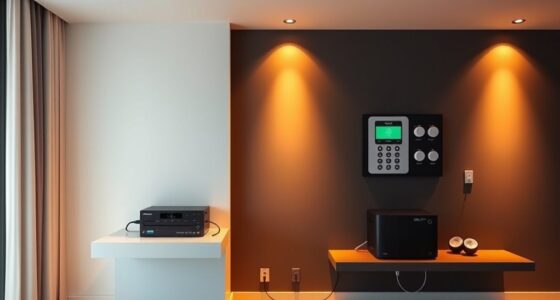
While smart homes offer convenience, they also come with hidden risks you might not see at first. Your devices can be hacked or tracked, risking your privacy and safety. Relying heavily on technology can make you less capable of handling emergencies manually. Compatibility issues, maintenance demands, and constant alerts can add stress. Plus, vulnerabilities from outdated software or weak passwords leave you exposed to cyber threats. Stay aware of these concerns to better protect your home and privacy as you explore more.
Key Takeaways
- Smart devices can expose personal data to hacking, leaks, and misuse if not properly secured.
- Overreliance on automation diminishes manual skills and emergency response capabilities.
- Compatibility issues among devices can cause integration problems and increase maintenance complexity.
- Software vulnerabilities and weak passwords leave smart systems susceptible to cyberattacks.
- Power outages or internet disruptions can render smart home systems inoperative and disrupt daily routines.

While smart homes promise convenience and enhanced control, they also come with significant drawbacks that are often overlooked. One of the biggest issues you might face is privacy concerns. With every device connected to the internet, your personal data becomes more susceptible to hacking or unauthorized access. Cameras, motion sensors, voice assistants, and smart locks constantly gather information about your daily routines, preferences, and even your whereabouts. If these systems aren’t properly secured, hackers could potentially tap into your private life, leading to stolen information or even physical security breaches. You might not realize how much of your personal activity is being collected until it’s too late. This constant data collection can feel invasive, especially when you consider how easily this information could be misused or leaked. Additionally, security vulnerabilities**** in smart technology pose ongoing risks, as outdated software or weak passwords can leave systems exposed.
Smart homes collect personal data constantly, risking privacy breaches and misuse if security isn’t properly managed.
Another important downside is tech dependence. When you rely heavily on smart devices for everyday tasks, you risk losing your ability to function independently without them. What happens if your internet goes out, or if there’s a power failure? Suddenly, your smart home systems become useless, leaving you stranded or unable to control basic functions like lighting, heating, or security. Over time, you might find yourself less capable of performing simple tasks manually, which can be problematic during emergencies. Additionally, the more you depend on technology, the more vulnerable you become to malfunctions or software glitches. A bug or cyberattack could disable your entire home system, causing disruptions and frustration. This dependence creates a fragile environment where a single failure can have widespread impacts, making you less resilient to unexpected issues.
Furthermore, integrating multiple smart devices often leads to compatibility problems. Not all gadgets play nicely together, and you might find yourself stuck with a mishmash of systems that don’t work seamlessly. Updating or troubleshooting these devices can also be complex and time-consuming, especially if you’re not tech-savvy. As your smart home grows, so does the complexity of maintaining it, which can become overwhelming. Plus, the constant stream of notifications and alerts from various devices can be distracting or stressful, reducing the overall sense of calm you hoped to achieve with your smart home setup.
In essence, while a smart home offers undeniable convenience, it also introduces risks that can compromise your privacy and increase your reliance on technology. Being aware of these drawbacks helps you make informed decisions about how much automation you want to incorporate into your life. It’s crucial to weigh the benefits against the potential pitfalls to ensure that your smart home truly enhances your life without exposing you to unnecessary vulnerabilities.
Top picks for "downsid smart home"
Open Amazon search results for this keyword.
As an affiliate, we earn on qualifying purchases.
Frequently Asked Questions
How Secure Are Smart Home Devices Against Hacking?
Smart home devices can be vulnerable to hacking, so your security depends on how well you protect them. While many devices have built-in security features, they still face hacking vulnerabilities if not updated regularly or if default passwords aren’t changed. This puts your privacy at risk, making it essential to use strong passwords, enable two-factor authentication, and keep firmware current to minimize hacking threats and safeguard your personal information.
What Are the Long-Term Costs of Maintaining Smart Home Tech?
Think of smart home tech like a garden—you need to tend it regularly. Over time, you’ll face increased energy consumption from constant device operation and maintenance expenses for updates, repairs, and replacements. These costs can add up unexpectedly, especially if a device breaks or becomes outdated. Staying on top of maintenance keeps your smart home running smoothly, but it’s important to budget for these long-term costs to avoid surprises.
Can Smart Devices Function During Power Outages?
During power outages, most smart devices won’t function unless you’ve set up device backup solutions. Power outage challenges mean your smart home tech could become temporarily useless without a backup power source. You can use uninterruptible power supplies (UPS) or backup batteries to keep essential devices running. Planning ahead guarantees you won’t lose connectivity or control during outages, maintaining safety and convenience even when the power’s out.
How Does Smart Home Technology Impact Home Resale Value?
They say a bird in the hand is worth two in the bush, so upgrading to smart home tech can boost your resale value. However, you should consider privacy concerns and user dependency, as potential buyers might worry about data security or reliance on technology. If you showcase how your smart home enhances convenience and security, it can make your property more attractive, increasing its value in a competitive market.
Are Smart Home Devices Environmentally Friendly?
Smart home devices can be environmentally friendly if they help reduce your energy consumption, like smart thermostats and lighting. However, consider device longevity, as some gadgets may have a limited lifespan, leading to frequent replacements and electronic waste. While they can cut down on energy use, you should weigh their overall environmental impact, including production and disposal, to guarantee you’re truly making eco-friendly choices.
Conclusion
As you sit in your quiet, dimly lit house, the glow of screens and the whisper of connected devices feel more like a cage than comfort. Shadows dance on the walls, reminders that beneath the convenience lies vulnerability. Without careful thought, your once cozy sanctuary becomes a labyrinth of unseen eyes and fragile tech. Remember, while smart homes promise ease, they also invite unseen risks—so stay vigilant and protect your peaceful haven from the hidden downsides.