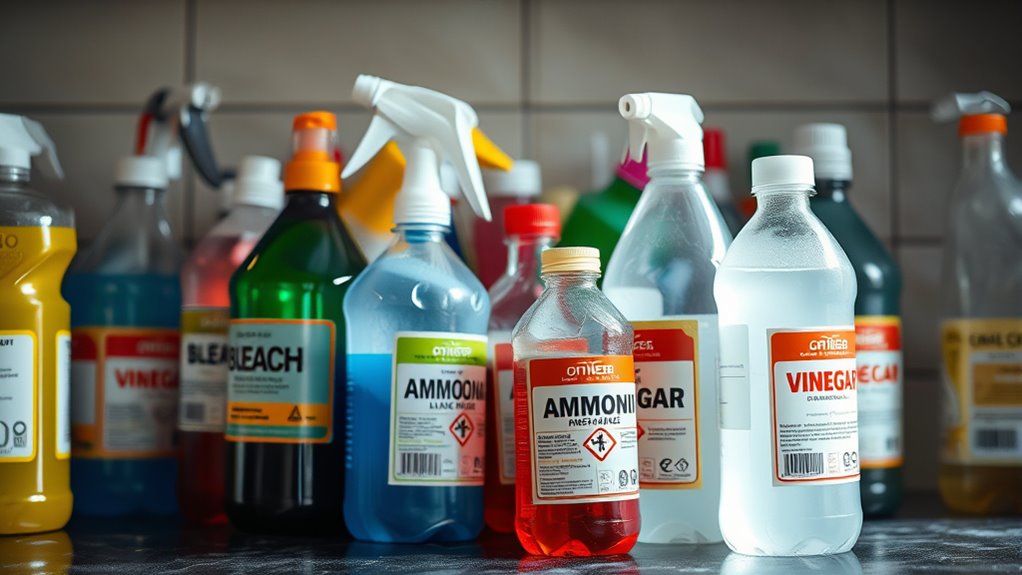

Never mix bleach with ammonia or vinegar, as this releases toxic chloramine and chlorine gases that can cause serious respiratory problems. Also avoid combining hydrogen peroxide with vinegar, which creates corrosive peracetic acid, irritating your skin and lungs. These reactions can harm both your health and surfaces. Understanding these dangers helps you clean safely—continue to discover more about avoiding hazardous combinations for a healthier home.

Get the little things that make your day delivered free with Prime
- Fast, free delivery on millions of items
- Prime Video, Amazon Music and more included
- Member-only deals all year
Key Takeaways
- Never mix bleach with ammonia, as it produces toxic chloramine vapors that can cause respiratory issues.
- Avoid combining bleach with vinegar to prevent the release of dangerous chlorine gas, which irritates lungs and eyes.
- Do not mix hydrogen peroxide with vinegar, as it forms corrosive peracetic acid harmful to skin and respiratory health.
- Refrain from mixing different household cleaners, especially acids and bases, to prevent hazardous chemical reactions.
- Use natural cleaning ingredients like baking soda and vinegar separately to ensure safety and avoid toxic fumes.
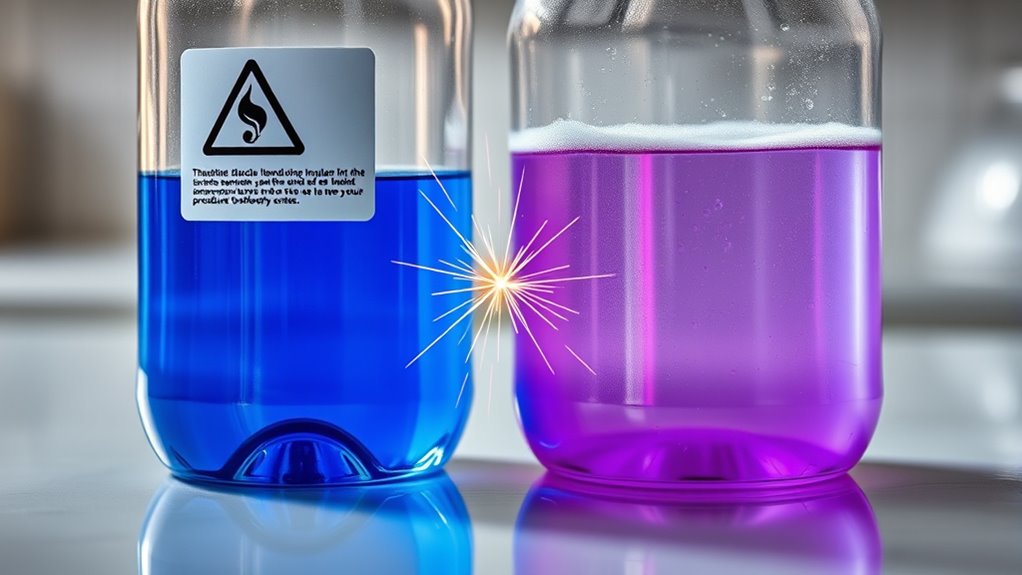
Many common cleaning products can be dangerous when mixed, so it’s essential to know which combinations to avoid. Not only can unsafe mixes harm your health, but they can also damage surfaces or cause dangerous chemical reactions. Instead of risking accidents, you can explore DIY cleaning hacks that rely on safe, eco-friendly alternatives. These solutions are simple to make and effective, helping you maintain a clean home without exposing yourself to harmful fumes or residues.
One of the most notorious dangerous combinations involves bleach and ammonia. When mixed, they produce chloramine vapors, which can cause respiratory issues, chest pain, and even pneumonia in severe cases. These fumes are highly irritating and can be deadly if inhaled in large quantities. Even if you’re just trying to create a stronger disinfectant, resist the urge to combine these products. Instead, opt for DIY cleaning hacks using natural ingredients like vinegar and baking soda. These ingredients are non-toxic, inexpensive, and environmentally friendly. For example, mixing baking soda with a bit of water makes an excellent abrasive cleaner for sinks and tubs, while vinegar works as a natural deodorizer and disinfectant.
Avoid mixing bleach and ammonia to prevent deadly chloramine vapors and respiratory hazards. Use natural alternatives instead.
Additionally, mixing bleach and vinegar is extremely hazardous because it can release chlorine gas, which is toxic and can cause coughing, eye irritation, and breathing difficulties. To keep your cleaning routine safe, avoid mixing these ingredients altogether. Instead, use each separately or create cleaning solutions that don’t rely on dangerous combinations. For instance, you can use vinegar on glass and tile surfaces and save bleach for laundry or disinfecting toilet bowls, always following proper dilution instructions.
Many people overlook the dangers of mixing hydrogen peroxide with vinegar, believing it will boost cleaning power. However, combining these can create peracetic acid, which is corrosive and can irritate your skin, eyes, and respiratory system. If you want to maximize cleaning efficiency, try DIY hacks that involve using each ingredient separately or combining them in a controlled manner, such as using hydrogen peroxide for disinfecting and vinegar for stain removal. This approach guarantees safety while still harnessing the power of natural, eco-friendly alternatives. Understanding the chemical reactions involved in cleaning can help you avoid accidental hazards and maintain a safe environment at home.
As an affiliate, we earn on qualifying purchases.
Frequently Asked Questions
Can Mixing Cleaning Products Cause Long-Term Health Issues?
Mixing cleaning products can cause long-term health issues because you’re exposing yourself to harmful chemicals. Repeated chemical exposure may lead to respiratory problems, skin irritation, or even more serious conditions over time. To protect your long-term health, always use cleaning products as directed and avoid mixing them. Staying cautious helps prevent dangerous chemical reactions and minimizes your risk of health issues caused by improper cleaning practices.
Are There Any Safe Natural Alternatives to Chemical Cleaners?
Yes, you can use safe natural alternatives like plant-based cleaners and essential oils. These options are gentle yet effective, helping you avoid harsh chemicals. You simply mix plant-based ingredients such as vinegar, baking soda, or castile soap with water, and add a few drops of essential oils like lemon or tea tree for a fresh scent and antimicrobial benefits. They’re eco-friendly, safe for your family, and work well for most cleaning tasks.
How Should I Properly Dispose of Mixed or Expired Cleaning Products?
Think of disposing of mixed or expired cleaning products like handling fragile glass—you can’t just toss it in the trash. You should follow proper disposal methods and never pour hazardous waste down the drain. Check your local regulations for hazardous waste collection sites or programs. This guarantees harmful substances stay out of the environment and keep your community safe. Proper disposal is the safest way to protect everyone, including yourself.
What Should I Do if I Accidentally Mix Hazardous Cleaning Agents?
If you accidentally mix hazardous cleaning agents, immediately follow emergency procedures by ventilating the area and avoiding further contact. Call poison control right away for guidance on how to handle the situation safely. Do not try to neutralize or dilute the mixture yourself, as it may worsen the hazard. Stay calm, keep others away, and wait for professional assistance to ensure everyone’s safety.
Do Professional Cleaners Follow Specific Guidelines for Mixing Products?
Isn’t it ironic that professional cleaners often ignore the very guidelines meant to protect them? They do follow specific professional guidelines and cleaning regulations, but only if they’re properly trained. Without strict adherence, they risk health hazards and damage. It’s essential to understand that these standards exist for a reason—to keep everyone safe. So, yes, professionals should follow cleaning regulations meticulously, because shortcuts aren’t worth risking your health or the environment.
As an affiliate, we earn on qualifying purchases.
Conclusion
Remember, mixing cleaning products can be dangerous. For example, combining bleach and ammonia creates toxic chloramine vapors that can cause respiratory issues. Did you know that according to the EPA, nearly 10,000 people visit the emergency room each year due to DIY cleaning accidents? Stay safe by never mixing products, always reading labels, and using each cleaner as directed. Your health and home depend on smart, safe cleaning habits.
As an affiliate, we earn on qualifying purchases.
hydrogen peroxide surface disinfectant
As an affiliate, we earn on qualifying purchases.
As an affiliate, we earn on qualifying purchases.
NFL season / tailgating Picks
team gear
As an affiliate, we earn on qualifying purchases.