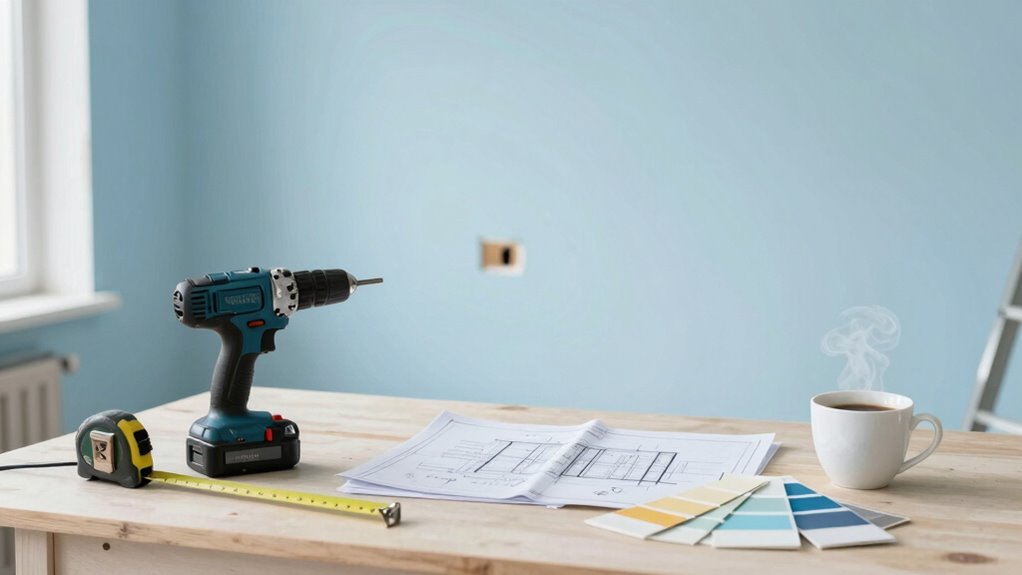

To prevent your renovation from taking over your life, set a clear budget and stick to it, including a buffer for surprises. Keep communication open with your contractors and regularly check in to avoid misunderstandings. Stay organized with detailed timelines and documents, and give yourself breaks to maintain well-being. Trust the process and avoid micromanaging, allowing things to flow smoothly. If you want practical tips to stay balanced, there’s more to discover below.

Get the little things that make your day delivered free with Prime
- Fast, free delivery on millions of items
- Prime Video, Amazon Music and more included
- Member-only deals all year
Key Takeaways
- Establish a clear budget and track expenses to prevent financial stress and project delays.
- Maintain consistent communication with contractors to avoid misunderstandings and ensure progress.
- Create a detailed timeline and break tasks into manageable steps to stay organized and on schedule.
- Set boundaries by trusting professionals and avoiding micromanagement to reduce stress.
- Prioritize self-care and enlist support to maintain well-being amidst the renovation chaos.

Renovations can quickly become overwhelming if you don’t set clear boundaries and stay organized. The key to preventing this chaos is managing your time, expectations, and resources effectively. One of the most essential aspects is budget management. You need to establish a realistic budget from the start and stick to it, allowing some buffer for unexpected expenses. Tracking every expense helps you stay on top of costs and avoid surprises that can derail your project. It’s tempting to splurge on upgrades or last-minute additions, but disciplined budget management keeps your renovation from spiraling out of control and draining your finances.
Effective budget management keeps your renovation on track and prevents unexpected costs from taking over.
Another critical component is maintaining open and consistent contractor communication. You should clearly articulate your vision, priorities, and deadlines right from the beginning. Don’t wait until issues arise to reach out—regular check-ins can prevent misunderstandings and keep everyone on the same page. When you communicate effectively, you minimize delays and avoid costly mistakes. Make sure to document all agreements, changes, and instructions in writing, so there’s a clear record for reference. This approach helps you stay organized and ensures that your contractor understands your expectations, reducing the risk of miscommunication.
Staying organized throughout the project is equally important. Create a detailed timeline that outlines each phase of the renovation, including milestones and deadlines. Break down the tasks into manageable steps, and keep track of progress regularly. Use digital tools or physical folders to store receipts, contracts, and correspondence. This way, you can quickly access information when needed and avoid losing critical documents. Staying organized also involves setting boundaries—know when to step back and give your contractor space to work without micromanaging. Trust their expertise while remaining involved enough to catch issues early. Additionally, exploring emerging trends in digital content can help you find innovative tools or resources that streamline project management and communication.
Lastly, don’t forget to prioritize your well-being. Renovations can be noisy, messy, and stressful, but maintaining a routine and carving out time for yourself helps you stay grounded. Enlist help if needed, whether it’s a project manager or a friend to offer support and perspective. Keep communication lines open, manage your budget diligently, and stay organized to keep the project on track. When you do these things, your renovation will be less invasive and more manageable, allowing you to enjoy your new space without feeling like the project is taking over your life.
As an affiliate, we earn on qualifying purchases.
Frequently Asked Questions
How Do I Choose the Right Contractor for My Renovation?
To choose the right contractor, start by checking their credentials and verifying licenses and insurance. Ask for references and review their past renovation projects to gauge quality. Discuss your renovation timeline clearly and make sure they can meet your deadlines. Trust your instincts—select a contractor who communicates well, shows professionalism, and aligns with your vision. This way, you’ll minimize surprises and keep your renovation on track without it taking over your life.
What Should I Include in a Renovation Budget?
You should include costs for design ideas, like layout and style, and material selection, such as flooring, cabinets, and fixtures. Don’t forget to add a contingency fund for unexpected expenses. Research prices for labor, permits, and delivery. Break down each category clearly to track spending. This way, your budget stays realistic, and you avoid surprises that could derail your renovation project.
How Can I Prevent Delays During the Renovation Process?
To prevent delays during your renovation, prioritize proactive planning and precise scheduling. Practice punctuality by making timely timing adjustments, and maintain clear communication strategies with your contractors and crew. Regularly review progress, promptly address problems, and stay flexible to unexpected hiccups. By fostering a flow of transparency and trust, you help keep your project on track, avoiding setbacks and ensuring your renovation wraps up within your desired timeframe.
What Permits Are Needed for Home Renovations?
You need to identify the permit process and approval requirements for your specific renovation project. Check with your local building department to determine which permits are necessary, such as building, electrical, or plumbing permits. Submit detailed plans and application forms, and wait for approval before starting work. Ensuring you have all permits in place prevents legal issues and delays, keeping your renovation on track and stress-free.
How Do I Handle Unexpected Renovation Costs?
When you face unexpected expenses during your renovation, stay calm and reassess your budget. Use budgeting strategies like setting aside a contingency fund of at least 10-15% of your project cost to cover surprises. Prioritize essential repairs and cut non-essentials if needed. Communicate openly with your contractor about additional costs, and be flexible to adjust your plans, ensuring your renovation stays on track without overwhelming your finances.
As an affiliate, we earn on qualifying purchases.
Conclusion
By staying organized, setting realistic goals, and maintaining open communication, you can keep your renovation from consuming your entire life. It’s natural to worry about the chaos, but remember, a well-planned approach minimizes stress and keeps things manageable. Trust the process, and don’t hesitate to seek professional help when needed. With patience and a clear focus, you’ll enjoy your transformed space without feeling overwhelmed—proving that a successful renovation is entirely within your reach.
project management tools for home renovation
As an affiliate, we earn on qualifying purchases.
As an affiliate, we earn on qualifying purchases.
home renovation organization folders
As an affiliate, we earn on qualifying purchases.
As an affiliate, we earn on qualifying purchases.
Halloween Picks
halloween
As an affiliate, we earn on qualifying purchases.