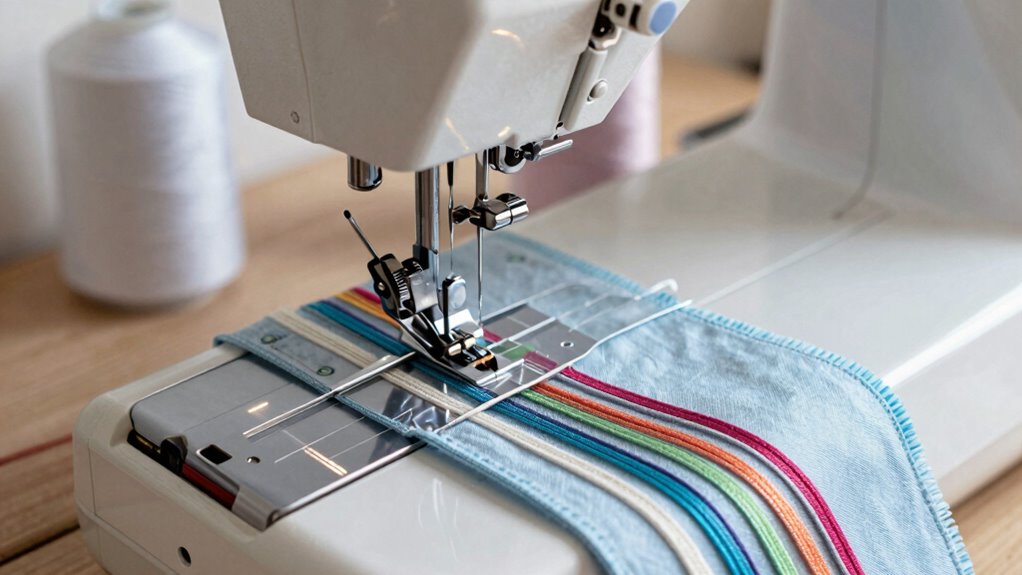
A serger is different from a sewing machine because it finishes raw fabric edges with overlock stitches and trims excess fabric simultaneously, giving a professional, clean look. It uses multiple threads and automatically manages tension, making seam finishing faster and more durable. A sewing machine, on the other hand, constructs seams and decorative stitches but doesn’t typically finish edges or trim fabric. To discover more about these sewing tools, keep exploring their unique features and functions.
Key Takeaways
- Sergers primarily finish fabric edges with overlock stitches, while sewing machines create various single stitches like straight or zigzag.
- Sergers automatically manage thread tension for multiple threads, unlike sewing machines which require manual adjustments.
- Sergers trim excess fabric during stitching, whereas sewing machines do not cut fabric edges automatically.
- Sergers produce multi-thread, tightly woven stitches for seam finishing, offering a professional look with minimal effort.
- Sewing machines are more versatile for diverse sewing tasks, while sergers specialize in seam finishing and edge overlocking.
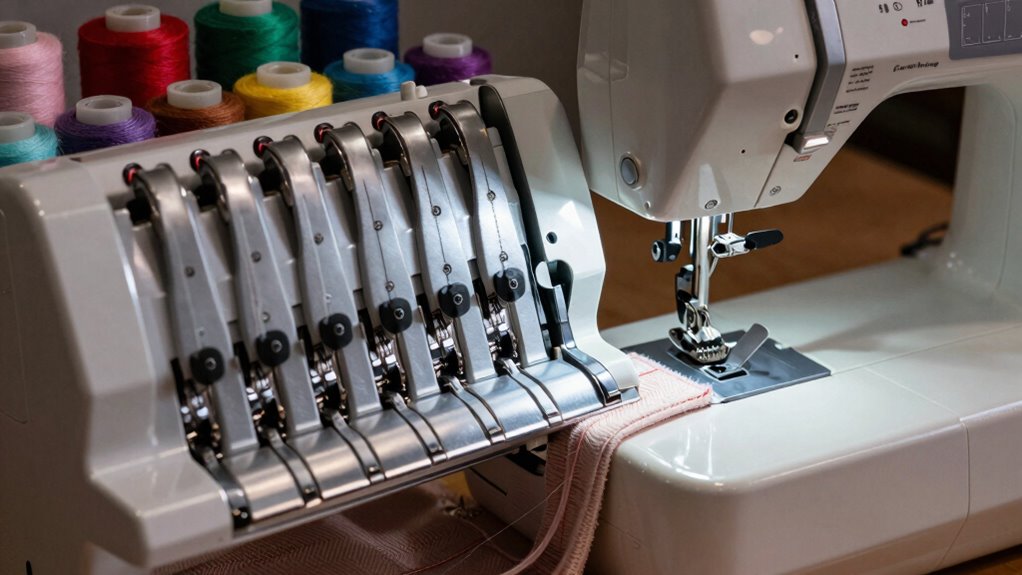
While both sergers and sewing machines are indispensable tools for sewing, they serve different purposes and operate in distinct ways. If you’re trying to decide which one to use, understanding their differences can help you make the right choice. A vital distinction lies in how each machine handles thread tension and stitch formation. On a sewing machine, you typically control the thread tension manually for each thread involved in your project. This adjustment influences how tight or loose the stitches are, affecting the durability and appearance of your seams. Proper thread tension is essential because it ensures your stitches are balanced, preventing puckering or loose threads. Stitch formation on a sewing machine involves creating a single, straight, zigzag, or decorative stitch by guiding fabric through the machine’s needle. It’s versatile and ideal for a wide range of sewing projects, from quilting to garment construction.
A serger, on the other hand, is designed primarily for finishing raw fabric edges with overlock stitches. It automatically manages thread tension for multiple threads simultaneously, which is fundamental for creating strong, clean seams. Because of this, you don’t usually need to adjust tension as often as you do on a sewing machine—its tension settings are optimized for the overlocking process. When it comes to stitch formation, a serger produces tightly woven, multi-thread stitches that encase the fabric edges. These stitches trim the excess fabric while sealing the edges, preventing fraying and giving your finished project a professional look. Unlike a sewing machine that creates a single line of stitches, a serger’s stitch formation involves multiple threads working together in a loop, which gives it the ability to finish seams efficiently. Additionally, the thread tension system in a serger is designed to work automatically, making it easier to achieve consistent results.

Brother Serger, 1034D, Heavy-Duty Metal Frame Overlock Machine, 1,300 Stitches Per Minute, Removeable Trim Trap, 3 Included Accessory Feet, White
METAL FRAME: The Brother 1034D is a durable serger made with a high-quality metal frame and interior components….
As an affiliate, we earn on qualifying purchases.
As an affiliate, we earn on qualifying purchases.
Frequently Asked Questions
Can a Serger Replace a Regular Sewing Machine Entirely?
A serger can’t fully replace a regular sewing machine because it primarily finishes edges, trims excess fabric, and creates stretchy seams. While you can add embroidery embellishments and decorative appliqué with a serger, it lacks the versatility for detailed stitching, buttonholes, or precise topstitching needed for many projects. For complete sewing tasks, combining both machines is ideal, as each excels in different areas.
What Types of Stitches Can a Serger Create?
A serger primarily creates overlock stitches, which are great for fabric finishing and preventing fraying. While it excels at seam construction, it can also produce decorative stitches with specialty thread or settings, adding flair to your projects. However, it doesn’t replace a standard sewing machine for detailed stitching or buttonholes. Your serger mainly enhances finishing touches and provides durable, professional-looking seams, making it an essential tool for finishing garments efficiently.
Is a Serger Suitable for Quilting Projects?
Did you know that over 65% of quilters use a serger for finishing their quilts? A serger’s speed and ability to create strong quilt seams make it suitable for quilting projects. It’s perfect for sewing sturdy quilt seams and adding decorative edges, giving your quilt a professional look. While it’s not a substitute for a quilting machine, a serger can definitely enhance your quilting process with neat, durable finishes.
How Much Maintenance Does a Serger Require?
A serger requires regular maintenance to stay in top shape. You should check the thread tension frequently to guarantee proper stitching and prevent issues. Needle maintenance is also essential—you’ll need to replace or sharpen needles regularly to avoid skipped stitches and fabric damage. Keep the machine clean and oil it as recommended by the manufacturer. Regular upkeep helps your serger perform smoothly and extend its lifespan.
Can I Sew With a Serger Without Extra Attachments?
Absolutely, you can sew with a serger without extra attachments—if your goal is to create a tangled, thread-tension nightmare. A serger relies on precise thread tension and specific needle types, so skipping accessories might limit your options. Sure, you can start sewing, but don’t expect a smooth ride. To unleash your serger’s full potential, mastering tension adjustments and needle choices is key—otherwise, it’s just a fancy overlock machine.
![Babylock Serger Machine 4-Thread Automatic Tension Jet Air Through [ Imagine (BLE1AT-2) JP Model ]](https://m.media-amazon.com/images/I/415xhW3PhGL._SL500_.jpg)
Babylock Serger Machine 4-Thread Automatic Tension Jet Air Through [ Imagine (BLE1AT-2) JP Model ]
This Serger machine is a Japanese version. machine, it itself is same as an American edition. But it's…
As an affiliate, we earn on qualifying purchases.
As an affiliate, we earn on qualifying purchases.
Conclusion
Remember, a stitch in time saves nine, and understanding the difference between a serger and a sewing machine helps you choose the right tool for your project. While a sewing machine is perfect for detailed sewing and quilting, a serger excels at finishing edges quickly and professionally. Knowing when to use each will save you time and frustration, ensuring your sewing projects turn out beautifully. Ultimately, using the right machine at the right time makes all the difference.

Singer Side Cutter Attachment | Trim & Finish Fabric Edges Seamlessly | Ideal for Zigzag & Overedge Stitches | Compatible with Low-Shank Sewing Machines
TRIM AND FINISH IN ONE STEP: Seamlessly trim fabric and finish edges as you sew, achieving a professional…
As an affiliate, we earn on qualifying purchases.
As an affiliate, we earn on qualifying purchases.
Brother Serger, 1034D, Heavy-Duty Metal Frame Overlock Machine, 1,300 Stitches Per Minute, Removeable Trim Trap, 3 Included Accessory Feet, White
METAL FRAME: The Brother 1034D is a durable serger made with a high-quality metal frame and interior components….
As an affiliate, we earn on qualifying purchases.
As an affiliate, we earn on qualifying purchases.