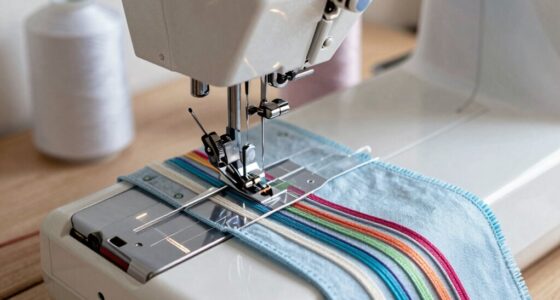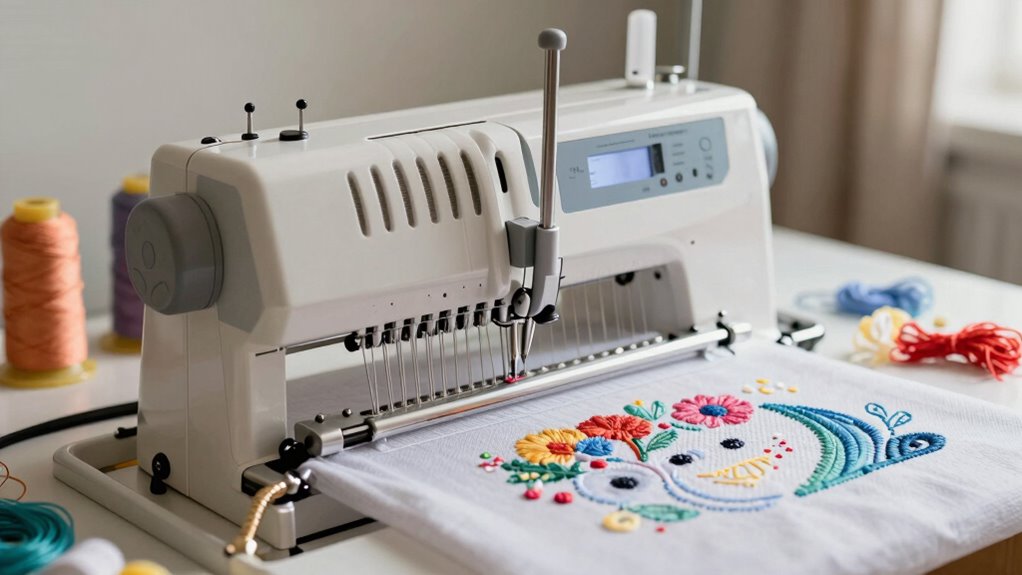

To get started with embroidery at home, choose the right thread for your project—polyester for durability, rayon for shine, or cotton for a softer look. Make certain your fabric type matches your stabilizer and machine settings to avoid puckering or uneven stitches. Adjust your machine’s tension and stitch density based on the fabric and stabilizer. Proper preparation ensures professional results. Keep exploring to discover more tips that will help you improve your embroidery skills.

Get the little things that make your day delivered free — and shop member deals
- Fast, free delivery on millions of items
- Access to Prime Big Deal Days deals on October 6–7
- Prime Video, Amazon Music and more included
Key Takeaways
- Understand your machine’s capabilities, including stitch options and tension adjustments, to optimize embroidery results.
- Choose appropriate threads (polyester, rayon, cotton) based on fabric type and desired final appearance.
- Select suitable stabilizers to support different fabrics and prevent puckering or stretching.
- Test settings and thread on scrap fabric to ensure proper tension, stitch density, and compatibility.
- Properly prepare fabric and stabilizer to achieve professional, durable, and high-quality embroidery outcomes.
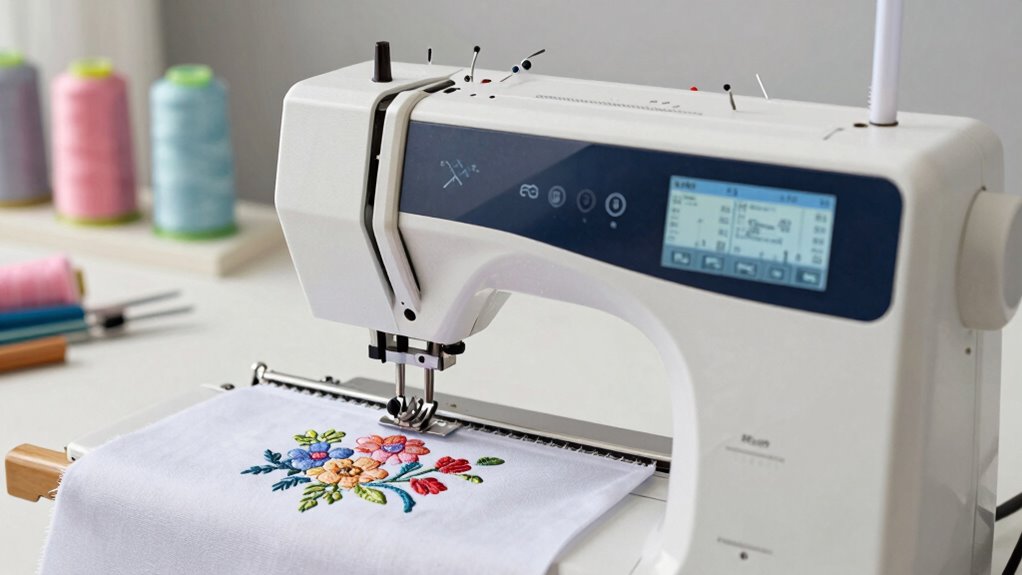
Embroidery machines have become indispensable tools for anyone interested in creating detailed, professional-looking designs on fabric. When getting started, understanding the basics of thread types and fabric compatibility is critical to achieving the best results. Different thread types, such as polyester, rayon, and cotton, each have unique qualities that influence the appearance and durability of your embroidery. Polyester threads are strong, colorfast, and resistant to shrinking, making them ideal for most projects, especially those that need to withstand frequent washing. Rayon threads offer a shiny, luxurious finish and a vibrant color palette, perfect for decorative stitches where aesthetics matter most. Cotton threads provide a matte finish and a natural feel, suitable for projects where a softer look is desired or for embroidery on natural fibers. Selecting the right thread type depends on your project’s purpose, the fabric you’re working with, and the desired final appearance. Additionally, being aware of fabric compatibility ensures you choose the appropriate stabilizers and tension settings for optimal results. Proper stabilizer selection can prevent puckering, stretching, or uneven stitches, especially when working with challenging fabrics. Fabric compatibility is another essential aspect to take into account when working with your embroidery machine. Not all fabrics are created equal, and some require specific tension adjustments or stabilizers to prevent puckering, stretching, or uneven stitching. Light, delicate fabrics like silk or chiffon may need a stabilizer to support the embroidery and keep stitches even, while heavier fabrics like denim or canvas can handle more robust thread and thicker stabilizers. When choosing stabilizers, considering the fabric weight can be crucial to achieving professional-looking results. It’s also helpful to understand the thread tension settings on your machine, which play a vital role in stitch quality and fabric handling. Being aware of your machine’s capabilities helps you select the appropriate settings and prevent issues during stitching. Before starting, always check your machine’s guidelines and test on scrap pieces to verify compatibility. Using the wrong fabric can result in thread breakage, skipped stitches, or damage to your material, which can be frustrating and costly. Your machine’s capabilities also influence fabric choices; some models excel with lightweight fabrics, while others are built for thicker, more substantial materials. Be mindful of your machine’s specifications and adjust settings accordingly, including stitch density and tension. Properly matching thread types with the fabric ensures your designs come out crisp and professional.
As an affiliate, we earn on qualifying purchases.
Frequently Asked Questions
How Do I Troubleshoot Common Embroidery Machine Errors?
When troubleshooting embroidery machine errors, start by checking your thread tension; uneven stitches often mean it’s too tight or loose. Next, verify your needle selection—using the wrong needle type can cause jams or skipped stitches. Clear any fabric or thread jams, make sure your machine is properly threaded, and reset it if needed. Regular maintenance and correct settings help prevent errors, making your embroidery process smoother and more enjoyable.
What Maintenance Is Required for Long-Term Machine Performance?
To guarantee your embroidery machine performs well long-term, regularly lubricate moving parts as recommended by your manual to prevent wear. Keep an eye on thread tension, adjusting it as needed for smooth stitching and fewer errors. Clean lint and dust from the bobbin area and feed dogs frequently. Proper maintenance, including lubrication and thread tension adjustments, helps extend your machine’s lifespan and guarantees consistent, high-quality embroidery results.
Can Embroidery Machines Be Used for Fabric Types Other Than Cotton?
Yes, you can use embroidery machines for fabric types beyond cotton. Your machine offers excellent fabric versatility and material compatibility, allowing you to work with silk, wool, denim, and more. However, it’s important to adjust your settings and use appropriate needles and threads for each fabric type. This way, you guarantee smooth stitching and avoid damage, expanding your creative options across various materials.
What Safety Precautions Should I Follow When Operating an Embroidery Machine?
When operating an embroidery machine, you should always follow safety precautions to prevent accidents. Before starting, make sure proper machine setup, including securing the embroidery hoop and checking for loose parts. Keep your hands clear of moving parts during operation, and unplug the machine when adjusting settings or changing needles. Follow recommended embroidery techniques to avoid jams or damage. Wearing safety glasses can protect your eyes from flying debris, guaranteeing a safe crafting experience.
How Do I Choose the Right Embroidery Designs for My Projects?
You should start by considering your project’s purpose and fabric type, as these influence design selection. Investigate how pattern customization can help you create unique pieces that reflect your style. Choose designs that match your skill level, making sure they’re compatible with your embroidery machine. Look for clear, high-resolution patterns, and don’t hesitate to tweak colors or sizes to personalize your project. This approach guarantees your embroidery projects turn out beautifully and uniquely yours.
embroidery stabilizer for delicate fabrics
As an affiliate, we earn on qualifying purchases.
As an affiliate, we earn on qualifying purchases.
Conclusion
Now that you’re familiar with the basics of embroidery machines, you’re ready to set sail on your creative journey. Think of your machine as a trusty ship, guiding your ideas through the sea of fabric and thread. With each stitch, you’ll navigate new patterns and techniques, turning simple materials into stunning works of art. So, embrace the adventure, keep learning, and let your imagination be the compass that leads you to beautiful, handcrafted creations.
As an affiliate, we earn on qualifying purchases.
embroidery machine tension adjustment tool
As an affiliate, we earn on qualifying purchases.
As an affiliate, we earn on qualifying purchases.
NFL season / tailgating Picks
team gear
As an affiliate, we earn on qualifying purchases.