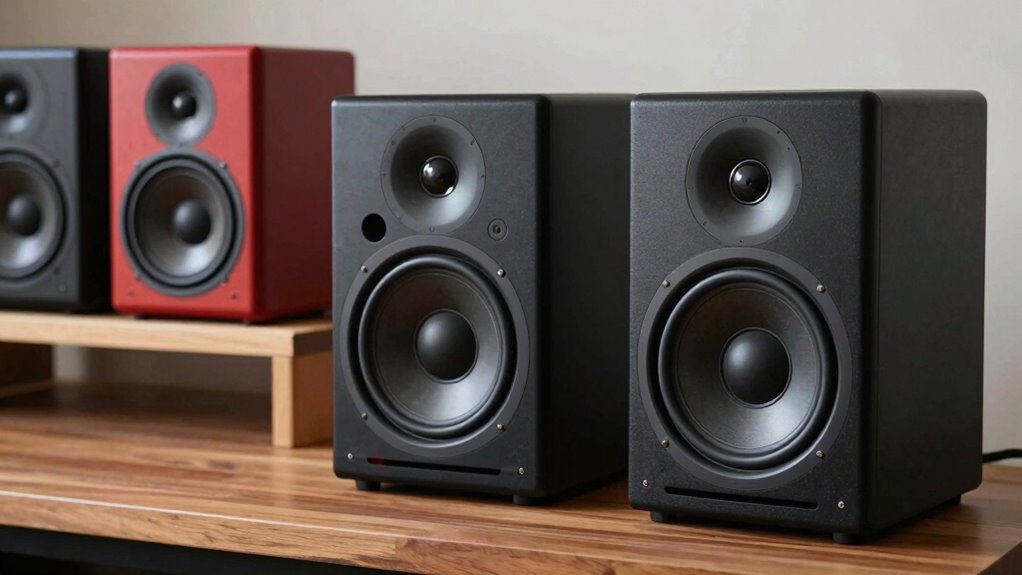

Studio monitors give you accurate, flat sound, making them perfect for mixing and critical listening because they reveal every detail in your audio. Regular speakers often boost bass or treble, which can distort or color the sound, making them better suited for casual listening. Placement and room acoustics also affect their performance. If you’re serious about audio quality, understanding these differences helps you choose the right speakers—stick around to learn more.

Get the little things that make your day delivered free with Prime
- Fast, free delivery on millions of items
- Prime Video, Amazon Music and more included
- Member-only deals all year
Key Takeaways
- Studio monitors provide flat frequency response for accurate sound, while regular speakers often boost bass or treble for casual listening.
- Designed for close-up use, studio monitors deliver precise audio, whereas regular speakers suit larger rooms and broader soundscapes.
- Studio monitors reveal audio details essential for mixing, unlike regular speakers that may color or distort sound.
- Placement and room acoustics significantly impact the performance of both, but studio monitors are optimized for critical listening environments.
- Regular speakers prioritize entertainment and convenience, while studio monitors focus on accurate reproduction for professional audio work.
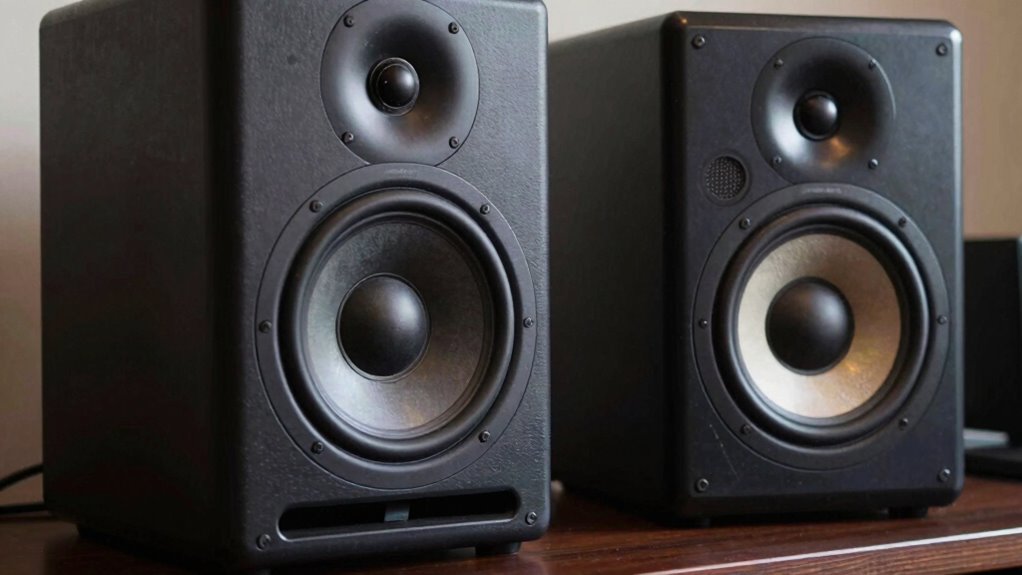
When choosing audio equipment, understanding the difference between studio monitors and regular speakers is essential. As someone who values sound quality, you need to recognize that studio monitors are designed specifically to deliver accurate sound reproduction. Unlike regular speakers, which often emphasize bass or treble to appeal to casual listeners, studio monitors prioritize sound accuracy. This means you get a flat frequency response that reveals every detail in your audio, making them ideal for mixing, mastering, or critical listening. Your listening environment greatly influences how well you perceive these details. A well-treated room can enhance the benefits of studio monitors, but even in less-than-perfect spaces, their focus on precision helps you make better judgments about your recordings. Recognizing the importance of sound accuracy can help you make informed decisions about your audio setup. You should consider your listening environment when choosing between the two. Studio monitors are typically designed for close proximity use, placed on your desk or stands, allowing you to hear the true sound without coloration. They have an even dispersion pattern, so every part of your listening space receives consistent sound, which is vital for mixing and editing. Additionally, the frequency response of studio monitors is usually flat, providing an uncolored representation of your audio. This flat response aids in identifying issues and making precise adjustments during the production process. Conversely, regular speakers are built for larger rooms and often have a broader soundstage, but they can introduce coloration or distortion depending on the design. If your goal is to produce or evaluate audio with precision, you need a setup that offers a true representation of the sound, which is what studio monitors provide. Sound accuracy becomes your top priority if you’re working on audio projects. It’s important to realize that regular speakers, with their emphasis on bass or treble boosts, can mislead your perception during critical listening tasks. They tend to enhance certain frequencies, making music sound more lively or engaging but less true to the original source. This can distort your ability to identify issues or make precise adjustments. Studio monitors, however, give you a transparent window into your audio, enabling you to identify problems and nuances that might go unnoticed on regular speakers. They help you create mixes that translate well across all playback systems, ensuring your work sounds consistent everywhere. Additionally, room acoustics play a crucial role in how effectively you can utilize either type of speaker, further emphasizing the need for proper setup and environment.
studio monitor speakers for mixing
As an affiliate, we earn on qualifying purchases.
As an affiliate, we earn on qualifying purchases.
Frequently Asked Questions
Can Regular Speakers Be Used for Professional Audio Mixing?
Regular speakers can be used for professional audio mixing, but they might not be ideal. You need to pay close attention to speaker placement to guarantee accurate sound, and consider their power handling capacity to avoid distortion or damage. Unlike studio monitors, regular speakers often color the sound, making precise mixing difficult. For critical audio work, investing in dedicated studio monitors is recommended, but if you choose regular speakers, ensure proper setup and power management.
How Do Studio Monitors Affect Sound Accuracy Compared to Regular Speakers?
Studio monitors enhance sound accuracy by offering flat frequency response, which means they don’t color the sound like regular speakers might. This results in better sound fidelity, allowing you to hear true audio details. Regular speakers often add bass or treble boosts, skewing your perception. With studio monitors, you get a more honest representation of your mix, helping you make precise adjustments and produce professional-quality audio.
Are There Specific Brands That Excel in Studio Monitor Design?
You’ll find that brands like Adam Audio, Focal, and Neumann excel in studio monitor design, blending brand innovation with sleek design aesthetics. These companies prioritize sound accuracy and build quality, ensuring you get reliable performance for mixing or production. Their monitors often feature innovative driver technology and modern looks, making them stand out. Choosing from these brands means investing in monitors that combine cutting-edge design with professional-grade sound quality.
What Is the Typical Lifespan of Studio Monitors Versus Regular Speakers?
Studio monitors typically last between 5 to 10 years, depending on speaker durability and usage. Regular speakers may have a similar lifespan, but longevity factors like build quality, frequency of use, and environmental conditions influence this. You can prolong their lifespan by keeping them in a stable environment, avoiding overuse, and performing regular maintenance. Proper care ensures your speakers, whether studio monitors or regular, stay functional and sound great longer.
Do Studio Monitors Require Special Room Acoustics for Optimal Performance?
Did you know that proper room acoustics can improve sound accuracy by up to 50%? Studio monitors do require special room treatment and acoustic adjustment for ideal performance, as untreated spaces can cause sound reflections and muddiness. Investing in bass traps, diffusers, and acoustic panels helps create a balanced listening environment. This ensures your studio monitors deliver precise, true-to-source sound, essential for accurate mixing and mastering.
As an affiliate, we earn on qualifying purchases.
Conclusion
So, whether you’re seeking crystal-clear clarity or just craving casual listening, choosing between studio monitors and regular speakers depends on your purpose. Remember, studio monitors provide precision and professionalism, while regular speakers suit relaxed, everyday enjoyment. By understanding your needs, you can make a smart, satisfying choice. Stay savvy, select sensibly, and enjoy sound that suits your style—whether it’s serious studio sessions or simple, soothing sounds. Sound decisions start with knowing what suits you best!
professional studio monitor speakers
As an affiliate, we earn on qualifying purchases.
As an affiliate, we earn on qualifying purchases.
As an affiliate, we earn on qualifying purchases.
Halloween Picks
halloween
As an affiliate, we earn on qualifying purchases.