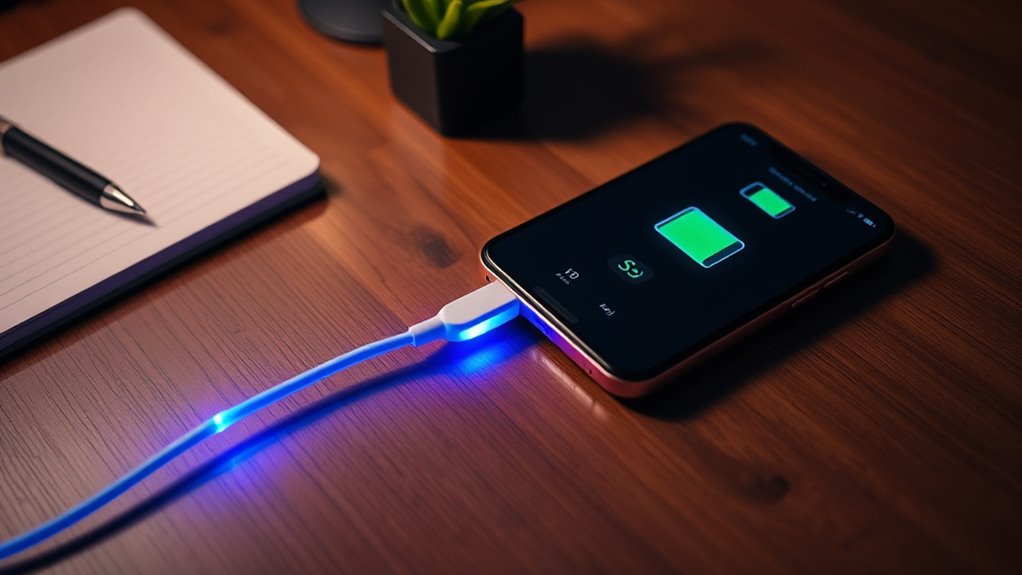

To charge your phone properly, avoid deep discharges by keeping your battery above 20%, and don’t leave it at 0% for too long. Unplug once it hits around 80-90% to prevent overheating and overcharging. Regularly top up from mid-levels instead of waiting for a low battery. Performing calibration every few months also helps maintain accuracy. Follow these tips to enhance your battery’s lifespan and enjoy better device performance over time.
Key Takeaways
- Keep your battery level between 20% and 80% to minimize stress and prolong battery lifespan.
- Avoid letting your phone sit at 0% for extended periods, as deep discharges damage lithium-ion batteries.
- Unplug your device around 80-90% to prevent overcharging and heat buildup that can harm battery health.
- Perform full battery calibration periodically by charging to 100% and draining completely for accurate readings.
- Regularly top up your battery from mid-range levels instead of waiting for it to fully drain or overcharge.
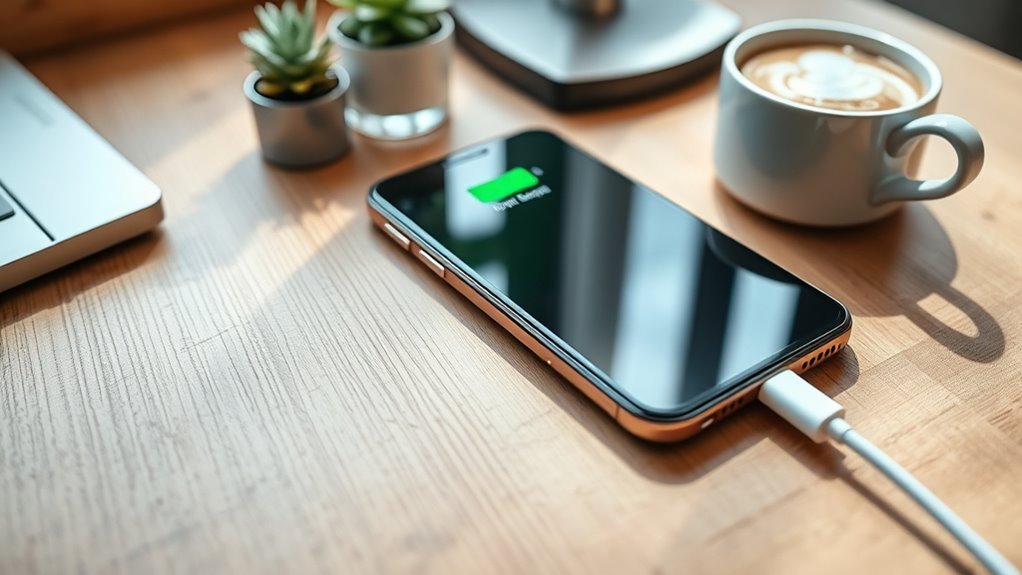
Have you ever wondered if you’re charging your phone the right way? Many people overlook small habits that can profoundly impact their device’s battery life. One essential tip is understanding the importance of battery calibration. Over time, your phone’s battery percentage indicator can become less precise, making it seem like your battery is draining faster or holding less charge than it actually does. To keep this indicator accurate, you should occasionally perform a full battery calibration. This involves charging your phone to 100%, then letting it drain completely until it powers off. Afterward, charge it uninterrupted back to full capacity. Doing this every few months helps your phone’s software better estimate the real battery level, ensuring you’re not caught off guard by sudden drops in charge.
Another key aspect is respecting ideal charging times. You don’t need to constantly keep your phone plugged in or let it run down to zero. Instead, aim to keep your battery between 20% and 80% whenever possible. This range minimizes stress on the battery cells, prolonging their lifespan. Charging from 0% to 100% repeatedly can accelerate battery aging, reducing overall capacity over time. If you notice your phone’s battery health declining, adjusting your charging habits to stay within those suitable times can make a difference. For example, if you’re at 50%, it’s better to plug in and top up to 80% rather than waiting until you’re at 20%, which puts more strain on the battery.
Avoid letting your phone sit at 0% for extended periods because deep discharges can harm lithium-ion batteries. Likewise, constantly charging to 100% isn’t ideal, especially if you leave it plugged in for hours after reaching full capacity. Overcharging can generate excess heat, which may damage the battery cells. Many modern devices have built-in protections against overcharging, but it’s still a good practice to unplug once your battery reaches around 80-90%, especially if you’re charging overnight or during long periods of inactivity. Additionally, understanding battery technology can help you make more informed decisions about your charging habits and extend your device’s overall lifespan.
Ultimately, proper charging isn’t just about plugging in and unplugging at random; it’s about understanding your device’s needs and maintaining good habits. Performing battery calibration periodically, sticking to suitable charging times, and avoiding extreme charge levels can considerably extend your battery’s health and ensure your phone runs smoothly for years to come. Small adjustments in your charging routine can make a big difference, so start paying attention to how and when you charge.
Top picks for "right charge phone"
Open Amazon search results for this keyword.
As an affiliate, we earn on qualifying purchases.
Frequently Asked Questions
Can I Leave My Phone Charging Overnight Safely?
You can leave your phone charging overnight safely if you use quality charging accessories and your device has built-in safeguards. Modern smartphones are designed to stop charging once they reach full capacity, protecting your battery health. However, avoid cheap chargers or damaged cables, as they can cause overheating or damage. Make sure your phone is on a ventilated surface to prevent heat buildup, which can impact battery health over time.
Is It Bad to Use My Phone While Charging?
Using your phone while charging is like running a marathon during a heatwave—your device can overheat, increasing the risk of battery swelling. It’s not inherently dangerous, but it can cause your phone to become warm or even hot, which may damage the battery over time. To keep your battery healthy, avoid prolonged use during charging, especially if your phone gets noticeably warm or hot, reducing the risk of overheating and swelling.
How Often Should I Calibrate My Battery?
You should calibrate your battery about once every three months to maintain accurate battery readings. Regular calibration helps your phone’s software better estimate remaining battery life, so you avoid unexpected shutdowns. Keep in mind that frequent charging, especially partial charges, can affect your battery’s health, but calibration mainly guarantees your battery’s reporting remains precise. Incorporate battery calibration into your charging frequency to optimize your phone’s performance over time.
Does Using a Third-Party Charger Harm My Battery?
Using a third-party charger can impact your battery lifespan if it’s low quality, as 30% of charger malfunctions come from non-original accessories. While some third-party chargers offer faster charging speeds, they might deliver inconsistent power, damaging your battery over time. Always choose reputable brands to guarantee safe charging, protect your device’s health, and maintain ideal charging speed, ultimately extending your battery’s overall lifespan.
What’s the Ideal Temperature for Charging My Phone?
You should keep your phone’s temperature between 0°C and 35°C (32°F to 95°F) during charging for peak thermal management. Excess heat slows down charging speed and damages the battery over time. To protect your device, avoid charging in hot environments, and remove any cases that trap heat. Maintaining this ideal temperature helps your battery stay healthy and charges efficiently without risking overheating.
Conclusion
Think of your phone’s battery as a delicate garden; with patience and care, it blooms beautifully. Avoid the weeds of overcharging and deep discharges, and nurture it with gentle, consistent charging habits. When you treat your battery like a precious seed, it thrives longer, guiding you through your day’s journey. So, cherish each charge as a moment of growth—your device’s energy depends on the love and attention you give it.