To set up a PA system for small events, focus on choosing the right microphones like handheld or lapel types, and position them close to speakers’ mouths to reduce feedback. Use a mixer to balance sound levels and avoid distortion. Make certain your speakers are powerful enough for the space and perform a sound check beforehand. Proper setup and techniques make your audio clear and professional. Keep exploring to discover more tips for mastering your sound setup.

Get the little things that make your day delivered free with Prime
- Fast, free delivery on millions of items
- Prime Video, Amazon Music and more included
- Member-only deals all year
Key Takeaways
- Choose appropriate microphones (handheld, lavalier) based on speaker needs and event size.
- Position microphones close to speakers’ mouths to ensure clear sound and reduce feedback.
- Use a mixer to balance audio levels and prevent distortion across the venue.
- Conduct sound checks beforehand to identify and resolve feedback or volume issues.
- Select sufficient speakers for the venue size to ensure even sound coverage for all attendees.
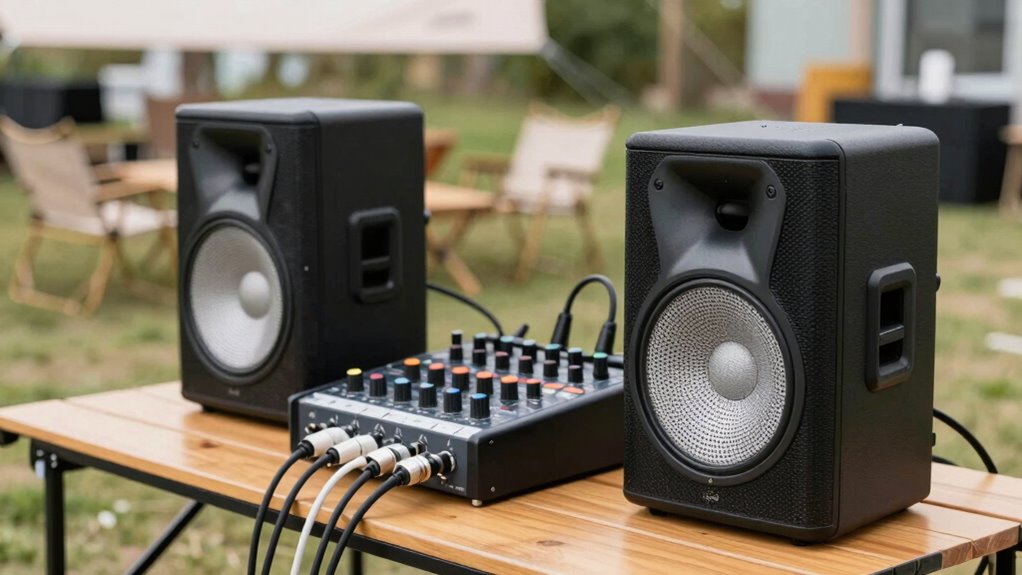
Have you ever wondered how large events or public gatherings project clear sound across vast spaces? The secret lies in effective sound amplification. A PA (public address) system is designed to guarantee everyone, whether close or far away, can hear the speaker clearly. When setting up a PA system for small events or gatherings, understanding the basics of sound amplification is essential. It involves selecting the right equipment and positioning it correctly so that sound travels efficiently without distortion or feedback. The core components include microphones, speakers, and a mixer, all working together to deliver crisp, clear audio.
Microphone types play a vital role in sound amplification. Different microphones are suited for various situations, and choosing the right one can dramatically improve sound clarity. For small events, handheld dynamic microphones are popular because they’re durable, easy to use, and resistant to feedback. They’re ideal for speakers or performers moving around on stage. Lavalier microphones, which clip onto clothing, are great for presenters who want to free their hands or avoid holding a mic. They provide consistent sound pickup and are less intrusive. Another option is condenser microphones, which are more sensitive and used in controlled environments, but they might be less suitable for outdoor or noisy settings. By selecting the appropriate microphone type, you guarantee your voice is captured accurately, making the entire event more engaging and professional.
Choosing the right microphone type ensures clear, professional sound for any small event setting.
In addition to choosing the right microphone, proper placement is essential. Position your microphones close to the speaker’s mouth to minimize ambient noise and feedback. For handheld mics, encourage speakers to hold them at a consistent distance. If using lavalier mics, attach them securely and adjust the gain on your mixer to avoid distortion. The speaker’s position relative to the speakers and the size of the venue also influence how well sound is projected. Large or outdoor spaces may require more powerful speakers or additional microphones to cover the entire area evenly. Proper microphone placement is crucial for sound quality, ensuring optimal audio output and clarity. Additionally, understanding the sound system components helps in troubleshooting and optimizing your setup, ensuring your event sounds professional. Properly configuring the sound system setup and performing a thorough sound check beforehand can significantly improve the quality of your audio. A well-balanced setup involves testing the sound system beforehand. Check for feedback, adjust volume levels, and make sure every area of the venue is audible. Keep in mind that the goal is to amplify sound without overwhelming the audience with loud or distorted audio. Sound amplification techniques can help you achieve a balanced and clear sound. With the right combination of microphone types, proper placement, and effective sound amplification techniques, you’ll be able to host small events that sound professional and feel engaging. This knowledge helps you create an atmosphere where your message is heard loud and clear, making your gathering a memorable success.
As an affiliate, we earn on qualifying purchases.
Frequently Asked Questions
How Do I Troubleshoot Feedback Issues During an Event?
To troubleshoot feedback issues during your event, first identify the source by slowly adjusting the microphone or speaker volume and listen for feedback. Use feedback prevention techniques like placing microphones further from speakers and angling them correctly. Adjust sound quality settings to reduce high frequencies that cause feedback. Keep an eye on your sound levels, and if feedback persists, temporarily turn down the gain or mute problematic mics.
What Is the Ideal Speaker Placement for Small Venues?
Think of your venue as a musical canvas—speaker positioning is your brushstroke. To optimize acoustics, place speakers slightly above ear level and angled toward your audience, avoiding corners and walls that cause echoes. Keep them centered and equidistant from listeners, creating a soundscape you can almost touch. Proper acoustic optimization guarantees your voice travels clearly, filling the space evenly without feedback or dead zones.
How Do I Connect Multiple Microphones to One System?
To connect multiple microphones to one system, you’ll need an audio mixer with multiple mic inputs. First, choose the right microphone types—like dynamic or condenser—to suit your event. Then, connect each microphone to separate channels on the mixer using XLR cables. Adjust the gain and volume for each mic to balance sound. Finally, connect the mixer’s output to your PA system, ensuring clear, balanced audio for your event.
What Power Source Is Best for Portable PA Systems?
For portable PA systems, battery operation is your best choice, offering flexibility and mobility without needing a constant power outlet. Look for systems with rechargeable batteries to save costs. Solar power is also a great eco-friendly option if you’re outdoors, as it harnesses sunlight to keep your system running longer. Both options guarantee you stay powered up during your event, providing reliable sound without interruption.
How Often Should I Perform Maintenance on My PA Equipment?
You should perform maintenance on your PA equipment regularly—about every few months—to keep it in top shape. Don’t wait until something breaks; that’s like closing the barn door after the horse has bolted. Focus on battery maintenance by charging and inspecting batteries, and check cables for wear and tear. Regular upkeep guarantees clear sound and prolongs your equipment’s life, saving you headaches during your events.
handheld dynamic microphone for speeches
As an affiliate, we earn on qualifying purchases.
As an affiliate, we earn on qualifying purchases.
Conclusion
Now that you know the basics of a PA system, you’re ready to organize outstanding small events and gatherings. Remember, simplicity and sound are your superstars—set it up smoothly, speak clearly, and let your speakers shine. With a bit of preparation and a dash of confidence, you’ll deliver delightful, distraction-free experiences every time. So, step up, set the sound, and succeed—your small event will surely sound spectacular!
lavalier microphone for presenters
As an affiliate, we earn on qualifying purchases.
As an affiliate, we earn on qualifying purchases.
portable speaker for small gatherings
As an affiliate, we earn on qualifying purchases.
As an affiliate, we earn on qualifying purchases.
Halloween Picks
halloween
As an affiliate, we earn on qualifying purchases.