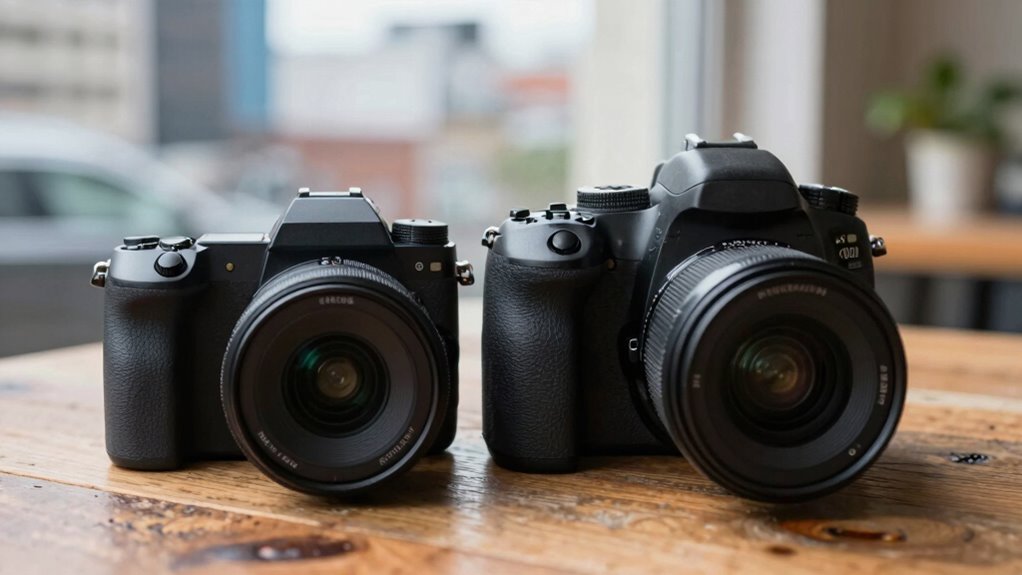

If you’re choosing between mirrorless and DSLR for modern photography, consider your shooting style and comfort with size and weight. Mirrorless cameras are compact and lightweight, making them ideal for travel and spontaneous shots, while DSLRs offer larger bodies with better ergonomics for extended shoots. Your preference for handling, quick access to controls, and the types of photos you want to create matter. Keep exploring to discover more about which camera fits your needs best.

Get the little things that make your day delivered free with Prime
- Fast, free delivery on millions of items
- Prime Video, Amazon Music and more included
- Member-only deals all year
Key Takeaways
- DSLRs offer larger bodies with better ergonomics for extended shooting sessions, while mirrorless cameras are more portable and lightweight.
- Mirrorless cameras support spontaneous shooting and travel photography due to their compact design.
- DSLR ergonomics enable quick access to controls, enhancing workflow for professional or extensive shoots.
- User preferences and shooting habits influence the choice between larger, comfortable DSLRs and smaller, versatile mirrorless models.
- Technological differences like sensor size and autofocus impact image quality and suitability for various modern photography styles.
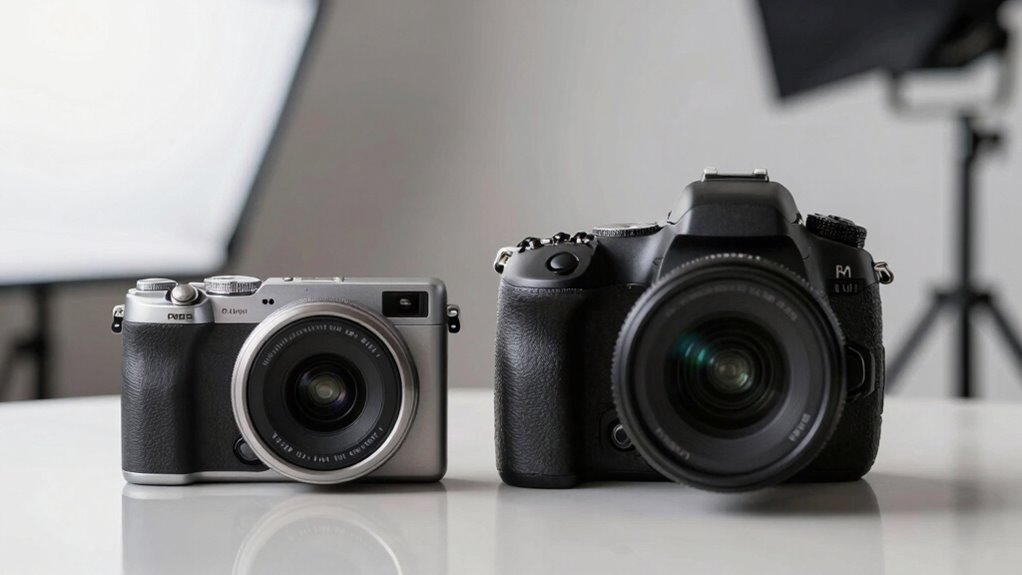
Choosing between mirrorless and DSLR cameras can considerably impact your photography experience, especially as technology continues to evolve. Both camera types have unique advantages, but understanding their differences helps you decide which suits your style best. One of the most immediate considerations is camera ergonomics. DSLRs often feature larger bodies with substantial grips, making them comfortable to hold for extended shoots. Their physical design allows you to easily access buttons and dials, giving you quick control over settings without interrupting your workflow. Mirrorless cameras, on the other hand, tend to be more compact and lightweight, which is beneficial if you prefer traveling light or need a camera that’s less cumbersome. However, some users find that smaller bodies can compromise grip comfort, especially during long sessions. As you evaluate ergonomics, think about how the size and weight of each camera will fit into your shooting style and whether the physical feel encourages or hinders your creativity and spontaneity. Additionally, consider how your choice may influence your overall shooting experience, and comfort during extended use. Reflecting on user preferences and how each type aligns with your shooting habits can further guide your decision. A deeper understanding of technology differences, such as sensor size and autofocus systems, can also influence your choice, especially considering how photobombing and unexpected moments can add humor and unpredictability to shoots.
As an affiliate, we earn on qualifying purchases.
Frequently Asked Questions
Which Camera Type Has Better Battery Life?
DSLR cameras generally have better battery longevity because they consume less power compared to mirrorless cameras. Mirrorless models rely heavily on electronic viewfinders and live view screens, which increase power consumption. If you need longer battery life for extended shoots, a DSLR is the smarter choice. However, modern mirrorless cameras are improving their power efficiency, but overall, DSLRs still lead in battery longevity due to lower power consumption.
Are Mirrorless Cameras More Durable Than DSLRS?
In 1984, nobody imagined mirrorless cameras would be more durable than DSLRs today. Generally, DSLRs tend to be more rugged due to their larger, stronger bodies and weather-sealed designs. Mirrorless cameras, being lighter and more compact, prioritize weight and portability but might lack the same durability, especially if exposed to harsh conditions. So, if durability is your main concern, DSLRs often hold the edge over mirrorless models.
How Do Autofocus Speeds Compare in Low Light?
In low light, mirrorless cameras generally offer faster autofocus speeds compared to DSLRs, thanks to their advanced on-sensor autofocus systems. You’ll notice better autofocus accuracy and improved low light performance, especially with newer models that employ sophisticated algorithms. While some DSLRs still perform well, mirrorless cameras tend to excel in dim conditions by providing quicker, more reliable focus, making them ideal for night photography or indoor shoots.
Can Mirrorless Cameras Use Existing DSLR Lenses?
Mirrorless cameras can often use existing DSLR lenses, but you’ll need the right adapter. Lens compatibility varies by camera brand and model, so check if your lens requires an adapter. Some adapters maintain autofocus and image stabilization, while others might limit functionality. Before buying, verify compatibility to guarantee your lenses work smoothly, giving you flexibility without needing to purchase new glass.
Which Camera Is Better for Video Recording?
For video recording, mirrorless cameras often outperform DSLRs thanks to better lens compatibility and advanced video features. They typically offer superior video stabilization, making your footage smoother and more professional. Plus, their compact design allows easier handling during shoots. While some DSLRs excel in stills, if you prioritize video quality, a mirrorless camera is usually the better choice, especially with modern autofocus and in-body stabilization options.
As an affiliate, we earn on qualifying purchases.
Conclusion
In choosing between mirrorless and DSLR cameras, consider your style and needs. Did you know that mirrorless cameras now make up over 50% of the global camera market? Their compact size and advanced features make them perfect for modern photography. Whether you prefer the traditional feel of a DSLR or the sleek versatility of mirrorless, your choice should enhance your creativity. Ultimately, both types can deliver stunning results—it’s all about what suits your shooting style best.
As an affiliate, we earn on qualifying purchases.
As an affiliate, we earn on qualifying purchases.
NFL season / tailgating Picks
team gear
As an affiliate, we earn on qualifying purchases.