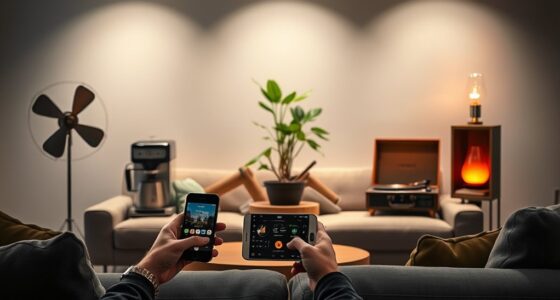
Deciding if a smart home is right for you depends on your priorities. It offers convenience, improved security, and energy savings, but also comes with security risks, privacy concerns, and setup challenges. If you’re tech-savvy or want more control over your home, it could be a great fit. However, if managing devices feels stressful or you’re worried about security, you might want to think carefully. Keep exploring to see if smart home tech matches your lifestyle.
Key Takeaways
- Smart homes offer increased convenience, security, and energy efficiency but require initial setup and ongoing management.
- Security risks exist due to device vulnerabilities; using strong passwords and reputable brands mitigates threats.
- They can reduce energy costs through automation and real-time monitoring, supporting sustainable living.
- Dependence on stable internet and potential privacy concerns should be considered before adoption.
- Starting small helps evaluate compatibility and ease of use, ensuring the system aligns with personal priorities.

Smart home technology has become increasingly popular as more homeowners seek convenience, security, and energy efficiency. You might be drawn to the idea of controlling your lighting, thermostats, and security cameras with a few taps on your phone. However, it’s important to consider the security concerns that come with connecting so many devices to the internet. While smart systems can enhance your home security by allowing remote monitoring and instant alerts, they also open up potential vulnerabilities. Hackers could target weak passwords or exploit security flaws in your devices, putting your personal information and home safety at risk. To mitigate this, it’s essential to choose reputable brands, regularly update your firmware, and use strong, unique passwords. Understanding these security concerns helps you weigh the benefits of smart home tech against the potential risks.
Energy efficiency is another major advantage that appeals to many homeowners. Smart thermostats, for example, learn your schedule and adjust the temperature accordingly, reducing unnecessary energy consumption. You can set your lights to turn off automatically when you leave a room or dim during the evening, saving on electricity bills. These features not only help you cut costs but also contribute to a more sustainable lifestyle. With real-time energy monitoring, you get detailed insights into your consumption patterns, enabling you to make smarter decisions about energy use. If you’re environmentally conscious or looking to reduce your utility bills, smart home technology offers practical solutions to improve energy efficiency. Plus, automation can make your home more responsive to your needs, ensuring you’re never wasting power when it’s not needed. Additionally, local automation and routines allow you to customize how your devices respond to various scenarios, further optimizing efficiency and convenience.
Of course, there are considerations to keep in mind. The initial setup can be complex if you’re not tech-savvy, and integrating multiple devices may require a learning curve. Additionally, some systems depend on a stable internet connection, meaning outages could disrupt your smart home’s functionality. Cost is also a factor—smart devices can be pricey upfront, although many homeowners find the energy savings and convenience justify the investment over time. Privacy is another concern; the more data your devices collect about your habits, the more you need to trust your provider’s security measures.
Ultimately, whether a smart home is right for you depends on your priorities. If you value convenience, security, and energy savings, and are willing to manage potential security concerns, smart home technology can considerably enhance your living experience. But if you’re worried about privacy or the complexity of managing multiple devices, it might be worth carefully researching and starting small before making a full commitment.

AOQEE 2K Cameras for Home Security-Outdoor/Indoor Camera for Dog/Cat/Pet/Nanny/Baby/Elderly, Color Night Vision, White Light, Siren, 24/7 SD Recordings, Works with Alexa, Plug in (C1-White-2pack-2.4G)
【2K Resolution & Color Night Vision】This 2K Ultra HD security camera is designed for indoors and outdoors. You…
As an affiliate, we earn on qualifying purchases.
As an affiliate, we earn on qualifying purchases.
Frequently Asked Questions
How Secure Are Smart Home Devices From Hacking?
Smart home devices can be vulnerable to hacking, so cybersecurity risks are real if you don’t take proper precautions. You might face privacy concerns if hackers gain access to your personal data or control your devices. To stay secure, use strong, unique passwords, enable two-factor authentication, and keep your firmware updated. Being proactive helps protect your smart home from cyber threats and maintains your privacy.
Can Smart Home Technology Reduce My Energy Bills Significantly?
Yes, smart home technology can considerably reduce your energy bills through smarter energy savings and enhanced cost effectiveness. By automating lighting, adjusting thermostats, and monitoring energy use in real time, you optimize your consumption, cut waste, and lower costs. You control when devices operate, conserve resources, and maximize efficiency. Ultimately, smart systems empower you to save money, be more sustainable, and enjoy a more comfortable, cost-effective home environment.
What Is the Average Cost of Setting up a Smart Home?
The average cost of setting up a smart home ranges from $1,000 to $10,000, depending on your budget considerations and desired features. Installation costs vary based on the complexity of the system and whether you do it yourself or hire professionals. Simple setups with smart lighting and thermostats are more affordable, while all-encompassing systems with security and automation can be pricier. Planning your budget helps you choose the right devices without overspending.
Are Smart Homes Suitable for All Age Groups?
Imagine a cozy, smart-lit living room where all ages feel at home. Smart homes can suit all age groups through intergenerational adoption, making life easier for everyone. However, accessibility concerns might arise for seniors or those with disabilities if features aren’t user-friendly. You’ll need to weigh how well the system adapts to different tech skills, ensuring it’s inclusive and safe for every family member.
How Easy Is It to Upgrade or Replace Smart Home Systems Later?
Upgrading or replacing your smart home systems is generally straightforward, especially if you choose compatible devices from the start. Future upgrades tend to be seamless, but you might face some replacement challenges if your systems use proprietary technology or outdated standards. To make future changes easier, pick flexible, widely supported devices now, and keep software up-to-date. This way, you can enjoy smooth upgrades without major hassle later on.

ecobee Smart Thermostat Essential – Energy Star Certified programmable Wi-Fi Thermostat – Works with Siri, Alexa, and Google Assistant
Save up to 23% every year on heating and cooling costs, adjusts to your set schedule to save…
As an affiliate, we earn on qualifying purchases.
As an affiliate, we earn on qualifying purchases.
Conclusion
Considering a smart home? Think about Sarah, who installed a smart thermostat and security system. She enjoys lower energy bills and peace of mind, but also faces occasional tech glitches. If you’re tech-savvy and want convenience, a smart home could be perfect. However, if you value simplicity or worry about privacy, it might be less ideal. Weigh these pros and cons carefully to decide if a smart home fits your lifestyle and priorities.

Philips Hue Essential Smart LED A19 Bulb, White and Color Ambiance, E26 Base, 8.8W, 2200K-6500K, 800 Lumens, Dimmable, Works with Alexa, Google, and Apple Home, 4-Pack
SWITCH TO SMART LIGHTING: Enjoy smart lighting instantly: screw in your bulb, download the Hue app, and control…
As an affiliate, we earn on qualifying purchases.
As an affiliate, we earn on qualifying purchases.

Hubitat Elevation C-8 Pro Smart Home Automation Hub – Latest Platform Updates – Matter 1.5, Z-Wave 800 LR, Zigbee 3.0 & Bluetooth – Local Control (No Cloud) – Alexa, Apple HomeKit & Google Home
POWERFUL SMART HOME PERFORMANCE – EVEN WITHOUT INTERNET Hubitat C-8 Pro runs automations inside your home instead of…
As an affiliate, we earn on qualifying purchases.
As an affiliate, we earn on qualifying purchases.