

To set up parental controls on all your smart devices, start by exploring each device’s settings, such as screen time, restrictions, or safety features. Use built-in options like Windows Family Safety, macOS Screen Time, or device-specific apps to block inappropriate content and limit usage. Enable filters on streaming services and apps your child uses. Regularly review and adjust these controls as needed. Continuing with this process will help you create a safer digital environment for your child.

Get the little things that make your day delivered free with Prime
- Fast, free delivery on millions of items
- Prime Video, Amazon Music and more included
- Member-only deals all year
Key Takeaways
- Access parental control settings in each device’s system menu, such as device settings, digital wellbeing, or screen time options.
- Enable content filtering and restrict app downloads or usage based on age ratings and categories.
- Set screen time limits and schedule device usage to promote balanced digital habits.
- Use built-in parental controls on streaming platforms and apps to block inappropriate content.
- Regularly review and update controls, and maintain open communication about online safety with your child.
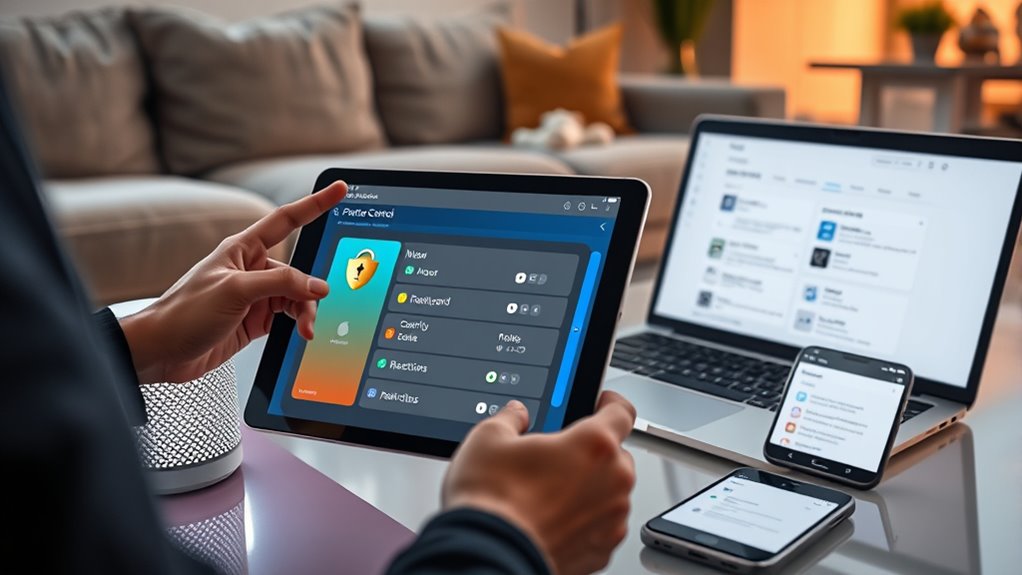
In today’s digital age, setting up parental controls on smart devices is vital to help you manage your child’s online activity and guarantee their safety. One of the most effective ways to do this is by implementing screen time limits, which ensure your child isn’t spending too much time on their devices and help promote healthier habits. You can set daily or weekly limits, so they get a clear idea of how much time they have left, and you can adjust these settings as needed. This feature encourages moderation without constantly hovering, giving your child a sense of responsibility while protecting them from excessive screen exposure. Alongside screen time limits, content filtering plays an indispensable role in safeguarding your child from inappropriate material. Content filtering allows you to restrict access to certain websites, apps, or types of media that aren’t suitable for their age. Many devices and platforms have built-in parental controls that let you block explicit content, hide adult websites, or restrict access to specific categories like social media or gaming. This way, you can curate a safer online environment tailored to your child’s maturity level. Additionally, understanding the importance of digital literacy can empower your child to make safer choices online as they grow.
To set up these controls effectively, start by exploring the parental control options available on each device your child uses. For smartphones and tablets, go into the settings menu and look for parental controls or digital wellbeing features. For computers, you can use built-in settings like Windows Family Safety or macOS Screen Time to establish rules. Many streaming services and apps also have parental controls, allowing you to restrict content directly within the app. When configuring content filtering, consider blocking not only explicit websites but also apps that your child shouldn’t access at their age. Remember, no filter is foolproof, so combining technical controls with ongoing conversations about online safety remains vital.
Make sure to review these settings regularly, adjusting them as your child’s needs evolve. Keep communication open, explaining why certain restrictions are in place, which helps them understand the importance of responsible internet use. In addition, educate your child about online safety and encourage them to come to you if they encounter anything uncomfortable. Setting up parental controls isn’t just about restricting access but about guiding your child toward healthy, safe digital habits. By proactively managing screen time and filtering content, you create a safer digital environment where your child can learn, explore, and grow confidently.
Products Worth Considering

Dyson Cyclone V10 Origin Cordless Vacuum

iRobot Roomba 105 Vac Robot Vacuum

eufy E25 Robot Vacuum and Mop Combo with HydroJet Roller Mop
As an affiliate, we earn on qualifying purchases.
Frequently Asked Questions
Can Parental Controls Be Bypassed by Tech-Savvy Children?
Tech-savvy children can sometimes bypass parental controls if you don’t set them up carefully. They might use VPNs, reset devices, or find loopholes to access restricted content. To prevent this, you need to update controls regularly, use strong passwords, and enable device restrictions at a deeper system level. Staying proactive and monitoring activity helps minimize the risk of parental control bypass and keeps your kids safer online.
How Do Parental Controls Affect Device Performance?
Parental controls can impact device performance subtly, but usually, the effect is minimal. When you set device restrictions, your smart device might experience minor delays or slower responses, especially if the controls run in the background. However, these performance impacts are generally negligible and don’t substantially affect your device’s overall speed or functionality. Properly configured parental controls help keep your kids safe without compromising your device’s performance.
Are Parental Controls Available on All Smart Device Brands?
You might be surprised to find parental controls aren’t available on every smart device brand. Device compatibility varies, and some products have feature limitations that restrict parental control options. Major brands like Apple, Samsung, and Google offer built-in controls, but lesser-known brands may lack this feature entirely. Always check each device’s specifications before purchasing if parental controls are essential for your family’s safety and management needs.
How Often Should I Update or Review Parental Control Settings?
You should review and update your parental control settings at least once a month to guarantee they’re effective. Regularly check for software updates, as they often include security improvements and new features. Consider privacy considerations when updating controls, making sure your child’s data stays protected. Staying proactive helps you adapt to your child’s evolving needs and tech use, keeping their online environment safe and appropriate.
Can Parental Controls Be Customized for Different Age Groups?
You can customize parental controls for different age groups because “a chain is only as strong as its weakest link.” By using content customization and age-specific filtering, you guarantee each child gets appropriate access. Set restrictions based on age, block mature content, and filter websites to match your child’s maturity level. This tailored approach helps promote safe tech use while respecting individual needs and development stages.
Conclusion
By setting up parental controls on all your smart devices, you create a safer online environment for your kids. Did you know that children spend an average of 4 hours daily on screens? Taking these steps helps you manage their digital world and protect them from inappropriate content. Remember, proactive monitoring gives you peace of mind and helps foster healthy tech habits. Start today and guarantee your family’s online safety is always a priority.