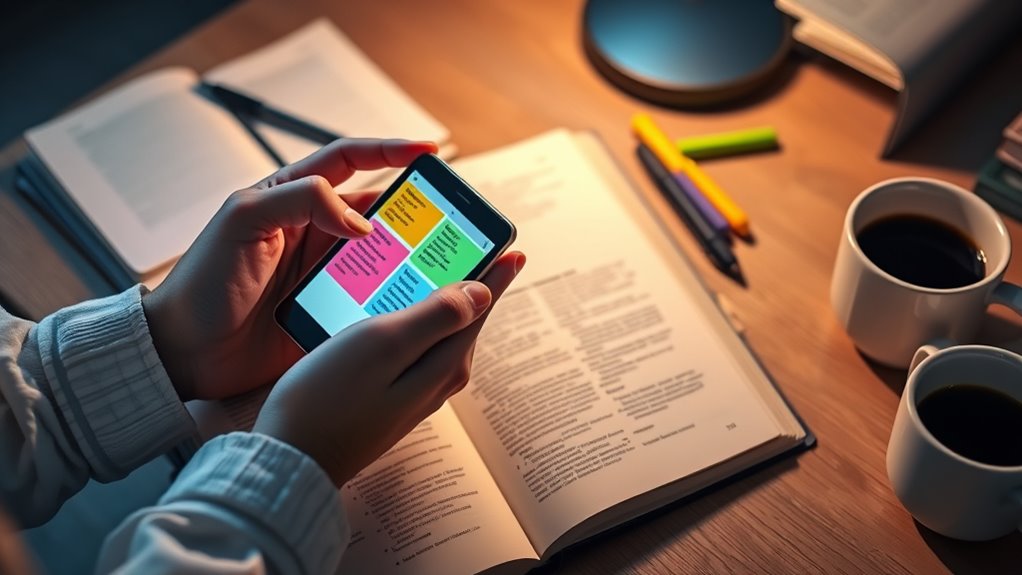

To boost your exam score with your phone, use apps like Anki or Quizlet to create flashcards and review key concepts regularly, benefiting from spaced repetition. Listen to educational podcasts or watch videos on platforms like Khan Academy or YouTube for engaging, flexible learning. Organize your notes with productivity apps like Evernote or Notion, set study goals with habit-tracking tools, and stay motivated by tracking your progress. Keep exploring these strategies to make your study time more effective.
Key Takeaways
- Utilize flashcard apps like Anki or Quizlet for efficient spaced repetition and long-term memory retention.
- Access educational podcasts and videos to clarify difficult topics and reinforce learning during downtime.
- Organize notes and set study reminders with productivity apps like Evernote, Notion, or OneNote to maintain consistent review.
- Track study goals and routines using Habitica or Todoist to stay motivated and develop effective habits.
- Incorporate gamified learning and digital resources to make studying engaging, personalized, and aligned with your learning style.

In today’s digital age, your phone isn’t just a distraction—it can be a powerful tool to improve your exam scores. Instead of viewing it as a constant source of distraction, you can leverage your device to enhance your study habits and retention. The key is to use the right apps and strategies to make your phone work for you, not against you.
First, consider installing flashcard apps like Anki or Quizlet. These tools let you create custom flashcards and review them on the go. Repetition is essential for memory retention, and these apps make it easy to study anywhere, whether you’re commuting or waiting in line. They often feature spaced repetition algorithms, which optimize review sessions and help embed information into your long-term memory. With just a few taps, you can reinforce key concepts and formulas, making your study sessions more efficient.
Use flashcard apps like Anki or Quizlet to reinforce key concepts anytime, anywhere.
Another effective way to use your phone is through educational podcasts and videos. Platforms like YouTube, Khan Academy, and Coursera offer a wealth of free content that can clarify difficult topics or provide alternative explanations. Instead of passively scrolling through social media, you can listen to a math lecture, review historical events, or learn language vocabulary during your downtime. These resources make studying more engaging and allow you to diversify your learning methods, catering to different learning styles.
You should also take advantage of productivity and note-taking apps like Evernote, Notion, or Microsoft OneNote. These tools help you organize your notes, create study schedules, and set reminders for upcoming exams. Keeping your study material neat and accessible on your phone means you’re more likely to review regularly. You can also use voice-to-text features to quickly jot down ideas or summarize lessons without interrupting your flow. This organization boosts your ability to review material efficiently and reduces last-minute cramming. Additionally, exploring study techniques can further improve your efficiency by providing proven methods to retain information better. Understanding the role of technology in learning can also help you tailor your study strategies to take full advantage of digital tools. Moreover, incorporating digital learning strategies can enhance your retention and engagement, making your study time more effective.
Furthermore, many apps help you track your progress and set goal-oriented routines. Apps like Habitica or Todoist let you create daily or weekly study goals, helping you stay accountable. When you see your progress visualized, it motivates you to keep going and develop consistent study habits. These apps turn studying into a manageable, rewarding process rather than a formidable chore.
Additionally, understanding the history of pinball machines can inspire creative ways to approach your studies, such as gamifying your learning process to stay motivated and engaged.

Anki Perfect Master Guide: Master the Ultimate Flashcard App (Japanese Edition)
As an affiliate, we earn on qualifying purchases.
As an affiliate, we earn on qualifying purchases.
Frequently Asked Questions
How Can I Prevent My Phone From Distracting Me During Study Sessions?
You can prevent your phone from distracting you during study sessions by turning off notifications, activating “Do Not Disturb” mode, and placing your phone out of reach. Use apps that block distracting sites or limit your screen time. Set specific times to check your phone, and keep it in silent mode. These steps help you stay focused, ensuring you make the most of your study time without interruptions.
What Are the Best Apps for Tracking and Managing Study Time?
You should try apps like Toggl, Clockify, or Forest to effectively track and manage your study time. These apps help you set timers, monitor your productivity, and stay focused by blocking distracting sites or encouraging breaks. By using them consistently, you’ll gain better insight into how you spend your study hours, identify distractions, and optimize your schedule, making your study sessions more efficient and productive.
How Can I Use My Phone to Improve Memory Retention Effectively?
Imagine your phone as a mini memory palace. Use spaced repetition apps like Anki or Quizlet to review info regularly. Record yourself explaining concepts and listen to these recordings during commutes or breaks. Leverage flashcard apps for quick, daily practice. These strategies make your phone a powerful tool for memory retention, turning idle moments into effective study sessions that stick with you long after the screen goes dark.
Are There Specific Phone Settings That Enhance Focus While Studying?
You can enhance your focus by enabling Do Not Disturb mode to block notifications and calls. Turn off app notifications for social media and messaging apps to minimize distractions. Use focus or concentration modes if available on your phone, and consider setting screen time limits for distracting apps. Adjust your display to a softer, darker theme to reduce eye strain, helping you stay engaged longer during study sessions.
How Do I Balance Phone Use Between Study and Leisure Without Losing Productivity?
You should set clear boundaries for phone use by scheduling specific times for study and leisure. Use apps to block distracting sites during study sessions, and turn on do-not-disturb mode to minimize interruptions. When it’s time to relax, allow yourself some leisure time without guilt. Balancing your phone use helps maintain focus, boosts productivity, and guarantees you enjoy your free moments without sacrificing your academic goals.
Quizlet digital flashcards
As an affiliate, we earn on qualifying purchases.
As an affiliate, we earn on qualifying purchases.
Conclusion
Just like Sherlock Holmes uses every clue to crack the case, you can harness your phone to uncover your full potential. When you turn your device into a study partner, you’re not just scrolling aimlessly—you’re gathering valuable knowledge. Remember, the key to success isn’t avoiding technology but mastering it. So, go ahead—use your phone wisely, and watch your exam scores soar, transforming your study sessions into your own personal detective story of achievement.

The student voice on AI and assessment: Student insights on re-imagining educational evaluation in the Age of Artificial Intelligence
As an affiliate, we earn on qualifying purchases.
As an affiliate, we earn on qualifying purchases.

Ophaya Sync Smart Pen and A5 Notebook(5-Pack) for Note Taking| Gifts for Adults Women Men Coworkers Teachers Students Guest Friends | Sync Notes to Phone/Tablet Instantly/Convert to Text
[Real-Time Digital Capture & Sync] Write naturally on paper while the free Ophaya Pro+ app (iOS/Android) instantly digitizes…
As an affiliate, we earn on qualifying purchases.
As an affiliate, we earn on qualifying purchases.