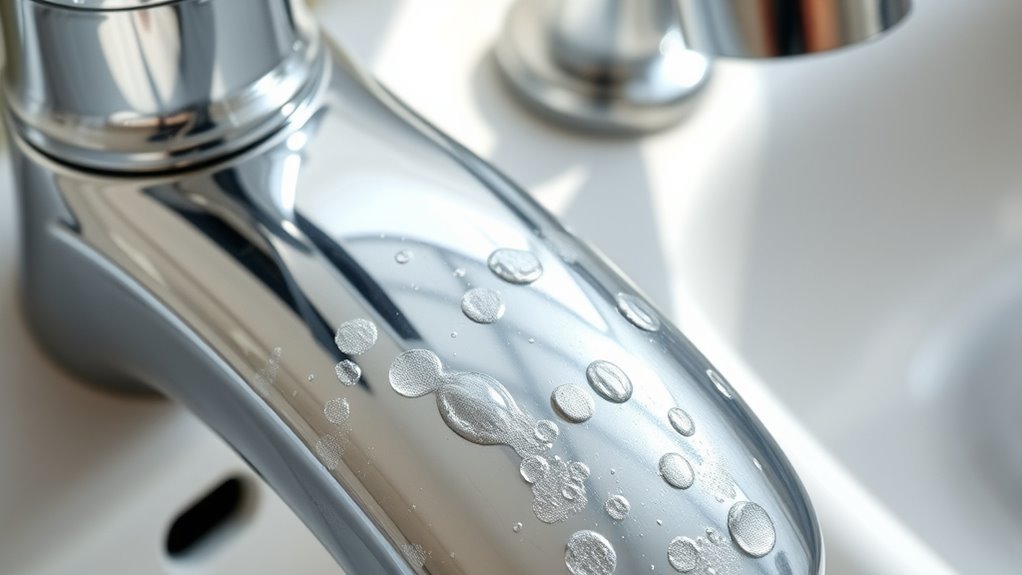

To remove hard water stains from fixtures, start by soaking a cloth in white vinegar and wrapping it around the affected area for 30 minutes to an hour. For tougher stains, create a paste with vinegar and baking soda and apply it for about 15 minutes before scrubbing gently with a soft brush. Rubbing lemon halves directly on the fixtures also helps break down mineral deposits. Keep staining at bay and learn more about eco-friendly solutions by continuing on.
Key Takeaways
- Soak a cloth in white vinegar, wrap it around fixtures, and leave for 30 minutes to loosen mineral deposits.
- Create a paste with vinegar and baking soda, apply to stains, and wait 15 minutes before scrubbing.
- Rub lemon halves directly onto fixtures or use soaked cloths to break down calcium and magnesium buildup.
- Gently scrub fixtures with a soft-bristle brush or sponge after treatment, then rinse thoroughly with water.
- To prevent future stains, install a water softener and regularly wipe fixtures with natural remedies.
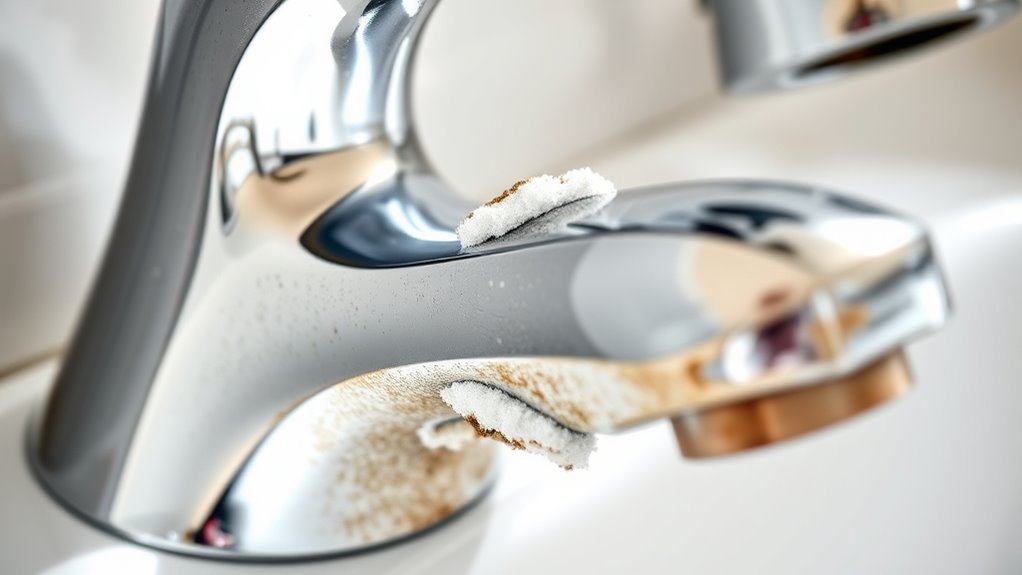
Hard water stains can be stubborn and unsightly, but with the right approach, you can restore your fixtures to their original shine. One effective method involves water softening, which reduces mineral buildup that causes these stains. Installing a water softener system can be a long-term solution, especially if you live in an area with hard water. In the meantime, you can use natural remedies to tackle stains without harsh chemicals. These options are eco-friendly, affordable, and often just as effective.
Use natural remedies like vinegar and lemon to fight hard water stains effectively.
A popular natural remedy involves using vinegar, which is excellent at dissolving mineral deposits. To use it, soak a cloth or paper towels in white vinegar and wrap it around the stained area. Let it sit for 30 minutes to an hour to loosen the mineral buildup. Afterward, scrub gently with a soft-bristle brush or sponge, then rinse thoroughly with water. For stubborn stains, you can create a paste by mixing equal parts of vinegar and baking soda. Apply the paste directly to the stain, let it sit for about 15 minutes, then scrub and rinse. This combination not only helps remove the stains but also neutralizes odors and prevents future buildup.
Lemon juice is another natural remedy that works well, thanks to its citric acid content. Cut a lemon in half and rub it directly onto the stained fixture, or soak a cloth in lemon juice and apply it to the area. Let it sit for 10-15 minutes before scrubbing and rinsing. The acidity in lemon helps break down calcium and magnesium deposits, leaving your fixtures shiny and free of stains. For an extra boost, sprinkle some salt onto the lemon half before rubbing—it acts as a gentle abrasive that aids in cleaning. Additionally, choosing natural ingredients like vinegar and lemon can help maintain your fixtures without the use of harsh chemicals.
Prevention is key to maintaining fixtures free of hard water stains. Besides installing a water softener, you should regularly wipe down fixtures after use to prevent mineral buildup from settling. Using natural remedies as part of your routine cleaning can keep stains at bay and prolong the shine of your fixtures. Over time, these methods can markedly reduce the need for harsh chemical cleaners, saving you money and protecting the environment. Remember, patience and consistency are essential; with regular care, you’ll notice a marked improvement in the appearance of your fixtures and a reduction in hard water stains.
Top picks for "remove hard water"
Open Amazon search results for this keyword.
As an affiliate, we earn on qualifying purchases.
Frequently Asked Questions
Can Hard Water Stains Cause Long-Term Fixture Damage?
Yes, hard water stains can cause long-term fixture damage. Mineral buildup from hard water can lead to fixture corrosion over time, weakening the material and causing discoloration. If you ignore these stains, they may trap moisture and promote rust, ultimately damaging your fixtures. Regular cleaning helps prevent this damage by removing mineral deposits early, preserving the integrity and appearance of your fixtures for years to come.
Are There Eco-Friendly Methods to Remove Hard Water Stains?
You might think eco-friendly solutions can’t tackle tough hard water stains, but natural cleaning methods actually work well. Vinegar and baking soda are powerful, non-toxic options that break down mineral deposits. Using these natural cleaning agents not only preserves your fixtures but also keeps your home safe and environmentally friendly. So, yes, eco-friendly methods effectively remove hard water stains without harmful chemicals, making your cleaning routine safer for you and the planet.
How Often Should I Clean Fixtures to Prevent Stains?
You should clean your fixtures at least once a week to prevent hard water stains. Maintaining a regular cleaning frequency helps you catch mineral buildup early, making stain prevention easier. Use eco-friendly cleaning solutions like vinegar or baking soda to keep fixtures spotless without harsh chemicals. Consistent cleaning not only prevents stains but also extends the lifespan of your fixtures, keeping them shiny and new with minimal effort.
Do Commercial Cleaning Products Harm Fixture Finishes?
Commercial cleaning products with harsh chemical cleaners can harm fixture finishes if used improperly or too frequently. You might notice discoloration or corrosion, which affects fixture durability over time. To protect your fixtures, always follow the manufacturer’s instructions, opt for pH-neutral cleaners when possible, and avoid abrasive or overly strong chemical cleaners. Regular, gentle cleaning helps maintain the finish and prolongs fixture lifespan without risking damage.
Can Hard Water Stains Be Removed Without Harsh Chemicals?
Yes, you can remove hard water stains without harsh chemicals by using natural remedies and DIY solutions. Try mixing equal parts white vinegar and water, then spray or soak the stained area. Let it sit for a few minutes, scrub gently with a soft brush or cloth, and rinse thoroughly. This eco-friendly approach effectively dissolves mineral deposits without damaging your fixtures or exposing you to harsh chemicals.
Conclusion
Now that you know how to tackle those stubborn hard water stains, you’ll keep your fixtures looking shiny and new. Regular cleaning can reduce mineral buildup by up to 80%, saving you time and effort in the long run. Remember, using simple household ingredients like vinegar and baking soda works wonders. Staying proactive not only enhances your fixtures’ appearance but also extends their lifespan. Keep at it, and enjoy sparkling results every time!