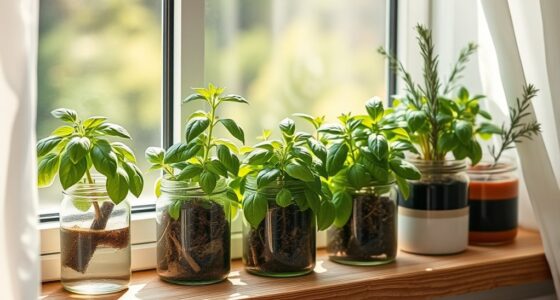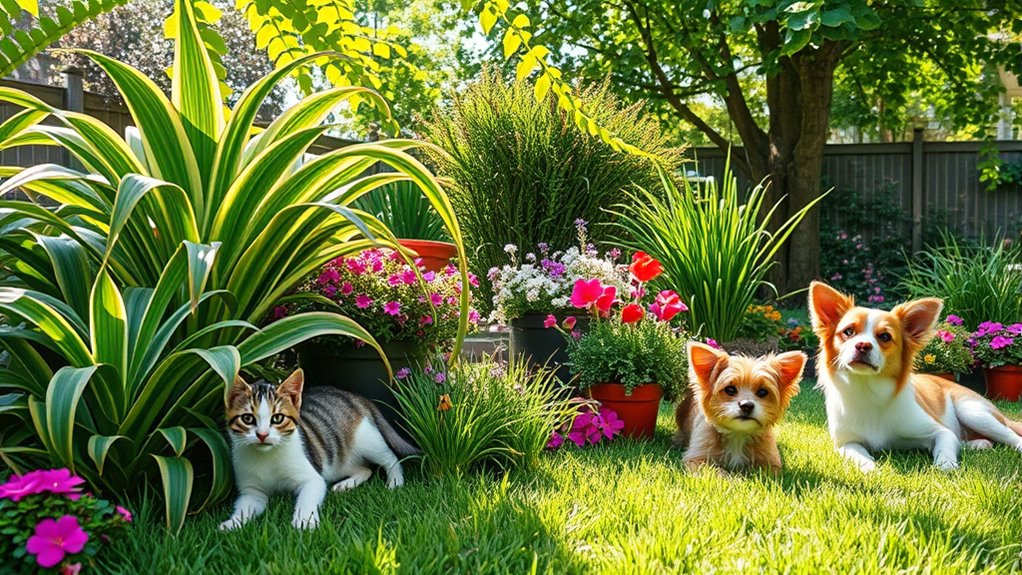

To create a pet-friendly garden, choose non-toxic plants like basil, rosemary, thyme, or creeping thyme, and avoid dangerous ones like lilies, azaleas, or sago palms. Implement safe landscaping by using natural barriers and keeping harmful debris away from pets. Regularly inspect your garden for hazards and steer clear of chemical pesticides or fertilizers. Creating a safe, healthy space benefits your pets and garden alike—discover more ways to protect your furry friends below.

Get the little things that make your day delivered free with Prime
- Fast, free delivery on millions of items
- Prime Video, Amazon Music and more included
- Member-only deals all year
Key Takeaways
- Select non-toxic, pet-safe plants like basil, rosemary, thyme, and certain ground covers for your garden.
- Avoid hazardous plants such as lilies, azaleas, and sago palms to prevent poisoning risks.
- Regularly inspect garden debris and fallen leaves for potential choking hazards or toxins.
- Use natural pest control methods and organic fertilizers to ensure a safe environment for pets.
- Design designated pet zones with shaded areas, water stations, and soft turf to promote safety and comfort.

Have you ever wondered how to create a garden that’s safe and enjoyable for your pets? If you’re a pet owner, you know how much your cats and dogs love exploring outside. The last thing you want is for your furry friends to accidentally ingest something harmful. That’s why understanding toxic plant identification is essential. By recognizing which plants are dangerous, you can prevent potential health issues. For example, plants like lilies, azaleas, and sago palms are highly toxic to cats and dogs. Learning to identify these hazards means you can keep them out of reach or avoid planting them altogether. It’s a simple step that makes a big difference in your pet’s safety.
Creating a pet-safe garden starts with recognizing and avoiding toxic plants like lilies, azaleas, and sago palms.
When planning your garden, safe landscaping tips come into play. Start by choosing pet-friendly plants that are non-toxic and safe for animals. Many herbs, such as basil, rosemary, and thyme, are not only safe but also add flavor to your meals. Consider adding hardy ground covers like clover or creeping thyme, which are safe for pets and create a lush, inviting space. Incorporate sturdy plants that can withstand curious paws and playful bites, reducing the risk of damage and ingestion. Also, think about creating designated play zones separated from any potentially hazardous areas. Using natural barriers like mulch or fencing can help contain your pets and keep them away from plants you’d rather keep safe.
Another useful tip is to keep your garden well-maintained. Regularly check for any fallen leaves, berries, or flowers that your pets might be tempted to chew on. Clean up any debris that could pose a choking hazard or contain toxins. If you’re unsure about a particular plant, consult reputable resources or speak with a local horticulturist. This proactive approach guarantees you’re always aware of what’s growing in your yard and whether it’s pet-friendly. Additionally, understanding toxic plant identification can help you make informed choices about your garden’s layout and plant selection.
Finally, consider adding pet-friendly features like shaded areas, water stations, and soft turf where your pets can relax safely. Avoid using chemical pesticides or fertilizers that could be harmful if ingested. Instead, opt for natural pest control methods and organic fertilizers. This not only benefits your pets but also promotes a healthier garden environment overall.
As an affiliate, we earn on qualifying purchases.
Frequently Asked Questions
Are There Any Non-Toxic Plants for Both Cats and Dogs?
Yes, there are many non-toxic plants for both cats and dogs that guarantee pet safety. You should consider plants like spider plants, Boston ferns, and areca palms, which are known for their low plant toxicity. These options help you create a pet-friendly garden while avoiding any risks associated with plant toxicity. Always double-check specific plant varieties and consult your veterinarian to keep your pets safe and healthy.
How Can I Prevent My Pets From Chewing on Plants?
To prevent your pets from chewing on plants, start with consistent pet training to redirect their attention. Use gentle but firm commands to discourage nibbling. You can also employ plant deterrents, such as applying bitter sprays or placing decorative barriers around your plants. Regularly supervise your pets and provide engaging toys to keep them occupied. Combining training with deterrents effectively reduces the likelihood of your pets damaging your pet-friendly garden.
Which Plants Are Most Resistant to Pet Damage?
You’ll find that plants with high resilience stand up best to pet damage in your pet proof gardening efforts. Hardy succulents like aloe vera and jade, along with sturdy herbs such as rosemary, often resist being chewed or knocked over. Investigating plant resilience reveals these options are naturally tough, making them ideal for a garden where pets roam freely. Prioritizing resilient plants helps protect your garden and keeps your pets safe from harmful ingestion.
Are There Any Toxic Plants That Also Repel Pests?
Some toxic plants also act as natural pest repellents, making them appealing for gardens. For example, citronella and lemon balm are pest repellent flora that may deter insects, but they can be toxic to pets if ingested. Always consider pet plant toxicity before introducing these plants, and keep a close eye on your pets. Using these plants thoughtfully helps protect your garden and keeps your furry friends safe.
How Do I Identify if My Pet Has Ingested a Toxic Plant?
If you notice your pet acting oddly—like drooling, vomiting, or difficulty breathing—they might have encountered a sneaky, toxic plant. Recognize signs of plant poisoning early to guarantee prompt emergency pet plant care. Keep a close eye on unusual behaviors, and if you suspect ingestion, contact your veterinarian immediately. Acting swiftly can make all the difference in keeping your furry friend safe and healthy.
As an affiliate, we earn on qualifying purchases.
Conclusion
So, now that you know which plants are safe for your furry friends, go ahead and turn your garden into a pet paradise—minus the potential poisonings. Because nothing says “good host” like a yard where cats can lounge and dogs can dig without risking their lives. Just remember, safe plants are the new black, so ditch the toxic ones and let your pets frolic freely. Happy gardening—your pets will thank you, even if you don’t!
pet-friendly ground cover plants
As an affiliate, we earn on qualifying purchases.
As an affiliate, we earn on qualifying purchases.
As an affiliate, we earn on qualifying purchases.
NFL season / tailgating Picks
team gear
As an affiliate, we earn on qualifying purchases.