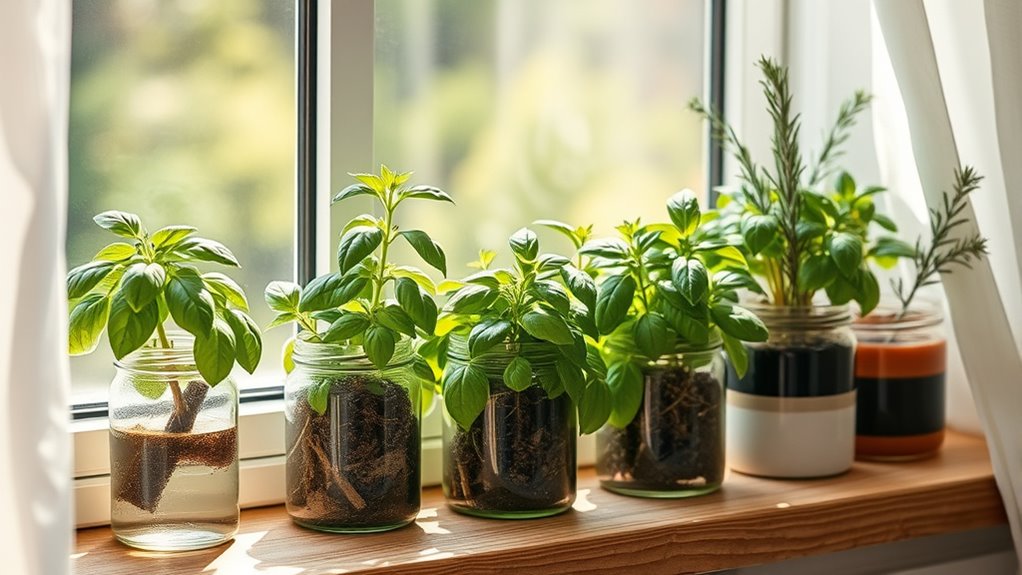

Growing herbs on your windowsill is a simple, rewarding way to have fresh ingredients all year. Pick herbs suited for your light conditions, like basil for sunny spots or mint for indirect light. Use pots with drainage and quality potting mix, then place them where they get 4-6 hours of sunlight daily. Keep an eye on watering, prune regularly, and watch for pests. Want to turn your windowsill into a lush herb garden? Keep exploring to learn how!
Key Takeaways
- Select herbs suited to your light conditions, such as basil for direct sunlight and mint for indirect light.
- Use pots with drainage holes and fill them with high-quality potting mix for healthy root growth.
- Ensure 4-6 hours of daily sunlight, or supplement with grow lights if natural light is limited.
- Water herbs consistently, checking soil moisture and avoiding overwatering to prevent root rot.
- Regularly prune, fertilize, and monitor for pests to promote bushier growth and a thriving indoor herb garden.
Choosing the Right Herbs for Your Space
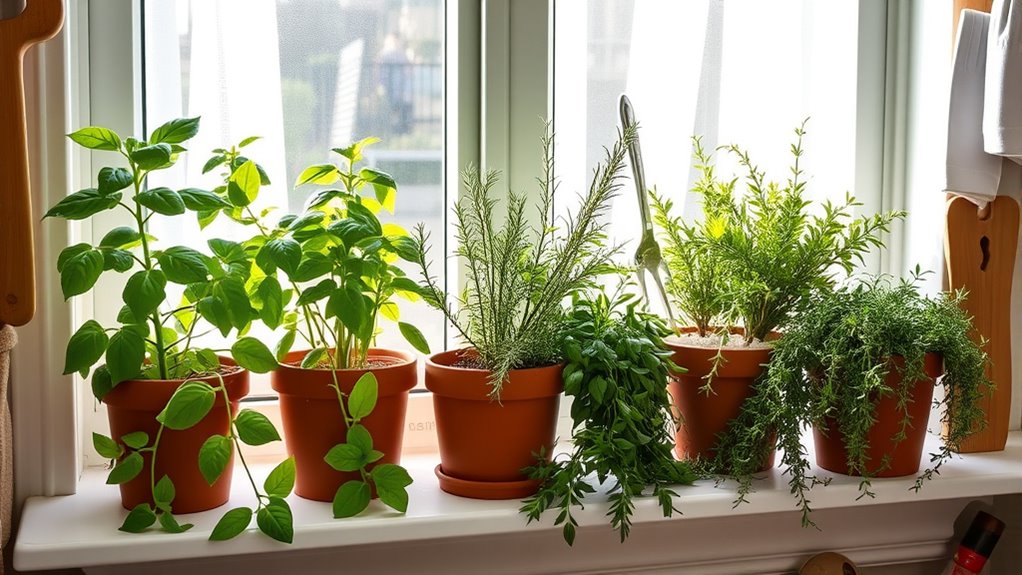
When selecting herbs for your indoor garden, it’s important to contemplate the amount of light your space receives. If your windowsill gets plenty of direct sunlight, herbs like basil, thyme, and oregano thrive. For spaces with less light, opt for shade-tolerant herbs such as mint, parsley, or chives. Consider how much time you spend near your garden—if you want herbs that grow quickly, choose fast-growing varieties like cilantro or basil. Think about your culinary preferences too; select herbs you frequently use, so your garden remains functional and enjoyable. Remember, matching your herbs to your lighting conditions helps them flourish and keeps your indoor garden healthy. Properly choosing herbs based on light guarantees a thriving, easy-to-maintain garden on your windowsill.
Selecting the Ideal Containers and Soil
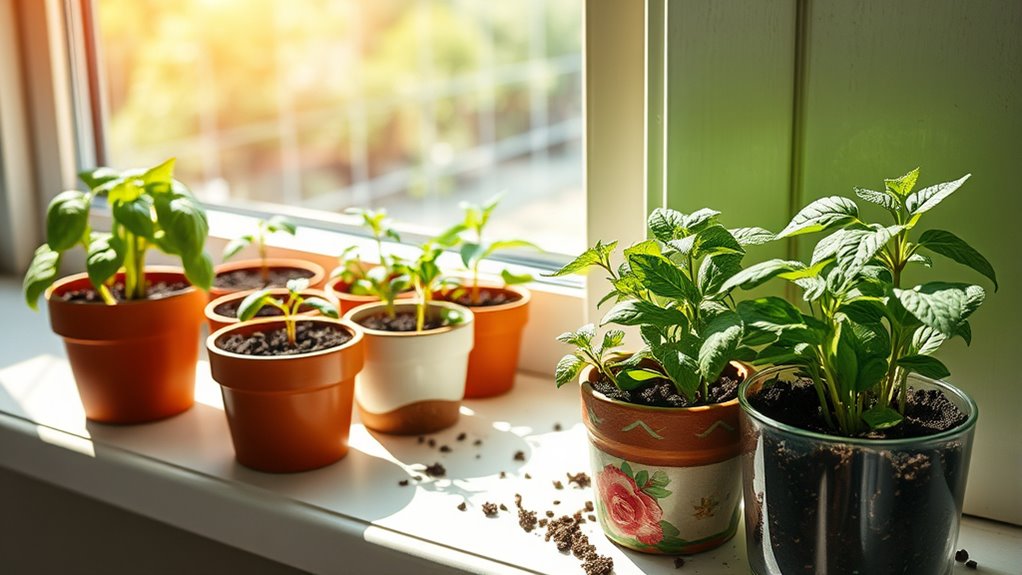
Choosing the right containers and soil sets the foundation for healthy, thriving herbs indoors. Pick containers with drainage holes to prevent water buildup, which can cause root rot. Terra cotta, ceramic, or plastic pots work well; just make certain they’re proportionate to your herbs’ mature size. Fill your containers with a high-quality potting mix designed for herbs or vegetables. These mixes drain well while retaining enough moisture for your plants to thrive. Avoid garden soil, as it’s too heavy and can introduce pests. When planting, leave some space at the top for watering. Proper containers and soil help manage moisture levels, promote root development, and prevent disease. With these essentials in place, your herbs will have a solid start to growing healthily on your windowsill.
Finding the Perfect Location on Your Windowsill
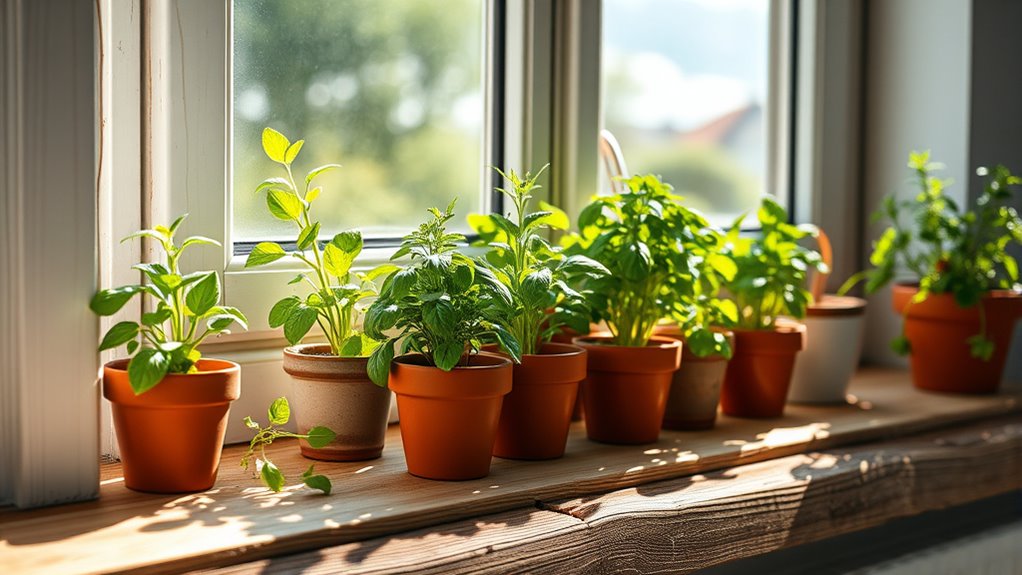
Finding the perfect spot on your windowsill is essential for healthy herb growth. Choose a location that gets plenty of direct sunlight, ideally 4-6 hours daily, to guarantee your herbs thrive. Avoid areas with drafts, temperature fluctuations, or close proximity to heating or cooling vents, as these can stress your plants. Keep an eye out for spots that receive consistent sunlight throughout the day, such as south- or west-facing windows. If sunlight is limited, consider supplemental grow lights. Make sure the windowsill isn’t shaded by trees or buildings that block sunlight at certain times. Also, guarantee there’s enough space for your herbs to grow without being cramped. A good location balances sunlight, stability, and airflow, creating ideal conditions for your indoor garden.
Watering and Maintenance Tips
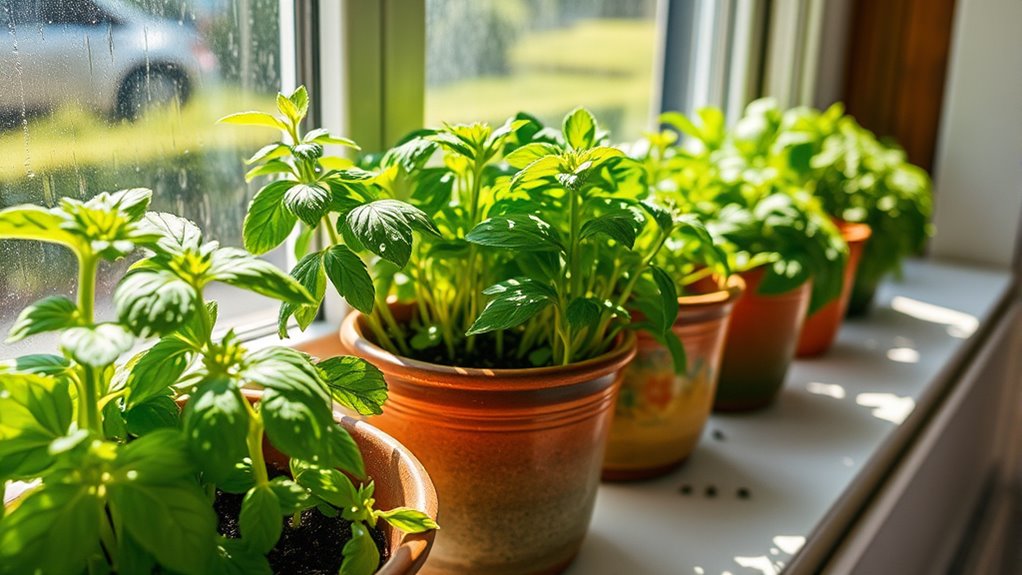
To keep your indoor plants healthy, you need to establish a consistent watering schedule that matches their needs. Make sure your pots have proper drainage to prevent water from pooling, which can lead to root rot. Regularly check soil moisture levels to avoid over- or under-watering and guarantee your plants thrive.
Consistent Watering Schedule
Maintaining a consistent watering schedule is essential for healthy indoor plants, as uneven watering can lead to stress, root rot, or dehydration. Regularly check your herbs’ moisture levels and water only when the top inch of soil feels dry. Consistency helps your plants develop strong roots and stay lush. To keep your watering routine on track:
- Set a weekly reminder to check soil moisture.
- Use the same amount of water each time to prevent over- or under-watering.
- Adjust frequency based on the season and indoor conditions, like increased heating or sunlight.
Proper Drainage Techniques
Proper drainage is essential for preventing water from pooling at the bottom of your pots, which can cause root rot and other health issues. To guarantee good drainage, use pots with drainage holes. Place a layer of small stones or gravel at the bottom to improve water flow and prevent soil from blocking drainage holes. Always use well-draining potting soil designed for herbs, which helps excess moisture escape. When watering, wait until the top inch of soil feels dry before watering again, and avoid overwatering. Elevate your pots slightly off the windowsill to allow air circulation and excess water to escape. Regularly check drainage and soil moisture to maintain healthy roots, and adjust your watering routine as needed to prevent water buildup.
Monitoring Soil Moisture
How can you guarantee your indoor garden stays healthy? Monitoring soil moisture is key. You want to water your herbs just enough—neither too much nor too little. Check soil moisture regularly by inserting your finger about an inch deep; if it feels dry, it’s time to water. Use a moisture meter for more accuracy if needed. Proper moisture helps prevent root rot and keeps your herbs vibrant.
To keep soil conditions ideal:
- Water only when the top inch feels dry
- Ensure excess water drains properly
- Adjust watering frequency based on season and humidity
Consistent monitoring helps you catch problems early and ensures your herbs thrive on your windowsill.
Troubleshooting Common Growing Issues
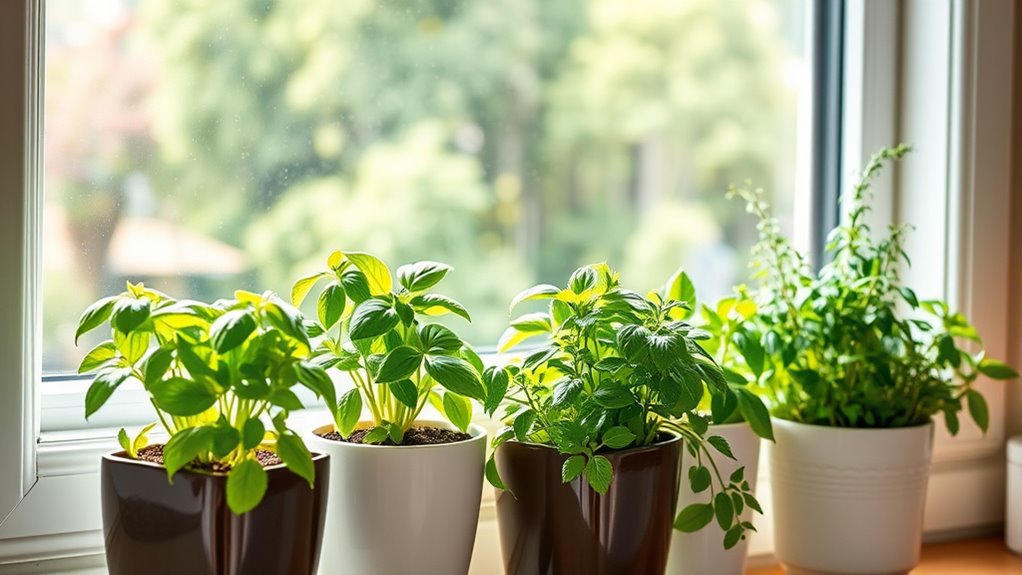
Even experienced indoor gardeners encounter issues that can hinder plant growth, but most problems have straightforward solutions when you identify the root cause. If your herbs are wilting despite regular watering, check if they’re overwatered or in poorly draining soil. Yellowing leaves may indicate nutrient deficiencies or improper lighting. Leggy growth often results from insufficient light; move your herbs closer to the window or add grow lights. If pests appear, gently inspect leaves and stems, then treat with organic solutions like neem oil. Root rot can cause stunted growth and soft stems; remove affected plants and improve drainage. Consistent monitoring is key. By observing plant behavior and environmental conditions, you can quickly diagnose issues and take targeted action to keep your herbs healthy and thriving.
Harvesting and Using Your Fresh Herbs
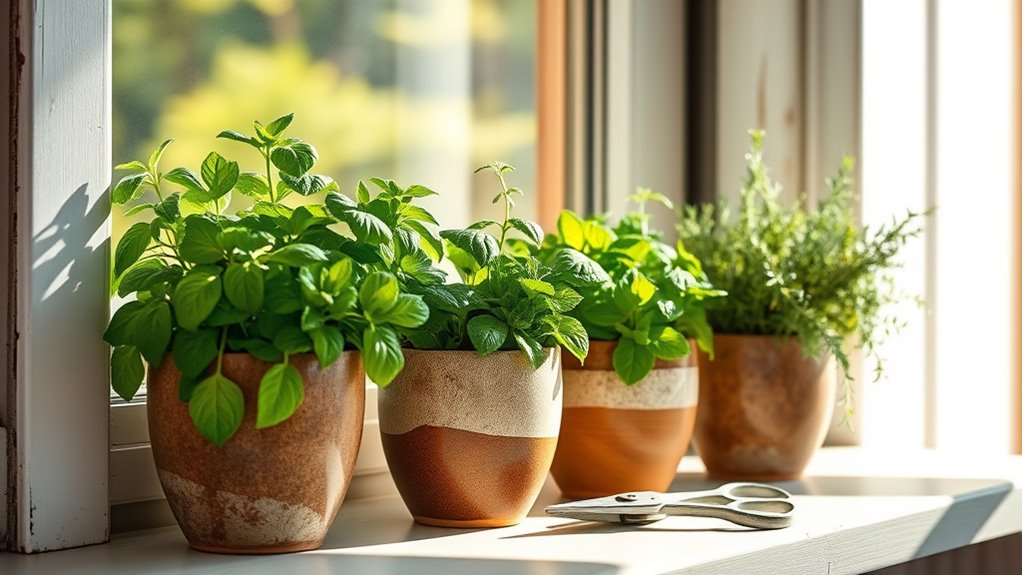
When it’s time to harvest your herbs, use sharp scissors and pick just above a set of leaves to encourage new growth. Once harvested, get creative with your herbs—try making fresh pesto, herb-infused oils, or flavorful teas. Proper techniques and inventive uses guarantee you enjoy the full flavor and benefits of your indoor garden.
Proper Harvesting Techniques
To guarantee your herbs stay healthy and flavorful, you need to harvest them at the right time and in the correct way. Always use clean, sharp scissors or pruning shears to make clean cuts, which help prevent damage and disease. Harvest early in the morning when essential oils are at their peak for maximum flavor. When trimming, focus on the top few inches of the plant, encouraging bushier growth. Avoid removing more than one-third of the plant at once to prevent stress. Regular harvesting promotes healthy growth and keeps your herbs vigorous.
- Use sharp scissors or pruning shears for clean cuts
- Harvest in the morning for prime flavor
- Trim just above a leaf node to encourage bushiness
Creative Herb Uses
Once you’ve mastered proper harvesting techniques, you can start exploring creative ways to use your fresh herbs. Chop basil into pesto for a flavorful spread, or add mint to iced tea for a invigorating twist. Sprinkle chopped rosemary on roasted vegetables to boost their aroma, or mix thyme into homemade salad dressings. Use parsley to garnish soups and stews, elevating their visual appeal and flavor. Incorporate chives into scrambled eggs or creamy dips for a mild onion taste. Don’t forget to experiment with herbs in desserts—like basil in fruit salads or lavender in baked goods. Your fresh herbs not only enhance your dishes but also add a touch of elegance to your presentation. Get creative, and enjoy the vibrant flavors and aromas your windowsill garden provides.
Frequently Asked Questions
How Often Should I Fertilize My Indoor Herbs?
You should fertilize your indoor herbs every 4 to 6 weeks during the growing season. Use a balanced, water-soluble fertilizer diluted to half strength to avoid overfeeding. In the winter, reduce fertilizing frequency since herbs grow slower. Always monitor your plants for signs of over-fertilization, like yellowing leaves, and adjust accordingly. Consistent feeding helps keep your herbs healthy, flavorful, and vigorous.
Can I Grow Herbs Indoors Without Sunlight?
Imagine trying to paint a masterpiece without colors—that’s what growing herbs indoors without sunlight feels like. While natural sunlight is ideal, you can grow herbs indoors with grow lights that mimic sunlight, providing the energy they need. LED or fluorescent grow lights work well, and you should keep them on about 12-16 hours daily. With proper lighting, your herbs will thrive, even in the absence of actual sun.
What Are Signs of Overwatering or Underwatering?
You can tell if you’re overwatering your herbs if their leaves turn yellow, wilt, or develop mold at the soil surface. Underwatering, on the other hand, makes leaves dry out, become brown, or curl inward. To avoid both, check the soil’s moisture level regularly—water only when the top inch feels dry. Proper watering keeps your herbs healthy, vibrant, and flavorful.
How Do I Prevent Pests on My Windowsill Herbs?
You can prevent pests on your windowsill herbs by regularly inspecting your plants for any signs of bugs or damage. Keep your herbs healthy by watering appropriately and ensuring proper airflow. Use natural deterrents like neem oil or insecticidal soap if you notice pests. Avoid overcrowding, clean fallen leaves, and quarantine new plants before introducing them. These steps help keep pests at bay and promote healthy, thriving herbs.
How Long Does It Take for Herbs to Mature Indoors?
Most herbs take about 3 to 4 weeks to reach maturity indoors, but basil can be ready in as little as 2 weeks. You’ll notice leaves getting larger and more fragrant as they grow. To speed things up, make sure your herbs get at least 6 hours of direct sunlight daily and keep the soil consistently moist. With proper care, you’ll enjoy fresh herbs in no time!
Conclusion
Growing herbs on your windowsill is a simple way to enjoy fresh flavors daily. Did you know that indoor herbs can boost your mood and reduce stress? With just a little effort, you can transform your space into a lush, fragrant garden. Keep experimenting, stay attentive, and soon you’ll be savoring your own homegrown herbs—delicious, healthy, and incredibly rewarding. Start today and reap the benefits of your indoor garden!