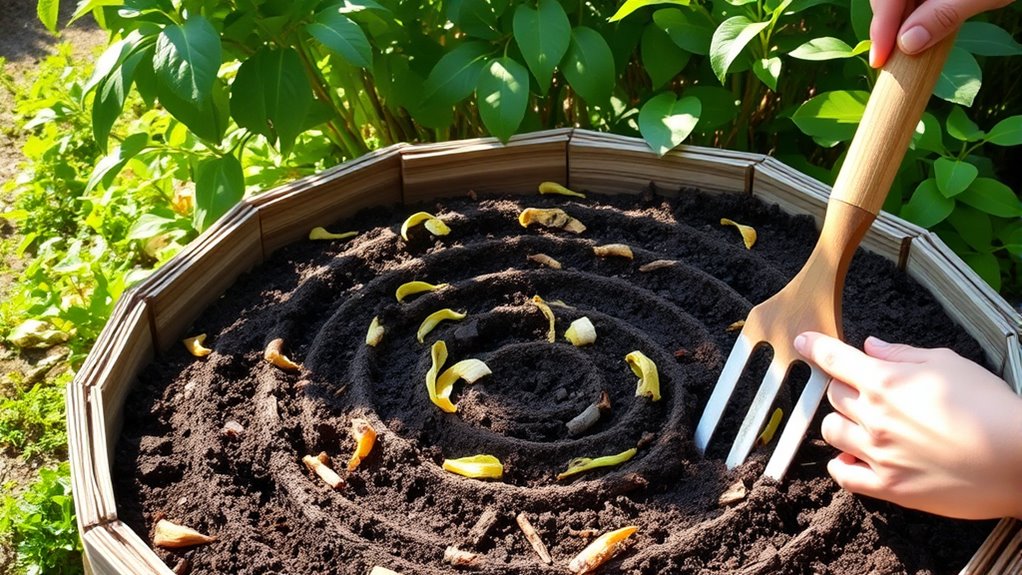

Start composting by choosing a convenient, well-drained spot away from your home, and gather a good mix of “greens” (wet, nitrogen-rich) and “browns” (dry, carbon-rich). Turn your pile regularly and keep it moist like a sponge to speed up decomposition. Avoid adding meat, dairy, or chemicals to prevent pests and odors. With the right setup and care, you’ll turn waste into nutrient-rich soil—learn more to master successful composting.
Key Takeaways
- Understand the basics of composting, including balancing greens and browns and maintaining moisture and aeration.
- Choose a suitable, well-drained location away from your home and ensure easy access to water.
- Compost kitchen scraps like fruit, vegetable peels, and coffee grounds, but avoid meat, dairy, and diseased plants.
- Regularly turn the compost to aerate and monitor moisture levels to keep decomposition active.
- Follow key principles such as proper aeration, moisture control, and material selection to create nutrient-rich compost.
Top picks for "ultimate compost beginner"
Open Amazon search results for this keyword.
As an affiliate, we earn on qualifying purchases.
Understanding the Basics of Composting
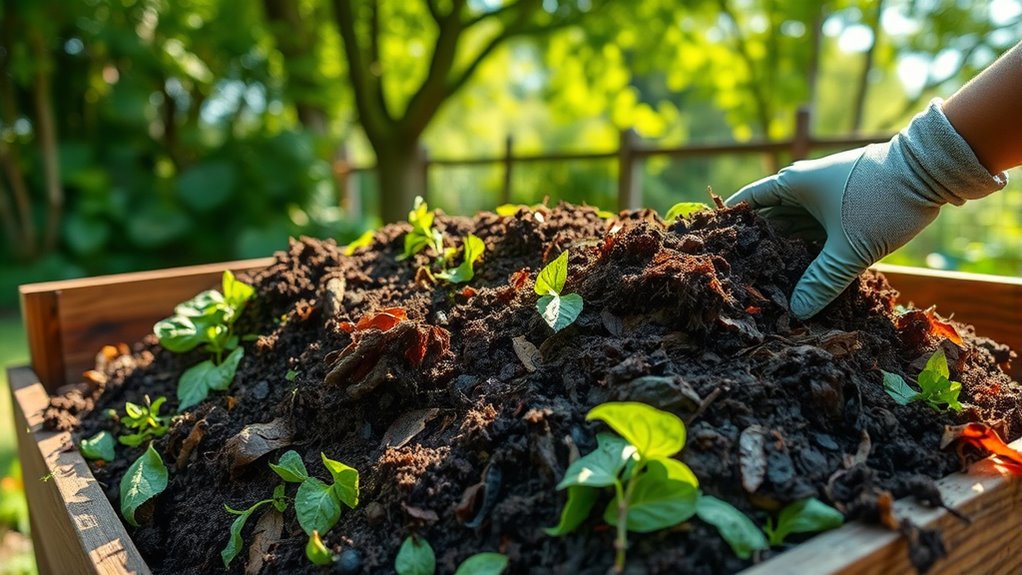
Composting is a simple way to turn household waste into nutrient-rich soil, but understanding its basics helps you do it effectively. At its core, composting involves breaking down organic materials, like vegetable scraps, coffee grounds, and yard waste, with the help of microorganisms. These tiny creatures decompose the waste naturally, producing compost that enhances soil health. To succeed, you need a good balance of “greens” (wet, nitrogen-rich materials) and “browns” (dry, carbon-rich materials). Proper aeration is essential; turning the pile regularly introduces oxygen, speeding up decomposition. Keep the compost moist, but not soaked, to create ideal conditions. Knowing these fundamentals helps you maintain a healthy compost pile that transforms waste efficiently into rich, usable soil for your garden.
Choosing and Preparing Your Composting Space
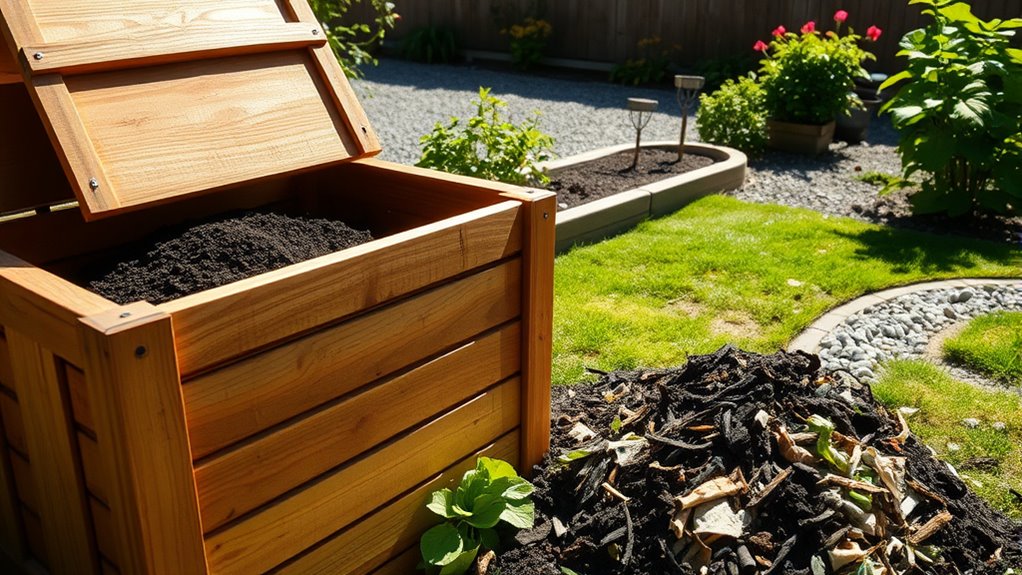
Choosing the right spot for your compost pile is essential to guarantee it functions efficiently and doesn’t become a nuisance. Look for a location that’s convenient, well-drained, and receives some sunlight. This helps speed up composting and prevents waterlogging. Clear the area of weeds and debris before starting. Consider nearby shade to prevent overheating in hot climates, but avoid shaded spots that slow decomposition. Keep it away from your home’s foundation or outdoor living spaces to reduce odors and pests.
Choose a sunny, level spot away from your home for efficient, odor-free composting.
- A flat, level surface for stability and easy turning
- Good airflow to prevent anaerobic conditions
- Close to a water source for easy moisture control
What to Compost and What to Avoid
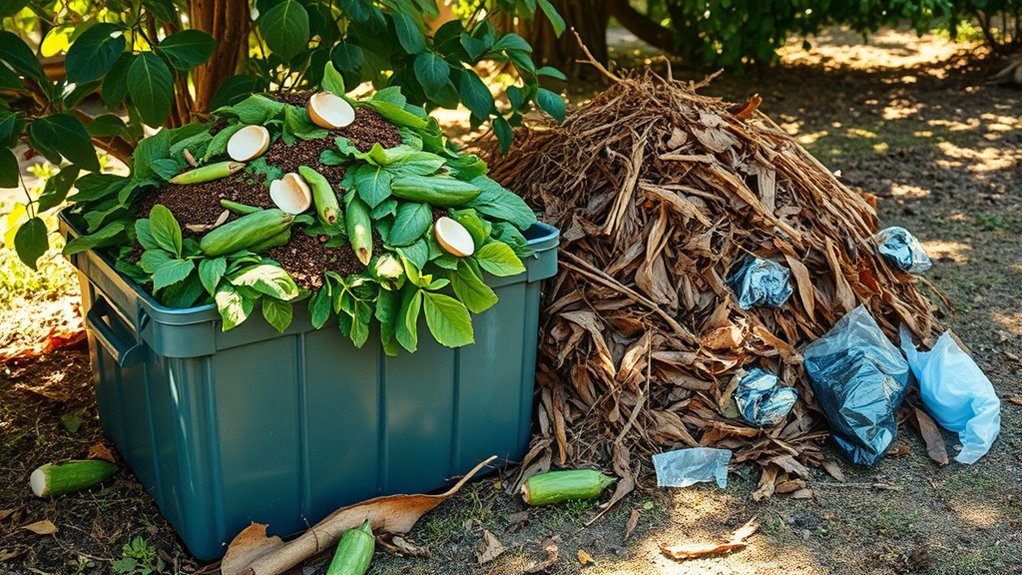
Knowing what materials to include and avoid is essential for successful composting. You should add kitchen scraps like fruit and vegetable peels, coffee grounds, and eggshells, along with yard waste such as leaves, grass clippings, and small branches. These provide the right balance of nitrogen and carbon for healthy decomposition. However, refrain from composting meat, dairy, fats, and oily foods, as they attract pests and create odors. Likewise, steer clear of diseased plants, weeds with seeds, and treated wood or chemicals that can contaminate your compost. Never include pet waste or human waste, as they can carry harmful pathogens. Properly selecting materials ensures your compost breaks down efficiently and remains safe to use in your garden.
Maintaining and Troubleshooting Your Compost Bin

Once you’ve started adding materials to your compost bin, regular maintenance is key to keeping the process efficient and odor-free. You should turn the pile regularly to aerate it, which speeds up decomposition and prevents odors. Keep an eye on moisture levels; it should be as damp as a sponge—add water if it’s too dry or dry materials if it’s too wet. Troubleshoot issues like foul smells by balancing green and brown materials, or slow composting by mixing in more nitrogen-rich scraps. To help visualize, imagine:
- Turning the compost with a pitchfork to mix air and materials
- Adding dry leaves or straw if it gets too wet or slimy
- Checking for pests, ensuring your bin is sealed and secure
Proper maintenance keeps your compost healthy and productive.
Frequently Asked Questions
How Long Does It Typically Take for Compost to Be Ready?
It usually takes about three to six months for compost to be ready, but this depends on factors like temperature, moisture, and your compost materials. You can speed up the process by turning the pile regularly and maintaining the right balance of greens and browns. Keep an eye on it, and you’ll have rich, dark compost in no time, ready to boost your garden’s health.
Can I Compost Pet Waste or Dairy Products Safely?
Composting pet waste or dairy products is like juggling fire—possible but risky if not done properly. You can compost pet waste if you use a dedicated, sealed bin and wait at least a year before using the compost. Dairy products, on the other hand, often cause odor and attract pests, so it’s better to avoid composting them directly. Instead, consider specialized composting systems or alternative disposal methods.
What Are the Signs of a Compost Bin That’s Too Wet or Dry?
If your compost bin is too wet, it’ll smell sour or like rotten eggs, and the materials may be slimy or waterlogged. When it’s too dry, it’ll look crumbly, and you might notice little to no activity or heat. To fix this, add water if it’s too dry, or mix in carbon-rich materials like dry leaves or shredded paper if it’s too wet. Keep the moisture balanced for healthy composting.
How Do I Speed up the Composting Process Naturally?
Think of your compost as a busy kitchen that needs the right ingredients to cook quickly. To speed up natural composting, shred kitchen scraps and yard waste into smaller pieces, like chopping vegetables for faster cooking. Turn the pile regularly to aerate it, and keep the moisture level like a damp sponge. Adding a balanced mix of greens and browns also fuels the process, transforming waste into rich soil faster.
Is It Safe to Use Compost on Edible Plants Immediately?
No, it’s not safe to use compost on edible plants immediately. You should let the compost cure for at least a few weeks to a few months, ensuring it’s fully broken down and free of pathogens. Using finished compost reduces the risk of transmitting harmful bacteria or parasites. Always check for a dark, crumbly texture and earthy smell before applying to your vegetables or herbs for safe, healthy growth.
Conclusion
Now that you know the essentials, composting becomes easy and rewarding. For example, imagine turning kitchen scraps and yard waste into rich soil for your garden, just like Lisa did. She set up a simple bin, added her compost ingredients, and kept it balanced. Soon, her garden flourished with healthy plants. With patience and some practice, you’ll enjoy the benefits of composting too—saving waste and nurturing your garden all at once.