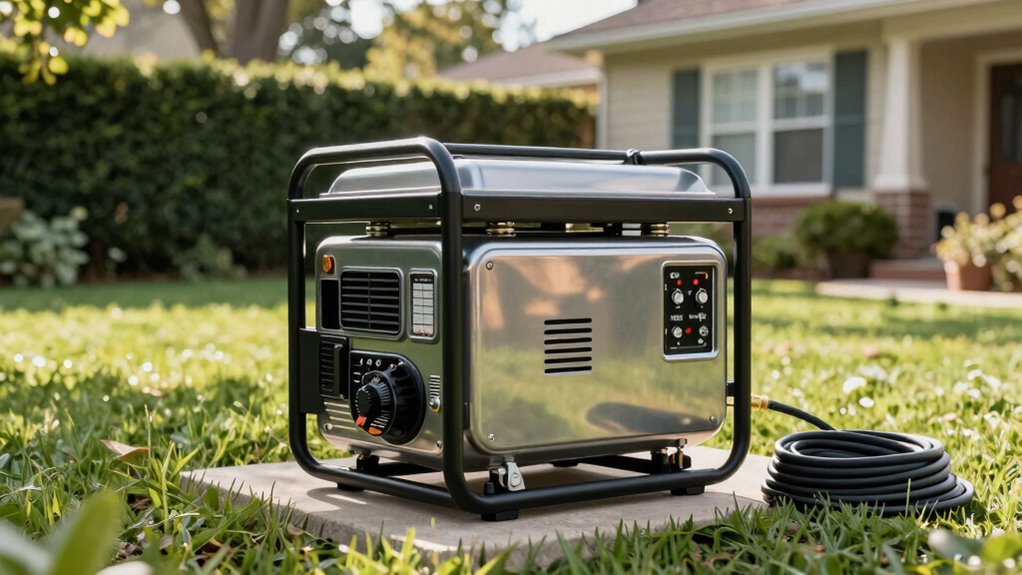
To plan your backup generator effectively, start by evaluating your home’s power needs and choosing the right type—solar or fuel-based—based on your environment and budget. Make sure to select a size that can handle critical devices without overload. Consider long-term costs like fuel and maintenance, and ensure proper installation with permits. Good planning guarantees safety, reliability, and comfort during outages. Keep exploring to find tips that will help you make smarter decisions for your home.
Key Takeaways
- Assess your home’s critical power needs and choose a generator with appropriate capacity to ensure reliable backup during outages.
- Consider environmental factors like climate and altitude to select a generator that performs optimally in your location.
- Evaluate initial costs, ongoing fuel and maintenance expenses, and long-term savings when selecting a generator type.
- Plan for proper installation, permits, and electrical upgrades to ensure safety and compliance.
- Prioritize safety features and load management strategies to prevent overloads and ensure peace of mind during power outages.
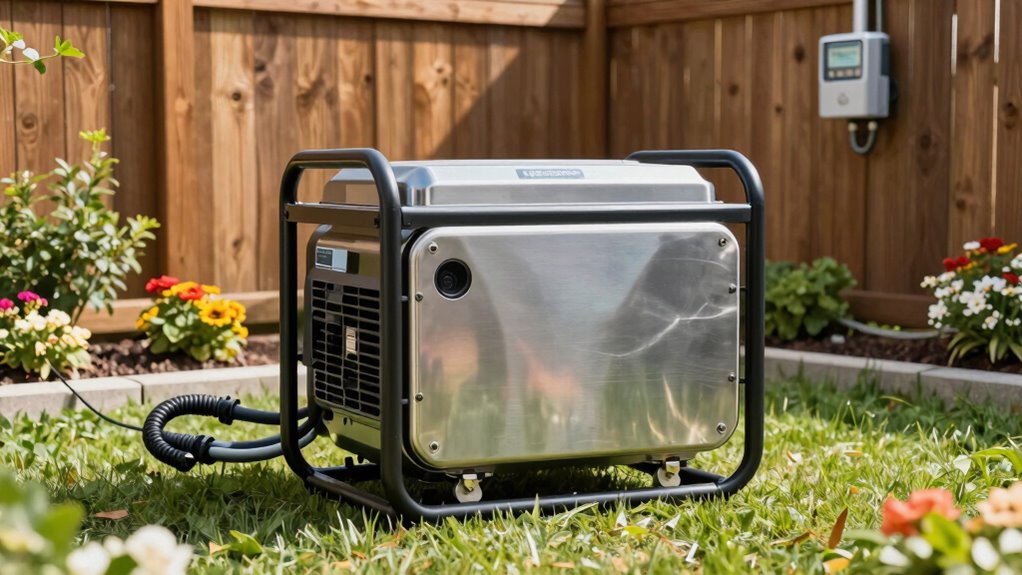
Have you ever experienced a power outage that left your home in the dark? If so, you know how disruptive and inconvenient it can be. That’s where a backup generator can make a real difference, ensuring you maintain comfort and safety during outages. Before you invest, it’s essential to plan carefully, starting with understanding your options. One key consideration is exploring renewable options, such as solar-powered generators, which harness the sun’s energy to provide power during outages. These systems can be environmentally friendly and reduce ongoing fuel costs, making them appealing for homeowners interested in sustainability. However, they might come with a higher upfront cost and depend on sunlight availability, so it’s crucial to evaluate whether they suit your typical power needs. Traditional gas or diesel generators are often more straightforward and reliable but require ongoing fuel purchases and maintenance. You must consider your local climate, fuel availability, and how much power you need to decide which type aligns best with your lifestyle. Additionally, assessing your power needs can help you select a generator that offers the right capacity without overspending.
Alongside choosing the right generator type, conducting a thorough cost analysis is essential. You need to weigh the initial purchase price against long-term expenses like fuel, maintenance, and potential repairs. For example, while a larger, more powerful generator might seem more expensive upfront, it could save you money over time by providing sufficient power without needing an upgrade later. Conversely, smaller units are cheaper initially but may not cover all your essential appliances during extended outages. Think about your typical outage duration and the critical devices you want to keep running, such as refrigerators, heating systems, or medical equipment. This helps you determine the appropriate size and capacity, ensuring your investment is practical and effective. Additionally, considering power management strategies can help optimize your generator’s efficiency and lifespan, especially during prolonged outages.
Furthermore, understanding generator ratings and derating factors can prevent performance issues and ensure reliable operation in extreme conditions. Additionally, don’t forget to factor in installation costs, permits, and potential upgrades to your home’s electrical system. These expenses can greatly influence your overall investment. It is also helpful to understand generator ratings and derating factors, which can impact performance in specific environments like high altitudes or extreme temperatures. These factors should be considered when selecting a unit to ensure reliable operation in your specific environment. Remember, a well-planned backup generator isn’t just about having power during an outage; it’s about ensuring safety, convenience, and peace of mind. By carefully considering renewable options and performing a detailed cost analysis, you’ll make smarter decisions that fit your budget and energy needs. With proper planning, you can be confident that your home will stay powered and comfortable, no matter what the weather throws your way.

Westinghouse 12500 Watt Dual Fuel Home Backup Portable Generator, Remote Electric Start, Transfer Switch Ready, Gas and Propane Powered
- Power Output: 12500 Peak / 9500 Running Watts (Gas)
- Fuel Options: Gasoline and Propane Powered
- Start Type: Remote Electric and Recoil Start
As an affiliate, we earn on qualifying purchases.
As an affiliate, we earn on qualifying purchases.
Frequently Asked Questions
How Long Does a Backup Generator Typically Last Before Needing Replacement?
A backup generator typically lasts between 10 to 30 years, depending on maintenance and usage. You should consider fuel efficiency and noise levels when choosing one, as these factors influence longevity and operation costs. Proper maintenance, like regular oil changes and inspections, can extend its lifespan. Keep an eye on wear and tear, and replace the generator when it becomes less fuel-efficient or noisy, signaling it’s nearing the end of its service life.
Are There Any Tax Incentives for Installing a Home Backup Generator?
Imagine never losing power during storms—sounds ideal, right? You might qualify for tax incentives when installing a home backup generator. Many states and federal programs offer tax credits and incentive programs to encourage energy-efficient upgrades. These incentives can considerably offset installation costs, making it more affordable. Be sure to check local regulations and eligibility requirements to maximize your savings and enjoy uninterrupted power.
Can a Backup Generator Operate During a Power Outage Without Manual Start?
Yes, a backup generator can operate during a power outage without manual start if it has automatic startup features. These systems detect power loss and start the generator automatically. Additionally, remote monitoring allows you to oversee your generator’s status and receive alerts, ensuring it’s ready when needed. This setup provides convenience and peace of mind, especially during extended outages, so you don’t have to be physically present to activate your backup power.
What Maintenance Is Required to Ensure Generator Reliability?
Think of your generator as a trusted guardian, needing regular check-ups to stay alert. To guarantee reliability, you should regularly inspect and change the oil, test the system, and clean air filters. Keep fuel fresh for maximum fuel efficiency, and monitor noise levels to prevent disturbances. Proper maintenance, like a vigilant guardian, keeps your generator ready for duty, ensuring it operates smoothly and quietly when you need it most.
How Does Climate Affect the Choice of Backup Generator?
Climate greatly influences your choice of backup generator because you need one with strong weather resilience and climate adaptability. For colder regions, opt for models with cold-weather starting features, while in humid areas, consider corrosion-resistant materials. In hurricane-prone zones, look for generators with enhanced wind resistance. By choosing a generator suited to your climate, you guarantee reliable power during extreme weather conditions, minimizing outages and protecting your home effectively.

Jackery Solar Generator 1000 v2 and 200W Solar Panel,1070Wh,1500W AC
- Powerful yet Portable: 1500W AC output, 1070Wh capacity, lightweight design
- Fast Charging: Full charge in 1 hour via app
- Long-lasting Battery: Over 10 years lifespan with 4000 cycles
As an affiliate, we earn on qualifying purchases.
As an affiliate, we earn on qualifying purchases.
Conclusion
Planning for a backup generator keeps your home powered during outages, giving you peace of mind. Did you know that over 70% of homeowners with generators feel more secure during storms? By evaluating your power needs and choosing the right system, you guarantee your family stays comfortable and safe no matter what. Don’t wait until the next blackout—proper planning makes all the difference. Invest now, and enjoy reliable power when you need it most.

Oxseryn Power Equipment 4400 Watts Inverter Generator Gas Powered, Portable Open Frame Generator, Low Noise with ECO Mode, RV Ready, Emergency Home Backup
- High Power Output: 4400 peak / 3400 running watts
- Multiple Output Ports: 2 AC, 1 DC, RV port
- Long Runtime: Up to 14 hours at 25% load
As an affiliate, we earn on qualifying purchases.
As an affiliate, we earn on qualifying purchases.

Tzechkii 200 Amp Manual Generator Transfer Switch for Home, 48000W
- High Capacity: Supports 48,000W for whole-home use
- Weather-Resistant Enclosure: Galvanized steel NEMA 3R rated for outdoor use
- Secure Manual Operation: Double-throw lever prevents backfeeding and ensures safety
As an affiliate, we earn on qualifying purchases.
As an affiliate, we earn on qualifying purchases.