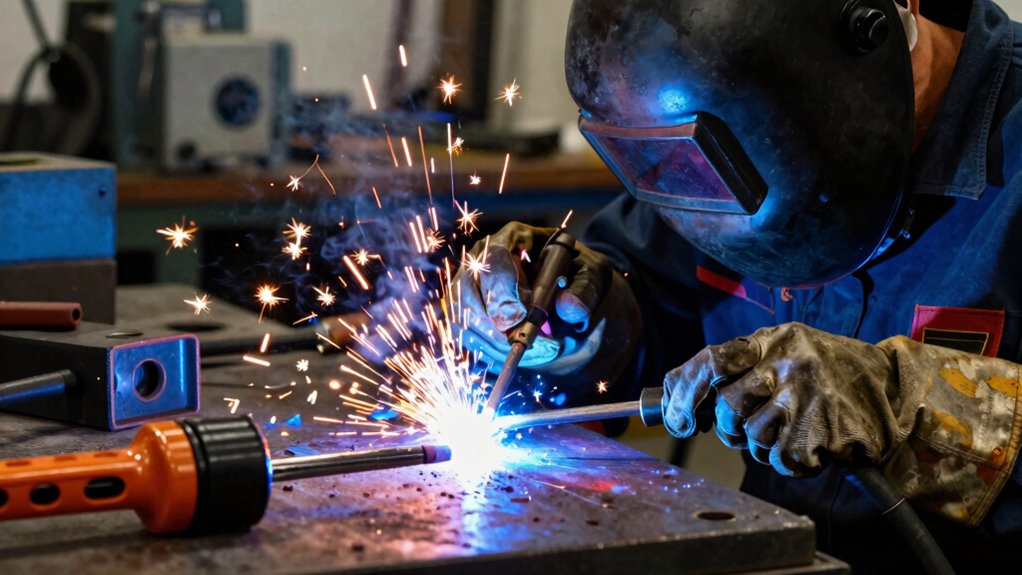

If you’re new to welding, understanding the main types can help you choose the right tool for your projects. MIG welders are great for beginners because they’re easy to use and produce clean welds with less spatter. TIG welders offer precision for delicate work, while stick welders are tough and good for outdoor or heavy-duty tasks. Keep safety in mind and explore each type further to find what suits your needs best.
Key Takeaways
- MIG welders are beginner-friendly, easy to use, and produce clean welds with minimal spatter.
- TIG welders offer precision for thin materials but require more manual skill and careful handling.
- Stick welders are rugged and suitable for outdoor, heavy-duty projects, but generate more fumes and sparks.
- Proper safety gear and ventilation are essential for all welder types to prevent health hazards.
- Regular equipment maintenance ensures safety, better results, and efficient welding performance.
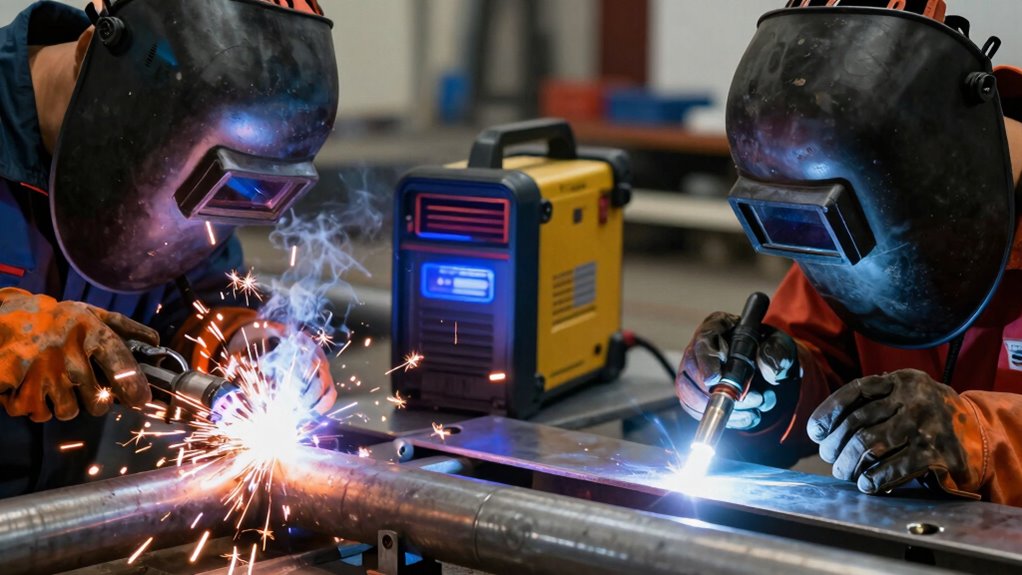
Starting your welding journey can be exciting but overwhelming, especially when choosing the right welder. With so many options available, it’s important to understand the different types and what they require from you in terms of safety and equipment maintenance. Welding safety** should always be your top priority, no matter which welder you pick. Proper protective gear, such as gloves, masks, and eye protection, helps prevent injuries from sparks, intense light, and harmful fumes. Additionally, maintaining your equipment is essential for safe, efficient welding. Regularly cleaning your welder, inspecting cables, and replacing worn-out parts keep your machine in good shape and reduce the risk of accidents. Using high-quality welding equipment** can also improve safety and results, making your experience more successful and enjoyable.
The most common beginner-friendly welder types include MIG, TIG, and stick welders. MIG welders, short for Metal Inert Gas, are often recommended for beginners because they are easy to learn and versatile. They use a wire feed that automatically supplies the welding wire, making the process simpler to control. As you practice, you’ll develop a feel for managing the speed and heat, but initially, it’s quite forgiving. MIG welding also tends to produce cleaner welds with less spatter, which means less cleanup. Since safety is vital, make certain your workspace is well-ventilated when using a MIG welder, as fumes can be hazardous. Proper ventilation is crucial for safety, especially when working with different types of welders. Equipment maintenance involves regularly checking the wire feed system, gas lines, and replacing consumables like tips and nozzles to keep everything functioning properly.
TIG welders, or Tungsten Inert Gas welders, require a bit more skill but give you greater control over the welding process. They’re ideal for precision work and thin materials. As a beginner, you’ll need to learn how to handle the torch, control the heat, and feed the filler rod manually. Because TIG welding produces less spatter and fumes, it can be safer with proper ventilation. However, equipment maintenance is more involved, requiring frequent cleaning of the tungsten electrode, inspecting the gas flow, and ensuring the torch is in good condition. Diligent maintenance not only keeps your TIG welder running smoothly but also helps prevent safety hazards.
Stick welders, also known as arc welders, are rugged and straightforward, making them a good choice for outdoor or heavy-duty projects. They require less equipment but demand careful attention to safety, especially because they produce more fumes and sparks. They’re forgiving in terms of power supply but need regular cleaning and inspection of the rod holder and cables. Proper equipment maintenance reduces the risk of malfunction and ensures safe operation. Whichever welder you choose, prioritizing welding safety and routine equipment upkeep will set you up for success and help you enjoy your new craft safely.
As an affiliate, we earn on qualifying purchases.
Frequently Asked Questions
Which Welder Is Best for DIY Projects?
For DIY projects, a MIG welder is your best choice. It’s user-friendly and versatile, making it great for beginners. You’ll find it easy to learn welding techniques with this type, and it works well with various materials like steel and aluminum. Plus, its quick setup and clean welds help you complete projects efficiently. Overall, a MIG welder offers the perfect balance of simplicity and performance for most DIY enthusiasts.
How Much Does a Beginner Welder Typically Cost?
A beginner welder typically costs between $200 and $500, making it accessible for new DIY enthusiasts. As you develop your beginner welding skills, prioritize welding safety by choosing a machine with safety features and easy-to-use controls. This affordable range allows you to practice and learn without significant investment. Remember, the right equipment helps you build confidence and improves your welding safety, ensuring a smoother learning experience.
Are There Safety Certifications for Beginner Welders?
Yes, there are safety certifications for beginner welders. These certifications guarantee you’re following proper welding safety and meet certification standards to protect you on the job. As a beginner, pursuing certifications like the AWS (American Welding Society) certification helps you learn safe practices and gain credibility. Staying updated on welding safety and certification standards is essential, so seek out courses and training programs that emphasize both safety and skill development.
Can I Upgrade a Basic Welder Later?
Yes, you can upgrade your basic welder later. Imagine transforming your simple, flickering flame into a powerful, steady blaze, expanding your welding safety and skills. As you progress, you can add welding accessories like advanced torches or higher amperage units, enhancing performance and versatility. Upgrading allows you to tackle more complex projects, improving your craftsmanship while ensuring safety remains a priority. Your welding journey is flexible; grow with your needs.
What Maintenance Is Required for Different Welders?
You need to follow specific maintenance schedules to keep your welder in top shape, ensuring safe and efficient welding. Regularly inspect cables, connections, and electrodes, and clean or replace parts as needed. Prioritize welding safety by keeping your equipment dry and free from dust. Lubricate moving parts and check for wear. Proper maintenance prevents accidents, extends your welder’s lifespan, and guarantees consistent performance.
As an affiliate, we earn on qualifying purchases.
Conclusion
Now that you know the different welder types, you’re practically armed with the power to forge worlds! Imagine sparks flying like fireworks, shaping metal into masterpieces with a single flick of your wrist. Whether you’re welding tiny jewelry or building towering steel structures, your newfound knowledge transforms you into a metal magician. So go ahead—ignite that passion, master your craft, and turn raw metal into awe-inspiring works of art that might just change the world!
As an affiliate, we earn on qualifying purchases.
welding safety gear for beginners
As an affiliate, we earn on qualifying purchases.
As an affiliate, we earn on qualifying purchases.