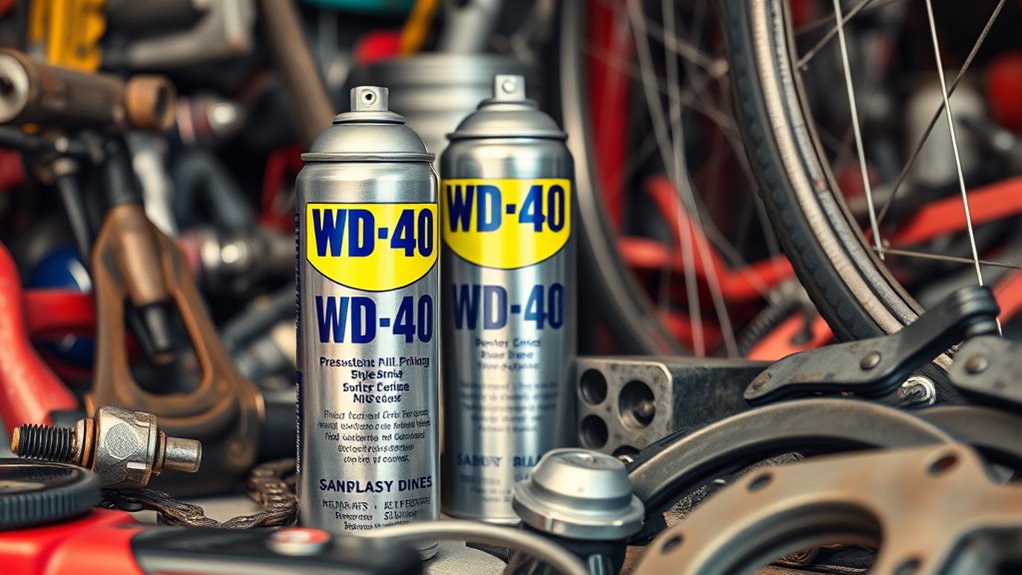

WD-40 isn’t just for squeaky hinges; it can also help you remove sticky residues and labels, prevent rust on tools, loosen stuck zippers, eliminate hinge squeaks, and erase crayon marks from walls. You can also use it to keep garden tools rust-free and to lubricate jewelry and small hardware. Curious? Stick around to discover even more surprising ways this versatile product makes household chores easier.
Key Takeaways
- Remove stubborn adhesive residues and labels from surfaces like glass, metal, and plastic.
- Prevent rust and corrosion on tools and metal objects with regular WD-40 application.
- Loosen stuck zippers and handles easily by spraying WD-40 directly on the problem areas.
- Eliminate squeaks from hinges and locks for smooth, noise-free operation.
- Safely remove crayon and marker marks from painted walls without damaging the paint.
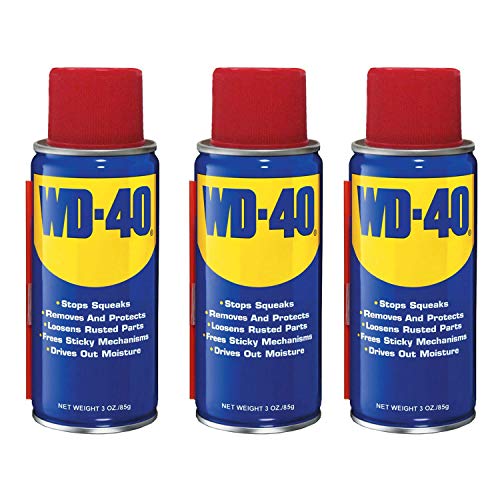
WD-40 Multi Use Lubricant On the Go Handy Can with Straw, 2.75 Ounce (3 Pack)
As an affiliate, we earn on qualifying purchases.
As an affiliate, we earn on qualifying purchases.
Removing Sticky Residues and Adhesives
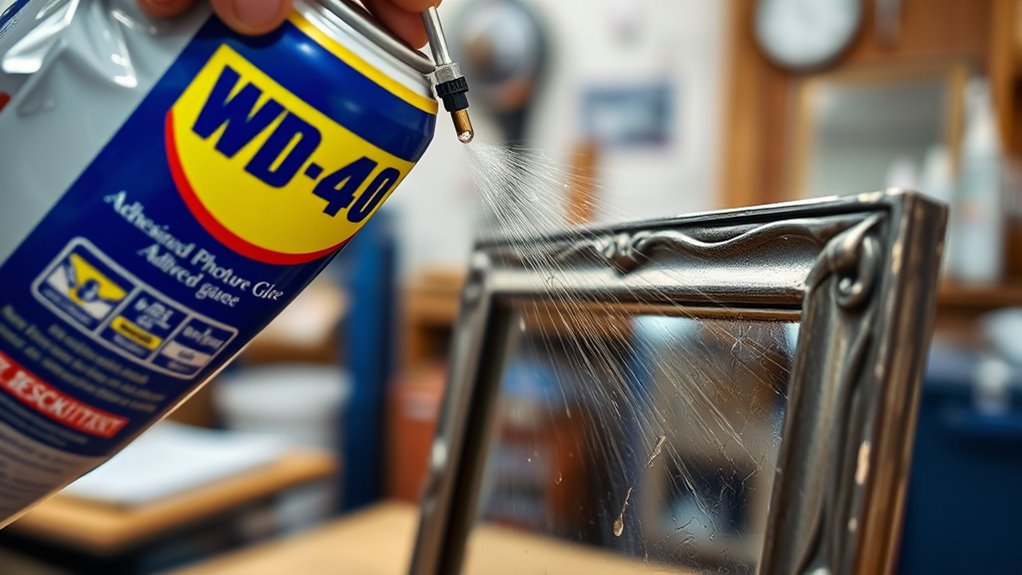
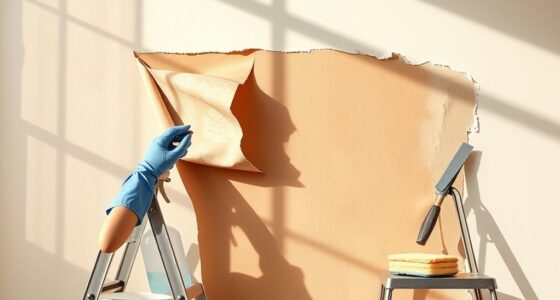
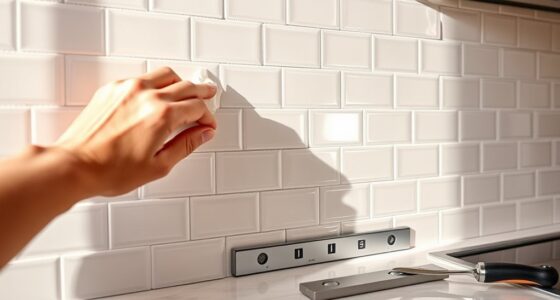
Removing sticky residues and adhesives can be tricky, but WD-40 makes it easier. When you encounter sticky labels or glue remnants, spray WD-40 directly onto the area. Let it sit for a minute or two to penetrate the adhesive. Then, use a cloth or plastic scraper to gently lift the residue. You’ll notice it softens and loosens quickly, saving you effort. For stubborn spots, reapply and repeat the process. Once the residue lifts, wipe the surface with a clean cloth dampened with soapy water to remove any leftover oil. WD-40 works well on various surfaces, including glass, metal, and plastic. Just be sure to test it on a small, hidden area first to avoid any damage. This simple trick makes cleanup effortless.

WD-40 Specialist Corrosion Inhibitor, Long-Lasting Anti-Rust Spray, 6.5 OZ
Coats metal parts to lubricate and protect against rust and corrosion by blocking out air and moisture. Protects…
As an affiliate, we earn on qualifying purchases.
As an affiliate, we earn on qualifying purchases.
Preventing Rust and Corrosion on Tools
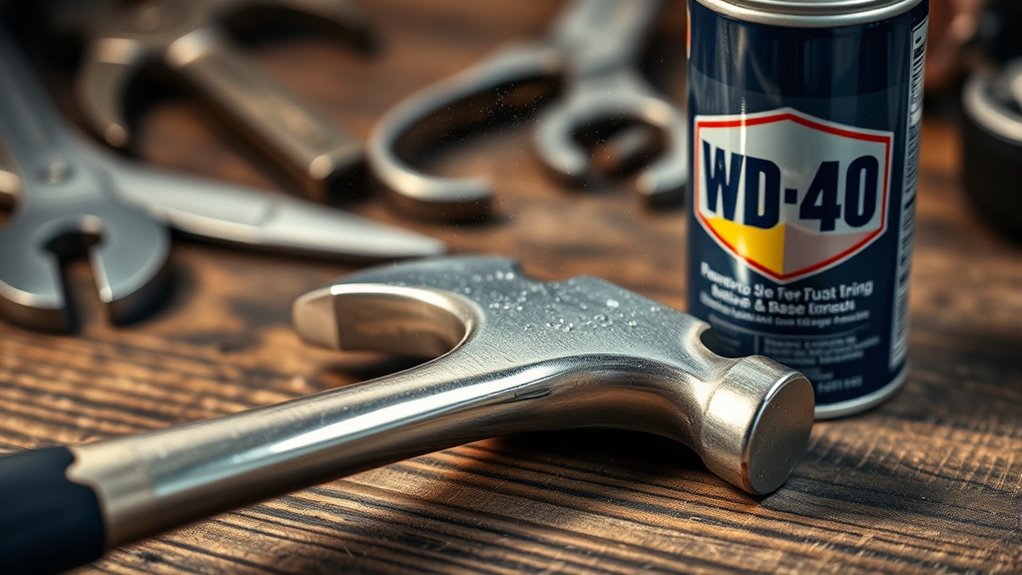
To keep your tools in top shape, you can use WD-40 to lubricate their joints and prevent rust. Applying it creates a protective coating that shields metal surfaces from moisture and corrosion. With just a quick spray, you’ll extend the lifespan of your tools and keep them working smoothly.
Lubricate Tool Joints
A small amount of WD-40 can work wonders in keeping your tool joints smoothly functioning and rust-free. To do this, simply spray a light film onto the moving parts of your tools. Here’s how to get the best results:
- Identify the joints or hinges that need lubrication.
- Spray WD-40 directly onto the moving parts, ensuring coverage.
- Work the joint back and forth to distribute the lubricant evenly.
- Wipe away excess to prevent dirt buildup and ensure smooth operation.
This process prevents rust, reduces friction, and keeps your tools functioning properly. Regular application guarantees your tools stay in top shape, especially if they’re stored in humid environments. WD-40 is your go-to for easy, effective lubrication.
Create Protective Coatings
Applying a protective coating of WD-40 after lubricating your tools helps prevent rust and corrosion. Spray a thin, even layer on metal surfaces, especially those exposed to moisture or humidity. Make sure to cover all areas, including joints and hard-to-reach spots. Wipe away any excess with a clean cloth to avoid dirt buildup. This creates a barrier that shields your tools from moisture, which is the primary cause of rust. Regular application is especially important if you store tools in damp environments or don’t use them often. By creating this protective coating, you extend the lifespan of your tools and keep them in good working condition. It’s a simple step that saves you time and money on repairs or replacements down the line.

WD-40 Specialist Silicone Lubricant with SMART STRAW SPRAYS 2 WAYS, 11 OZ
Use on a variety of surfaces – metal, rubber, vinyl, plastic and more. Use on 100s of items…
As an affiliate, we earn on qualifying purchases.
As an affiliate, we earn on qualifying purchases.
Loosening Stuck Zippers and Handles
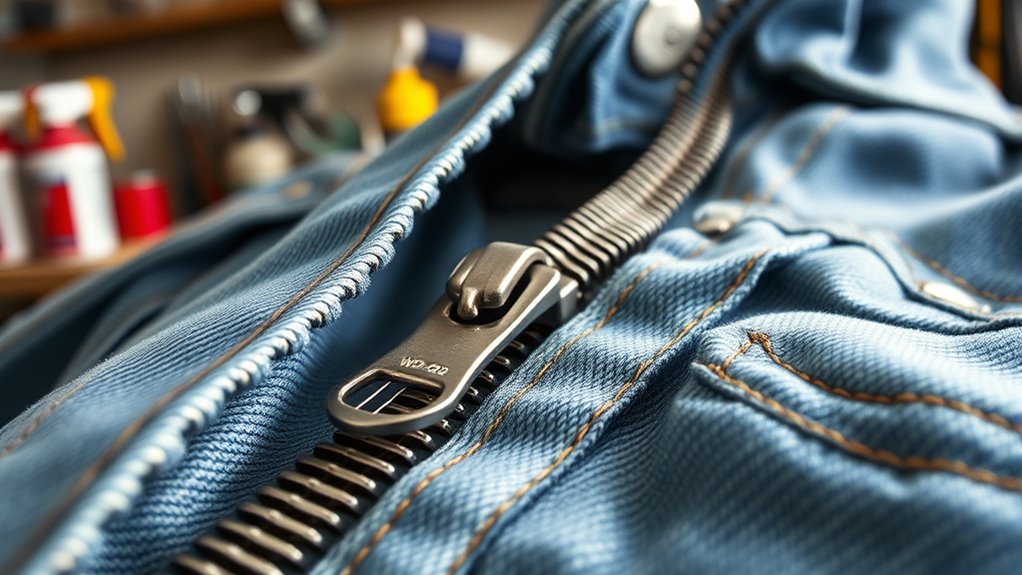
When zippers or handles become stubborn and won’t budge, WD-40 can be a quick solution. It lubricates metal parts and loosens rust or dirt that may be causing the jam. To use it effectively:
- Shake the can well before use.
- Spray a small amount directly onto the stuck zipper or handle.
- Wait a few seconds to let it penetrate.
- Gently move the zipper or handle back and forth to loosen it.
This method helps free up rusted, sticky, or corroded components without much effort. WD-40 works on a variety of materials, making it perfect for stubborn wardrobe zippers or handles on furniture or appliances. Just wipe away excess to prevent dirt buildup.
WD-40 Specialist Silicone Lubricant with SMART STRAW SPRAYS 2 WAYS, 11 OZ
Use on a variety of surfaces – metal, rubber, vinyl, plastic and more. Use on 100s of items…
As an affiliate, we earn on qualifying purchases.
As an affiliate, we earn on qualifying purchases.
Eliminating Squeaks From Hinges and Locks
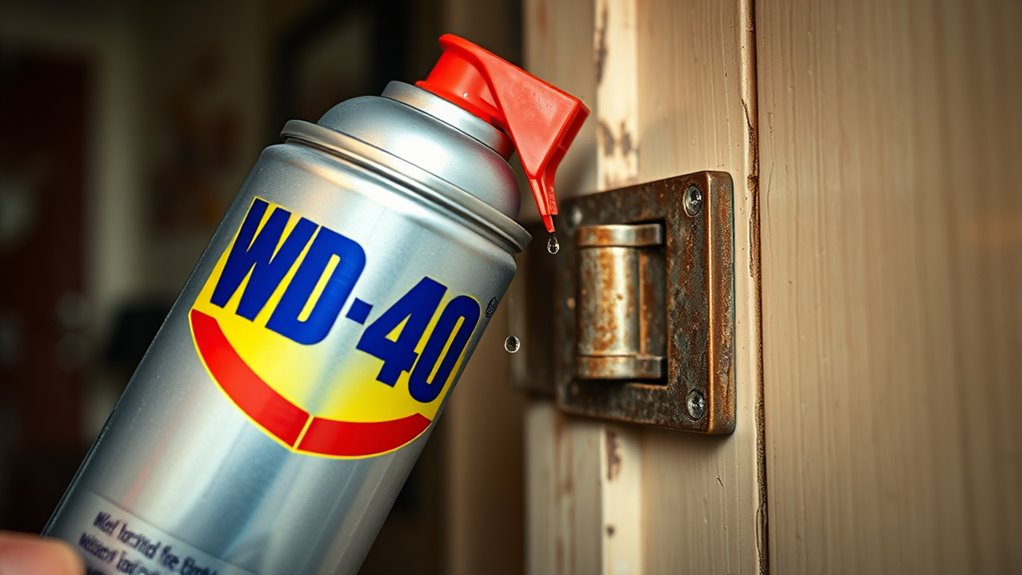
Squeaky hinges and sticking locks can be annoying and frustrating. WD-40 makes it easy to quiet those noisy hinges and keep locks operating smoothly. Just a quick spray can restore silence and improve functionality instantly.
Quiet Hinges Effectively
If your door hinges or locks are making annoying squeaks, WD-40 can be a quick fix. To quiet hinges effectively, follow these steps:
- Open the door fully to access the hinges.
- Spray WD-40 directly onto the hinge pins.
- Move the door back and forth to work the lubricant in.
- Wipe away any excess with a cloth to prevent drips.
This simple process reduces friction and silences squeaks fast. Remember, applying WD-40 regularly can prevent hinges from squeaking in the first place. For locks, spray a small amount into the keyhole, then turn the key to distribute the lubricant. Avoid over-application, which can attract dirt. With these tips, your hinges stay quiet and smooth.
Lubricate Locks Easily
Applying WD-40 to your locks is an easy way to keep them operating smoothly and quietly. If your door lock feels stiff or squeaks every time you turn the key, a quick spray can solve the problem. Simply spray a small amount into the keyhole and around the latch. Turn the key a few times to distribute the lubricant evenly. WD-40 loosens rust and debris that may cause sticking or noise, restoring smooth function. It’s especially helpful on outdoor locks exposed to the elements. Just wipe away any excess to prevent dirt buildup. Regular use of WD-40 on your locks can prevent future squeaks and jamming, prolonging their lifespan. Keep your locks working effortlessly with this simple, effective solution.
Removing Crayon and Marker Marks From Walls

Crayon and marker marks on walls can be stubborn, but WD-40 offers an effective solution. To remove these blemishes, follow these steps:
- Spray a small amount of WD-40 directly onto the mark.
- Let it sit for about a minute to loosen the residue.
- Gently wipe the area with a soft cloth or sponge.
- Clean the wall with soap and water to remove any leftover oil.
This method works well on most painted surfaces without damaging the paint. Be sure to test a small, hidden area first to prevent discoloration. Once cleaned, your wall should look fresh and mark-free. Keep WD-40 handy for quick touch-ups and stubborn stains around your home.
Keeping Garden Tools Rust-Free and Working Smoothly

Keeping garden tools in top condition is essential for maintaining a healthy and productive yard. WD-40 helps prevent rust and keeps tools functioning smoothly. Spray WD-40 on metal parts after each use, especially before storing them away. Wipe away excess to avoid buildup. Regular application creates a protective barrier, reducing corrosion and friction. To illustrate, here’s a quick guide:
| Tool Type | Maintenance Tip | Benefit |
|---|---|---|
| Pruners | Spray and wipe to prevent rust | Sharp, smooth cuts |
| Shovels | Apply WD-40 before storing for corrosion resistance | Longer lifespan |
| Rakes | Light spray to keep tines rust-free | Easier to rake |
| Hedge Trimmers | Lubricate blades regularly | Smoother operation |
| Garden Shears | Use WD-40 on hinges for easy opening | Quiet, effortless use |
Detangling and Lubricating Jewelry and Small Hardware
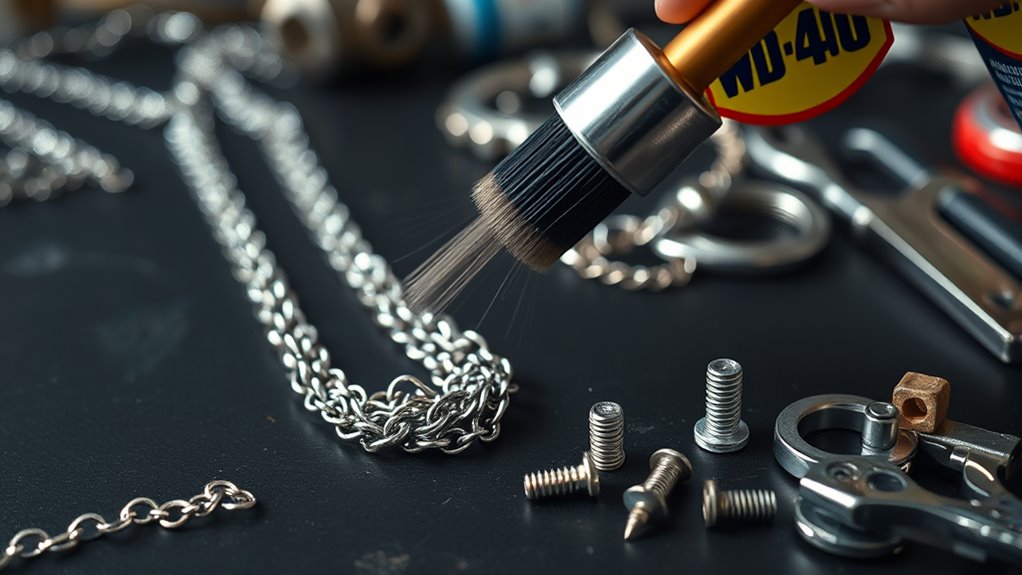
Ever struggled to untangle knotted necklaces or loosen stuck jewelry clasps? WD-40 can help. Spray a small amount onto tangled chains or rusty jewelry parts, then gently work out the knots or loosen the clasps. It acts as a lubricant, making jewelry easier to handle. Here are some tips:
- Untangle jewelry: Spray WD-40 on knots, wait a few seconds, then carefully loosen the tangle.
- Loosen stuck clasps: Apply to clasps or hinges that won’t open smoothly.
- Remove grime: Use WD-40 to clean dirt and debris from small hardware, like screws or hinges.
- Prevent rust: Spray lightly on jewelry or hardware that’s prone to corrosion for added protection.
Just remember to wipe off excess and clean with a soft cloth afterward to avoid residue buildup.
Frequently Asked Questions
Can WD-40 Be Used Safely on Electronic Devices?
You shouldn’t use WD-40 on electronic devices. It can damage sensitive components and cause corrosion or short circuits. Instead, use specialized electronic contact cleaners designed for delicate circuits. If you’re trying to fix a squeaky or sticky part, apply WD-40 carefully to non-electronic areas. Always turn off and unplug devices before cleaning, and avoid spraying directly onto electronics to prevent any damage.
Is WD-40 Effective for Cleaning Car Headlights?
Yes, WD-40 can help clean your car headlights. You spray it on, then wipe with a clean cloth to remove grime and oxidation. It restores clarity and shine, making your headlights look newer. However, avoid using it on plastic lenses regularly, as it can cause damage over time. For best results, follow up with a proper headlight polish or sealant to protect against future oxidation.
How Often Should I Apply WD-40 to Prevent Rust?
You should apply WD-40 to prevent rust every few months, especially if you live in a humid or coastal area. Regularly spraying it on vulnerable metal surfaces creates a protective barrier that repels moisture and reduces corrosion. Remember to wipe off excess product after application and inspect the area periodically. Consistent use helps keep rust at bay and maintains the longevity of your tools, bikes, and outdoor equipment.
Can WD-40 Be Used to Remove Soap Scum?
Did you know that WD-40 can break down soap scum effectively? You can use it by spraying a small amount directly on the residue, letting it sit for a few minutes, then scrubbing with a sponge or cloth. It’s especially useful on stubborn buildup in showers and tubs. Just rinse thoroughly afterward to remove any leftover oil. WD-40 makes cleaning soap scum quicker and easier, saving you time and effort.
Is WD-40 Safe to Use Around Pets and Children?
WD-40 isn’t safe to use around pets and children. Its chemicals can cause skin irritation, respiratory issues, or poisoning if ingested. Always keep WD-40 away from areas accessible to kids and pets, and wash your hands thoroughly after use. If accidental contact occurs, rinse the affected area immediately and seek medical advice if needed. For household tasks near children or pets, consider safer alternatives.
Conclusion
Now that you know these surprising ways to use WD-40 around your house, you’ll wonder how you ever managed without it. From fixing squeaky hinges to keeping your tools rust-free, this versatile spray truly does it all. Just remember, it’s a jack of all trades—so don’t put all your eggs in one basket. Keep it handy, and you’ll be able to tackle those pesky household issues with ease.