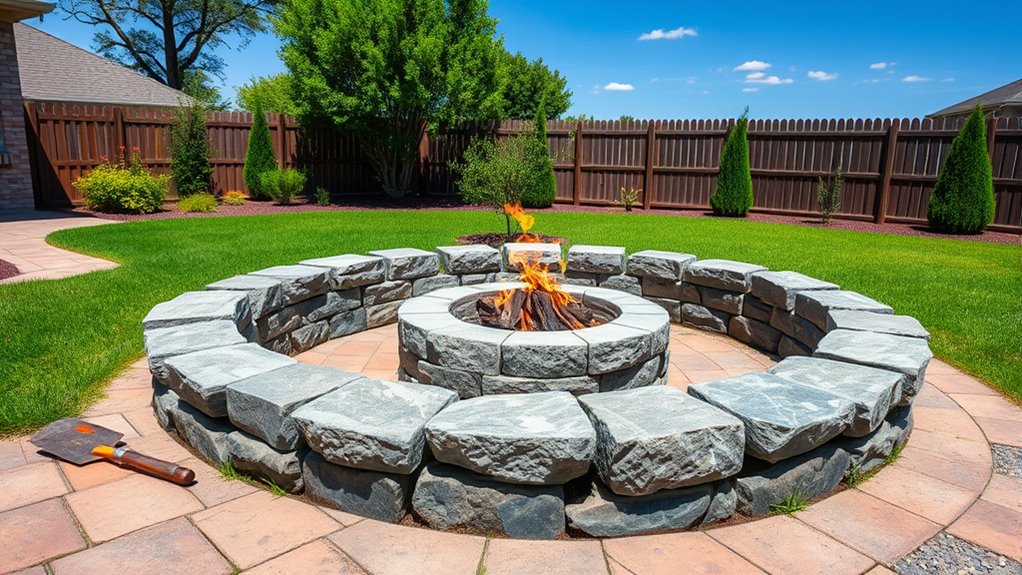

To build your own backyard fire pit in a weekend, start by selecting a safe, flat spot away from structures and overhead branches, then gather durable materials like fire bricks or retaining wall blocks. Clear and level the area, add a gravel base, and carefully stack your chosen materials, ensuring everything stays level. Finish by filling gaps and adding accessories. Want a step-by-step guide to help you craft a perfect fire pit? Keep exploring to find out more.
Key Takeaways
- Select a safe, flat outdoor area near seating, measuring 3-4 feet diameter for the fire pit.
- Gather durable, fire-resistant materials like concrete blocks or fire bricks, along with gravel for the base.
- Excavate a 4-6 inch deep circle, fill with compacted gravel, and ensure a level, stable foundation.
- Build the fire-resistant wall in stacked layers, checking for levelness, and secure with mortar if desired.
- Finish by adding interior features, seating, and lighting to create a functional, inviting backyard fire pit.
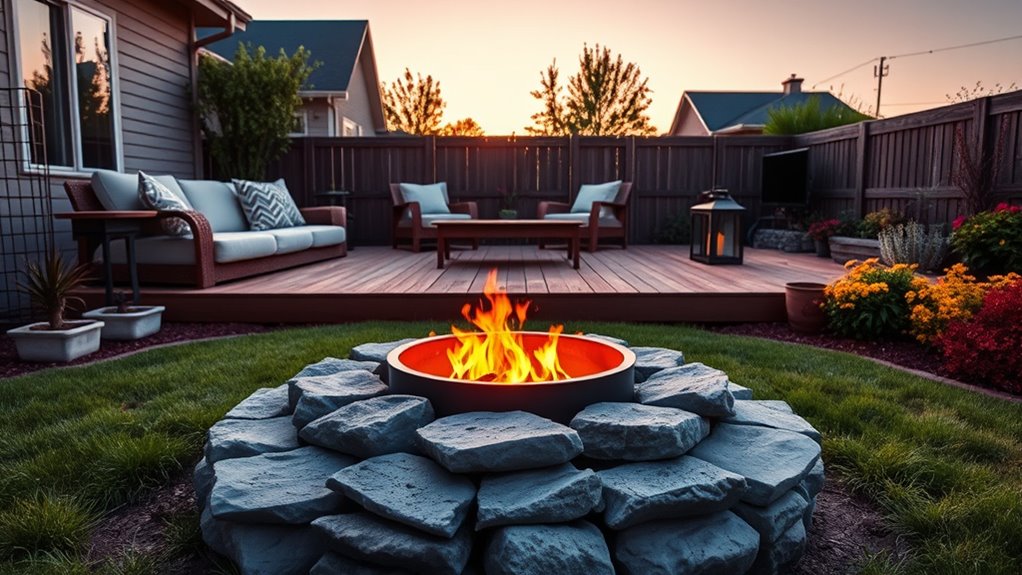
Creating your own backyard fire pit is a rewarding project that adds warmth and ambiance to your outdoor space. With a little planning and some basic tools, you can build a functional and attractive fire pit in just a weekend. Start by choosing the right location, ideally a flat area away from overhanging branches or structures. Consider safety and convenience—placing it near your patio or seating area makes it easier to enjoy. Measure out the size you want, typically around three to four feet in diameter, and mark the outline with spray paint or stakes and string. This helps you visualize the space and guarantees your design fits well within your yard.
Choose a flat, safe location near your patio for your backyard fire pit.
Next, gather your materials. Common options include retaining wall blocks, fire bricks, or large stones, depending on your style and budget. Fire bricks are excellent for durability and heat resistance, but sturdy concrete blocks are easier to work with and more affordable. You’ll also need gravel or crushed stone to create a stable base, along with some mortar or adhesive if you’re using bricks that require bonding. Don’t forget safety gear—gloves, safety glasses, and a dust mask—especially when working with mortar or cutting materials. Clear the area of debris, and then dig out the marked circle to about four to six inches deep, removing grass and roots to ensure a stable foundation. Proper planning can help you avoid common mistakes and ensure your fire pit is safe and durable. Additionally, selecting the right building materials can influence the longevity and safety of your fire pit.
Once you’ve prepared the hole, fill it with a layer of gravel or crushed stone, ramming it down firmly with a tamper or the back of a shovel. This base promotes drainage and prevents shifting over time. Now, start stacking your fire-resistant blocks or bricks in your desired pattern, ensuring they’re level and securely placed. If you’re using mortar, apply it between each layer for added stability. Take your time to check that each row remains level, using a level tool, to keep the structure even and safe. Continue stacking until you reach your desired height, typically around 12 inches for a comfortable fire pit. Building codes are also important to consider to ensure safety and compliance in your area.
Finally, inspect your work, fill any gaps with mortar or gravel, and let everything cure if mortar was used. You can add a ring of fire glass or small stones inside, or leave it open for wood fires. When it’s finished, place your outdoor furniture around it, add some outdoor lighting, and you’re ready to enjoy cozy evenings by your new backyard fire pit. Building it yourself gives you a sense of accomplishment, plus you get exactly what you want in terms of size, style, and location—all in a weekend. Understanding free floating can help you optimize your backyard design for safety and aesthetics. Additionally, exploring options like electric dirt bikes can provide alternative entertainment and functionality for outdoor spaces.
Top picks for "build backyard fire"
Open Amazon search results for this keyword.
As an affiliate, we earn on qualifying purchases.
Frequently Asked Questions
What Permits Do I Need for a Backyard Fire Pit?
You’ll need to check with your local building department to find out about permits for your fire pit. Usually, you’ll require a permit if it’s larger than a certain size or if it’s near structures or property lines. Some areas have restrictions on open flames or require safety setbacks. It’s best to contact your city or county office beforehand to make sure you’re following all regulations and avoid fines.
How Do I Ensure Safety Around the Fire Pit?
You can’t afford to overlook safety around your fire pit—think of it as the difference between a cozy night and a disaster. Always keep a safe distance, use a spark screen, and keep a fire extinguisher nearby. Clear the area of flammable debris and never leave the fire unattended. Regularly check for cracks or damage, and ensure everyone’s aware of safety rules to enjoy your fire pit responsibly.
What Materials Are Best for Fire Pit Construction?
You should choose fire-resistant materials like fire bricks, natural stone, or concrete blocks for your fire pit. These materials withstand high heat and guarantee safety. Avoid using flammable materials like wood or plastic in construction. Refrain from using regular bricks, as they may crack or break under high temperatures. Opt for durable, heatproof options to create a long-lasting, safe fire pit in your backyard.
How Do I Prevent Smoke From Drifting Into Neighbors’ Yards?
Did you know that smoke drifts up to 14 times farther than the height of your fire pit? To prevent smoke from reaching your neighbors, position your fire pit at least 10-20 feet away from property lines. Use dry, seasoned wood for cleaner burning, and build a taller, well-ventilated fire. Adjusting wind direction and creating a slight windbreak also helps keep smoke away from neighboring yards.
What Is the Average Cost to Build a Fire Pit?
The average cost to build a fire pit ranges from $300 to $1,500, depending on size, materials, and design. If you opt for a simple, DIY brick or stone fire pit, you’ll spend less. More elaborate or custom-designed fire pits with high-end materials can push costs higher. Be sure to factor in additional expenses like permits, tools, and accessories, which can add to your overall budget.
Conclusion
Now that you’ve built your own backyard fire pit, you’re ready to create unforgettable memories. Imagine cozy nights with friends, roasting marshmallows and sharing stories around the warm glow. For instance, last summer, a family transformed their backyard into a gathering spot, making every weekend special. With just a weekend’s work, you’ve turned your outdoor space into a welcoming retreat. Enjoy your new fire pit and the countless evenings it brings to life!