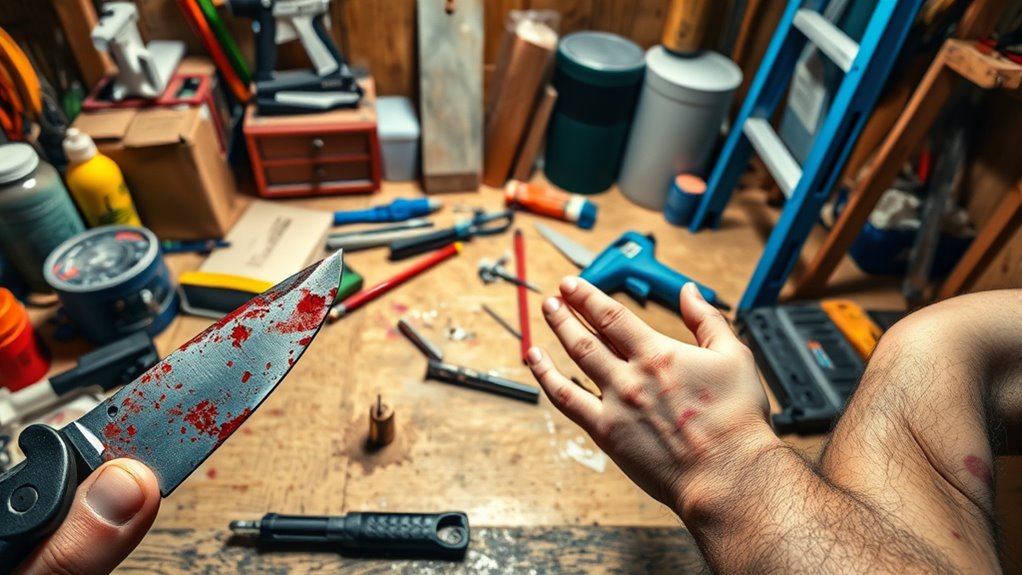

Common DIY injuries include cuts from sharp tools, burns from hot surfaces or chemicals, eye injuries from debris or splashes, falls from ladders or uneven surfaces, and repetitive strain from improper technique. To avoid these, always wear safety gear like goggles, gloves, and masks, follow instructions carefully, keep your workspace organized, and know your limits. Staying cautious reduces risks, and if you continue exploring, you’ll discover how to protect yourself every step of the way.
Key Takeaways
- Cuts and lacerations from sharp tools can be prevented by wearing gloves and handling tools carefully.
- Eye injuries from debris are avoided by always wearing safety goggles during DIY projects.
- Hearing loss risks are reduced by using ear protection when working with loud power tools.
- Respiratory issues caused by dust and fumes can be prevented with dust masks and proper ventilation.
- Falls and trips are minimized by keeping work areas tidy and securing ladders or scaffolding properly.
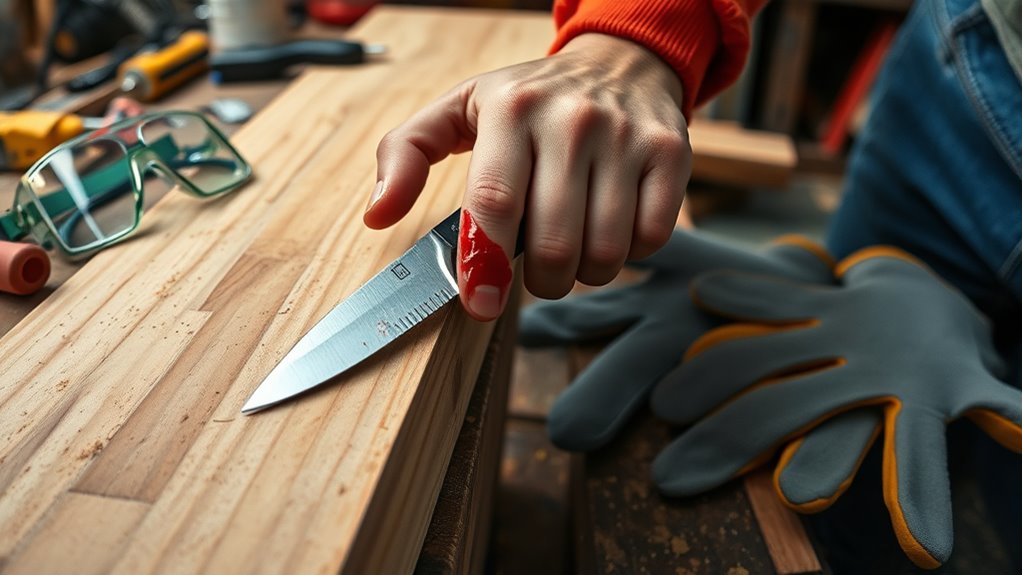
Trying to tackle home projects yourself can be rewarding, but it also increases the risk of injuries if you’re not careful. One of the most important steps you can take to stay safe is to always wear the right safety gear. Safety goggles protect your eyes from flying debris, splinters, and dust, while gloves shield your hands from cuts, splinters, and chemical exposure. Hearing protection is essential when using loud power tools, and a dust mask can prevent inhalation of harmful particles. Don’t skip these protective measures—your safety gear acts as your first line of defense against common injuries. It might seem like an extra step, but it can save you from serious harm.
Wearing proper safety gear is essential to protect yourself from common injuries during home projects.
Another vital aspect to prevent injuries is proper tool maintenance. Dull or damaged tools can slip, kick back, or malfunction, increasing your chances of cuts, punctures, or worse. Regularly inspect your tools before starting a project. Keep blades sharp, replace worn-out cords, and tighten loose parts. Proper maintenance ensures tools operate smoothly and safely, reducing the likelihood of accidents. Using well-maintained equipment not only makes your work easier but also minimizes the risk of unexpected malfunctions that could lead to injuries. Remember, neglecting tool upkeep might seem minor, but it can have serious consequences.
When working with power tools, always read the manufacturer’s instructions and follow recommended safety procedures. Avoid rushing through tasks; take your time to set up and operate tools correctly. Secure your workpiece firmly to prevent slips or kickbacks, especially when cutting or drilling. Keep your workspace tidy—cluttered areas can cause trips or accidental contact with sharp or hot objects. Be mindful of your surroundings and ensure others are clear of your work zone. Staying alert and cautious reduces the chances of accidental injuries.
Additionally, know your limits. If a task seems too complicated or dangerous, don’t force it. Seek guidance or hire a professional for complex jobs. Overexertion and fatigue can impair judgment and coordination, leading to accidents. Taking regular breaks and staying focused helps you maintain control and awareness. Remember, safety isn’t just about wearing gear but also about respecting your skills and the tools you’re using. Proper project planning and understanding your equipment can significantly reduce the risk of injuries. By paying attention to safety gear and tool maintenance, you greatly reduce your risk of common DIY injuries, making your home projects safer and more enjoyable.
Frequently Asked Questions
What Are the Most Overlooked Safety Precautions in DIY Projects?
You often overlook safety precautions like wearing proper protective gear and maintaining a tidy workspace. Always don goggles, gloves, and masks to protect yourself from debris and fumes. Keep your workspace organized to prevent accidents caused by clutter or misplaced tools. These simple steps help you avoid injuries, ensure a safer environment, and keep your DIY projects running smoothly. Don’t underestimate the importance of these overlooked precautions—they’re essential for your safety.
How Can I Properly Dispose of Hazardous DIY Waste?
You should always follow proper disposal guidelines for hazardous waste to protect yourself and the environment. Take hazardous DIY waste, like paint, solvents, or chemicals, to designated disposal facilities or recycling centers. Never pour them down drains or onto the ground. Check local regulations for specific disposal instructions. By doing so, you prevent contamination and keep your workspace and community safe from the dangers of hazardous waste.
What First Aid Steps Should I Take for Common DIY Injuries?
If you get injured while DIYing, start by cleaning the wound with gentle soap and water to prevent infection. For cuts, apply pressure to stop bleeding, then cover with a sterile bandage. If you have a burn, cool it immediately with running water for at least 10 minutes, then cover with a non-stick bandage. Seek medical help if the injury is severe or doesn’t improve.
Are There Specific Tools That Reduce Injury Risk During DIY?
Think of your tools as your safety partners, working hand-in-hand to safeguard you. Using ergonomic tools reduces strain, while safety gear like gloves, goggles, and masks shields you from potential hazards. Invest in tools designed with safety features—such as anti-slip handles and blade guards—that minimize injury risk. By choosing the right tools and gear, you turn your DIY project into a safer, more enjoyable experience.
How Do I Prevent Repetitive Strain Injuries From DIY Activities?
To prevent repetitive strain injuries during DIY activities, you should adopt ergonomic techniques like maintaining proper posture and taking frequent breaks. Incorporate stretching routines to keep your muscles flexible and reduce tension. Use tools designed to minimize strain, and avoid overexertion by pacing yourself. Listening to your body and stopping if you feel discomfort helps prevent injuries, ensuring you stay safe and productive during your DIY projects.
Conclusion
So, next time you pick up that hammer or paintbrush, remember these tips. It’s funny how a simple slip can turn a fun project into a trip to the ER. Staying attentive and taking precautions not only keeps you safe but also guarantees your DIY adventures stay enjoyable. After all, the best coincidence is finishing a project without a single injury—because nothing ruins the fun like an unexpected mishap. Stay safe and keep creating!