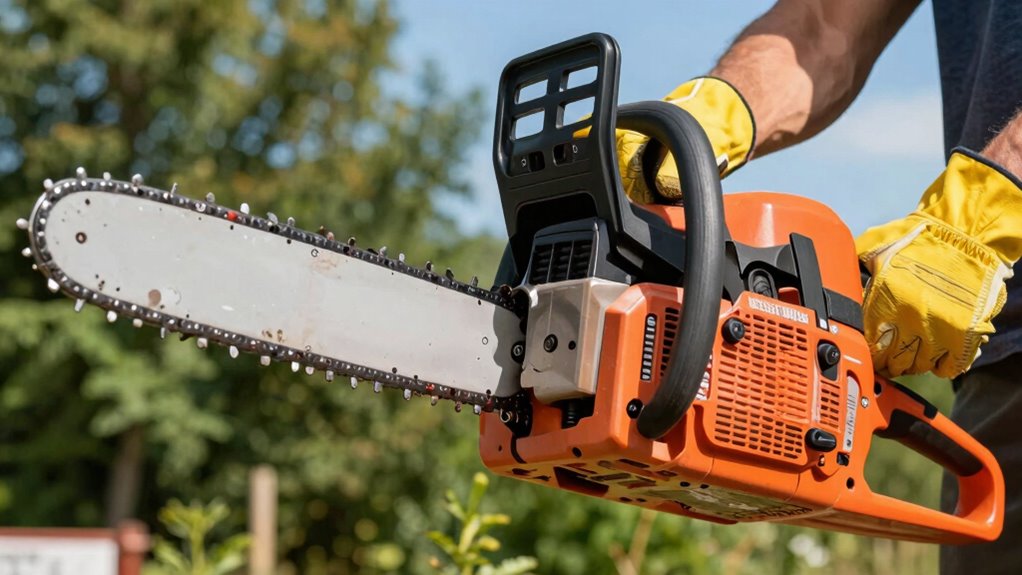

To stay safe with your chainsaw, always wear the proper protective gear like a helmet, gloves, chaps, and steel-toed boots. Before starting, do safety checks on the chain tension, inspect for damage, and know emergency procedures. Maintain a firm grip, stand with feet shoulder-width apart, and stay alert to avoid cutting above shoulder height. Consistently follow these habits and you’ll reduce risks. Keep exploring for more essential tips to keep safe during every use.

Get the little things that make your day delivered free with Prime
- Fast, free delivery on millions of items
- Prime Video, Amazon Music and more included
- Member-only deals all year
Key Takeaways
- Always wear comprehensive protective gear, including helmet, gloves, chaps, and steel-toed boots.
- Perform thorough safety checks on the chainsaw before each use, inspecting for damage and proper chain tension.
- Maintain a firm grip with both hands and stand with feet shoulder-width apart for stability.
- Operate the chainsaw within your skill limits, avoiding above-shoulder cuts or unsafe positions.
- Regularly maintain and inspect the chainsaw to prevent malfunctions and ensure safe operation.
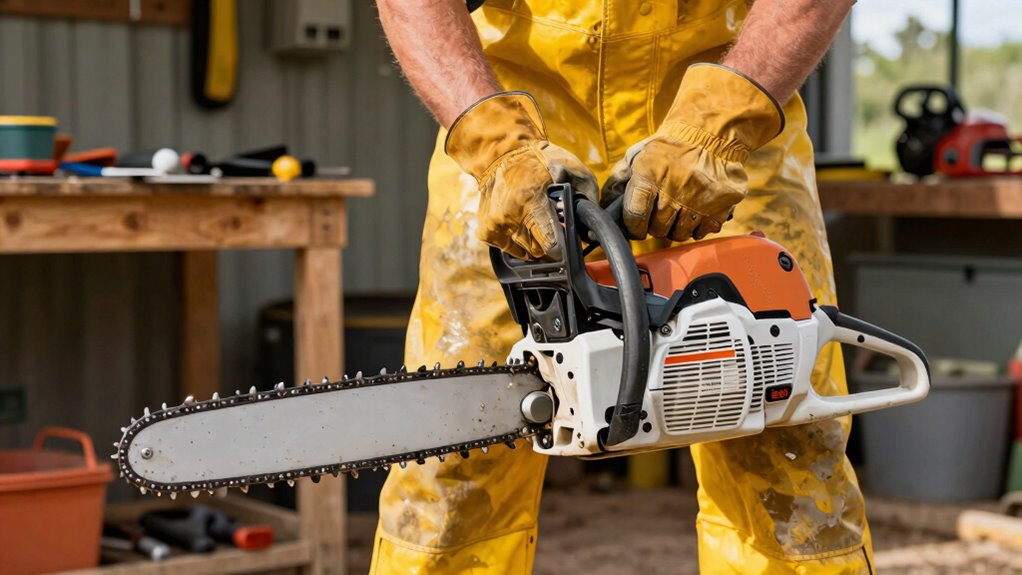
Using a chainsaw safely is essential to prevent accidents and injuries. Before you even start the engine, make sure you’re dressed appropriately. Protective gear isn’t just recommended; it’s a must. Wear a helmet with a face shield or safety goggles to shield your eyes and face from flying debris. Heavy-duty gloves protect your hands from cuts and vibrations, while sturdy chaps or chainsaw pants guard your legs from accidental contact with the moving chain. Steel-toed boots with non-slip soles give you stability and protect your feet if the saw slips. These safety measures are your first line of defense against injury and should never be overlooked.
Always wear protective gear—helmet, goggles, gloves, chaps, and steel-toed boots—before operating a chainsaw for maximum safety.
Once you’re dressed in proper protective gear, it’s crucial to familiarize yourself with emergency procedures. Know how to quickly shut off the chainsaw in case of a problem. Practice gripping the saw firmly with both hands, maintaining control at all times. Before making cuts, check the chain tension—too loose and it may derail; too tight and it could break. Always inspect the chainsaw for damage or loose parts before starting. If an emergency occurs, such as a kickback or chain break, stay calm and follow your predetermined safety steps. Having a first aid kit nearby and knowing basic first aid techniques can make a critical difference if an accident happens.
Holding the chainsaw correctly is another vital safety habit. Keep a firm grip with both hands, with your thumbs wrapped around the handles. Maintain a balanced stance, standing with your feet shoulder-width apart, and keep your body slightly to the side of the saw. Avoid cutting above shoulder height or reaching too far, as this increases the risk of losing control. Always clear your work area of obstacles and ensure you have a clear escape route. Never operate the saw when you’re fatigued, under the influence of alcohol, or feeling unwell. These conditions impair judgment and reaction time, increasing the likelihood of an accident. Recognizing and respecting the power of the chainsaw is essential for safe operation.
Additionally, understanding the chainsaw’s power and limitations can help you operate it more safely and effectively. Take your time with each cut, and don’t rush. If something feels wrong or unsafe, stop and reassess. Being aware of the proper handling techniques can further improve your safety. Proper maintenance and regular inspections, as highlighted in the safety gear section, also play a crucial role in preventing malfunctions. Remember, safety gear and emergency procedures are there to protect you, but your own vigilance and responsible behavior are what truly keep you safe. By integrating these habits into your routine, you’ll reduce risk and handle your chainsaw with confidence and care.
As an affiliate, we earn on qualifying purchases.
Frequently Asked Questions
How Often Should I Sharpen My Chainsaw Chain?
You should sharpen your chainsaw chain after every few uses or when you notice it’s dull, which can be indicated by difficulty cutting or increased vibration. Regular chainsaw maintenance is vital for safety precautions, so keep the chain sharp to prevent accidents and ensure efficient cutting. Always inspect your chain before use, and sharpen it promptly to maintain peak performance and reduce the risk of injury.
What Are the Signs of a Dull Chainsaw?
Like a dull blade dulls a sword, a dull chainsaw signals trouble. You’ll notice it struggles to cut smoothly, requiring more effort. The chain may produce excessive vibration, or you might see burn marks on the wood. These signs indicate your chain needs sharpening through proper chain maintenance. Always follow safety precautions, wear gear, and keep your chainsaw in top shape to prevent accidents and guarantee efficient, safe work.
Can I Use My Chainsaw in the Rain Safely?
You shouldn’t use your chainsaw in the rain because rainy conditions can cause it to malfunction or slip, risking injury. Water can damage the electrical components, compromising electrical safety. Always wait for the rain to stop and the area to dry thoroughly before operating your chainsaw. This helps guarantee safe handling, prevents electrical hazards, and keeps your equipment in good working order. Safety first—never compromise on rainy weather use.
How Do I Properly Store a Chainsaw Long-Term?
To store your chainsaw long-term, you should clean it thoroughly, removing all debris and oil. Apply fresh bar and chain oil, then drain the fuel or add a fuel stabilizer to prevent gumming. Store it in a dry, cool place, preferably in a case or on a shelf. Regularly check on it for corrosion or rust, and perform long-term maintenance like sharpening the chain before your next use.
What Personal Protective Equipment Is Essential for Chainsaw Use?
Did you know that wearing the right protective gear reduces the risk of injury by over 70%? When using a chainsaw, you must prioritize safety protocols by donning essential protective gear. This includes a helmet with a face shield, hearing protection, gloves, chaps or chainsaw pants, and sturdy boots. These items shield you from potential kickbacks, flying debris, and loud noise, keeping you safe and confident during every cut.
chainsaw safety gloves and chaps
As an affiliate, we earn on qualifying purchases.
As an affiliate, we earn on qualifying purchases.
Conclusion
By adopting these chainsaw safety habits, you’re building a sturdy shield around yourself, much like a knight’s armor. Remember, safety isn’t just a habit; it’s your best partner in the wild dance of cutting and carving. Stay alert, wear your gear, and respect the tool’s power. With each cautious step, you’re weaving a safety net that keeps you secure—because when it comes to chainsaws, a moment of care saves a lifetime of regret.
As an affiliate, we earn on qualifying purchases.
As an affiliate, we earn on qualifying purchases.
NFL season / tailgating Picks
team gear
As an affiliate, we earn on qualifying purchases.