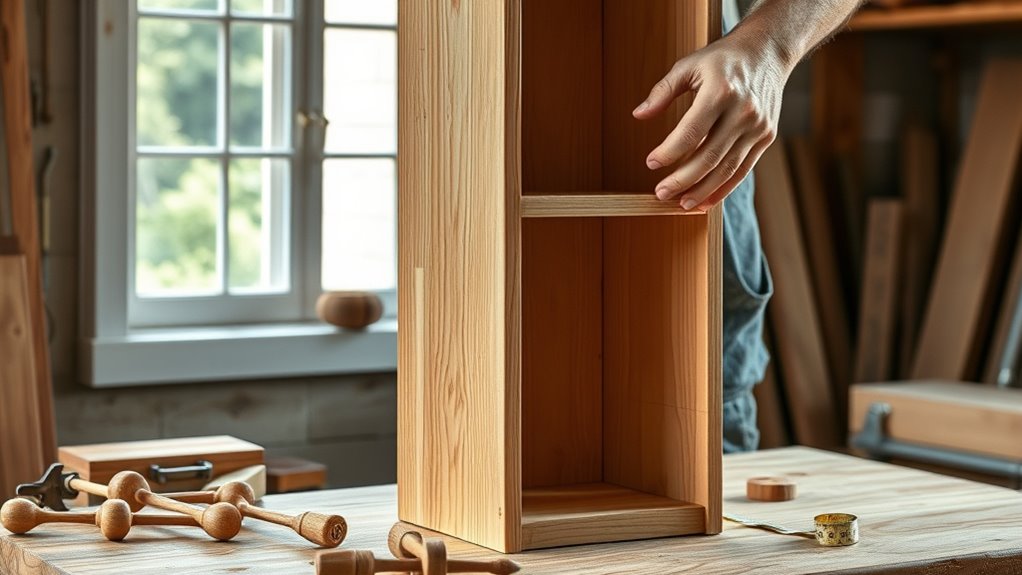
To build a bookshelf without power tools, start by selecting solid wood like pine or cedar. Use a handsaw or crosscut saw to cut your panels to size, measuring and marking carefully before cutting. Join pieces with dowels, nails, or screws driven by a manual screwdriver, and add wood glue for extra strength. Sand all surfaces thoroughly, then finish with stain or paint for durability. For detailed step-by-step instructions, keep exploring how you can craft a sturdy, attractive bookshelf using simple tools.
Key Takeaways
- Use hand saws, chisels, and a square for precise cuts and joinery without power tools.
- Join pieces with wood dowels, nails, or screws, securing with a manual screwdriver and wood glue.
- Smooth edges and surfaces with sandpaper or sanding blocks to ensure safety and a professional finish.
- Plan shelf heights and supports manually, incorporating brackets or dado joints for stability.
- Finish the bookshelf with stain, paint, or sealant by hand for durability and aesthetic appeal.
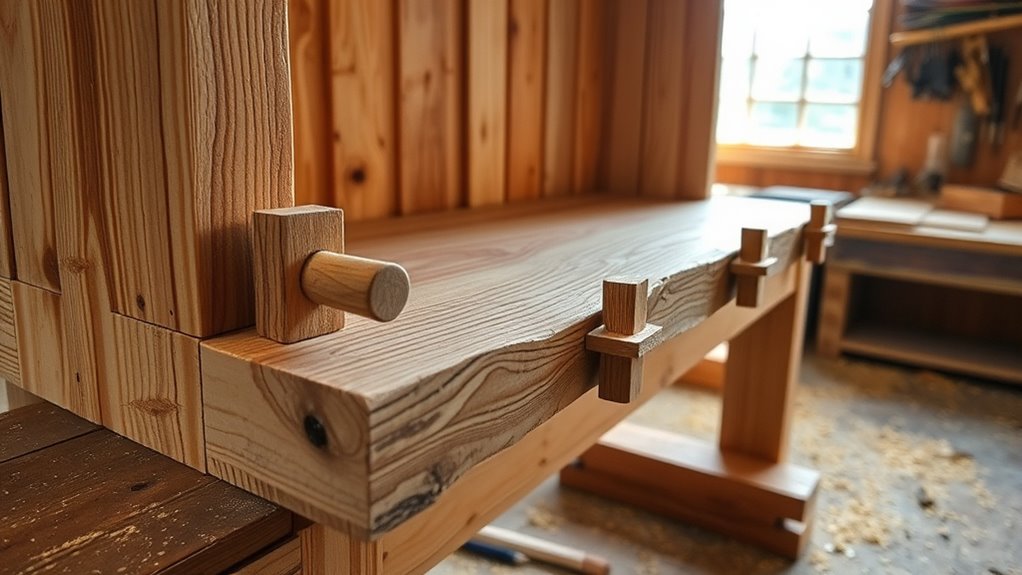
Creating a sturdy bookshelf without power tools is entirely possible and can be a rewarding DIY project. You don’t need expensive equipment or a workshop filled with drills and saws to craft a functional and attractive piece of furniture. Instead, you’ll rely on manual tools, patience, and some clever techniques to bring your vision to life. One of the key steps is ensuring proper DIY finishing, which not only enhances the appearance but also protects your bookshelf from wear and tear over time. Smooth sanding, thorough sealing, and a good paint or stain can make a significant difference. When it comes to shelf organization, think carefully about how you want to use the space—whether for books, decorative items, or a combination—and plan your shelf heights accordingly.
Start with selecting the right materials. Solid wood like pine, cedar, or oak works well because it’s sturdy and easier to work with manually. Use a hand saw or a simple crosscut saw to cut your panels to size. Take your time measuring and marking your cuts precisely; using a square will help keep your lines straight. After cutting, smooth the edges with sandpaper or a sanding block. This step is essential for DIY finishing, as it prevents splinters and creates a clean look. Sand the surfaces thoroughly, paying attention to corners and joints, so your shelves will sit flush and look professional even without power tools.
Next, assemble your bookshelf using traditional joinery methods like wood dowels, nails, or screws with a manual screwdriver. For added stability, consider using wood glue along with your fasteners. Clamp the joints securely and let the glue dry completely before moving on. When attaching shelves, support the weight by installing brackets or using dado joints—these can be made with hand saws and chisels. To improve shelf organization, incorporate adjustable or fixed shelves based on your needs, and consider adding small lips or edge guards to prevent items from falling off.
Once assembled, focus on DIY finishing touches. Sand the entire piece again for a smooth surface. Apply a stain, paint, or sealant to protect the wood and give it a finished look. If you want a rustic vibe, a simple stain and clear varnish can highlight the natural wood grain. For a modern look, opt for a clean coat of paint. These finishing touches not only enhance aesthetics but also extend the lifespan of your bookshelf.
Building a bookshelf without power tools isn’t just practical; it’s also a chance to sharpen your craftsmanship. With careful planning, precise manual work, and attention to DIY finishing, you can create a beautiful, organized space that perfectly suits your needs. Whether you’re stacking books or displaying cherished keepsakes, your handcrafted bookshelf will stand as a tribute to your resourcefulness and skill.
Frequently Asked Questions
What Are the Best Hand Tools for Woodworking Projects?
You should consider using hand saws and chisels for woodworking projects. Hand saws are versatile for making precise cuts, while chisels help with detailed carving and shaping. These tools are easy to handle, require no electricity, and are perfect for detailed work or rough cuts. With a good set of hand saws and chisels, you’ll be able to complete your project efficiently, even without power tools.
How Do I Ensure My Bookshelf Is Level and Sturdy?
Think like a seasoned craftsman from the 18th century and guarantee your bookshelf is level and sturdy. Measure accurately with a spirit level or a simple carpenter’s level, checking multiple spots. Focus on weight distribution by evenly spacing shelves and securing joints tightly. Use clamps and braces to keep everything aligned while you work. Remember, patience and precision are key to a stable, well-balanced bookshelf that’ll stand the test of time.
Can I Build a Large Bookshelf Without Power Tools?
Yes, you can build a large bookshelf using manual woodworking and hand tools. Focus on precise measurements, carefully cut your wood with saws, and use clamps to hold pieces steady. Always prioritize hand tool safety by wearing protective gear and working slowly. With patience, careful planning, and skillful use of hand tools like saws, chisels, and screwdrivers, you can create a sturdy, impressive large bookshelf without power tools.
What Types of Wood Are Easiest to Work With Manually?
Think of softwoods like cedar and pine as your friendly guides—easy to work with by hand. Their smooth wood grain makes sawing and sanding simpler, and they accept finish options beautifully, giving your bookshelf a polished look. You won’t struggle with tough knots or dense fibers, making these woods perfect for manual craftsmanship. Immerse yourself in their versatility, and your project will come together smoothly and beautifully, even without power tools.
How Long Does It Take to Build a Bookshelf by Hand?
Building a bookshelf by hand typically takes about 4 to 8 hours, depending on your experience and the complexity of the design. The assembly time involves measuring, cutting, and fitting the wood pieces together. Proper wood preparation speeds up the process, so take your time sanding and marking. With patience and the right tools, you’ll have your bookshelf ready in a day, enjoying a rewarding DIY project.
Conclusion
Now, with just your hands and a bit of patience, you’ve crafted a sturdy bookshelf, reminiscent of the craftsmen of old. Imagine yourself in a cozy workshop, sparks flying from a forge, yet here you are, building beauty without power tools. It’s a declaration to timeless skills, proving that with determination and simple tools, you can create something truly special. So, go ahead—sit back, admire your work, and feel proud of your craftsmanship, just like a true artisan.