
Upcycling helps you save money by turning trash into functional, personalized items, so you spend less on new products and avoid waste disposal fees. It reduces clutter, prolongs the life of household goods, and offers creative solutions that boost your home’s style without extra cost. Plus, it promotes mindful consumption and environmental benefits. Keep exploring to discover how upcycling can make a meaningful difference in your savings and sustainability efforts.
Key Takeaways
- Upcycling transforms old items into functional decor, reducing the need to buy new products and saving money.
- Repurposing household objects minimizes waste disposal costs and lessens landfill burden.
- Creating custom upcycled pieces adds value to your home without the high costs of retail purchases.
- Upcycling encourages resourcefulness, decreasing impulse buying and promoting sustainable, cost-effective habits.
- It offers a creative way to enjoy stylish, personalized items while significantly cutting household expenses.
If you want to save money while reducing waste, upcycling offers a smart solution. Instead of tossing out old items, you can transform them into something new and useful through creative reuse. This approach not only keeps clutter out of landfills but also helps you cut costs on buying new products. Upcycling allows you to see potential where others see trash, turning everyday objects into personalized, functional pieces. By doing so, you’re engaging in a form of cost reduction that benefits both your wallet and the environment.
Upcycling saves money, reduces waste, and transforms trash into useful, personalized home decor.
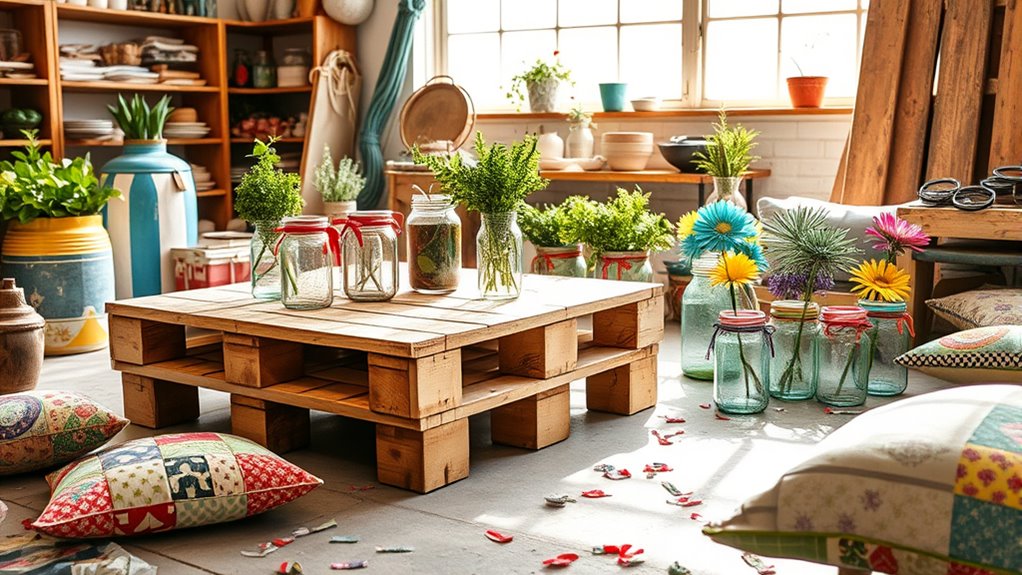
When you choose to upcycle, you tap into your creativity and resourcefulness. Instead of spending money on new furniture, decor, or storage solutions, you breathe new life into what you already have. For instance, an old wooden pallet can become a stylish coffee table, and worn-out jars can serve as charming storage containers. This creative reuse not only saves you money but also gives you the satisfaction of making something unique. Plus, it encourages you to think outside the box and develop new skills, which can lead to even more savings in the future.
The financial advantages of upcycling extend beyond just avoiding purchases. By repurposing items, you reduce the need for buying new products, which often come with higher price tags due to branding and marketing. Over time, these savings add up, considerably lowering your overall household expenses. Additionally, upcycled pieces can increase in value or become conversation starters, adding a sense of pride to your home. It’s a win-win situation: you get functional, stylish items at a fraction of the cost, all while making environmentally conscious choices.
Another way upcycling saves you money is through the avoidance of disposal fees and the reduction of waste collection costs. When you keep items out of the trash, you’re indirectly reducing your household’s waste management expenses. It also lessens the burden on local landfills, contributing to a healthier environment. This eco-friendly mindset often leads to more thoughtful consumption, where you’re less likely to impulse buy and more likely to repurpose what you already own. Recognizing the environmental benefits of upcycling can motivate more sustainable habits across your entire household.
In essence, upcycling blends creativity and practicality, empowering you to make smarter financial decisions. It’s about seeing value in what others might discard and turning it into something valuable for your home. With a little effort and imagination, you can enjoy the benefits of cost reduction while making a positive impact on the planet. Upcycling isn’t just about saving money; it’s about creating a sustainable lifestyle that emphasizes resourcefulness and innovation.
Top picks for "trash treasure upcycl"
Open Amazon search results for this keyword.
As an affiliate, we earn on qualifying purchases.
Frequently Asked Questions
What Are the Best Beginner Upcycling Projects for Saving Money?
Start with simple projects like transforming old jars into creative storage for your pantry or bathroom. You can also upcycle furniture by repainting or reupholstering, turning thrifted pieces into unique accents. These beginner upcycling projects are budget-friendly and fun, helping you save money while adding personal style to your home. Plus, they’re easy to do and perfect for building your confidence in upcycling.
How Can Upcycling Reduce Household Waste and Disposal Costs?
Imagine turning old glass jars into stylish storage containers; this upcycling reduces household waste and disposal costs by keeping items out of landfills. Your recycling habits become more impactful as you repurpose items instead of discarding them. Incorporating waste reduction strategies like upcycling minimizes the need for new purchases and waste management fees, saving you money while helping the environment. Embrace creative solutions to cut waste and lower disposal expenses effectively.
Are There Safety Tips for Upcycling Old or Damaged Items?
When upcycling old or damaged items, always wear safety gear like gloves and goggles to protect yourself. Check for hazardous materials such as lead paint, mold, or sharp edges before starting your project. Work in a well-ventilated area, and handle chemicals carefully. If you’re unsure about materials, consult safety guidelines or professionals to avoid health risks. Taking these precautions guarantees a safe and enjoyable upcycling experience.
What Tools or Materials Are Essential for Cost-Effective Upcycling?
Think of your toolkit like a painter’s palette—full of potential. Essential tools include basic hand tools like scissors, hammers, and screwdrivers, plus eco-friendly adhesives for a sustainable touch. Recycling techniques such as sanding and painting can transform items beautifully. Keep materials like old fabric or wood on hand for upcycling projects. These simple, cost-effective tools and materials make your projects easier, eco-friendly, and budget-conscious, turning trash into treasure effortlessly.
Can Upcycled Items Have Higher Resale Value Than Original?
Yes, upcycled furniture and vintage repurposing can have higher resale value than the original items. When you breathe new life into old pieces, you create unique, stylish pieces that appeal to eco-conscious buyers. Your skill in vintage repurposing adds charm and character, often increasing demand. Proper finishing and marketing can boost their value even more, making your upcycled creations a profitable and sustainable investment.
Conclusion
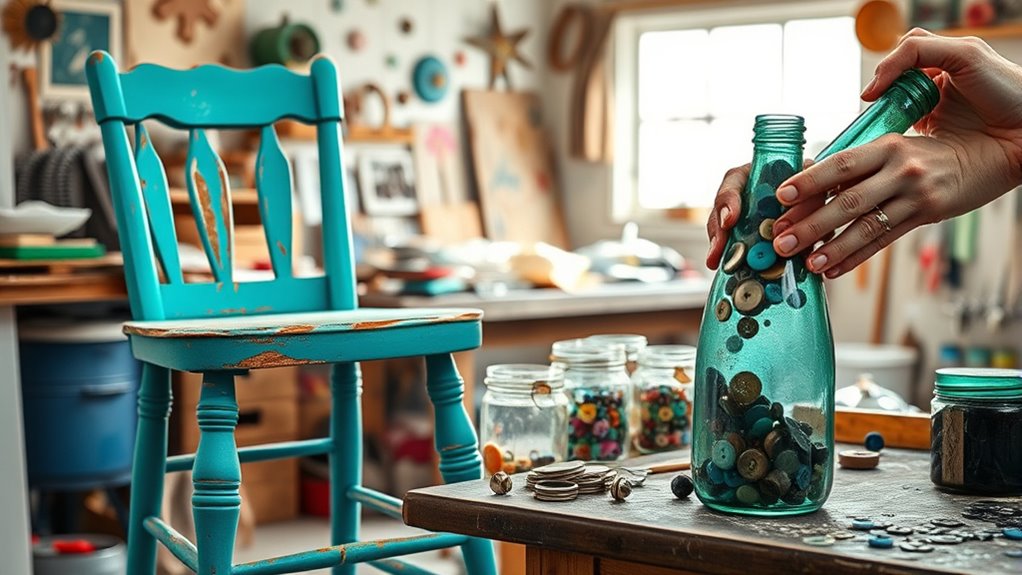
So, next time you see that old chair or broken jar, ask yourself: could this become something new and useful instead of trash? Upcycling not only saves you money but also sparks your creativity and helps the environment. Why keep throwing things away when you can transform them into treasures? Embrace upcycling and make a positive change today—after all, your wallet and the planet will thank you! Are you ready to start turning trash into treasure?