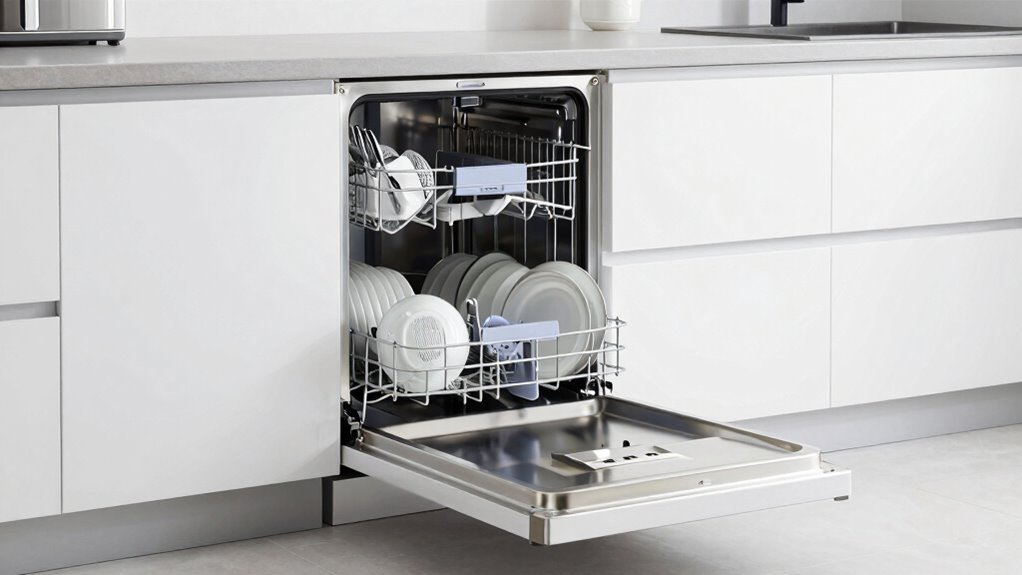

When considering dishwasher noise levels, focus on decibels—40 dB or less is whisper-quiet, ideal for open spaces, while 50 dB or higher can be disruptive. Think about your home layout, and whether noise might interfere with daily life. Look for models with soundproofing and vibration-reduction features, and guarantee proper installation for minimal noise. If you want to know more about managing sounds and choosing the best model, keep exploring these tips.

Get the little things that make your day delivered free with Prime
- Fast, free delivery on millions of items
- Prime Video, Amazon Music and more included
- Member-only deals all year
Key Takeaways
- Consider whether the noise level is below 40 dB for whisper-quiet operation in open spaces.
- Assess your kitchen layout to determine acceptable noise levels during appliance use.
- Look for models with noise-reduction features like insulation, vibration dampening, and soundproof panels.
- Ensure proper installation, including secure placement and soundproofing measures, to minimize operational noise.
- Balance noise levels with energy efficiency and other features when choosing a dishwasher.
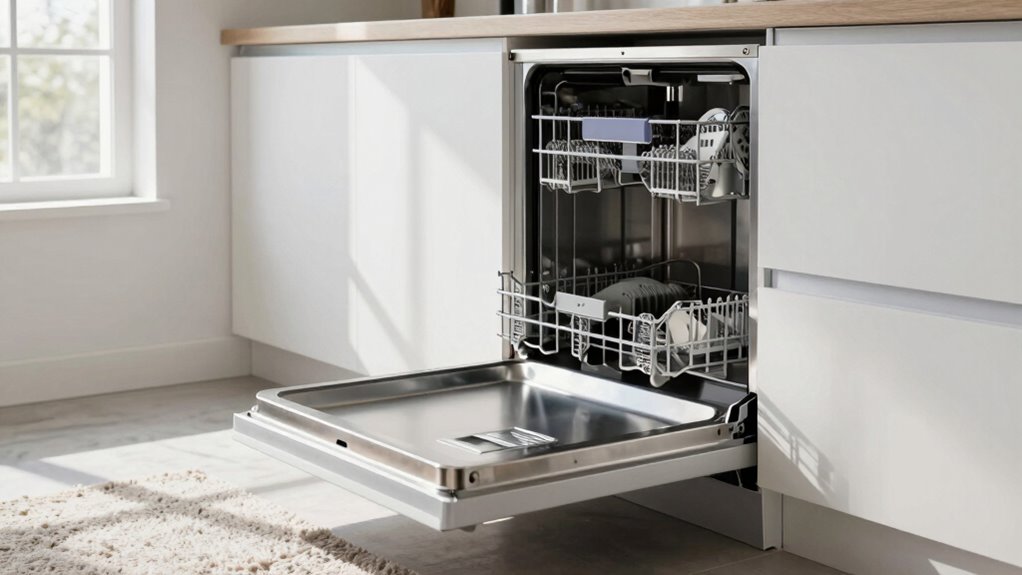
Have you ever wondered how to determine whether a dishwasher’s noise level is acceptable for your home? Noise is a vital factor when choosing a dishwasher, especially if your kitchen is open-plan or near living spaces. Noise level is usually measured in decibels (dB), with lower numbers indicating quieter operation. Generally, dishwashers producing around 40 dB or less are considered whisper-quiet, making them ideal for homes where noise can disrupt daily life. On the other hand, models with noise levels of 50 dB or higher tend to be louder and more noticeable during operation, which might be acceptable if your kitchen is separate from your main living areas.
When evaluating noise levels, it’s also important to think about energy efficiency. Quieter dishwashers often incorporate advanced insulation and soundproofing features, which can sometimes lead to increased energy consumption. However, many modern models strike a good balance between energy efficiency and noise reduction. Look for ENERGY STAR-rated dishwashers, as they are designed to consume less power and water without sacrificing performance or quiet operation. This way, you can enjoy a quieter home environment while also saving on utility bills. Additionally, some manufacturers include noise-reduction technology that can further improve the overall soundproofing of your appliance. Proper installation techniques, such as ensuring vibration dampening, can also significantly enhance noise reduction.
Installation considerations play a key role in managing dishwasher noise. Proper installation can considerably reduce operational noise and vibration. Ensure your dishwasher is installed on a stable, level surface, and consider placing it on a cushioned mat or anti-vibration pads, especially if it’s installed on a hard floor. Additionally, confirm that there’s adequate space around the appliance to allow for proper ventilation and soundproofing. If your kitchen cabinets are close to the dishwasher, consider adding soundproof panels or insulating materials behind the panels to further dampen noise. Properly securing the dishwasher to prevent movement during cycles also minimizes vibrations that can amplify noise. Understanding dishwasher noise levels and how they relate to installation techniques can help you make an informed decision to create a more peaceful home environment.
As an affiliate, we earn on qualifying purchases.
Frequently Asked Questions
Are Quieter Dishwashers Less Effective at Cleaning?
No, quieter dishwashers aren’t less effective at cleaning. Many noise level myths suggest quieter models compromise cleaning power, but manufacturers use soundproofing techniques to reduce noise without sacrificing performance. In fact, advanced insulation and better motor design help keep noise low while maintaining cleaning efficiency. So, you can choose a quieter dishwasher confidently, knowing it’ll still do a great job without disturbing your peace.
What Is the Average Noise Level for Quiet Dishwashers?
Quiet dishwashers typically operate around 40 to 50 decibels, making them less disruptive. You should consider sound insulation and noise frequency when choosing one, as better insulation reduces overall noise, and certain frequencies may seem louder or softer. These models balance effective cleaning with minimal sound, so you can run your dishwasher anytime without disturbing your household. Remember, the lower the decibel level, the quieter your dishwasher will be.
Do Installation Locations Affect Dishwasher Noise Levels?
Think of your dishwasher’s noise as a song played louder or softer depending on its placement. Installation placement greatly affects noise levels; placing it on a solid, insulated surface can muffle sound. Consider soundproofing options like acoustic panels or mats to further quiet things down, especially if you want minimal disruption. Proper installation and soundproofing make your dishwasher’s hum a gentle whisper rather than a noisy concert.
How Does Dishwasher Noise Compare to Other Household Appliances?
Dishwasher noise is typically quieter than a vacuum cleaner but louder than a refrigerator. To keep it manageable, use sound insulation and noise mitigation techniques, like installing the dishwasher on a cushioned pad or adding soundproof panels nearby. You can also choose models with noise-reduction features. This helps create a quieter home environment, especially if your kitchen is open-plan or near living spaces.
Can Noise-Reducing Features Be Added After Purchase?
Yes, you can add noise-reducing features after purchase through post-purchase modifications. Consider installing soundproofing options like acoustic panels or mats around the dishwasher to dampen noise. You might also add insulation or a noise barrier to further reduce sound. These modifications are effective and affordable ways to make your dishwasher quieter without replacing the entire unit, enhancing your kitchen’s comfort and peace.
dishwasher soundproofing insulation
As an affiliate, we earn on qualifying purchases.
As an affiliate, we earn on qualifying purchases.
Conclusion
While a quieter dishwasher lets you enjoy peaceful moments, don’t forget that some noise signals it’s working hard. Silence might mean efficiency, but it can also hide potential issues. So, as you choose your appliance, weigh the noise against durability and performance. Sometimes, a little background hum is a small price to pay for a reliable, effective dishwasher. After all, in the quiet, you might miss the subtle signs of something needing attention.
energy efficient quiet dishwasher
As an affiliate, we earn on qualifying purchases.
As an affiliate, we earn on qualifying purchases.
dishwasher vibration dampening pads
As an affiliate, we earn on qualifying purchases.
As an affiliate, we earn on qualifying purchases.
NFL season / tailgating Picks
team gear
As an affiliate, we earn on qualifying purchases.