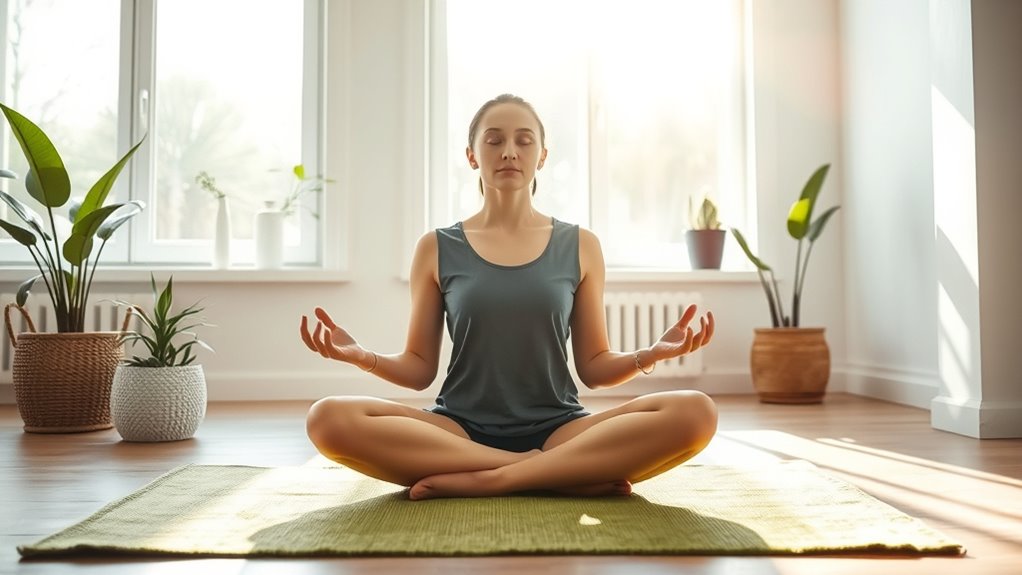

To manage stress effectively with mindfulness, find a quiet spot and focus on your breath by taking slow, deep inhales and exhales. Practice body scans to notice tension in different areas and observe physical sensations and surroundings with full attention. Incorporate these simple techniques into your daily routine, even for a few minutes, and learn to recognize early signals of stress. Continuing this journey will reveal more ways to build calm and resilience in your life.
Key Takeaways
- Practice slow, deep breathing to anchor attention in the present moment.
- Use body scans to identify and release physical tension associated with stress.
- Observe sensory details of objects around you to foster mindfulness during stressful times.
- Incorporate daily mindfulness routines to build emotional resilience and reduce stress over time.
- Recognize early signs of stress to respond proactively with mindfulness techniques.
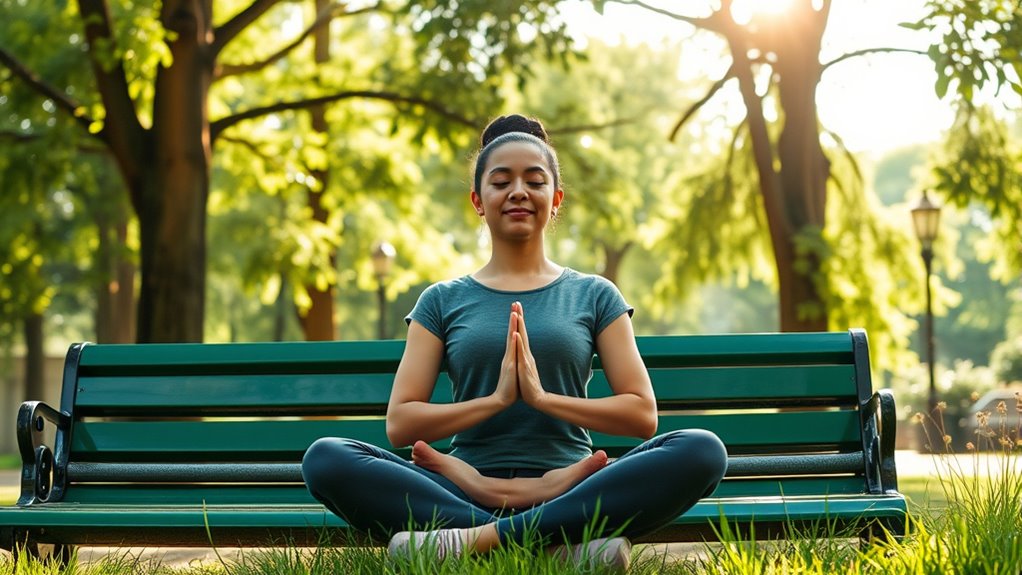
Stress can quickly overwhelm you, but practicing mindfulness offers an effective way to regain control. When life feels chaotic and your mind races with worries, taking a moment to be present can make a significant difference. Mindfulness encourages you to focus on what’s happening right now, instead of dwelling on past mistakes or future anxieties. This shift in perspective helps reduce the intensity of stress and brings clarity to your thoughts. To start, find a quiet space where you can sit comfortably without interruptions. Close your eyes if that feels comfortable, and take slow, deep breaths. As you breathe in, notice the sensation of air filling your lungs. As you breathe out, feel the tension leaving your body. Concentrating on your breath anchors you to the present moment and calms your mind.
Another effective technique is body scanning. Begin by bringing your awareness to your feet, noticing any sensations, tension, or relaxation. Slowly move your focus upward through your legs, hips, abdomen, chest, arms, neck, and head. Pay attention to how each part feels, without trying to change anything. This practice helps you recognize physical signs of stress that might be otherwise overlooked. When you identify areas of tension, take a deep breath and imagine releasing that tightness. Regularly practicing body scans trains your mind to become more aware of stress signals early, giving you a chance to respond before stress becomes overwhelming. Developing this awareness can also help you recognize early stress signs and respond proactively. Incorporating mindfulness techniques such as these can enhance your ability to manage stress effectively. Being aware of your physical sensations can also help you notice tension linked to muscle tightness before it escalates. Cultivating this awareness can also foster greater overall emotional resilience.
Mindful observation is also powerful. Pick an everyday object, like a pen, a plant, or a cup. Observe it closely, noting its color, texture, shape, and any details you might usually ignore. Engage your senses fully—what do you see, hear, or feel? This simple act pulls your attention away from racing thoughts and grounds you in the present. It’s a quick way to reset during stressful moments, whether you’re at work or home. Incorporating such practices into your routine can help build resilience over time. The key is to approach these practices with patience and without judgment. If your mind wanders, gently bring it back to your breath, body, or object of focus.
Consistency is essential. Incorporate these techniques into your daily routine, even if only for a few minutes. Over time, you’ll notice that you’re better equipped to handle stress, respond thoughtfully, and stay centered amid chaos. Mindfulness isn’t about eliminating stress but learning to observe it without becoming overwhelmed. With practice, you develop resilience and a sense of calm that can profoundly improve your overall well-being. Building ongoing mindfulness habits ensures that these benefits become part of your lifestyle. Remember, even brief moments of mindfulness can have a lasting impact if practiced regularly.
Frequently Asked Questions
Can Mindfulness Techniques Be Practiced During High-Stress Situations?
Yes, you can practice mindfulness techniques during high-stress situations. Focus on your breath, taking slow, deep inhales and exhales to calm your mind. Ground yourself by paying attention to your senses—notice sounds, textures, or smells around you. Even a few seconds of mindful awareness can help you regain control, reduce anxiety, and approach the situation more calmly. Practice regularly so it becomes easier when stress peaks.
How Long Does It Take to See Stress Reduction Benefits From Mindfulness?
You might start feeling calmer in just a few days, like a storm calming into a gentle breeze. With consistent practice, many notice reduced stress within 8 weeks, as if a fog lifts from your mind. The more you engage in mindfulness, the faster your inner landscape shifts from chaos to clarity. Keep practicing daily, and you’ll watch stress melt away, revealing a more peaceful, resilient you.
Are There Any Risks or Drawbacks to Practicing Mindfulness for Stress?
Practicing mindfulness generally has minimal risks, but some people might experience increased anxiety, emotional discomfort, or frustration if they become overwhelmed or if they try to force the process. It’s important to start gently and seek guidance if needed. If you notice persistent negative feelings, take a break or consult a mental health professional to guarantee your mindfulness practice supports your well-being safely.
Can Mindfulness Help With Chronic Stress or Anxiety Disorders?
Think of your mind as a turbulent sea—mindfulness acts like a gentle anchor, calming the waves. Yes, it can help with chronic stress and anxiety disorders by grounding you in the present moment, reducing overwhelming feelings. While it’s not a cure-all, regular practice allows you to build resilience, like a sturdy ship weathering storms. Embrace mindfulness, and you’ll navigate your emotional waters with greater ease and clarity.
What Common Misconceptions About Mindfulness Should I Be Aware Of?
You might think mindfulness means emptying your mind completely or always feeling calm, but that’s not true. It’s about paying attention on purpose, without judgment, to your present experience. Many believe it’s a quick fix for stress, but it takes regular practice. It’s not about relaxation alone but about becoming more aware of your thoughts and feelings. Keep these misconceptions in mind to use mindfulness effectively.
Conclusion
Just like a steady lighthouse guides ships safely through stormy seas, mindfulness can help you navigate life’s stresses with calm and clarity. By practicing these simple techniques, you strengthen your inner resilience and stay grounded amid chaos. Remember, the greatest strength lies within you—waiting to be awakened whenever stress threatens to overwhelm. Embrace mindfulness as your guiding light, and you’ll find peace even in life’s roughest waters.