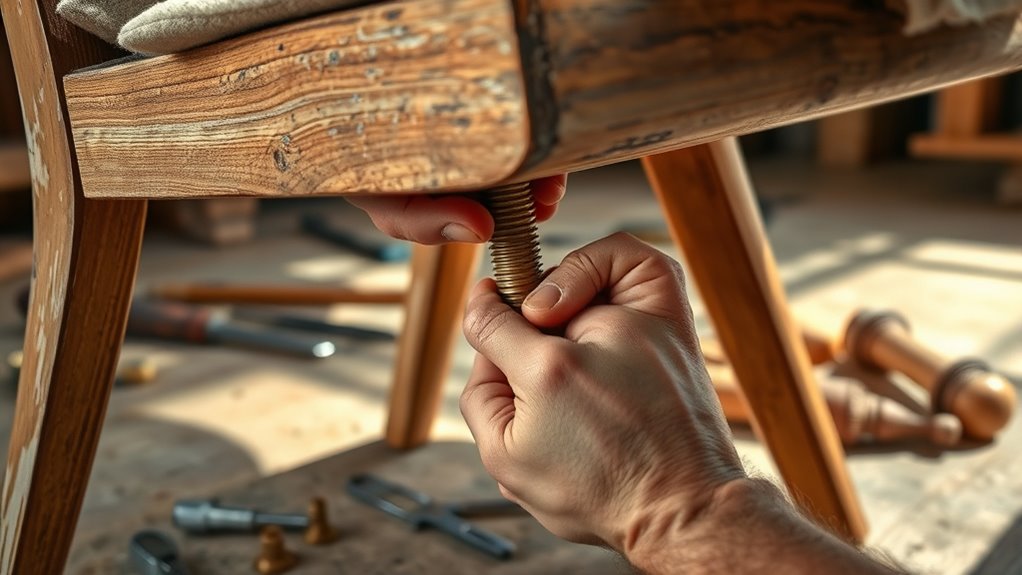

To fix a wobbly chair, start by inspecting all joints and tightening or gluing loose connections with wood glue and clamps. Reinforce damaged joints with screws or dowels if needed, and check the upholstery for slack—stretch and secure it tightly with a staple gun. Also, tighten any loose hardware and level uneven legs with sanding or furniture glides. Keep going, and you’ll discover how to make your chair stable and lasting.
Key Takeaways
- Identify loose joints or damaged areas causing wobbliness and assess the chair thoroughly.
- Apply wood glue and clamp joints to restore stability; disassemble if necessary.
- Reinforce joints with screws or dowels for added strength without altering the chair’s appearance.
- Tighten or re-secure upholstery and replace worn padding to improve stability and comfort.
- Check and tighten hardware, fix uneven legs, and ensure all components are secure for a durable repair.
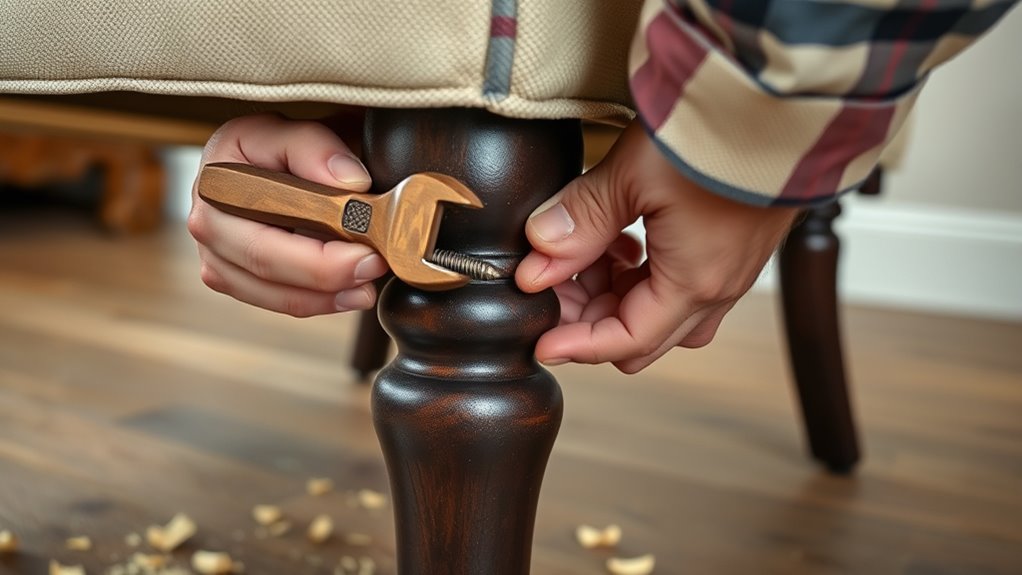
If your furniture has seen better days, don’t rush to toss it out. A wobbly chair can often be fixed with a few simple steps, saving you money and preserving its charm. The first thing to assess is what’s causing the instability. Usually, loose joints or worn-out upholstery are to blame. For the joints, wooden joint repair is your best starting point. Grab some wood glue and clamps, then carefully disassemble the loose parts if needed. Apply the glue to the joint, press it firmly together, and clamp it until the glue dries. This process restores stability by re-bonding the wood. Be sure to clean off any excess glue before it hardens to keep the repair neat. If the joint is severely damaged or cracked, you might need to reinforce it with small screws or dowels, but always ensure the repairs don’t alter the chair’s original structure or comfort. Natural materials like wood glue can be particularly effective for these repairs, especially if you aim to maintain the chair’s authentic look and feel. Once the joints are secure, check the upholstery. Over time, fabric or padding can loosen, causing the chair to wobble or feel unstable. Upholstery tightening is a straightforward fix that can make a big difference. Remove the seat cushion or fabric covering, then re-stretch and re-secure the fabric using a staple gun or upholstery tacks. Tightening the upholstery not only improves appearance but also adds to the overall stability by eliminating slack that can cause wobbling. If the padding is compressed or worn out, consider replacing it with new foam or batting, which will make the seat more comfortable and supportive. While working on your chair, don’t forget to inspect the legs and any screws or bolts holding the frame together. Tighten loose screws and replace any missing or damaged hardware. If the legs are uneven, you can sand down the shorter ones or add furniture glides to stabilize the feet on uneven surfaces. Sometimes, a wobble is caused by a combination of loose joints and slack upholstery, so addressing both issues simultaneously ensures a more durable fix. Keep in mind, repairing a wobbly chair isn’t just about fixing it temporarily; it’s about restoring its function and longevity. With patience and the right tools, you can breathe new life into your furniture, making it sturdy and comfortable once again.

Titebond Original Wood Glue 5063, Industry Standard for Woodworking, Furniture Repair/Assembly, Construction, Home Repair or Modeling, 8 oz
This item is a Franklin International 5063 Titebond Original Wood Glue, 8-Ounce
As an affiliate, we earn on qualifying purchases.
As an affiliate, we earn on qualifying purchases.
Frequently Asked Questions
How Can I Identify the Exact Cause of the Wobbliness?
To identify the exact cause of your wobbly chair, start by inspecting its stability from all angles. Check for loose joints, uneven legs, or cracks in the wood that could cause the wobble diagnosis. Sit on the chair and gently shift your weight to see if one leg feels more unstable. Tighten screws and examine the legs for unevenness to pinpoint the source of the wobbliness and restore stability.
What Tools Are Essential for Repairing a Wobbly Chair?
Fixing a wobbly chair is like solving a puzzle, and you need the right tools. Grab a screwdriver set to tighten loose joints, and keep wood glue handy to secure any cracked or loose parts. These essentials help you tighten screws, re-glue joints, and stabilize the chair quickly. With these tools, you can restore your chair’s stability and enjoy a sturdy seat once again.
Can I Fix a Wobbly Chair Without Professional Help?
Yes, you can fix a wobbly chair yourself. Start by inspecting the legs and consider a chair leg replacement if any are damaged. Tighten loose joints and check if upholstery tightening helps stabilize the seat. If the wobbliness persists, you might need to reinforce the frame or replace specific parts. With patience and the right tools, you can restore your chair’s stability without professional help.
How Long Does a Typical Chair Repair Take?
Did you know most chair repairs take just 30 minutes to an hour? You can quickly improve chair stability by tightening loose joints or replacing worn parts. The repair timeline depends on your skill level and the chair’s damage, but simple fixes often don’t require much time. With a few basic tools, you’ll have your chair wobbly no more, and it’ll stay sturdy for years to come.
Are There Any Safety Precautions I Should Follow?
You should always wear safety gear like gloves and goggles to protect yourself from splinters or debris. Make sure to work in a well-ventilated area, especially if you’re using adhesives or paints. Be cautious of electrical hazards if you’re using power tools—avoid contact with water and ensure cords are in good condition. Following these safety precautions keeps you safe and makes your repair process smoother.

Upholstery Staple Gun Heavy Duty, YEAHOME 4-in-1 Stapler Gun with 4000 Staples, Manual Brad Nailer Power Adjustment Stapler Gun for Wood, Crafts, Carpentry, Decoration DIY
Versatile Fastening Tool – YEAHOME 4-in-1 Staple Gun accepts D-shaped, U-shaped, T-shaped, and Pin Staples. This kit comes…
As an affiliate, we earn on qualifying purchases.
As an affiliate, we earn on qualifying purchases.
Conclusion
So there you have it—your trusty wobbly chair is now a sturdy throne, all thanks to your DIY skills. Who knew fixing furniture could be so satisfying? Now, next time someone complains about their shaky seat, you can smugly offer your expert advice—probably with a smirk. Remember, a little effort and some elbow grease turn a potential disaster into a crown jewel of your DIY empire. Happy fixing!
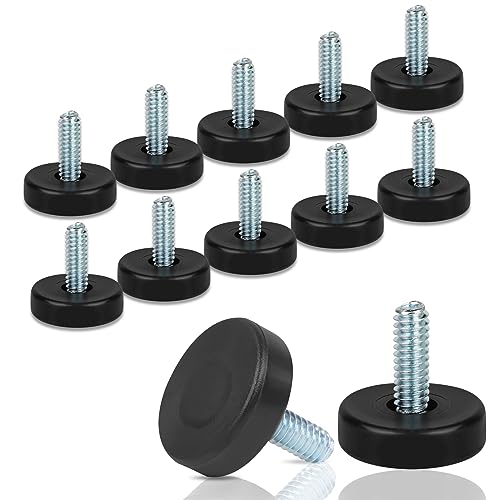
1/4" Thread Furniture Feet Levelers, 12 PCS Adjustable Furniture Feet Threaded Screw in, Leveling Feet Screw On Furniture Glide Leveling for Table, Cabinets, Chairs, Stool Legs
Size: 12 Sets of furniture levelers for each package; Inch coarse thread, 1/4"-20; Get details from the second…
As an affiliate, we earn on qualifying purchases.
As an affiliate, we earn on qualifying purchases.

Sunxeke 120PCS Cam Locks for Furniture,3-in-1 Eccentric Hardware Wheels,Furniture Fasteners & Connectors with Multi-Size Nuts,Bolts and Wood Dowel Pins-Assortment Kit for Furniture Assembly/Repair
Cam locks for furniture are crafted from durable alloy steel with nickel plating, ensuring rust and corrosion resistance…
As an affiliate, we earn on qualifying purchases.
As an affiliate, we earn on qualifying purchases.