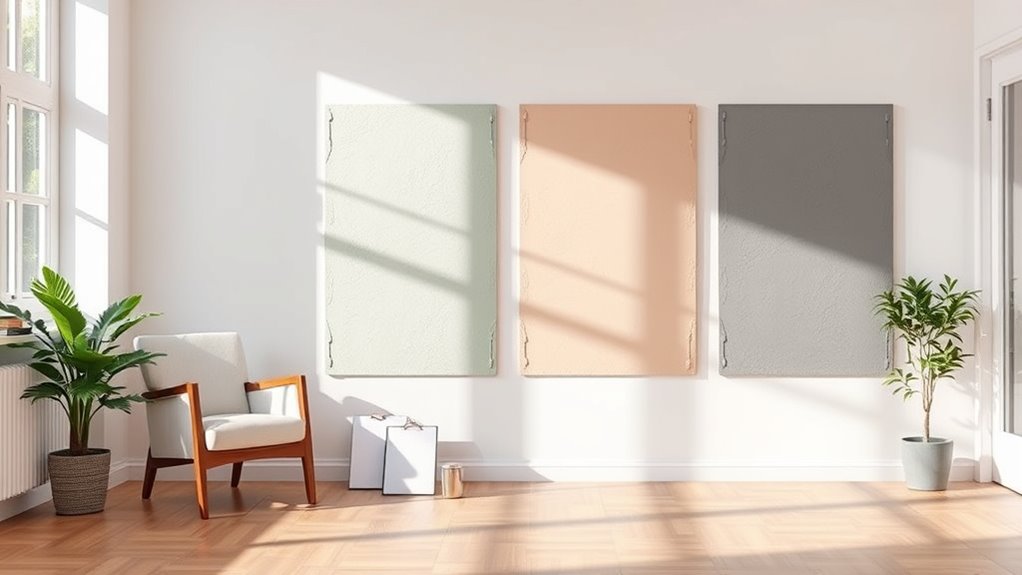

To pick the perfect paint color without regrets, consider how colors influence your mood—softer shades create calm, while brighter hues energize. Test samples in different lighting to see how they appear throughout the day, and match your choice to your personal style and decor. Pay attention to finishes, as they change how colors look and last. Keep these tips in mind, and you’ll be ready to choose confidently—and discover even more.

Get the little things that make your day delivered free with Prime
- Fast, free delivery on millions of items
- Prime Video, Amazon Music and more included
- Member-only deals all year
Key Takeaways
- Test paint samples in your space at different times to see how lighting affects the color.
- Consider the mood you want to create and choose colors that align with that ambiance.
- Select finishes (matte, satin, semi-gloss) based on the room’s function and desired appearance.
- Ensure the color complements existing decor, furniture, and flooring for a cohesive look.
- Trust your personal preferences and instincts to select a hue that feels right and reflects your style.

Selecting the perfect paint color can transform your space and reflect your personality, but with so many options available, it can also feel overwhelming. To make a confident choice, start by understanding how color psychology influences mood and atmosphere. Different hues evoke specific feelings: blues promote calmness, yellows energize, and grays offer neutrality. Think about the vibe you want in each room and choose colors that align with those emotions. For example, if you want a peaceful bedroom, soft blues or gentle greens can create a soothing environment. In contrast, a lively kitchen might benefit from warm reds or vibrant oranges. Knowing the psychological impact of colors helps you select shades that support your lifestyle and mood.
Choosing paint colors that reflect your personality and mood creates a space you’ll love.
Next, consider the paint finish options, as they profoundly affect the look and durability of your walls. Matte finishes hide imperfections and offer a velvety appearance, perfect for bedrooms or living rooms where a softer look is desired. Satin or eggshell finishes provide a slight sheen, making them suitable for areas prone to fingerprints or humidity, like kitchens and bathrooms. Semi-gloss or gloss finishes are more reflective and durable, ideal for trim, doors, or areas needing frequent cleaning. The finish you choose can also influence the perceived color; a shade may look different with a matte versus a semi-gloss finish, so it’s wise to test samples under your room’s lighting before committing.
Lighting plays a vital role in how colors appear once applied. Natural light can make colors seem brighter or cooler, while artificial lighting may warm or dull shades. To avoid surprises, view paint samples at different times of the day and in various lighting conditions. This way, you get a true sense of how the color will look in your space. Also, take into account the existing decor, furniture, and flooring, ensuring the new color complements your overall design. If you’re unsure about bold choices, start with a small patch or use accent walls to test how the color interacts with your environment.
Finally, trust your instincts and preferences. While advice and trends are helpful, your space should ultimately reflect your personality and comfort. Choosing a color that resonates with you will result in less regret and more satisfaction. Additionally, understanding the energy efficiency benefits of certain paint types can contribute to a more sustainable home environment. By understanding the influence of color psychology, selecting appropriate paint finish options, and testing samples thoroughly, you can confidently pick a hue that transforms your home into a space you love.
As an affiliate, we earn on qualifying purchases.
Frequently Asked Questions
How Does Lighting Affect Paint Color Perception?
Lighting considerably impacts how paint colors appear. Natural light varies throughout the day, making colors look brighter or softer, while artificial lighting can cast warm or cool tones that alter your perception. You should test your chosen paint in different lighting conditions—natural and artificial—to see how it changes. This way, you’ll select a color that looks fantastic under all lighting types, avoiding surprises once the room’s finished.
Can I Test Paint Colors Without Painting Entire Walls?
Yes, you can test paint colors without painting entire walls by using paint swatch testing or sample pot options. Apply small samples directly on your wall or use large adhesive samples to see how the color interacts with your lighting and decor. This way, you get a real sense of how the shade looks throughout the day, helping you make confident decisions without the hassle of repainting multiple times.
What Color Schemes Are Best for Small Rooms?
For small rooms, opt for light, neutral colors to make the space feel larger. Use color psychology by choosing calming hues like soft blues or gentle greens, which promote relaxation. Consider cultural significance; for example, red can symbolize luck in some cultures and energize a space, while white represents purity and spaciousness. Combining these insights helps you select color schemes that enhance your small room’s atmosphere and aesthetic appeal.
How Do I Choose Colors That Match My Existing Furniture?
Think of your room as a stage where your furniture plays the lead. To master furniture color coordination, start by matching or complementing your furniture’s hues. Use matching patterns or subtle contrasts to tie the space together. Stick to a color palette that reflects your style, and consider swatches before committing. This way, your walls become a seamless backdrop, highlighting your furniture’s beauty without clashing or overwhelming.
Are There Paint Finishes That Help Hide Wall Flaws?
Yes, certain paint finishes can help hide wall flaws. Matte and flat finishes are excellent choices because their low sheen minimizes appearance of wall imperfections and uneven textures. These paint textures absorb light rather than reflect it, making flaws less noticeable. When you choose these finishes, you’ll find your walls look smoother and more flawless, giving your space a polished, intentional appearance without the need for perfect walls.
matte vs semi-gloss paint finish
As an affiliate, we earn on qualifying purchases.
As an affiliate, we earn on qualifying purchases.
Conclusion
Remember, picking the right paint color doesn’t have to be overwhelming. Trust your instincts and visualize how the shade will feel in your space—imagine sunlight bouncing off a soft blue or cozy warmth from a deep beige. Even if you’re unsure, testing small patches can help you see the true color before committing. With a little confidence and these tips, you’ll create a space that feels just right—no regrets needed.
As an affiliate, we earn on qualifying purchases.
As an affiliate, we earn on qualifying purchases.
NFL season / tailgating Picks
team gear
As an affiliate, we earn on qualifying purchases.