
Couponing for beginners is still worth it, especially with digital apps making it easier and more convenient than ever. You can quickly find deals, stack coupons, and earn cashback without clipping paper. Many stores accept multiple digital discounts, helping you save more on everyday purchases. With a little effort, you can maximize your savings easily. Want to discover effective strategies and tips? Keep going to learn how to get the most out of your couponing journey.
Key Takeaways
- Digital coupons and rebate apps simplify savings, making couponing more accessible for beginners.
- Combining digital and store coupons can maximize discounts, even for newcomers.
- Understanding store policies ensures effective coupon stacking and avoids checkout issues.
- Couponing offers significant savings on regularly purchased items with minimal effort.
- The convenience of instant deals and cashback makes couponing still worth it today.
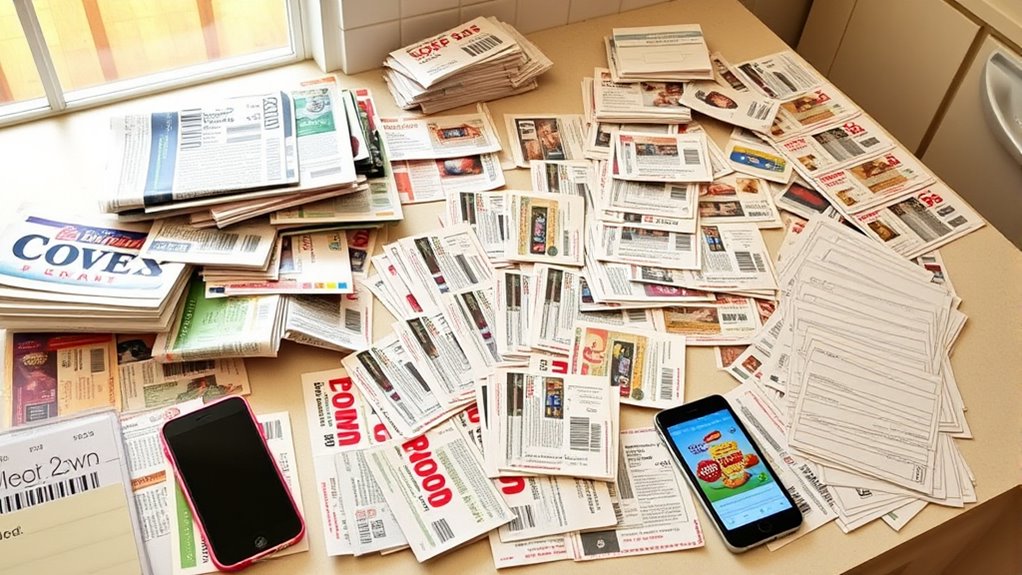
Are you new to couponing and wondering how to get started? The world of saving money through coupons might seem overwhelming at first, but once you understand the basics, it becomes a powerful tool for cutting your grocery bills. One of the easiest ways to begin is by exploring digital coupon apps. These apps have revolutionized couponing, making it more accessible and less cluttered than traditional paper coupons. Download a few popular apps like Ibotta, Rakuten, or store-specific ones, and start browsing their deals. The beauty of digital coupon apps is that they often update frequently, so you can find instant discounts on your favorite items without clipping a single coupon. Plus, many apps offer cashback or rebate options, giving you even more savings with minimal effort.
To maximize your savings, you should also learn about coupon stacking strategies. Coupon stacking involves combining different types of discounts on the same item, which can substantially reduce your out-of-pocket costs. For example, you might use a manufacturer coupon along with a store coupon for the same product, and then apply an in-store promotion or rebate. Many stores now accept digital coupons alongside paper coupons, and some even allow stacking multiple digital coupons if they’re from different sources. It’s essential to read the store policies carefully because rules around coupon stacking vary. Some stores will let you stack digital coupons with manufacturer coupons, while others may restrict stacking to just one type of coupon per item.
Getting comfortable with coupon stacking strategies can seem confusing initially, but once you understand the process, it becomes second nature. Start by identifying items you regularly buy and look for digital coupons that can be paired with store discounts. Keep a list or use apps that track deals so you don’t miss out. When you check out, present your digital coupons via your smartphone, or if the store allows, scan your digital coupons directly from the app. Additionally, understanding the coupon policies of each store can help you avoid confusion and maximize your savings. Over time, you’ll develop a sense of how to combine deals effectively, making your shopping trips both faster and more profitable.

Coupons 2025 : Code Promo (discount food coupons , grocery coupons , code promos Shopping Discounts Supermarket Deals Digital Coupons )
- Daily Deal Updates: Newest coupons added daily
- Personalized Notifications: Alerts for favorite stores and restaurants
As an affiliate, we earn on qualifying purchases.
As an affiliate, we earn on qualifying purchases.
Frequently Asked Questions
How Much Time Should I Dedicate Weekly to Couponing?
You should spend about 1 to 2 hours weekly on couponing, balancing your time management with coupon frequency. Focus on planning your shopping trips, clipping or digital coupons, and tracking deals. This amount allows you to maximize savings without feeling overwhelmed. By setting aside a specific time each week, you stay organized, guarantee consistent coupon use, and enjoy the benefits of smart shopping without sacrificing too much of your schedule.
Are Digital Coupons as Valuable as Paper Ones?
Digital coupons are just as valuable as paper ones, especially since coupon apps now offer exclusive deals and discounts. While some worry about coupon app security, trusted apps use encryption to protect your info. Digital coupons are more convenient and eco-friendly, making it easier to save on your shopping spree. Just make certain you download from reputable sources and regularly update your app—it’s like having a vintage record collection, but for savings.
Can Couponing Help Me Save on Non-Grocery Items?
Yes, couponing can help you save on non-grocery items, but watch out for couponing myths that suggest it always offers huge discounts. Stay flexible with brand loyalty, as coupons often favor specific brands, limiting choices. By comparing deals and using coupons wisely, you can cut costs on clothing, beauty products, and more. It’s a smart way to stretch your budget while avoiding common misconceptions about couponing’s usefulness beyond groceries.
What’s the Best Way to Organize Digital Coupons?
You’ll love how easy it is to organize digital coupons with apps and coupon organization tools. Ironically, your phone can become a cluttered mess if you don’t stay on top of it. To stay efficient, download trusted digital coupon apps, categorize coupons by type or store, and regularly delete expired ones. This way, your savings stay accessible, not buried under digital chaos, making every coupon count when you need it most.
Are There Legal Risks Associated With Coupon Stacking?
Yes, there are legal risks associated with coupon stacking if you’re not careful. You need to make certain you’re maintaining legal compliance by reading store policies and manufacturer restrictions. Coupon fraud, like using invalid or expired coupons or stacking beyond allowed limits, can lead to penalties or banning from stores. Always double-check the rules to avoid unintentional violations and protect yourself from potential legal issues.

Coupon App Discount Coupon Deal Cash Back Store
- No Sign-Up Required: Access coupons without signing up
- One-Click Code Copy: Easily copy discount codes
As an affiliate, we earn on qualifying purchases.
As an affiliate, we earn on qualifying purchases.
Conclusion
Think of couponing like planting a garden—you may start small, but with patience, your efforts can grow into big savings. I once saved enough on groceries to treat my family to a special dinner, all thanks to a well-timed coupon. While it takes some effort, the savings can be worth it, even today. So, give it a try—you might find that couponing still blooms into something truly rewarding.

How I Paid $8 for $170 Worth of Groceries (Confessions of a Coupon Fashionista)
As an affiliate, we earn on qualifying purchases.
As an affiliate, we earn on qualifying purchases.

Beginner’s Guide To Couponing: Learn How To Save Money With Coupons In 7 Easy Steps!
As an affiliate, we earn on qualifying purchases.
As an affiliate, we earn on qualifying purchases.