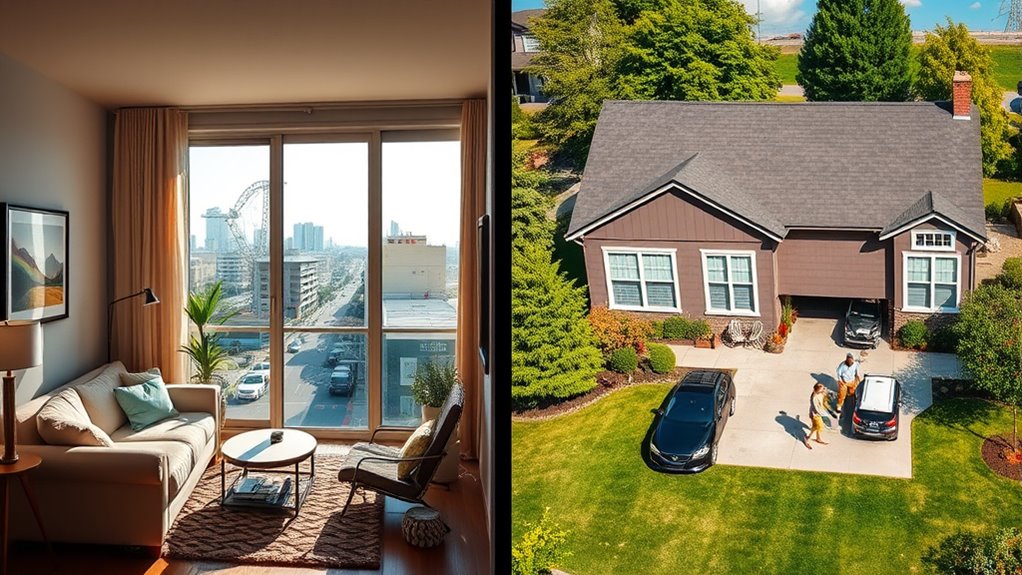

Choosing between renting and buying depends on your financial situation and lifestyle. Renting often offers predictable monthly payments and fewer responsibilities, making it more budget-friendly short-term. Buying can build equity and long-term wealth but involves costs like property taxes, maintenance, and potential fluctuation in expenses. If you want to understand how these factors impact your budget and which option suits your goals best, keep exploring the details ahead.

Get the little things that make your day delivered free with Prime
- Fast, free delivery on millions of items
- Prime Video, Amazon Music and more included
- Member-only deals all year
Key Takeaways
- Renting offers predictable monthly costs without surprise expenses, making budgeting easier.
- Homeownership involves additional costs like property taxes and maintenance, which can increase long-term expenses.
- Renters typically do not pay for repairs; homeowners must budget for unpredictable repair and upkeep costs.
- Renting does not build equity, while buying can lead to asset accumulation over time.
- Overall, renting is usually more budget-friendly in the short term, but buying may be more cost-effective long-term depending on circumstances.

Are you torn between renting and buying a home? It’s a common dilemma that can feel overwhelming, especially when you’re trying to stick to a budget. On one hand, renting might seem like the easier choice, offering flexibility and fewer immediate responsibilities. On the other hand, buying a home can be a smart long-term investment but comes with its own set of costs and commitments. To truly determine which option is more budget-friendly, you need to look beyond monthly payments and consider the full scope of expenses involved.
Choosing between renting and buying depends on your budget, lifestyle, and long-term goals.
When you rent, your monthly costs are usually straightforward. You pay rent and maybe some utilities, but the landlord typically handles property taxes and maintenance costs. This setup can make it easier to plan your budget because you’re not directly responsible for these large, unpredictable expenses. However, over time, rent payments can add up without building equity, meaning you’re essentially paying for someone else’s investment. Plus, rent can increase with market rates, which could strain your finances down the line.
Buying a home, on the other hand, involves a different financial picture. While the mortgage payments might initially seem comparable to rent, you also need to account for property taxes, which vary widely by location and can increase over time. These taxes are an ongoing expense that you can’t ignore, and they markedly impact your overall costs. Maintenance costs are another big factor. When you own, you’re responsible for repairs, upkeep, and renovations, which can be unpredictable and sometimes expensive. A leaking roof, a broken furnace, or landscaping issues all fall on your shoulders, and these costs can quickly add up if you’re not prepared.
That said, owning a home can be more budget-friendly in the long run if property values appreciate and you manage maintenance efficiently. The equity you build over time can serve as a financial asset, and some costs like property taxes and maintenance might be deductible or offset through other financial strategies. But if you’re on a tight budget and prefer financial predictability, renting offers stability with fewer surprises. Additionally, considering insulated jackets or other cost-effective solutions for winter can help you manage expenses during colder months.
Ultimately, the decision hinges on your financial situation, lifestyle, and long-term goals. If you want flexibility and less responsibility, renting could be the more budget-friendly option. If you’re ready to invest and can handle the ongoing property taxes and maintenance costs, buying might be the better choice. Either way, understanding the full scope of expenses involved helps you make a smarter, more informed decision.
As an affiliate, we earn on qualifying purchases.
Frequently Asked Questions
How Do Property Taxes Differ Between Renting and Buying?
When you buy a property, you’re responsible for paying property tax rates, which can vary based on location and property value. These taxes often come with tax deduction benefits, reducing your overall taxable income. If you rent, your landlord handles property taxes, so you don’t pay them directly. This difference can impact your budget, as owning may mean higher ongoing costs, but also potential tax advantages.
What Are the Hidden Costs Associated With Renting and Buying?
Hidden costs can sneak up on you like shadows in the night. When renting, you might overlook expenses like renewal fees or increased rent after lease agreements end. For buying, security deposits, maintenance, and property taxes can drain your budget. Both options have unseen costs that add up, so it’s essential to read the fine print and plan ahead to avoid surprises that could turn your financial plan upside down.
How Does Credit Score Impact Rental and Mortgage Options?
Your credit score considerably impacts your rental and mortgage options. A higher score improves your credit impact, making you more attractive to landlords and lenders. It influences the score influence on your approval chances, interest rates, and loan terms. With a strong credit score, you’re more likely to secure favorable rental agreements and mortgage deals, saving you money over time. Conversely, a lower score can limit options and increase costs.
What Are the Long-Term Financial Benefits of Each Option?
Buying a home allows you to build equity over time, leading to investment growth and potential financial stability. You can benefit from mortgage payments that increase your ownership stake, unlike renting, which doesn’t offer equity buildup. While renting provides flexibility, buying often results in long-term financial advantages, such as property appreciation and tax benefits. This makes homeownership a smarter investment for future financial security.
How Do Maintenance Responsibilities Compare in Renting Versus Owning?
They say “a stitch in time saves nine,” and that’s true for maintenance responsibilities. When you rent, maintenance costs are typically covered by your landlord, so you face fewer responsibility differences. As a homeowner, you handle all repairs, which can add up over time. You’re responsible for all maintenance costs, so weigh the ongoing costs against your ability to manage or afford them before deciding.
As an affiliate, we earn on qualifying purchases.
Conclusion
Ultimately, choosing between renting and buying is like planting a seed—you have to decide whether you want it to grow quickly or take root slowly. Renting offers flexibility and less upfront costs, making it easier to navigate financial storms. Buying, on the other hand, is an investment in your future, like planting a sturdy tree that bears fruit over time. Consider your goals, budget, and lifestyle to determine which path helps your financial garden thrive.
As an affiliate, we earn on qualifying purchases.
As an affiliate, we earn on qualifying purchases.
Columbus Day / Indigenous Peoples' Day Picks
long weekend sales
As an affiliate, we earn on qualifying purchases.