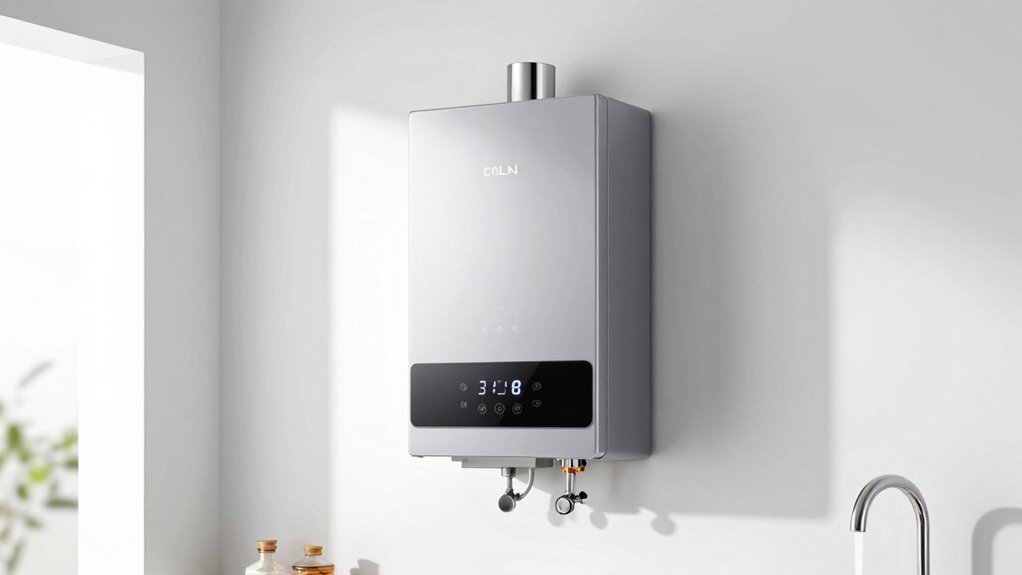

Among these tankless water heaters, I’d put the Stiebel Eltron Tempra 24 Trend first for whole-home electric use, while the Rinnai RX160iN stands out for gas-powered performance and the Rheem RTEX-06T suits a single point of use. The main tradeoff is between a compact, lower-demand unit and a larger heater that can serve more fixtures but may require substantial electrical or gas capacity. Fuel type, incoming water temperature, and installation requirements can narrow the field before headline flow rates do. Read on for the full breakdown of which models fit different homes and needs.

Get the little things that make your day delivered free with Prime
- Fast, free delivery on millions of items
- Prime Video, Amazon Music and more included
- Member-only deals all year
Key Takeaways
- The Tempra 24 Trend and Rheem RTEX-24 are the strongest electric whole-home contenders; service-panel capacity and local groundwater temperature can determine whether either can meet simultaneous demand.
- The Rinnai RX160iN and Rheem 7.0 GPM gas model suit higher-demand homes, but gas venting, combustion air, and installation planning make them a different project from electric swaps.
- Several 110V, 3000W models are point-of-use options, not whole-home replacements; their shared low-power format makes them better fits for a sink or small, limited-demand setup.
- The Rheem RTEX-06T, ORBEK 14kW, and Westinghouse 14kW fill distinct middle and small-use roles: point-of-use support, a straightforward mid-capacity electric option, and Wi-Fi-equipped electric control.
- The CAMPLUX AY132 is the portable propane outlier for temporary outdoor hot water, while the CAMPLUX 4.5kW 120V model offers a fixed electric option for modest, localized demand.






| tankless water heater | Dimensions | Voltage | Maximum temperature | Warranty |
|---|---|---|---|---|
| Rheem 18kW 240V Tankless Elect | 14.5 × 18.25 in | 240 V | 140°F | — |
| Tankless Electric Water Heater | 4.32 × 7.86 in | 110 V | 122°F | 24 months |
| Stiebel Eltron Tempra 24 Trend | 16.63 × 14.5 × 4.63 in | 240 V | 140°F | 7-year leakage; 3-year parts |
| 110V Tankless Electric Water H | 4.32 × 7.86 in | 110 V | 131°F | 24 months |
| 3000W Electric Tankless Water | 4.32 × 7.86 in | 110 V | 131°F | — |
| Rheem 11kW Multi Fixture Tankl | 8.25 in W × 12.63 in H | 240 V | — | 5-year leak; 1-year parts |
| Rheem RTG Series 7.0 GPM Natur | 13.5 in W × 24.2 in H × 10.27 in D | — | 140°F | — |
| Rheem RTEX-24 24kW 240V Electr | 17.63 in W × 18.25 in H × 3.5 in D | 240 V | — | 5-year leak; 1-year parts |
| Rheem RTEX-06T 6.5kW Professio | 10.88 in W × 5.88 in H | 240 V | 140°F | 5-year leak; 1-year parts |
| CAMPLUX 4.5 kW Electric Tankle | 7.4 × 10.9 × 2.52 in | 120 V | 131°F | 2-year limited |
| CAMPLUX AY132 5L Portable Tank | 4.33 in W × 20.28 in H | — | 114 °F | — |
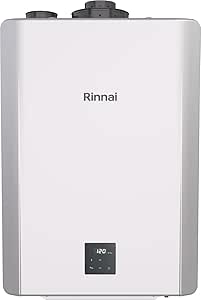
| Rinnai RX160iN Condensing Smar | 19 in W × 31 in H | — | 140 °F | 15-year heat exchanger; 5-year parts/labor with registration |
| ORBEK 14kW Electric Tankless W | 14.2 in H × 9.5 in L × 3.1 in W | 240V | — | — |
| Westinghouse 14 kW Tankless El | 9.56 in W × 12.59 in H × 3.28 in D | 240V | 140 °F | — |
More Details on Our Top Picks
Rheem 18kW 240V Tankless Electric Water Heater, Gray
I’d put the Rheem 18kW ahead of the small 110V point-of-use heaters when the goal is to supply a shower, not just a sink. Its stated 4.4 GPM maximum flow and 240V output give it far more capacity than the 3000W models, though actual flow depends on incoming water temperature. Self-modulation adjusts power to demand, while the external LED control makes temperature changes straightforward. The wall-mounted body saves floor space, but this is not a plug-in upgrade: it needs a dedicated 240V circuit and suitable electrical installation. Compared with the Stiebel Eltron Tempra 24 Trend, it has lower listed output, so I’d favor the Stiebel for greater whole-home demand and this Rheem for a simpler single-shower or small-home fit. It may fall short when several hot-water fixtures run together.
Pros:- 18kW output and a stated maximum flow of 4.4 GPM suit more than sink-only use.
- Self-modulating operation adjusts heating to demand.
- External LED control allows direct temperature adjustment.
- Compact wall-mount design keeps the unit off the floor.
Cons:- Requires a dedicated 240V circuit and may call for professional electrical work.
- May not supply enough hot water for multiple simultaneous showers.
- Listed maximum flow does not indicate the flow available at every incoming water temperature.
Best for: Households seeking an electric tankless unit for one shower or modest hot-water demand, with the electrical capacity for a 240V installation.
Not ideal for: Homes that regularly run multiple showers or high-demand fixtures at once, or buyers without a suitable dedicated 240V circuit.
- Power:18 kW
- Voltage:240 V
- Maximum flow rate:4.4 GPM
- Maximum temperature:140°F
- Efficiency:99.8%
- Mounting:Wall-mounted
- Dimensions:14.5 × 18.25 in
- Maximum pressure:150 psi
Our verdict“Choose this Rheem for a 240V home needing more than sink-only hot water but not a high-demand, multi-shower system.”
Tankless Electric Water Heater 110V 3000W Under Sink with Digital Display
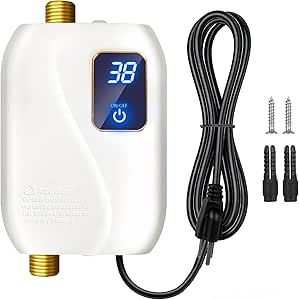
For a buyer who wants hot water at one sink, this 110V, 3000W point-of-use unit is a more fitting choice than the full-size Rheem 18kW, which is built for much greater demand and a more involved 240V installation. At a stated flow of up to 0.5 GPM, this compact heater can serve a handwashing or light kitchen task, but it is not a shower heater. Its LED display and listed dry-combustion, leakage, and waterproof protections add useful operating feedback and safeguards; they do not change its limited output. The vertical-only mounting requirement narrows installation options, and the specified wiring and 32A trip switch mean it still needs an appropriate circuit. Compared with the nearly identical 3000W wall-mounted model from B0FTCMVRY3, this version is best treated as an under-sink option rather than a whole-home solution.
Pros:- Compact body can fit in a small under-sink space.
- LED display provides a visible temperature readout.
- Listed safety features include dry-combustion and leakage protection.
- Up to 98% thermal efficiency is specified.
Cons:- Maximum stated flow of 0.5 GPM is far below typical shower demand.
- Must be installed vertically.
- Requires specified wiring and a 32A trip switch, so it is not a simple plug-in appliance.
Best for: Renters or homeowners adding hot water to a single sink, RV wash area, or other low-flow point of use where vertical mounting and the required circuit are available.
Not ideal for: Buyers who need shower flow, hot water at several fixtures, or a heater that can be mounted horizontally.
- Power:3000 W
- Voltage:110 V
- Maximum temperature:122°F
- Maximum flow:Up to 0.5 GPM
- Thermal efficiency:Up to 98%
- Dimensions:4.32 × 7.86 in
- Mounting:Vertical only
- Connection:1/2 in NPT
- Warranty:24 months
Our verdict“Pick this model for one low-flow sink when its vertical mounting and dedicated electrical requirements fit the installation.”
Stiebel Eltron Tempra 24 Trend Electric Tankless Water Heater
The Tempra 24 Trend is the strongest fit here for buyers who want a whole-house electric unit and can support its substantial electrical load. Its 24kW output exceeds the Rheem 18kW, giving it more headroom for simultaneous use, although the stated capacity of up to two showers applies to warm climates and should not be read as a guarantee in colder conditions. Auto-modulation matches heating to demand, and the compact wall-mounted design needs no venting. Those advantages come with a major installation constraint: this model is hardwired and calls for two 50A breakers and a 100A draw, so the home’s electrical service must be checked before purchase. Compared with the 3000W under-sink heaters, it is a whole-house alternative, not an incremental sink upgrade. Its leakage and parts warranties are also clearly specified.
Pros:- 24kW output offers more capacity than the Rheem 18kW in this lineup.
- Auto-modulation adjusts power to demand.
- Compact wall-mounted design requires no venting.
- Warranty terms specify seven years for leakage and three years for parts.
Cons:- Requires hardwiring and substantial electrical infrastructure, including two 50A breakers and a 100A draw.
- Simultaneous-shower capacity can be limited in cooler climates.
- Professional electrical installation may add planning and labor.
Best for: Owners of electrically equipped homes who want a higher-output tankless heater for whole-house use and can accommodate the required breaker capacity.
Not ideal for: Homes with limited electrical service, cold-climate households expecting multiple showers at once, or buyers seeking a simple under-sink installation.
- Power:24 kW
- Voltage:240 V
- Maximum temperature:140°F
- Maximum pressure:150 psi
- Dimensions:16.63 × 14.5 × 4.63 in
- Weight:16.1 lb
- Mounting:Wall-mounted
- Warranty:7-year leakage; 3-year parts
Our verdict“Choose the Tempra 24 Trend when whole-house electric capacity matters more than a simple installation and your service can support its load.”
110V Tankless Electric Water Heater, 3000W Instant Under-Sink Model with Digital Display
This unit suits a tight installation where the priority is a compact, wall-mounted heater for a nearby sink. Its 4.32 × 7.86-inch body, standard 1/2-inch NPT connections, and pre-drilled mounting points make the physical setup less imposing than the 240V Rheem 18kW. Output is the limiting factor: the listed range is 0.3–0.5 GPM, so this is for a low-flow tap, not a shower or whole-home supply. The LED display and IPX4 rating are useful details, alongside protections against leakage, dry boiling, overheating, and inactivity. Compared with the B0DQY3FPGW, it offers similar power and compact dimensions but specifies stainless steel and ABS construction and lists mounting holes. Vertical-only placement and the 32A circuit requirement still restrict where it can go.
Pros:- Small wall-mounted enclosure fits compact utility spaces.
- Standard 1/2-inch NPT connections and pre-drilled holes simplify physical placement.
- LED display and listed automatic shutoff protections provide clear operating information.
- IPX4 rating is specified for water-splash resistance.
Cons:- Flow tops out at 0.5 GPM, making it unsuitable for showers.
- Vertical mounting is required.
- Requires wiring of at least 2.5 mm² and a 32A trip switch.
Best for: People adding low-flow hot water to a kitchen or bathroom sink who need a small wall-mounted unit with standard plumbing connections.
Not ideal for: Anyone expecting shower-level flow, whole-home hot water, horizontal installation, or a basic low-current connection.
- Voltage:110 V
- Power output:3000 W
- Maximum temperature:131°F
- Flow rate:0.3 GPM at 82°F rise; 0.5 GPM at 131°F rise
- Thermal efficiency:98%
- Dimensions:4.32 × 7.86 in
- Connections:1/2 in NPT
- Warranty:24 months
Our verdict“Choose this compact model for a single low-flow sink when its vertical orientation and high-current wiring requirements are workable.”
3000W Electric Tankless Water Heater with Digital Display, 110V
Among the three compact 3000W heaters in this batch, this model’s clearest distinction is its stated 10-year product service, rather than higher output: its listed flow of 0.3–0.5 GPM matches sink-focused use, not showers. The LED display supports Fahrenheit and Celsius settings, while IPX4, leakage, dry-burning, and over-temperature protections address common operating risks. Those details make it more feature-specific than the Rheem 18kW for a small point-of-use job, but the Rheem is the appropriate comparison if the household needs shower-capable flow. Installation also needs careful checking: the unit is vertical-only and calls for 13 AWG wiring with a 32A-or-higher breaker. I’d confirm the circuit and clarify what “product service” covers before treating that term as a parts or repair warranty.
Pros:- Compact wall-mounted format suits point-of-use installations.
- Display supports Fahrenheit and Celsius settings.
- Multiple listed protections include IPX4, leakage, dry-burning, and over-temperature shutoff.
- Product data states a 10-year service period.
Cons:- Maximum stated flow of 0.5 GPM is unsuitable for showers.
- Vertical-only installation limits placement.
- Requires 13 AWG wiring and a 32A-or-higher circuit breaker; service coverage terms need clarification.
Best for: Sink-only buyers who value the stated long service period and can verify the required vertical installation and electrical setup.
Not ideal for: Households needing shower or whole-house flow, or buyers who need a clearly stated parts-and-labor warranty rather than a product-service claim.
- Power:3000 W
- Voltage:110 V
- Maximum temperature:131°F
- Temperature rise and flow:82–131°F at 0.3–0.5 GPM
- Efficiency:98%
- Dimensions:4.32 × 7.86 in
- Connections:1/2 in NPT
- Installation:Vertical only; 13 AWG wiring and 32A-or-higher breaker recommended
- Service period:10 years of product service
Our verdict“Consider this unit for one sink if its electrical requirements fit and the stated service coverage is confirmed to match your expectations.”
Rheem 11kW Multi Fixture Tankless Electric Water Heater – 240V
The Rheem RTEX-11 makes more sense for a small home or a targeted renovation than for a whole-house setup with heavy overlapping demand. Its listed 2.68 GPM flow rate can serve more than one fixture when demand is modest, while the wall-mounted, vent-free design avoids the space and exhaust requirements of a gas unit such as the Rheem RTG 7.0 GPM. Digital controls span 80°F to 140°F, and the 99.8% efficiency figure reflects heating water on demand rather than maintaining a tank. The tradeoff is electrical capacity: this model needs a dedicated 240V, 50-amp circuit and at least a 100-amp service panel. Compared with the larger Rheem RTEX-24, it asks less of the electrical system but also supplies substantially less flow.
Pros:- Compact wall-mounted body preserves floor space.
- No venting requirement simplifies placement compared with indoor gas models.
- Digital temperature adjustment spans 80°F to 140°F.
- On-demand heating avoids keeping stored water hot.
Cons:- Requires a dedicated 240V, 50-amp circuit and at least a 100-amp service panel.
- The 2.68 GPM listed flow limits simultaneous high-demand use.
- The listed parts warranty is one year.
Best for: Small households with modest hot-water overlap that have 240V service and want a compact electric unit without venting.
Not ideal for: Large households or homes expecting several simultaneous showers; its 2.68 GPM rating is well below the Rheem RTEX-24 and RTG 7.0 GPM.
- Power source:AC
- Wattage:11 kW
- Voltage:240 V
- Flow rate:Up to 2.68 GPM
- Temperature range:80°F–140°F
- Efficiency:99.8%
- Dimensions:8.25 in W × 12.63 in H
- Warranty:5-year leak; 1-year parts
Our verdict“Choose the RTEX-11 for modest multi-fixture demand when you want electric, vent-free installation and do not need the RTEX-24’s higher output.”
Rheem RTG Series 7.0 GPM Natural Gas Tankless Water Heater Indoor – 160,000 BTU High Efficiency On-Demand (Non-Condensing)
Among these five options, the Rheem RTG 7.0 GPM is the clear fit for households whose priority is serving several hot-water fixtures at once. Its listed output of up to 7.0 GPM at a 35°F rise is far beyond the electric Rheem RTEX-24 at 5.9 GPM, making this the stronger candidate for multiple showers—subject to incoming-water temperature and site conditions. Natural gas supplies the heat, while the wall-mounted body saves floor space and built-in freeze and leak protection adds useful safeguards. Its non-condensing design keeps the setup distinct from condensing systems, but it needs indoor placement with direct venting and may be less efficient in very cold climates. It is a poor match for buyers seeking a simple, vent-free electric installation like the RTEX-11.
Pros:- Listed flow of up to 7.0 GPM at a 35°F rise supports higher simultaneous demand than the electric options here.
- Natural-gas operation avoids the substantial electrical service demands of the RTEX-24.
- Wall mounting leaves floor space available.
- Built-in freeze and leak protection and digital temperature control are included.
Cons:- Requires indoor installation with a direct vent system, limiting placement choices.
- Non-condensing construction may be less efficient in very cold climates.
- Warranty details are not specified in the provided product data.
Best for: Larger households with natural-gas service that often run multiple showers or other hot-water fixtures simultaneously.
Not ideal for: Homes without suitable indoor direct-vent placement, or buyers who want an electric unit without gas venting requirements.
- Power source:Natural gas
- Maximum listed flow:7.0 GPM at a 35°F rise
- Heat output:160,000 BTU/hr
- UEF:0.82
- Electrical supply:120 V; 132 W
- Maximum temperature:140°F
- Dimensions:13.5 in W × 24.2 in H × 10.27 in D
- Weight:46.5 lb
Our verdict“Pick the RTG 7.0 GPM when a gas-equipped household needs higher simultaneous flow and can accommodate indoor direct venting.”
Rheem RTEX-24 24kW 240V Electric Tankless Water Heater
The Rheem RTEX-24 is the electric choice in this group for buyers who need more output than the RTEX-11 can provide but do not want a gas heater. Its listed 5.9 GPM flow and 24 kW rating give it a wider workload than the smaller Rheem, while digital controls adjust between 80°F and 140°F in one-degree increments. At 99.8% efficiency, it heats on demand and needs no venting, unlike the gas-fired Rheem RTG 7.0 GPM. That convenience comes with a substantial electrical requirement: three 40-amp double-pole breakers, #8 AWG copper conductors, and a 200-amp service are recommended. Its 5.9 GPM rating also remains below the RTG’s listed 7.0 GPM, so households with very high simultaneous demand should compare gas capacity and installation needs carefully.
Pros:- Listed flow up to 5.9 GPM is higher than the RTEX-11’s 2.68 GPM.
- 99.8% efficiency and on-demand heating avoid tank standby heat loss.
- Digital controls set temperatures from 80°F to 140°F in one-degree increments.
- Wall-mounted design requires no venting and saves floor space.
Cons:- Calls for three 40-amp double-pole breakers and recommends 200-amp service.
- Electrical work is complex, making professional installation a sensible expectation.
- Listed flow remains below the Rheem RTG 7.0 GPM gas model.
Best for: Households with strong 240V electrical infrastructure that want a higher-output electric heater for several fixtures.
Not ideal for: Homes with limited panel capacity or buyers expecting the RTEX-24 to match the Rheem RTG’s 7.0 GPM listed flow.
- Model:RTEX-24
- Wattage:24 kW
- Voltage:240 V
- Flow rate:Up to 5.9 GPM
- Temperature range:80°F–140°F
- Efficiency:99.8%
- Electrical requirements:Three 40-amp double-pole breakers; #8 AWG copper; 200-amp service recommended
- Dimensions:17.63 in W × 18.25 in H × 3.5 in D
- Warranty:5-year leak; 1-year parts
Our verdict“Choose the RTEX-24 for higher electric hot-water demand if your home can support its demanding 240V electrical setup.”
Rheem RTEX-06T 6.5kW Professional Classic Point-of-Use Tankless Electric Water Heater
The Rheem RTEX-06T is not a smaller whole-house substitute for the RTEX-11 or RTEX-24; its role is to bring hot water close to a single sink or another limited point of use. With a listed 1.5 GPM flow rate, a 6.5 kW draw, and a compact four-pound body, it suits a remote fixture where a larger heater would be unnecessary. The thermostatic control holds the selected temperature within one degree, giving it more precise control than the basic sink-focused CAMPLUX TE05N4 data describes. The tradeoff is capacity: neither model is designed for multiple fixtures, and the Rheem requires a dedicated 240V circuit. Consider it for a targeted installation, not as a way to supply showers throughout a home.
Pros:- Compact, four-pound wall-mountable design suits tight point-of-use locations.
- Temperature control maintains the setting within one degree.
- On-demand heating avoids keeping a storage tank hot.
- Can reduce the wait for hot water when installed near the fixture.
Cons:- The 1.5 GPM listed flow is intended for limited point-of-use demand, not multiple fixtures.
- Requires a dedicated 240V electrical circuit.
- Its one-year parts warranty is limited compared with the five-year leak warranty.
Best for: Homeowners or light-commercial users adding a compact 240V heater near one remote sink or other low-flow fixture.
Not ideal for: Buyers needing whole-house hot water, simultaneous fixture support, or a 120V sink heater like the CAMPLUX TE05N4.
- Model:RTEX-06T
- Wattage:6.5 kW
- Voltage:240 V
- Flow rate:Up to 1.5 GPM
- Maximum temperature:140°F
- Maximum pressure:150 psi
- Dimensions:10.88 in W × 5.88 in H
- Weight:4 lb
- Warranty:5-year leak; 1-year parts
Our verdict“Choose the RTEX-06T for a nearby, low-flow fixture when precise control matters more than whole-house capacity.”
CAMPLUX 4.5 kW Electric Tankless Water Heater, 120 V
The CAMPLUX TE05N4 stands apart from Rheem’s point-of-use RTEX-06T by using a 120V supply and targeting one sink, rather than a 240V circuit and broader light-duty applications. Its 4.5 kW rating is paired with a stated temperature rise of 50°F at 1.0 GPM, so the actual usefulness depends on incoming water temperature and how quickly the sink draws water. The LED display and touch controls make temperature settings easy to read, while self-modulating power responds to demand. But 120V does not mean a plug-in installation: this unit still calls for hardwiring to a 40-amp circuit. Its narrow single-sink role is less flexible than the Rheem RTEX-06T, and the supplied data does not list a flow rate beyond the stated temperature-rise condition.
Pros:- 120V supply suits installations where a 240V point-of-use unit is not the desired fit.
- Compact wall-mounted body measures 7.4 × 10.9 × 2.52 inches.
- LED temperature display and touch control provide clear adjustment.
- Self-modulating operation heats water on demand.
Cons:- Designed for one sink rather than multiple fixtures.
- Requires hardwiring to a 40-amp circuit with 10 AWG wire.
- Listed temperature rise is 50°F at 1.0 GPM, which may limit performance with colder incoming water.
Best for: Buyers adding hot water at one sink who have a suitable 120V supply and can provide the required hardwired 40-amp circuit.
Not ideal for: Households seeking multi-fixture or whole-house service, or anyone expecting a plug-in appliance without dedicated electrical work.
- Model:TE05N4
- Power:4.5 kW
- Voltage:120 V
- Maximum temperature:131°F
- Temperature rise:50°F at 1.0 GPM
- Minimum activation flow:0.26 GPM
- Electrical requirements:Hardwired; 40-amp circuit breaker; 10 AWG wire
- Dimensions:7.4 × 10.9 × 2.52 in
- Warranty:2-year limited
Our verdict“Pick the CAMPLUX TE05N4 for a single sink when its 120V supply and dedicated hardwired circuit fit the installation.”
CAMPLUX AY132 5L Portable Tankless Propane Water Heater
For hot showers away from household utilities, the CAMPLUX AY132 is the clear specialist in this group. Its 10-pound portable build, folding handle, and included shower head, regulator, and hoses make it easier to bring into a camping or RV setup than the wall-mounted home units. It starts at just 3.0 PSI, which suits water supplies where pressure may be limited, and propane provides heat without a household electrical circuit. The tradeoff is capacity: 1.32 GPM and a 114°F maximum temperature are aimed at a single outdoor shower, not several fixtures. Unlike the Rinnai RX160iN, it is not a whole-home heater and is designed for outdoor use; buyers also need propane and two D-size batteries.
Pros:- Light 10-pound design with a folding handle for portability
- Starts at a low 3.0 PSI water pressure
- Includes a shower head, gas regulator, and hoses
- Multiple listed protections include flame-failure and overheat protection
Cons:- Limited 1.32 GPM flow suits a single modest-demand use
- Requires propane and two D-size batteries
- Designed for outdoor use rather than indoor installation
Best for: Campers, RV owners, and off-grid users who want a portable outdoor shower heater with low-pressure startup.
Not ideal for: Households seeking an indoor or whole-home heater, or anyone who needs multiple fixtures supplied at once.
- Flow rate:1.32 GPM
- Heat output:34,000 BTU
- Power source:Propane; two D-size batteries
- Minimum startup water pressure:3.0 PSI
- Maximum temperature:114 °F
- Weight:10 lbs
- Dimensions:4.33 in W × 20.28 in H
- Certification:CSA
Our verdict“Choose the CAMPLUX AY132 for portable outdoor hot water, not as a replacement for a household tankless heater.”
Rinnai RX160iN Condensing Smart Sense Tankless Water Heater
The Rinnai RX160iN is the strongest fit here for buyers prioritizing whole-home gas capacity and installation flexibility. Its listed 9 GPM flow rate is far above the electric ORBEK 14kW and portable CAMPLUX AY132, making it better suited to simultaneous household demand, subject to incoming water temperature and installation conditions. The UEF 0.97 rating and condensing design favor efficient operation, while Smart Sense supports natural gas or propane. Versa Vent installation options add flexibility, but this is a heavier, more involved appliance—not a plug-in upgrade. Professional installation is recommended and may be needed for the full warranty terms; registration within 90 days is required for the stated labor coverage, and the Wi-Fi module is separate.
Pros:- Listed 9 GPM capacity suits higher household hot-water demand
- UEF 0.97 condensing design prioritizes efficient gas use
- Smart Sense supports natural gas or propane
- Quick Flush feature supports routine maintenance
Cons:- Professional installation is recommended and can add complexity
- Wi-Fi control module is sold separately
- Registration within 90 days is required for the stated five-year parts and labor coverage
Best for: Homeowners replacing a gas tank heater who need high flow for multiple household fixtures and want natural-gas or propane flexibility.
Not ideal for: Renters, DIY-focused buyers, or homes without suitable gas service and space for professional installation.
- Flow rate:Up to 9 GPM
- Heat output:160,000 BTU
- Power source:Natural gas or propane
- Energy efficiency:UEF 0.97
- Maximum temperature:140 °F
- Dimensions:19 in W × 31 in H
- Weight:54 lbs
- Warranty:15-year heat exchanger; 5-year parts/labor with registration
Our verdict“Pick the Rinnai RX160iN for high-capacity gas hot water and installation flexibility if you can accommodate a professional setup.”
ORBEK 14kW Electric Tankless Water Heater, 240V, 3.38 GPM
The ORBEK 14kW offers a compact electric option for homes that want more than a single under-sink heater but do not need the gas capacity of the Rinnai RX160iN. Its stated 3.38 GPM is intended for two or three points of use, though actual simultaneous flow depends on water temperature and conditions. The small wall-mounted body can free up floor space, and temperature control is specified to hold within 1°F. Compared with the similarly rated Westinghouse 14 kW, ORBEK gives up Wi-Fi and voice controls in favor of a simpler feature set. The main hurdle is electrical: it calls for a 240V, 60-amp two-pole breaker and 6 AWG wiring, plus a household panel with at least 150 amps total capacity.
Pros:- Compact wall-mounted body saves installation space
- Listed 3.38 GPM flow is aimed at multiple points of use
- Temperature control is specified to stay within 1°F
- ETL-certified safety systems
Cons:- Requires a 60-amp, two-pole breaker and 6 AWG wiring
- Product data calls for at least 150 amps of total household panel capacity
- No Wi-Fi or voice control features listed
Best for: Homeowners with a suitable 240V electrical panel who want compact electric hot water for a small household or limited set of fixtures.
Not ideal for: Homes with limited panel capacity, buyers seeking gas-level whole-home flow, or anyone who wants smart-home controls.
- Power:14 kW
- Voltage:240V
- Flow rate:Up to 3.38 GPM
- Temperature range:86°F–140°F
- Breaker requirement:240V / 60A two-pole
- Wire gauge:6 AWG
- Dimensions:14.2 in H × 9.5 in L × 3.1 in W
- Certification:ETL
Our verdict“Choose the ORBEK for compact, multi-point electric hot water when your electrical panel can support its demanding circuit requirements.”
Westinghouse 14 kW Tankless Electric Water Heater, 240V, Wi‑Fi, ETL, Gray
Among these two 14 kW electric models, the Westinghouse is the one to choose if remote adjustments and voice control matter. It lists Wi-Fi connectivity, Alexa and Google Home support, and temperature memory, features the ORBEK 14kW does not list. Its rated 3.4 GPM is close to ORBEK’s 3.38 GPM, so this is primarily a control-feature distinction rather than a major capacity step. The compact wall-mount design and stated 98% thermal efficiency suit buyers focused on saving space and using electricity efficiently. The drawback is the electrical installation: hard wiring, a dedicated 60A double-pole breaker, and 6 AWG wiring are required. Its listed flow is also far below the gas-powered Rinnai RX160iN, making this a small-home or limited-demand choice rather than a high-capacity whole-house alternative.
Pros:- Wi-Fi connectivity with Alexa and Google Home voice control
- Temperature memory retains a preferred setting
- Compact wall-mountable body saves floor space
- ETL-listed safety protections include leak, overheat, and dry-fire protection
Cons:- Requires hard wiring and a dedicated 60A double-pole breaker
- 6 AWG wiring may call for professional electrical installation
- Its 3.4 GPM rated flow is far below the Rinnai RX160iN’s listed capacity
Best for: Tech-minded homeowners with a compatible 240V circuit who want app or voice control for a compact electric heater.
Not ideal for: Buyers who lack a dedicated high-capacity circuit, want a simple installation, or need the higher flow of a gas whole-home unit.
- Power source:Hard wiring required
- Wattage:14 kW
- Voltage:240V
- Flow rate:Up to 3.4 GPM
- Maximum temperature:140 °F
- Dimensions:9.56 in W × 12.59 in H × 3.28 in D
- Thermal efficiency:98%
- Certification:ETL
Our verdict“Choose the Westinghouse if smart controls are worth the added wiring demands and your hot-water needs fit a 14 kW electric unit.”

How We Picked
I compared the lineup by intended use, heating capacity, fuel, and installation demands, rather than treating every unit as a rival for the same job. A whole-home gas heater, a 240V electric model, a 110V under-sink unit, and a portable propane heater serve different needs; ranking them requires judging how well each fits its stated role. I also weighed practical usability, available controls, and whether the format appears suited to routine household service or occasional, localized use.
The order gives priority to models with a clearer path to dependable household hot water and a useful balance of capability and fit. The Tempra 24 Trend leads the electric options, while gas models rank highly for buyers who can support gas installation and want greater flow potential. Lower-powered and portable products rank for their narrower use cases, not as substitutes for whole-home systems. Installation constraints, temperature rise, and real simultaneous demand can change the best choice for an individual home, so I call out those tradeoffs rather than treating advertised flow figures as universal performance.
Factors to Consider When Choosing Tankless Water Heaters
Before choosing a model, match the heater to the way hot water is delivered in your home. Fuel supply, climate, fixture demand, and installation conditions can matter more than a feature list, and an undersized unit may disappoint even when its specifications look suitable.
Size for Simultaneous Use and Temperature Rise
Start with the fixtures that may run at the same time, such as a shower and kitchen tap, rather than counting every fixture in the building. A heater’s flow capacity depends on how much it must raise the incoming water temperature, so cold-climate homes can get less usable flow than a warm-region estimate suggests. Ask an installer to calculate demand using your coldest seasonal inlet temperature and preferred hot-water temperature. Do not treat a listed GPM figure as a promise of that flow at every temperature rise. If household routines often overlap, a unit sized only for one shower can lead to fluctuating temperature or reduced flow. A point-of-use heater may help a distant sink, but it does not automatically solve a whole-home capacity shortfall.
Check Electrical Service or Gas Infrastructure First
Electric tankless models can place a heavy load on a home’s electrical system, especially larger 240V units that may require dedicated circuits and adequate panel capacity. Confirm the unit’s voltage, breaker, and wiring requirements with a qualified electrician before purchase; a heater that cannot be supported by the panel can turn a simple replacement into a larger project. Gas models bring a different checklist: supply-line sizing, venting, combustion air, and approved clearances. Existing infrastructure may make one fuel type far less disruptive than the other, even if another model appears more appealing on paper. Include installation work in the decision, not just the appliance. Never assume a connection or vent can be reused without confirming compatibility.
Separate Point-of-Use From Whole-Home Needs
Small 110V and lower-kilowatt heaters are generally aimed at localized demand, such as a hand-washing sink, rather than multiple showers and appliances. A common buying mistake is to compare their compact size with a whole-home unit and assume the smaller product can replace a tank heater everywhere. Point-of-use placement can reduce the wait for hot water at a distant fixture, but it may add another appliance, connection, and maintenance task. Portable propane models serve a different purpose again: outdoor or temporary hot water where a fixed household installation is not practical. Before shopping, write down whether you need one sink, one bathroom, an auxiliary source, or the whole house. That single decision rules out many mismatched options.
Treat Flow Rates and Labels as Conditions, Not Guarantees
Advertised flow and capacity figures need context: they can depend on inlet temperature, outlet temperature, water pressure, and the number of active fixtures. A higher GPM label does not tell you how the heater will perform on the coldest day or during overlapping demand. Look for the performance conditions behind the figure and compare models at a similar temperature rise. Also check whether a unit is described as multi-fixture, point-of-use, or portable, since those terms signal different intended duties. When specifications do not state the conditions clearly, ask the manufacturer or installer for a household-specific estimate. Sizing by a single headline number is a frequent path to buying too little capacity.
Weigh Controls Against Service and Maintenance
Digital displays and Wi-Fi can make temperature adjustments easier, but they do not compensate for poor sizing or incompatible installation. Think about who will use the controls, whether remote access matters, and whether a simple local interface is enough. Ask what routine maintenance the heater requires, including scale management where hard water is present, and confirm that service parts and qualified technicians are available in your area. Gas condensing designs can have different venting and condensate needs from non-condensing units, while electric models avoid combustion venting but may demand more electrical capacity. A feature-rich model can be a poor fit if local service is hard to arrange. Favor a setup you can maintain over extras you are unlikely to use.
Compare the Full Installation Fit, Not Just the Heater
Tankless systems can save storage space and heat water on demand, but the changeover may involve electrical upgrades, gas work, vent changes, plumbing adjustments, or new shutoff arrangements. For a replacement, have the installer verify the existing connections and clearance before choosing a model. For a new location, account for the route to fixtures, access for future service, and any local permit or code requirements. A compact point-of-use heater may be easier to place, yet it may not deliver the coverage you want. Paying more for a larger or smarter unit makes sense only if your household can use its capacity and support its installation. Compare the complete installed plan, not just the appliance specifications.
Frequently Asked Questions
Can a 110V, 3000W tankless heater supply a whole house?
These low-power units are generally better suited to a single sink or similarly limited point of use than a whole home. Their available heating output constrains how much water they can warm, especially when incoming water is cold. A large advertised temperature setting does not mean they can maintain that temperature at high flow. If you need showers and multiple fixtures, compare appropriately sized 240V electric or gas options and have the required service checked. Treat the 110V models in this roundup as localized solutions unless the manufacturer confirms otherwise for your exact demand.
How do I know whether my electrical panel can support an electric tankless heater?
Check the specific model’s voltage, circuit, breaker, and wiring requirements, then have a qualified electrician review your panel and existing loads. Larger electric tankless heaters can draw substantial power, and available breaker spaces alone do not confirm that the service has enough capacity. The assessment may identify a need for additional circuits, wiring changes, or a service upgrade. Get this check before buying, since installation work can change which model makes sense. Do not rely on a general online estimate in place of a site-specific review.
Should I choose a gas heater or an electric one for a busy household?
Compare your household’s simultaneous hot-water demand with the capacity available from each fuel type, then factor in the infrastructure already at your home. Gas models in this roundup offer high flow potential, but they require suitable gas supply and venting. Electric models avoid combustion venting, yet larger units can call for considerable electrical capacity and may deliver less flow when incoming water is very cold. Installation feasibility can outweigh a small difference in headline specifications. Ask a qualified installer to compare both options against your local inlet temperature and typical use patterns.
Is a portable propane water heater suitable for permanent indoor use?
A portable outdoor-oriented propane model such as the CAMPLUX AY132 should not be treated as a permanent indoor whole-home heater. Portable appliances have specific operating, ventilation, connection, and placement rules, which must follow the manufacturer’s instructions and applicable local requirements. Using a unit in an unsuitable enclosed space can create serious combustion and carbon-monoxide hazards. For regular indoor household hot water, choose a model designed and approved for that installation. If you need hot water at a campsite or outdoor wash station, confirm the portable unit’s intended conditions before use.
Will a tankless heater work well with hard water or several fixtures running at once?
It can, but hard water may increase mineral buildup and make the manufacturer’s maintenance schedule especially relevant. Ask about flushing or descaling procedures, service access, and any water-treatment recommendations before installation. For simultaneous fixtures, size the unit against the combined flow and the temperature rise required at your coldest inlet conditions. A heater that handles one shower comfortably may struggle when another shower or appliance starts drawing hot water. Have an installer calculate the expected demand rather than assuming a listed maximum flow will cover every combination.
Conclusion
For a strong electric whole-home starting point, I’d choose the Stiebel Eltron Tempra 24 Trend, provided the home’s electrical service and demand suit it; that makes it my best overall pick in this lineup. For best value in a localized setup, the Rheem RTEX-06T is a more sensible direction than treating a small 110V under-sink heater as whole-home equipment. Buyers who want a premium gas option should compare the Rinnai RX160iN with the Rheem 7.0 GPM model and confirm venting and fuel capacity. For beginners, I’d start by defining the number of fixtures and asking an installer to check utility capacity before settling on a model. Choose the CAMPLUX AY132 for appropriate portable outdoor use, or a 110V under-sink unit for a limited sink application; neither is a stand-in for a properly sized household heater.
Halloween Picks
halloween
As an affiliate, we earn on qualifying purchases.