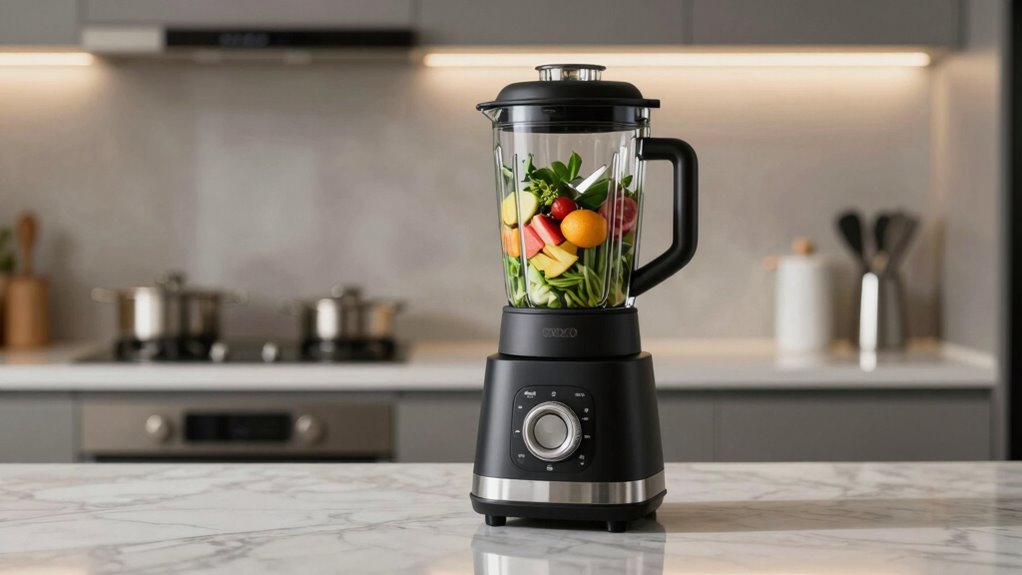

High-end blenders differ most in how much control, capacity, and versatility they offer—and how much counter space and noise you are willing to accept. I name the Vitamix Ascent X5 my best overall pick for its premium feature set, while the Vitamix 5200 stands out for straightforward controls and the Blendtec Professional 800 for buyers who prioritize a quieter enclosure. The tradeoff is that added programs, larger jars, or food-processing attachments may be unnecessary if you mostly make single servings or simple smoothies. I compare all 14 options by performance, usability, build, and flexibility so you can see which features justify a place in your kitchen. Read on for the full breakdown and guidance by buyer type.

Get the little things that make your day delivered free with Prime
- Fast, free delivery on millions of items
- Prime Video, Amazon Music and more included
- Member-only deals all year
Complete the kit


Key Takeaways
- The Ascent X5 is the strongest all-around fit for buyers who want a premium Vitamix with more guided functionality, while the X3 and VX3 offer a simpler route into the same high-performance family.
- Vitamix models serve different priorities rather than one identical use case: the 5200 favors direct manual control, the E310 is more compact, and the Ascent models bring newer program-focused features.
- The Blendtec Professional 800 and WantJoin stand out for sound management. Enclosures add bulk, so they make more sense in noise-sensitive homes or open kitchens than in tight counter spaces.
- The Ninja BP401 is the most versatile system-style option here, with blending, food processing, and a to-go cup; buyers seeking a dedicated premium blender may prefer a simpler machine.
- Jar size and serving habits separate several picks. Large pitchers suit batch prep, while the KitchenAid’s two-jar setup and the E310’s smaller container better match varied or modest portions.




| high end blender | Warranty | Model | Brand |
|---|---|---|---|
| KitchenAid Pure Power Blender | 1 year limited | KSB2078PL | — |
| Ninja UltraCrush Pro Kitchen S | — | BP401 | — |
| Breville Fresh and Furious Ble | 3-year limited | BBL620SIL1AUS1 | — |
| WantJoin Professional Commerci | 10 years | — | — |
| Vitamix VX3 Professional-Grade | 7-year limited | — | — |
| Vitamix Ascent X5 Professional | 10-year limited warranty | Ascent X5 | Vitamix |
| Vitamix Ascent X3 Professional | 10-year limited warranty | Ascent X3 (Model Number 073493) | Vitamix |
| Vitamix E310 Explorian Blender | 5-year full warranty covering parts, labor, and return shipping | E310 Explorian (VM0197) | Vitamix |
| Vitamix 5200 Professional-Grad | 7-year limited warranty | 5200 | Vitamix |
| Ninja Professional Blender BL6 | — | BL610 | — |
| Cleanblend Commercial Blender | Five-year full warranty (USA) | — | Cleanblend |
| Blendtec Total Blender Classic | Two-year limited warranty | TB-621-20 | Blendtec |
| Vitamix VX1 Professional-Grade | Five-year limited warranty | VX1 | — |
| Blendtec Professional 800 Blen | 10 years | Professional 800 | Blendtec |
More Details on Our Top Picks
KitchenAid Pure Power Blender with Two Blending Jars
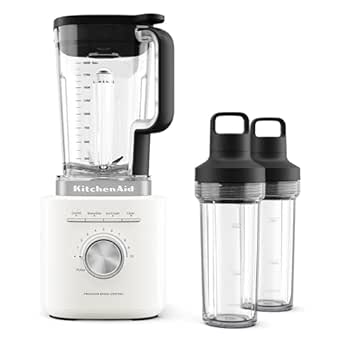
The KitchenAid Pure Power is a flexible pick for households that switch between family-size recipes and individual smoothies. Its 68-ounce main jar and two 16-ounce personal jars cover both jobs without requiring a separate blender, while the 10-speed control and smoothie cycle offer more adjustment than the Ninja UltraCrush Pro’s four manual speeds. The stainless steel blades are described as suited to ice crushing, but the 1700-watt figure is peak input power, not a direct measure of power at the blades. That distinction matters when comparing it with other high-end models on motor claims alone. Its jars are BPA-free plastic, which keeps the setup lighter than a glass-container option but may disappoint buyers seeking glass or metal construction. I’d choose it for versatility, not for a premium-material feel.
Pros:- Includes a 68-ounce main jar and two 16-ounce personal jars
- Ten speeds and a precision control knob allow more manual adjustment than the Ninja UltraCrush Pro
- Includes a smoothie cycle and stainless steel blades designed for ice crushing
- BPA-free jars
Cons:- Main and personal jars are plastic rather than glass or metal
- The 1700-watt figure is peak input power, not power delivered at the blades
- One-year limited warranty is shorter than the listed coverage for the Breville Fresh and Furious and WantJoin commercial blender
Best for: Households that make both large blender batches and individual smoothies and want personal jars included.
Not ideal for: Buyers who prefer glass or metal containers, or who want to judge blending strength from a clearly stated motor-output figure.
- Model:KSB2078PL
- Peak input power:1700 watts
- Number of speeds:10
- Main jar capacity:68 oz (2 L)
- Personal jar capacity:Two 16 oz (500 mL) jars
- Blade material:Stainless steel
- Dimensions:10 x 16 x 16.5 inches
- Warranty:1 year limited
Our verdict“Choose the KitchenAid if you want one setup for family batches and personal smoothies, and skip it if glass construction is a priority.”
Ninja UltraCrush Pro Kitchen System, 1500W Blender with 72oz Pitcher, 8-Cup Food Processor, and 18oz To-Go Cup, Silver, BP401
The Ninja UltraCrush Pro earns its place by doing more than blending: its package combines a 72-ounce pitcher, 8-cup food processor, and 18-ounce to-go cup. That makes it a better fit for buyers who want one appliance base for frozen drinks, chopping, and single servings than the Breville Fresh and Furious, which focuses on blending and programmed cycles. Its 1500-watt motor and Total Crushing Technology are aimed at ice and frozen ingredients, while four manual speeds keep operation straightforward. The tradeoff is a broader, attachment-heavy setup that takes more storage space than a single-jar blender, and its plastic containers lack the premium feel some buyers expect in a high-end appliance. I’d favor it for task range over fine-grained speed control or a compact counter footprint.
Pros:- Combines a 72-ounce pitcher, 8-cup food processor, and 18-ounce single-serve cup
- 1500-watt motor and Total Crushing Technology are designed for ice and frozen ingredients
- Four clearly defined manual speed settings are simple to operate
- BPA-free parts are dishwasher-safe for easier cleanup
Cons:- Multiple attachments and the base require more storage space than a single-purpose blender
- Plastic containers may feel less substantial than premium glass or metal alternatives
- Four speed settings offer less fine adjustment than the KitchenAid Pure Power’s ten speeds
Best for: Home cooks who want a blender, food processor, and individual blending cup in one coordinated system.
Not ideal for: Buyers with limited cabinet or counter space, or those who prefer a simpler blender with more speed settings and fewer attachments.
- Model:BP401
- Power:1500 watts
- Blender pitcher capacity:72 oz (64 oz maximum liquid)
- Food processor capacity:8 cups
- Single-serve cup capacity:18 oz
- Speed settings:4: Low, Medium, High, Max
- Container and blade materials:Plastic container; stainless steel blades
- Weight:4.4 lb
Our verdict“Pick the Ninja if you’ll use its food processor and personal cup as well as the pitcher; skip it if you want a compact, blender-only setup.”
Breville Fresh and Furious Blender, Silver
The Breville Fresh and Furious is the most guided option in this group for buyers who want more than a basic speed dial. It pairs nine one-touch programs with five manual speeds, an LCD display, and an auto-clean function, giving it a more structured interface than the KitchenAid Pure Power’s manual-focused controls. Its 50-ounce shatter-resistant Tritan jug is a practical middle ground for everyday batches, while the contoured blade-and-bowl system is designed to draw ingredients through the blending area. The smaller capacity gives it less room than the KitchenAid or Ninja pitchers, and it has no personal cup for blending directly into a travel container. Compared with the Vitamix VX3’s three programs and 48-ounce container, Breville offers more preset choices; the VX3, in turn, adds variable speed and pulse control.
Pros:- Nine one-touch programs complement five manual speed settings
- 50-ounce BPA-free Tritan jug resists shattering
- LCD display makes settings and operation easier to follow
- Auto-clean function supports easier routine cleanup
Cons:- Smaller capacity than the KitchenAid Pure Power and Ninja UltraCrush Pro pitchers
- No personal blending cup is included
- The listed 1100-watt motor is lower than the power figures listed for the KitchenAid, Ninja, and WantJoin models
Best for: Home cooks who want preset programs, a clear LCD interface, and a mid-size shatter-resistant jug for regular kitchen blending.
Not ideal for: Large households needing a bigger pitcher or smoothie drinkers who want an included personal blending cup.
- Model:BBL620SIL1AUS1
- Power:1100 watts
- Capacity:50 oz
- Jug material:BPA-free Tritan copolyester
- Blade material:Surgical-grade stainless steel
- Controls:5 speeds and 9 one-touch programs
- Display:LCD
- Warranty:3-year limited
Our verdict“Choose the Breville for guided programs and a durable mid-size jug, but look elsewhere for large batches or personal blending cups.”
WantJoin Professional Commercial Blender with Shield Quiet Sound Enclosure, 2200W, Self-Cleaning, Black
The WantJoin takes a different route from countertop models such as the Ninja UltraCrush Pro: it combines a sound enclosure, an 80-ounce pitcher, and a stated 2200-watt motor for buyers who blend large volumes and want less noise and splatter. Its listed maximum per cycle is 74 ounces, so the full pitcher capacity should not be treated as usable blend volume. A 38,000-RPM motor speed, dual-direction blades, tamper access, and overheat protection suit a broad range of dense ingredients and repeat blending. The 17-pound body and 21.65-inch height make it a poor match for buyers who need a light appliance or have low cabinets. Compared with the Breville Fresh and Furious, it offers more capacity and a sound shield, but its commercial-style size and plastic pitcher are less suited to a compact home kitchen.
Pros:- Sound enclosure is designed to reduce blending noise and splatter
- 80-ounce pitcher supports large batches, with 74 ounces listed as the maximum blend volume per cycle
- 38,000-RPM motor and dual-direction blades are specified for varied blending tasks
- Includes self-cleaning, overheat protection, tamper access, and a 10-year warranty
Cons:- At 17 pounds and 21.65 inches tall, it is heavy and may not fit under low cabinets
- Usable blend volume per cycle is lower than the 80-ounce pitcher capacity
- Plastic container may not suit buyers seeking glass construction
Best for: Cafés, shared kitchens, and households that regularly blend large batches and want a sound enclosure.
Not ideal for: Small kitchens, buyers with low overhead cabinets, or anyone who needs a lightweight blender that is easy to move and store.
- Power:2200 watts
- Voltage:110 volts
- Number of speeds:15
- Pitcher capacity:80 oz (2.2 L)
- Maximum blend volume per cycle:74 oz
- Motor speed:38,000 RPM
- Dimensions:9.84 x 9.84 x 21.65 inches
- Warranty:10 years
Our verdict“Choose the WantJoin for high-volume blending with a sound shield, but skip it if kitchen space or easy storage is limited.”
Vitamix VX3 Professional-Grade Blender, 3 Programs, Black
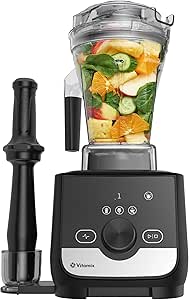
The Vitamix VX3 is the focused choice here for buyers who want guided cycles without giving up manual texture control. Its BlendPilot programs for smoothies, frozen cocktails, and soup handle common jobs, while variable speed and pulse let the cook adjust the result—an appealing contrast with the Breville Fresh and Furious, whose nine programs offer more presets but are paired with a different jug size and interface. At 48 ounces, the VX3 is better suited to smaller household batches than the 68-ounce KitchenAid or 72-ounce Ninja. Its self-cleaning program and included tamper add practical support for thick blends, and the listed seven-year limited warranty is longer than the Breville’s three-year coverage. The key compromise is capacity: buyers who regularly prepare drinks for a crowd may prefer a larger pitcher, and the product data does not provide a wattage figure for direct power comparison.
Pros:- BlendPilot offers dedicated smoothie, frozen cocktail, and soup programs
- Variable speed and pulse provide manual texture control
- Self-cleaning program and included tamper support practical daily use
- Seven-year limited warranty
Cons:- 48-ounce container holds less than the KitchenAid Pure Power and Ninja UltraCrush Pro pitchers
- Only three preset programs are listed, fewer than the Breville Fresh and Furious
- Product data does not state a motor wattage
Best for: Small households and cooks who want three guided programs alongside variable speed, pulse, and a tamper for texture control.
Not ideal for: Families that routinely blend large batches, or buyers who require a stated wattage to compare motor power across models.
- Container size:48 oz
- Container material:BPA-free plastic
- BlendPilot programs:Smoothie, Frozen Cocktail, Soup
- Speed control:Variable speed
- Pulse feature:Yes
- Self-cleaning:Yes; add warm water and dish soap
- Included accessories:Tamper and tamper holder
- Warranty:7-year limited
Our verdict“Choose the VX3 for smaller batches and a useful mix of presets and hands-on control, but select a larger-capacity model for frequent crowd-size blending.”
Vitamix Ascent X5 Professional-Grade Blender, Shadow Black
The Ascent X5 is the best fit here for buyers who want a high-end blender to handle routine tasks with less manual adjustment. Its 10 automatic programs cover jobs such as smoothies and soups, while the 2.2-HP motor and included tamper help with dense or frozen ingredients. SELF-DETECT adjusts settings for compatible containers, and the cleaning cycle takes under a minute, reducing the work after blending. Compared with the Ascent X3, the X5 offers more presets, so it suits households that prefer guided cycles over choosing speeds themselves. The tradeoff is a 48-ounce container, which gives it less batch capacity than the 64-ounce Vitamix 5200. Its premium feature set also makes less sense for buyers who mainly need occasional basic blending.
Pros:- 2.2-HP motor and included tamper support tough and frozen ingredients
- Ten automatic programs reduce the need to select settings manually
- SELF-DETECT adjusts settings for compatible containers
- Self-cleaning cycle takes under 60 seconds
Cons:- 48-ounce container is smaller than the Vitamix 5200’s 64-ounce container
- Feature-rich controls may be unnecessary for buyers who prefer manual blending
- Premium positioning is difficult to justify for infrequent, simple blending
Best for: Frequent smoothie and soup makers who want a premium Vitamix with many automatic programs and fast cleanup.
Not ideal for: Large households that regularly blend big batches, or buyers who want a simpler blender without extensive presets.
- Brand:Vitamix
- Model:Ascent X5
- Motor power:2.2 HP
- Container capacity:48 ounces
- Blade material:Stainless steel
- Programs:10
- Warranty:10-year limited warranty
- Included components:Motor base, 48-ounce container, S2 low-profile tamper, tamper holder, recipe book
Our verdict“Choose the Ascent X5 if you want Vitamix power paired with extensive presets and quick cleanup, and do not need a larger batch container.”
Vitamix Ascent X3 Professional-Grade Blender, 3 Programs, Shadow Black
The Ascent X3 keeps the core high-end Vitamix strengths—2.2-HP power, variable speed, pulse, and SELF-DETECT—without the X5’s broader set of automatic programs. Its three presets cover common tasks, while manual controls leave more room to adjust texture as a recipe changes. That makes it a better match than the X5 for cooks who want a few shortcuts but expect to control most blends themselves. Like the X5, it has a 48-ounce container, self-cleaning, and a 10-year limited warranty; it does not gain the larger capacity of the Vitamix 5200. The main drawback is its substantial counter footprint, and buyers who want lots of guided programs may find the X5 a more convenient fit.
Pros:- 2.2-HP motor and stainless-steel blades handle frozen and tough ingredients
- Variable speed and pulse allow direct control over texture
- SELF-DETECT adjusts settings for compatible containers
- Self-cleaning cycle takes under a minute
Cons:- 48-ounce container offers less room for family-size batches than the Vitamix 5200
- Large footprint can be difficult to accommodate in a crowded kitchen
- Three presets provide less automated variety than the Ascent X5
Best for: Home cooks who want a powerful, long-warranty Vitamix with variable speed control and only a small set of presets.
Not ideal for: Buyers seeking a compact countertop appliance or extensive automatic programs for hands-off blending.
- Brand:Vitamix
- Model:Ascent X3 (Model Number 073493)
- Motor power:2.2 HP
- Container capacity:48 ounces
- Automatic programs:3
- Controls:Variable speed and pulse
- Warranty:10-year limited warranty
- Included components:X3 motor base, 48-ounce container, tamper, tamper holder, digital recipe book
Our verdict“Pick the Ascent X3 if you value hands-on speed control and core Vitamix performance more than a large preset library.”
Vitamix E310 Explorian Blender, Professional-Grade, Self-Cleaning 48 oz Container, Black
The Vitamix E310 is the simpler high-performance choice for buyers who would rather set speed themselves than rely on the Ascent models’ presets and SELF-DETECT system. Its 10 variable speeds and pulse give control over texture, from smooth blends to chunkier soups, while the 48-ounce container suits medium batches. Self-cleaning limits cleanup to a short cycle, and the included mini-tamper helps move ingredients toward the blades. Compared with the Ascent X3, the E310 has a shorter, five-year full warranty and fewer connected-container features, but its more basic control approach may be all a hands-on cook needs. It still takes meaningful counter space, and it is not the right pick for someone who wants a large-capacity jar.
Pros:- Ten variable speeds and pulse give direct texture control
- 48-ounce container is suited to medium-sized batches
- Self-cleaning cycle takes under a minute
- Full five-year warranty covers parts, labor, and return shipping
Cons:- Five-year full warranty is shorter than the Ascent X3’s 10-year limited warranty
- 48-ounce container is less suitable for large household batches than the Vitamix 5200
- Large footprint can use substantial counter space
Best for: Hands-on home cooks making medium batches who want precise speed adjustment without a library of automatic programs.
Not ideal for: Buyers who need a 64-ounce container, guided presets, or a smaller blender footprint.
- Brand:Vitamix
- Model:E310 Explorian (VM0197)
- Container capacity:48 ounces
- Speed control:10 variable speeds plus pulse
- Blade material:Hardened stainless steel
- Warranty:5-year full warranty covering parts, labor, and return shipping
- Included components:Motor base, 48-ounce container, mini-tamper
- Color:Black
Our verdict“Choose the E310 if you want a capable Vitamix for medium batches and prefer manual speed control over smart features and presets.”
Vitamix 5200 Professional-Grade Blender, 64 oz, White
The Vitamix 5200 stands out in this group for its 64-ounce container, giving batch cooks more room than the 48-ounce jars on the Ascent X5, Ascent X3, and E310. Its 2-HP motor, tamper, and 10 variable speeds support everything from smoothies to soups, with manual control that suits cooks who want to set the blend themselves. Self-cleaning avoids taking the container apart after each use. Compared with the newer Ascent models, the 5200 has no listed automatic programs or SELF-DETECT, and its seven-year limited warranty is shorter than their 10-year limited warranties. The larger jar is useful for family portions, but it can be awkward when making a small serving, so buyers who mostly blend for one may prefer a smaller container.
Pros:- 64-ounce BPA-free container accommodates larger batches than the 48-ounce Vitamix models
- 2-HP motor and tamper support dense ingredients and thick blends
- Ten variable speeds plus a high-speed setting allow texture adjustments
- Self-cleaning cycle takes roughly 30 to 60 seconds
Cons:- Large container is less convenient for small batches
- Seven-year limited warranty is shorter than the Ascent X5 and X3 warranties
- Lacks the automatic programs and SELF-DETECT listed for the Ascent models
Best for: Families and batch cooks who regularly make large quantities of smoothies, soups, or sauces.
Not ideal for: Single-serving users who want a compact jar, or buyers who prefer automatic programs and SELF-DETECT features.
- Brand:Vitamix
- Model:5200
- Motor power:2 HP
- Container capacity:64 ounces
- Container material:BPA-free
- Blade material:Stainless steel
- Speed settings:10 variable speeds plus a high-speed setting
- Warranty:7-year limited warranty
Our verdict“Pick the 5200 if large batch capacity matters more to you than the Ascent series’ presets and container-recognition features.”
Ninja Professional Blender BL610, 1000W, 72oz Pitcher
The Ninja BL610 earns a place as the large-pitcher option for households focused on smoothies and frozen drinks, rather than as a direct substitute for the premium Vitamix models. Its 72-ounce pitcher holds up to 64 ounces of liquid, making it practical for serving several people at once, and Total Crushing Technology is designed to break down ice and tough ingredients. The dishwasher-safe pitcher also simplifies cleanup compared with the Vitamix models’ self-cleaning cycles. The tradeoff is a different level of control: the product data lists no variable speeds, tamper, or automatic programs, unlike the Vitamix 5200. Its 1000W motor and corded design make it a more limited fit for cooks seeking fine texture adjustment or flexible placement.
Pros:- 72-ounce pitcher with 64-ounce liquid capacity suits family-size batches
- Total Crushing Technology is designed for ice and tough ingredients
- BPA-free pitcher is dishwasher safe
- Recipe guide is included
Cons:- No variable speed controls or tamper are listed, unlike the Vitamix 5200
- 1000W motor offers less stated power than the 2-HP Vitamix 5200
- Corded design limits placement flexibility
Best for: Families who mainly make large batches of smoothies or frozen drinks and want a dishwasher-safe pitcher.
Not ideal for: Buyers who want variable-speed texture control, a tamper for thick blends, or a premium blender with longer listed warranty coverage.
- Model:BL610
- Power:1000W
- Pitcher capacity:72 ounces
- Liquid capacity:64 ounces
- Amperage:12.5 amps
- Power source:Corded electric
- Pitcher material:BPA-free
- Cleaning:Dishwasher safe
Our verdict“Choose the Ninja BL610 for big batches of frozen drinks and easy pitcher cleanup, but choose the Vitamix 5200 for more hands-on control.”
Cleanblend Commercial Blender – 1800W, 3 HP, 64 oz High-Performance Professional Countertop Blender with Stainless Steel Blades
The Cleanblend is the strongest fit here for buyers who want a commercial-style 3 HP motor and a full-size pitcher for frequent, substantial batches. Its 64-ounce BPA-free container and variable-speed control suit smoothies, sauces, soups, and ice-heavy blends, while the included tamper gives you a way to move stubborn ingredients toward the blades. Compared with the Blendtec Total Blender Classic, it offers hands-on speed adjustment rather than relying on preset cycles; that favors cooks who want direct control but may add a little more attention during blending. The five-year full warranty is a notable support advantage over the Total Blender Classic’s two-year limited warranty. The tradeoff is a bulky countertop footprint, and its appliance-replacement versatility matters less if you mainly make single servings.
Pros:- 3 HP, 1800-watt motor is suited to ice and dense ingredients
- 64-ounce BPA-free pitcher accommodates large batches
- Variable-speed control supports hands-on texture adjustment
- Five-year full warranty is longer than the Blendtec Total Blender Classic’s listed warranty
Cons:- Bulky footprint can be difficult to accommodate on a small counter
- Large pitcher is less convenient for single-serving blending
- Commercial-style capacity and power may be more than occasional home blending requires
Best for: Home cooks or small food-service operators who regularly make large batches, crush ice, and want variable-speed control with a five-year full warranty.
Not ideal for: Small-kitchen owners or people who mostly make individual smoothies; the full-size unit takes up counter space and its batch capacity may go unused.
- Brand:Cleanblend
- Motor power:1800 watts
- Horsepower:3 HP
- Capacity:64 fluid ounces
- Voltage:120 V
- Controls:Variable-speed knob or push button
- Warranty:Five-year full warranty (USA)
- Included components:Blender base, 64-ounce container, lid, tamper, and warranty booklet
Our verdict“Choose the Cleanblend if you regularly blend large, demanding batches and prefer variable-speed control over preset-led operation.”
Blendtec Total Blender Classic with 75oz FourSide Jar
The Total Blender Classic suits buyers who want guided blending without a tamper. Its FourSide jar is designed to draw ingredients toward the blades, and its programmed cycles simplify common jobs such as smoothies, soups, and frozen treats. The ability to heat soup during blending adds versatility for cooks who want a hot result without transferring ingredients to a pot. Compared with the Cleanblend Commercial Blender, the Blendtec offers more task-specific automation, while the Cleanblend’s variable-speed control gives cooks more direct manual adjustment. The tradeoff is the Total Blender Classic’s two-year limited warranty, shorter than the Cleanblend’s five-year coverage, and the listed 75-ounce total jar capacity does not equal its 32-ounce blending capacity. Its commercial-use restriction also makes it a poor fit for café or restaurant work.
Pros:- FourSide vortex design is intended to blend without a tamper
- Preprogrammed cycles simplify common blending tasks
- Can heat soup during blending and make frozen treats
- Blunt blades are designed for efficient blending and safer handling during cleaning
Cons:- Two-year limited warranty is shorter than the Cleanblend’s five-year full warranty
- Warranty is voided if used for commercial purposes
- Large jar takes up counter space, while stated blending capacity is 32 ounces
Best for: Home cooks who value preset smoothie, soup, and frozen-treat cycles, want to avoid using a tamper, and will use the blender only domestically.
Not ideal for: Commercial operators or buyers who want extended warranty coverage; the stated warranty is voided by commercial use and is shorter than the Cleanblend’s.
- Brand:Blendtec
- Model:TB-621-20
- Jar capacity:75 oz total; 32 oz blending
- Jar material:BPA-free
- Speed settings:10 incremental speeds plus Pulse
- Warranty:Two-year limited warranty
- Controls and display:Preprogrammed cycles and illuminated LCD timer
- Additional features:Self-cleaning cycle and hot soup capability
Our verdict“Pick the Total Blender Classic for preset-led home blending and heated soups, not for commercial use or long warranty coverage.”
Vitamix VX1 Professional-Grade Blender with 64 oz. Container, Black
The Vitamix VX1 is the simplest fit for buyers who want a 64-ounce container and direct speed control rather than a menu of preset programs. Its variable-speed dial and pulse function let cooks adjust texture as they blend, while the laser-cut stainless-steel blades are intended to handle fibrous ingredients. Compared with the Blendtec Total Blender Classic, the VX1 places more emphasis on manual control than programmed cycles and hot-soup capability; choose the Blendtec if those automated tasks matter more. The VX1’s five-year limited warranty is also longer than the Total Blender Classic’s listed two-year warranty. The supplied information gives no motor wattage or specific drawbacks, so buyers have less detail for comparing raw power, and should not assume this is the right choice if they need programmed routines or a compact base.
Pros:- 64-ounce classic container suits family-size batches
- Variable speed and pulse controls allow direct texture adjustment
- Laser-cut stainless-steel blades are designed for tough, fibrous ingredients
- Five-year limited warranty exceeds the Blendtec Total Blender Classic’s listed two-year warranty
Cons:- No motor wattage is specified in the supplied product details, limiting power comparisons
- No preset cycles are listed for hands-off task selection
- Full-size 64-ounce container may be excessive for single-serving blending
Best for: Home cooks who blend family-size batches, want manual variable-speed and pulse controls, and prefer a straightforward Vitamix setup.
Not ideal for: Buyers who want clearly specified motor wattage, preset programs, or a compact blender for occasional single servings.
- Model:VX1
- Color:Black
- Container capacity:64 ounces
- Blade material:Laser-cut stainless steel
- Controls:Variable speed and Pulse
- Warranty:Five-year limited warranty
- Included items:Blender base, 64-ounce classic container, and tamper
Our verdict“Choose the VX1 if you want a full-size Vitamix with manual speed control and do not need preset blending programs.”
Blendtec Professional 800 Blender with 90 oz WildSide+ Jar
The Professional 800 is the premium pick for buyers who want Blendtec’s tamper-free vortex design in a larger WildSide+ jar. Its listed 90-ounce total capacity and 36-ounce blending capacity give it more room than the Total Blender Classic’s 75-ounce total and 32-ounce blending capacity, though neither figure should be mistaken for the other. Soup heating, frozen-treat blending, and a self-cleaning cycle make it a broad-purpose choice for busy kitchens. The clearest differentiator is its 10-year warranty, far longer than the Classic’s two-year limited warranty. That extended coverage and added capacity come with a large footprint and a premium-positioned design; buyers with limited counter space or modest blending needs may get more practical use from the smaller Cleanblend, which also offers manual variable-speed control.
Pros:- WildSide+ jar is designed to create a vortex without a tamper
- 90-ounce total jar capacity is larger than the Total Blender Classic’s listed 75 ounces
- Soup heating, frozen-treat blending, and self-cleaning broaden its kitchen use
- Ten-year warranty is longer than the warranties listed for the other products in this batch
Cons:- Large footprint can occupy substantial counter space
- Premium positioning may be hard to justify for occasional or single-serving use
- The 36-ounce blending capacity is much lower than its 90-ounce total jar capacity
Best for: Frequent home cooks who want a large-capacity Blendtec for soups and frozen treats, value tamper-free blending, and plan to keep it on the counter.
Not ideal for: Small-kitchen owners, occasional smoothie makers, or buyers who need a stated motor-power figure before comparing performance.
- Brand:Blendtec
- Model:Professional 800
- Jar capacity:90 oz total; 36 oz blending
- Jar:WildSide+
- Color:Black
- Warranty:10 years
- Material:BPA-free
- Cleaning:Dishwasher-safe jar and self-cleaning cycle
Our verdict“Choose the Professional 800 if you want a large, tamper-free Blendtec with extended warranty coverage and have room for its full-size setup.”
How We Picked
I compared these 14 models on the factors that shape daily use: blending capability, control options, container capacity, construction, cleaning, and versatility. I also weighed practical fit—such as whether a machine is aimed at batch preparation, single-serve convenience, quieter operation, or food-processing tasks—against the space and extra parts those features can require.
The ranking gives priority to the best balance of performance and usability for a broad range of high-end-blender buyers, then distinguishes models with a clear specialty. Premium features alone did not guarantee a higher place: simpler controls, a more manageable footprint, or a purpose-built design can be a better match for many kitchens. Since the lineup spans personal, household, system-style, and commercial-inspired machines, I treat each product according to the buyer it serves rather than assuming one format fits everyone.
Factors to Consider When Choosing High End Blenders
Before choosing a high-end blender, I would start with the jobs it needs to handle and the routines it needs to fit. The right choice depends on more than motor claims: servings, sound, controls, cleaning, and accessories can make a premium machine either a daily workhorse or an oversized appliance.
Match Capacity to Your Usual Batch
Choose a jar around your normal serving size, not the largest capacity available. A large pitcher is useful for family smoothies, soups, or meal prep, but it takes more storage space and can be awkward when you usually make one portion. Smaller containers suit compact kitchens and modest batches, though they may limit how much you can prepare at once. Check whether the stated capacity reflects a practical working fill level, especially for hot or expanding blends. A common mistake is buying for occasional entertaining and living with a bulky jar every day. If your household makes both single drinks and larger batches, a second jar can be more useful than a bigger motor.
Choose Controls You Will Actually Use
Preset programs can simplify repeat tasks, while manual speed control gives you more say over texture and blending time. Neither approach is automatically better: programs help when you want a repeatable one-touch routine, and manual controls suit cooks who adjust recipes as they go. Pay attention to how easy it is to change speed mid-cycle and whether the controls remain clear during a busy cooking session. More presets can add convenience, but they do not replace learning the right fill level or using the tamper when a thick mixture stalls. Avoid paying for a feature-rich interface if you expect to use only one or two basic settings. Choose based on the tasks you repeat, not the longest feature list.
Treat Noise as a Kitchen-Fit Question
High-powered blending can be loud, and sound enclosures offer one way to manage it. They can make early-morning or shared-space use more considerate, but they also add height, width, and another surface to clean. A quieter design is most valuable when blending near sleeping areas, during calls, or in an open-plan home; it matters less if you blend briefly in a separate kitchen. Do not assume that a quiet enclosure makes every cycle silent. Look at the machine’s full footprint, including room for the cover to open and access to the controls. For many buyers, placement and blending schedule are cheaper and simpler noise solutions than a larger enclosed model.
Separate a Blender From a Kitchen System
A dedicated blender is usually the cleaner choice when smoothies, sauces, and soups are the main jobs. A system with a food processor attachment and personal cup can replace multiple appliances, but it also means more pieces to store, wash, and keep organized. Think about whether you already own a food processor or personal blender before paying for overlapping functions. Attachments are useful only when they are easy to reach and sized for your regular recipes. Consider the amount of counter and cabinet space you can give the full system, not just its base. Buyers who value a focused appliance may prefer simpler operation over a bundle of tools.
Account for Cleaning and Storage
Cleaning affects whether a powerful blender gets used often, so check what parts are removable and how the manufacturer recommends washing them. Self-cleaning cycles can reduce scrubbing after many blends, but they still require rinsing and do not remove every stubborn residue. Wide openings can make hand cleaning easier, while complex lids and attachments may add small crevices to maintain. Also measure the motor base and the height of the assembled jar under your cabinets. A premium blender that lives in a cupboard may be less convenient than a slightly smaller model that stays on the counter. Decide where it will live before choosing the largest or tallest option.
Pay More for a Benefit You Can Name
A higher-end model makes sense when its features solve a real routine: frequent batch cooking, more control over texture, a quieter shared kitchen, or a wider range of tasks. Extra power claims alone do not tell you how well a blender handles your recipes, and they should not be the only reason to step up. Compare warranty terms, replacement-container availability, and accessory costs as part of the ownership picture. An established premium platform may be a better long-term fit if you expect regular use and want parts or containers that support changing needs. For occasional smoothies, an elaborate program menu or commercial-style enclosure may bring little practical benefit. Set your must-have jobs first, then pay for the features that address them.
Frequently Asked Questions
Do I need a high-end blender if I mainly make smoothies?
Not necessarily. A premium model can make sense if you blend often, use fibrous ingredients, or want a machine that also handles soups and sauces. If your smoothies are simple and occasional, a powerful blender with straightforward controls may serve you better than one with many programs or accessories. The Ninja Professional BL610 is a more focused pitcher-style option in this lineup, while the Vitamix 5200 offers a more premium manual-control approach. Think about how often you will use the extra capability before choosing a more elaborate model.
Is a sound enclosure worth choosing for home use?
It can be useful if you blend in an open-plan home, near bedrooms, or while other people are working or sleeping. Enclosures add bulk and can make access and storage less convenient, so they are a tradeoff rather than a universal upgrade. The Blendtec Professional 800 and WantJoin are the enclosure-focused choices here, but their larger presence suits kitchens with room to spare. If you blend at predictable times in a separate kitchen, a conventional model may be easier to live with. Consider where the machine will sit and when you will run it.
Should I choose a blender with preset programs or manual speed control?
Choose programs if you want repeatable cycles with minimal adjustment, particularly for common tasks you make often. Manual speed control is a better fit if you prefer to tailor texture or stop a blend at a specific point. A preset cannot compensate for a poorly sized batch or a mixture that needs help moving around the jar. The Vitamix 5200 represents the more direct manual approach, while several newer Vitamix models provide program-focused controls. If you are unsure, consider which style you already use on other kitchen appliances.
Is a blender and food-processor bundle a good replacement for two appliances?
It may be, if you regularly switch between blending and chopping and have room to store the attachments. The Ninja BP401 is the lineup’s clearest system-style choice, adding food-processing capability and a personal cup alongside its pitcher. A dedicated blender can be simpler to set up and clean when most of your work involves liquids. Before replacing a food processor, check that the included bowl and functions match the chopping, slicing, or mixing jobs you actually do. Avoid buying a bundle for attachments that are likely to stay in a cupboard.
How should I choose between the Vitamix E310, 5200, and Ascent models?
Start with the balance you want between footprint, manual control, and newer program-oriented features. The E310 is the more compact choice among these, while the 5200 emphasizes straightforward operation and a larger household-style container. The Ascent X3 and X5 add a newer premium feature set, with the X5 the strongest all-around recommendation in this roundup. The VX3 and VX1 also offer distinct routes within Vitamix’s professional-grade lineup. Compare container size and controls against your everyday recipes rather than choosing by family name alone.
Conclusion
For most buyers seeking one premium machine for varied home use, I recommend the Vitamix Ascent X5 as best overall. The Vitamix E310 is my best value-style pick for someone who wants a capable, more compact Vitamix without stepping up to an Ascent model, while the Vitamix 5200 is best for beginners who favor direct controls over a menu of programs. For a premium sound-conscious kitchen, choose the Blendtec Professional 800; for buyers who want one appliance system to blend, process food, and make a to-go drink, the Ninja BP401 is the specific-needs pick. If your priority is a straightforward high-capacity pitcher, compare the 5200 and Ninja BL610, then decide whether premium controls or a simpler setup matter more to you.
Halloween Picks

8.5 Foot Halloween Inflatable Haunted House Castle with Skeleton, Ghost & Skulls

MGparty 10FT Halloween Inflatable Archway with LED Lights

Govee Outdoor Halloween Projector Light, 3D Dynamic Visual Holiday Decor
As an affiliate, we earn on qualifying purchases.