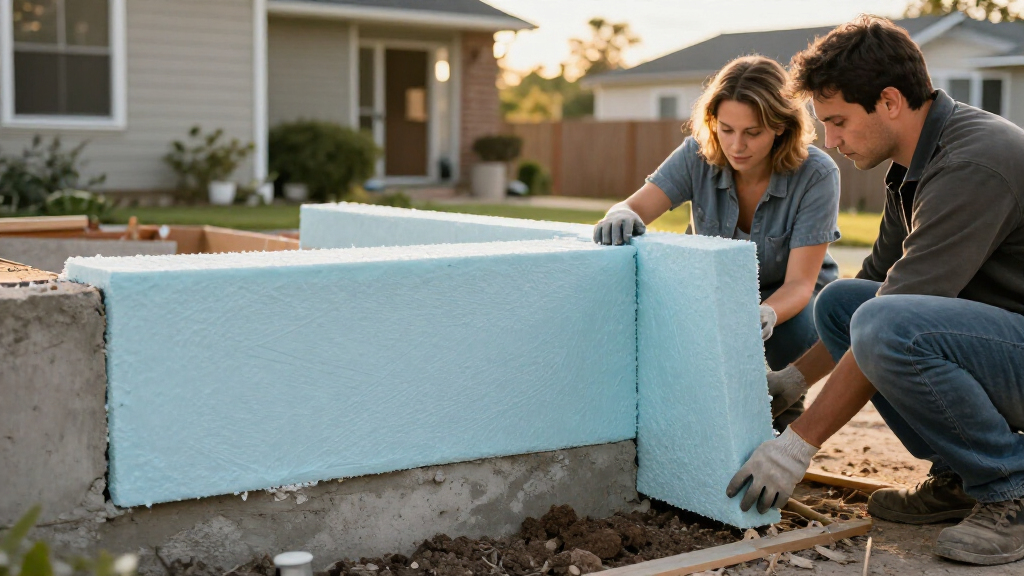
For foundation insulation, the right choice depends on whether you need to seal irregular gaps, cover a broad surface, or manage moisture and radiant heat. I rank the Kraken Bond Fastcoat kit first for its stated 480-square-foot coverage, closed-cell foam, and included application gear. The BEEST FullStop kit is a more modest foam package with protective equipment included, while the US Energy Products reflective roll covers a broad area without spray foam. The Akfix Thermcoat kit is the smaller foam option for targeted work.

Get the little things that make your day delivered free with Prime
- Fast, free delivery on millions of items
- Prime Video, Amazon Music and more included
- Member-only deals all year
These products are not interchangeable. Foam can expand into joints and create an air-sealing layer, but it calls for careful application, suitable temperatures, and protective measures. The reflective roll offers a different approach and needs the right installation conditions to deliver its intended radiant-barrier role. I weigh foundation suitability, stated coverage, thermal figures, moisture behavior, and installation demands rather than treating a high R-value alone as proof of a better foundation system.
Key Takeaways
- Kraken Bond Fastcoat is my broad-coverage foam pick: its listed 480 sq ft coverage and closed-cell formulation suit larger sealing projects, provided the substrate and installation plan fit spray foam.
- BEEST FullStop gives a smaller project a complete application bundle, including gloves, goggles, and a coverall; its stated R-value is lower than the two fire-rated spray-foam kits.
- Akfix Thermcoat is the compact choice for limited foundation areas, with six cans, interchangeable nozzles, and a stated R-value of 11.32 at two inches.
- US Energy Products Double Bubble is the only roll-format pick and covers 500 sq ft, but its 1/4-inch thickness and radiant-barrier design make installation details particularly important.
- Before choosing, confirm the foundation assembly, local code requirements, intended exposure, moisture conditions, and product installation instructions; these kits are not complete foundation systems by themselves.
| Kraken Bond Fastcoat Class-A Fire-Rated Closed-Cell Spray Foam Insulation Kit, 24 Cans, 480 sq ft |  | Best Overall for Broad-Area Foam Sealing | Material: Polyurethane | Foam type: Closed-cell expanding foam | Coverage: 480 sq ft | VIEW LATEST PRICE | See Our Full Breakdown |
| Akfix Thermcoat Fire Rated Spray Foam Insulation Kit (6×27.1 oz) |  | Best for Small, Targeted Foam Jobs | Material: Polyurethane | Cell structure: Closed cell | Coverage: 120 sq ft | VIEW LATEST PRICE | See Our Full Breakdown |
| BEEST FullStop Spray Foam Insulation Kit, 240 Board Feet |  | Best Foam Bundle for Buyers Prioritizing Included PPE | Material: Moisture-cured polyurethane foam | Coverage: Up to 240 board feet | R-value: 8.24 at 2 inches | VIEW LATEST PRICE | See Our Full Breakdown |
| US Energy Products Double Bubble White/Foil Reflective Insulation Roll, 48 in x 125 ft |  | Best Roll Format for Broad, Even Surfaces | Material: Polyethylene bubbles with metalized aluminum polyester film | Thickness: 1/4 inch | Dimensions: 48 in x 125 ft | VIEW LATEST PRICE | See Our Full Breakdown |
| foundation insulation product | Material | Coverage | R-value | Thickness |
|---|---|---|---|---|
| Kraken Bond Fastcoat Class-A F | Polyurethane | 480 sq ft | 5.66 per inch; 11.32 at 2 inches | 2 inches |
| Akfix Thermcoat Fire Rated Spr | Polyurethane | 120 sq ft | 11.32 at 2 inches | — |
| BEEST FullStop Spray Foam Insu | Moisture-cured polyurethane foam | Up to 240 board feet | 8.24 at 2 inches | — |
| US Energy Products Double Bubb | Polyethylene bubbles with metalized aluminum polyester film | 500 sq ft | — | 1/4 inch |
More Details on Our Top Picks
Kraken Bond Fastcoat Class-A Fire-Rated Closed-Cell Spray Foam Insulation Kit, 24 Cans, 480 sq ft
The Kraken Bond Fastcoat kit takes the top spot because it combines a sizable listed coverage area with a closed-cell foam format that can seal around irregular edges and penetrations. Its stated 480 sq ft coverage gives it a different role from the six-can Akfix kit, which is better suited to a focused repair or a smaller section. Kraken also supplies an application gun, two foam cleaners, and safety gear, so the package is geared toward a more substantial foam job rather than a handful of isolated cracks.
The listed thermal figure is R-5.66 per inch, or R-11.32 at two inches. That makes its stated R-value comparable to Akfix at the same thickness and higher than BEEST’s stated R-8.24 at two inches. Those numbers are useful for comparing the listings, but they do not tell me whether a given foundation assembly will meet local requirements. The foam’s airtight and watertight sealing claims may appeal where an installer needs to address air leakage as well as heat flow, though water management still depends on the full foundation design.
The main tradeoff is application discipline. Kraken recommends a can temperature near 68°F, with a stated application range of 41°F to 86°F. The product also calls for ventilation and careful adherence to safety instructions. That makes it a stronger fit for a planned project with controlled conditions than for a quick patch in a cold, poorly ventilated basement. I would not select it solely because the listing calls it Class-A fire-rated: the assembly and local rules determine whether foam can remain exposed or needs a protective covering.
Compared with the reflective US Energy Products roll, Kraken is better suited to filling gaps and creating a conforming foam layer, while the roll is simpler to spread across a large, relatively even surface. Compared with BEEST, Kraken offers more stated coverage and a higher listed two-inch R-value, but the bigger kit may be unnecessary for a small foundation repair. Its first-place position reflects breadth and versatility within this set, not a claim that it suits every below-grade application.
Pros:- Listed coverage of 480 sq ft across 24 cans suits broader foam projects.
- Closed-cell foam is described as forming an airtight, watertight seal and bonding to common building materials.
- Stated R-5.66 per inch, or R-11.32 at two inches, matches Akfix’s listed two-inch figure.
- Includes an application gun, two cleaners, and safety gear.
Cons:- Best results call for cans near 68°F, which can constrain when and where work is practical.
- Spray application requires ventilation and careful handling rather than casual, unprotected use.
- The listing does not establish suitability for every below-grade or exposed foundation assembly.
Best for: Buyers planning a larger foundation or crawl-space foam application who can follow the temperature, ventilation, and protective-equipment instructions.
Not ideal for: People who need only a few small repairs, cannot control application conditions, or need a product explicitly verified for a particular buried foundation assembly.
- Material:Polyurethane
- Foam type:Closed-cell expanding foam
- Coverage:480 sq ft
- Thickness:2 inches
- R-value:5.66 per inch; 11.32 at 2 inches
- Can size and quantity:27.1 oz each; 24 cans
- Application temperature:41°F to 86°F; recommended can temperature 68°F
- Included components:Application gun, 2 foam cleaners, safety gear
Our verdict“I rank Kraken Bond first for larger, planned foam projects because its stated coverage, closed-cell format, and included tools make it the most broadly capable option here.”
Akfix Thermcoat Fire Rated Spray Foam Insulation Kit (6×27.1 oz)
Akfix Thermcoat is the small-project alternative to the larger Kraken kit. Six 27.1-ounce cans are listed to cover 120 sq ft, making this a more sensible package when a foundation repair is limited to one section, a few penetrations, or a defined crawl-space area. Its kit includes a gun, cleaner, and two interchangeable nozzles, which can help adapt application to different orientations and access points.
On paper, Akfix shares Kraken’s R-11.32 at two inches and closed-cell polyurethane construction. The listing also describes the foam as waterproof and suitable for adhesion to materials including wood, metal, concrete, and PVC. That concrete compatibility makes the product relevant to foundation-related work, but it does not settle whether it is approved for a specific below-grade detail. I would check the manufacturer’s instructions and local requirements before using it against a foundation wall or in a location that may remain damp.
The accessory set is a useful distinction from BEEST: Akfix supplies interchangeable nozzles, while BEEST lists protective clothing and eyewear. Nozzles may help with access and orientation, but they do not remove the need for controlled application. Like Kraken, Akfix performs best with cans near 68°F; the stated operating range is 41°F to 86°F. It also calls for ventilation and protective equipment, and the listing notes that layered application is needed to reach maximum insulation thickness.
Akfix places below Kraken because the smaller coverage is an advantage only when the job is small. For a broad surface, buying and applying multiple six-can kits could be less convenient than choosing Kraken’s larger package or a roll product. For a compact repair, however, its coverage and included gun make it more proportionate than a 24-can set. I would skip it when a project needs a fully specified foundation assembly or when the work area cannot meet the temperature and ventilation directions.
Pros:- Six cans and stated 120 sq ft coverage suit a targeted project better than a large kit.
- Listed R-11.32 at two inches matches the Kraken kit’s stated figure.
- Includes a gun, cleaner, and two interchangeable nozzles.
- Product description lists adhesion to concrete, wood, metal, and PVC.
Cons:- Its 120 sq ft coverage is much lower than Kraken’s listed 480 sq ft.
- Cans are recommended near 68°F, with ventilation and protective equipment required.
- Maximum thickness requires layered application, adding time and care.
Best for: DIYers and contractors sealing a contained foundation, crawl-space, or penetration area who want a small foam kit with application accessories.
Not ideal for: Buyers insulating a large continuous area, or anyone who needs documented approval for a specific below-grade exposure rather than general material adhesion claims.
- Material:Polyurethane
- Cell structure:Closed cell
- Coverage:120 sq ft
- Quantity:6 cans, 27.1 fl oz each
- R-value:11.32 at 2 inches
- Thermal conductivity:0.025 W/m·K
- Operating temperature:41°F to 86°F; recommended application temperature 68°F
- Included accessories:Gun, cleaner, 2 interchangeable nozzles
Our verdict“I would choose Akfix over the larger Kraken kit when a foundation foam job is limited in area and nozzle flexibility is useful.”
BEEST FullStop Spray Foam Insulation Kit, 240 Board Feet
BEEST FullStop earns a distinct place for its all-in-one application bundle. The 12-can kit includes a foam gun, cleaner, gloves, goggles, and a coverall, so it is the most explicit choice for buyers who want protective items packaged alongside the foam. Its stated capacity is up to 240 board feet, a different measurement from Kraken and Akfix’s square-foot coverage figures; buyers should not compare those numbers as if they were directly equivalent without accounting for application thickness.
The listing gives BEEST an R-value of 8.24 at two inches, below the stated 11.32 at two inches for both Kraken and Akfix. That difference matters if the buyer is comparing the published thermal figures at equal thickness, though actual foundation performance depends on installation and the larger assembly. BEEST is described as moisture-cured polyurethane foam that bonds to wood, metal, drywall, concrete, and brick. This material compatibility makes it a plausible option for certain foundation-adjacent repairs, but the product listing does not confirm suitability for every damp, buried, or fire-protected condition.
BEEST also cites ASTM E84 surface-burning results: a flame spread index of 0 and smoke developed index of 120. The description says it meets Class A surface-burning criteria. I treat those as specified test details, not a substitute for checking building-code rules about foam plastic insulation, required ignition barriers, or the exact wall assembly. This distinction is particularly relevant in basements and crawl spaces where foam may not be permitted to remain exposed.
Compared with Akfix, BEEST gives up some stated two-inch R-value but includes a coverall, glasses, and gloves. Compared with Kraken, it has lower stated coverage in the package description and a narrower recommended application range of 68°F to 77°F. That tight range is a real scheduling constraint. I would put it ahead of Akfix only for buyers who value the included protective bundle and can work within those temperature conditions; for a larger job or a higher listed R-value at two inches, Kraken and Akfix are stronger matches.
Pros:- Includes a foam gun, cleaner, gloves, goggles, and coverall.
- Bonds to listed materials including concrete, brick, wood, metal, and drywall.
- Stated ASTM E84 flame spread index of 0 and smoke developed index of 120.
- Up to 240 board feet gives a useful package size for a defined project.
Cons:- Its stated R-8.24 at two inches is lower than the 11.32 listed for Kraken and Akfix.
- Recommended application temperature is limited to 68°F to 77°F.
- Protective gear does not remove the need for careful handling and ventilation.
Best for: Buyers completing a moderate foam-sealing project who value bundled gloves, goggles, and a coverall and can apply within the recommended temperature window.
Not ideal for: Anyone seeking the highest stated two-inch R-value, working outside 68°F to 77°F, or needing a product with documented approval for a particular foundation assembly.
- Material:Moisture-cured polyurethane foam
- Coverage:Up to 240 board feet
- R-value:8.24 at 2 inches
- ASTM E84 results:Flame Spread Index 0; Smoke Developed Index 120
- Recommended application temperature:68°F to 77°F
- Item weight:26.6 lb
- Compatible surfaces:Wood, metal, drywall, concrete, brick
- Included components:12 cans, foam gun, cleaner, glasses, coverall, gloves
Our verdict“I recommend BEEST when the included protective bundle is a priority and its narrower temperature range and lower stated R-value fit the project.”
US Energy Products Double Bubble White/Foil Reflective Insulation Roll, 48 in x 125 ft
The US Energy Products roll is the clear outlier in this roundup: it uses reflective bubble material rather than expanding foam. At 48 inches by 125 feet, the listing states 500 sq ft of coverage, the largest area figure among these products. Its two polyethylene bubble layers sit between metalized film layers, with a white side and a foil side. That broad, continuous format can suit a relatively even surface where a roll can be laid out and secured more readily than foam can be sprayed across the area.
The roll is described as R8, moisture resistant, and a radiant and vapor barrier. Those claims do not make it equivalent to two inches of closed-cell foam: the material is only 1/4 inch thick, and radiant-barrier performance depends on how it is installed and whether the required adjacent air space is present. I would read the product’s instructions carefully rather than assuming the listed R-value applies in every foundation assembly. The roll may be useful in some crawl-space or construction applications, but the listing alone does not establish that it is suitable for direct contact with soil or for every below-grade wall.
Compared with Kraken, the roll avoids can-temperature management and the same spray-foam application process, while Kraken is better at conforming around irregular gaps and penetrations. Compared with BEEST and Akfix, it offers far more listed surface coverage, but less ability to fill cavities or make a bonded air seal. It is also the only option here with a nominal thickness of just 1/4 inch, a meaningful limitation if the goal is a substantial layer of bulk insulation rather than reflective control.
I rank it fourth because the product format and application conditions may not match the needs of many foundation projects, even though its area coverage is generous. It can make sense for a buyer who specifically wants reflective roll material for a suitable assembly and can follow the installation guidance. I would skip it if the job centers on sealing irregular foundation joints, adding thick cavity insulation, or insulating a below-grade surface without clear manufacturer guidance for that exposure.
Pros:- Listed 500 sq ft coverage makes it the broadest area-format option in this lineup.
- Two bubble layers and reflective films create a different approach from spray foam.
- Described as moisture resistant and as a radiant and vapor barrier.
- Roll format can be easier to lay across a suitable continuous surface than foam.
Cons:- Nominal thickness is only 1/4 inch, unlike the thicker foam applications listed for the kits.
- Radiant-barrier performance depends on installation details and the specified adjacent air space.
- Does not expand to seal irregular gaps or establish the same type of bonded foam layer.
Best for: Buyers who need a broad roll-format radiant and vapor barrier for a suitable, relatively even construction or crawl-space application.
Not ideal for: People seeking thick foam insulation, an expanding air seal around irregular gaps, or a product explicitly verified for direct below-grade or soil-contact use.
- Material:Polyethylene bubbles with metalized aluminum polyester film
- Thickness:1/4 inch
- Dimensions:48 in x 125 ft
- Coverage:500 sq ft
- Thermal performance:R8, as listed
- Reflectivity:99.97%, as listed
- Moisture behavior:Described as resistant to moisture and humidity
- Format:White/foil reflective insulation roll
Our verdict“I would choose this roll only for a suitable assembly where reflective material is wanted; for irregular foundation sealing, the foam kits are a closer fit.”
How We Picked
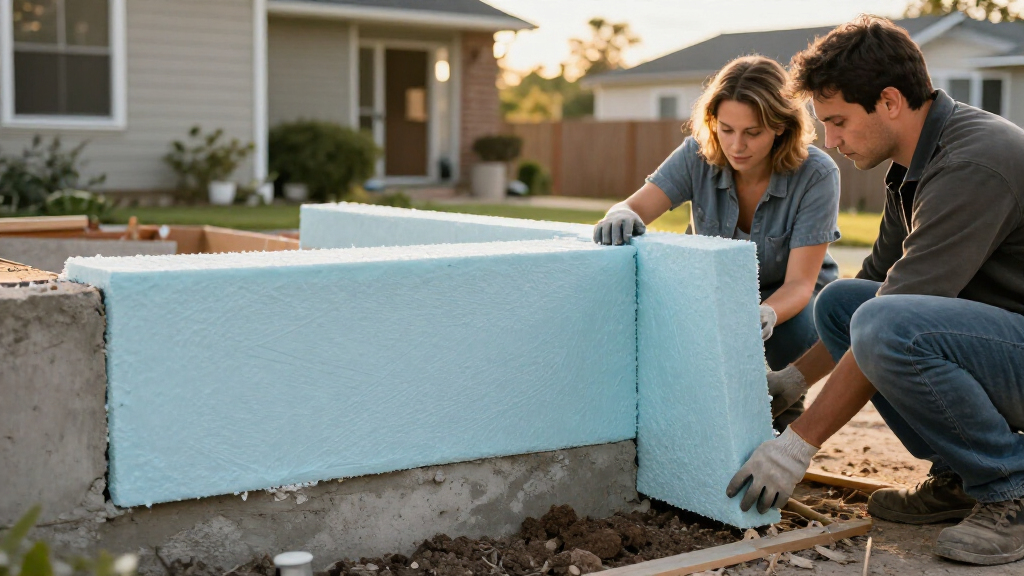
I compared each option as a foundation insulation product, not as a general-purpose building material. That distinction matters because foundation work can involve concrete or masonry, damp conditions, below-grade exposure, and connections where air and water movement need careful management. The supplied descriptions identify several products as suitable for crawl spaces or concrete, but they do not establish that every item is appropriate for every buried or exposed foundation condition.
My ranking gives weight to the usefulness of the stated coverage, the fit between product format and likely job size, and how clearly the listing describes thermal and moisture-related performance. I also compared the application burden: spray foam can fill irregular spaces and adhere to listed building materials, while a roll is easier to lay out over a broad plane but does not expand into gaps. A roll’s radiant performance depends on its installation details, including the adjacent air space specified by the manufacturer; its listed R-value should not be read as a universal assembly rating.
I treated fire-related claims cautiously. Class-A or ASTM E84 language refers to stated surface-burning test criteria, not a blanket guarantee that foam can be left exposed or that a complete foundation assembly meets fire-code requirements. Product listings also do not supply every detail a foundation project may require, including full below-grade suitability, drainage design, code approvals for the exact assembly, or verified installed performance. I therefore rank the Kraken kit first for its combination of claimed coverage, closed-cell format, and included accessories, while noting that none of these products replaces project-specific building guidance.
| foundation insulation product | Material |
|---|---|
| Kraken Bond Fastcoat Class-A F | Polyurethane |
| Akfix Thermcoat Fire Rated Spr | Polyurethane |
| BEEST FullStop Spray Foam Insu | Moisture-cured polyurethane foam |
| US Energy Products Double Bubb | Polyethylene bubbles with metalized aluminum polyester film |
Factors to Consider When Choosing Best Foundation Insulation Products
Choosing foundation insulation starts with the building detail, not the package label. I would first identify whether the work is on an interior basement wall, a crawl-space perimeter, a rim joist, or an exterior foundation face. Each location has different exposure and moisture conditions. The four products here offer foam kits and a reflective roll, but none should be treated as a complete drainage, waterproofing, or foundation-envelope system.
Match the format to the surface
Spray foam suits irregular areas where gaps, corners, and penetrations need a conforming layer. Kraken, Akfix, and BEEST are all polyurethane foam products; the listings describe adhesion to common building materials, with Akfix and BEEST specifically naming concrete. That does not mean every foam is approved for every foundation location, so check instructions for the substrate, moisture conditions, and exposure. A roll such as US Energy Products is more suited to a broad, relatively even plane. It can cover a large area, but it will not expand into small openings or automatically seal around pipes and uneven joints.
Foundation insulation also needs to work with air sealing and water management. A foam layer may reduce air movement at the treated surface, while a reflective roll is described as a radiant and vapor barrier. Neither product type fixes drainage problems or substitutes for a correctly designed water-control layer. Before choosing, clarify whether the job is insulation, air sealing, vapor control, or a combination that requires a designed assembly.
Read R-values in context
The listed foam figures differ: Kraken and Akfix each state R-11.32 at two inches, while BEEST lists R-8.24 at two inches. The US Energy Products roll is listed as R8, but its 1/4-inch reflective construction is not directly equivalent to a two-inch foam layer. Reflective materials can depend on adjacent air space and installation orientation, so I would not compare the number alone without reading the assembly instructions.
Use the listed R-value as one comparison point, then ask whether the thickness can be installed at the location, whether the product is intended for that exposure, and whether the complete wall meets local energy requirements. The data supplied here does not establish a tested R-value for every foundation wall build-up. Where code compliance or a specific thermal target matters, confirm the approved assembly rather than selecting by the highest number.
Plan around application conditions
Temperature and handling can determine whether a spray-foam kit is practical. Kraken and Akfix list an operating or application range of 41°F to 86°F, with a recommended temperature near 68°F. BEEST gives a narrower recommended range of 68°F to 77°F. If the foundation area or cans fall outside the product’s directions, postpone the work or choose a method that suits the conditions; poor temperature control can undermine application quality.
Spray foam also calls for ventilation and protective equipment. Kraken includes safety gear, while BEEST lists gloves, goggles, and a coverall. Akfix includes a gun, cleaner, and nozzles, but its listing still calls for protective equipment. Follow the complete label and safety data, protect nearby surfaces, and plan for cleanup. A reflective roll avoids foam spraying, but installation still needs proper fastening, sealing, and clearance details for the intended assembly.
Check moisture and below-grade suitability
Moisture resistance claims are not the same as permission for direct soil contact or permanent below-grade exposure. Kraken describes an airtight, watertight seal; Akfix calls its foam waterproof; the reflective roll is described as moisture resistant. These are product claims, not a replacement for the project’s waterproofing and drainage strategy. Foundation walls can experience water pressure, condensation, and seasonal dampness, so the surrounding assembly matters as much as the insulation material.
Before installation, confirm whether the product is intended for the exact side of the foundation and whether it needs a protective facing or covering. Check compatibility with membranes, coatings, sealants, and other materials already present. If the listing does not give a clear answer for the planned exposure, contact the manufacturer or a qualified building professional rather than inferring suitability from a broad phrase such as “waterproof.”
Treat fire claims as one part of the assembly
Several foam listings cite Class-A or ASTM E84 information. BEEST supplies flame spread and smoke developed figures, while Kraken and Akfix are described as Class-A fire-rated. Such claims should be read narrowly: surface-burning test results do not automatically mean foam can remain uncovered in a basement, crawl space, or other occupied area. Building codes may require a thermal or ignition barrier, and the rule can depend on the specific space and assembly.
I would verify the applicable code, product documentation, and any required covering before installation. A fire-related label is a useful comparison point, but it does not replace a code review. The reflective roll is also described as Class A fire rated; confirm what that claim covers and whether the proposed installation meets local requirements.
Choose quantity by the actual job
Coverage figures can look comparable while describing different things. Kraken lists 480 sq ft, Akfix 120 sq ft, and the reflective roll 500 sq ft; BEEST gives up to 240 board feet. Board feet account for volume, so they cannot be compared directly with square feet without knowing the installed thickness. Allow for the actual surface area, target thickness, gaps, and application technique, and use the manufacturer’s yield guidance rather than assuming the package will cover every area at the nominal figure.
For a large, open surface, the roll’s area coverage or Kraken’s larger kit may be more convenient. For a small repair, Akfix avoids committing to the biggest foam package. BEEST sits between the foam-kit sizes by its stated board-foot measure and comes with protective items. A realistic quantity estimate helps avoid interrupted work and reduces the chance of leaving an incomplete insulation layer.
Frequently Asked Questions
Which product is my best choice for a larger foundation insulation job?
Kraken Bond Fastcoat is my first choice among these foam kits for a larger planned job because its listing states 480 sq ft coverage and includes an application gun, cleaners, and safety gear. The reflective US Energy Products roll lists 500 sq ft, but it serves a different purpose and does not expand into irregular gaps. Compare the product format with the surface, then verify that the selected item is approved for the foundation location and exposure.
Can I use these products on a below-grade foundation wall?
The product descriptions do not confirm that every option is suitable for every below-grade wall or direct soil-contact condition. Akfix and BEEST list concrete among compatible surfaces, while other listings make broader claims about sealing or moisture resistance. I would check the manufacturer’s installation instructions for the exact location, along with local code and the foundation’s waterproofing design. Do not treat moisture resistance or a waterproof claim as proof that a product replaces drainage or foundation waterproofing.
Is the reflective insulation roll equivalent to two inches of spray foam?
No. The roll is listed as R8 and has a nominal thickness of 1/4 inch, while the foam kits give R-values at a two-inch application thickness. Reflective insulation performance can depend on installation details, including an adjacent air space, and the roll does not expand to fill gaps. I would compare each product as part of its intended assembly rather than treating the headline R-values as directly interchangeable.
Which foam kit has the highest stated R-value?
Kraken Bond and Akfix each list R-11.32 at two inches, higher than BEEST’s stated R-8.24 at two inches. That makes their published figures equal at the same stated thickness, but it does not prove that either one is the right choice for every foundation project. Coverage, application temperature, surface compatibility, code requirements, and the finished assembly still matter.
Do the Class-A or ASTM E84 claims mean spray foam can stay exposed?
Not by themselves. Class-A or ASTM E84 information describes surface-burning test criteria, while building codes may still require foam plastic insulation to be covered by a thermal or ignition barrier in a particular space. Requirements vary by location and assembly. I would confirm the applicable code and the manufacturer’s instructions before leaving any foam exposed in a basement or crawl space.
Conclusion
For a larger, planned foam application, I would start with Kraken Bond Fastcoat because it combines the largest stated foam coverage with a closed-cell formulation and a full set of application accessories. For a small, targeted repair, Akfix Thermcoat is more proportionate and includes interchangeable nozzles, while retaining the same stated R-11.32 at two inches. Choose BEEST FullStop if the included gloves, goggles, and coverall matter more to your project than the higher listed two-inch R-value, and if you can stay within its narrower application-temperature range.
The US Energy Products roll makes most sense when you specifically want reflective roll material for a compatible, broad, relatively even surface and can follow its air-space and installation instructions. I would not choose it as a substitute for expanding foam around irregular joints. Before buying any of these products, confirm the intended foundation location, moisture exposure, required protective covering, and local code rules. That final check matters more than choosing by package coverage or R-value alone.
Black Friday Picks

Sonos Play Portable Wi-Fi and Bluetooth Speaker, Black
As an affiliate, we earn on qualifying purchases.