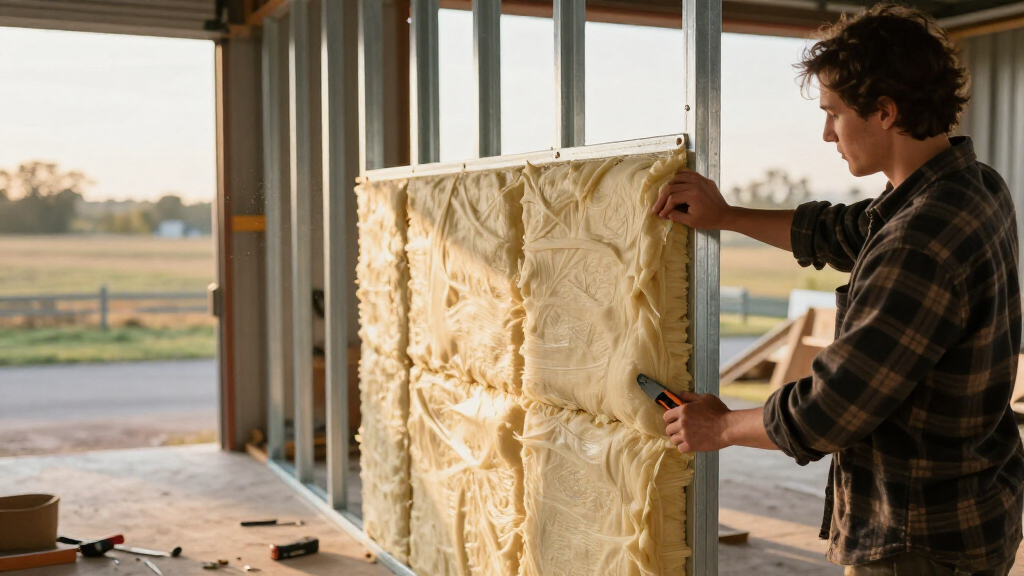

The best metal building insulation depends on whether you need a radiant barrier, a thicker insulation layer, or a system suited to a particular installation. My best overall pick is BlueTex 2mm PRO for its broad coverage and reflective format; PRODEX AD5 stands out for a long, wide roll, while 6-inch R-19 PSK-faced fiberglass is a stronger candidate when cavity insulation and a stated R-value matter. These options are not interchangeable: reflective products rely on an adjacent air space to limit radiant heat, while fiberglass works differently and needs careful moisture planning. Roll width, thickness, coverage, facing, and installation details can matter as much as the product label. Read on for the full breakdown and a guide to matching the material to your building.

Get the little things that make your day delivered free with Prime
- Fast, free delivery on millions of items
- Prime Video, Amazon Music and more included
- Member-only deals all year
Key Takeaways
BlueTex 2mm PRO is the most balanced starting point in this lineup: its 700-square-foot roll gives broad coverage without requiring buyers to choose the largest bulk format.
Reflective barriers and fiberglass solve different problems. The reflective rolls are aimed at radiant heat control, while the PSK-faced fiberglass options offer stated R-values and suit projects designed around cavity insulation.
Coverage and roll dimensions shape installation as much as material type. PRODEX AD5 and Houseables each cover 1,000 square feet in a 4-foot-wide roll, while the 16-inch Insulation Marketplace roll may suit narrow spaces but requires more seams over broad walls.
Product labels need context. A stated R-value does not by itself describe a complete wall or roof assembly, and a radiant barrier’s performance depends on its installation and air-space conditions.
Special-purpose choices are not general substitutes. The BlueTex garage door kit is targeted at roll-up doors, and the 6mm BlueTex vapor barrier is a distinct layer choice rather than a direct stand-in for thicker insulation.
| BlueTex 2mm PRO Reflective Metal Building Insulation, 50 in. × 168 ft., 700 sq. ft. |  | Best Overall for Broad Metal-Building Coverage | Material: EPE foam, aluminum foil, and white woven backing | Thickness: 2 mm | Roll dimensions: 50 in. wide × 168 ft. long | VIEW LATEST PRICE | See Our Full Breakdown |
| US Energy Products Double Bubble Reflective Insulation, 48 in. x 100 ft., R-8 |  | Best for Flexible, Multi-Area Projects | Construction: Double bubble | Dimensions: 48 in. wide × 100 ft. long | Coverage: 400 sq. ft. | VIEW LATEST PRICE | See Our Full Breakdown |
| 2-Inch PSK-Faced Fiberglass Insulation Blanket, 48 in. x 52.5 ft. |  | Best for Buyers Who Need Fiberglass Thickness | Material: Fiberglass | Thickness: 2 inches | Dimensions: 48 in. × 52.5 ft. | VIEW LATEST PRICE | See Our Full Breakdown |
| Trade Winds Astro-Armour Reflective Foam Insulation Roll, 6 ft x 50 ft, 300 sq ft, White |  | Best for Wide Sections and a Washable Surface | Brand: Trade Winds | Manufacturer: US Energy | Material: Polyethylene foam, woven polyethylene scrim, and metalized film | VIEW LATEST PRICE | See Our Full Breakdown |
| Insulation Marketplace Double Reflective Bubble Insulation Roll, 16 in x 50 ft |  | Best for Narrow Spaces and Strip Repairs | Dimensions: 16 in. × 50 ft. | Bubble layer thickness: 3/16 in. | Reflective surfaces: Foil on both sides | VIEW LATEST PRICE | See Our Full Breakdown |
| PRODEX AD5 Reflective Foam Insulation Barrier, 4 ft x 250 ft, 1/4 in Thick, 1,000 sq ft |  | Best for Foam-Core Moisture Protection | Material: Aluminum and polyethylene | Thickness: 0.25 inches | Roll dimensions: 4 ft x 250 ft | VIEW LATEST PRICE | See Our Full Breakdown |
| US Energy Products Radiant Barrier Insulation Roll, 1,000 sq ft, 4 ft Wide |  | Best Breathable Reflective Barrier | Coverage: 1,000 sq ft | Dimensions: 4 ft wide x 250 ft long | Construction: Five-layer reflective barrier with metalized aluminum, Mylar, and nylon scrim | VIEW LATEST PRICE | See Our Full Breakdown |
| EcoFoil Single Bubble Reflective Insulation Roll, 48 in x 125 ft, 500 sq ft |  | Best for Small DIY Projects | Width: 48 in | Length: 125 ft | Coverage: 500 sq ft | VIEW LATEST PRICE | See Our Full Breakdown |
| Trade Winds Astro-Armour Reflective Foam Insulation, White, 1,200 sq. ft., R-7 | | Best for Large Farm and Commercial Buildings | Coverage: 1,200 sq ft | Roll quantity: 4 rolls | Roll dimensions: 6 ft x 50 ft each | VIEW LATEST PRICE | See Our Full Breakdown |
| 6-Inch R-19 PSK-Faced Fiberglass Insulation, 48 Inches Wide x 39.3 Feet Long | | Best for Higher Thermal Resistance | Thickness: 6 in | R-value: R-19 | Facing: Polypropylene scrim kraft (PSK) | VIEW LATEST PRICE | See Our Full Breakdown |
| US Energy Products Double Bubble Reflective Insulation Roll, White/Foil, 48 in x 125 ft (500 sq ft) |  | Best for Moisture-Prone Metal Buildings | Brand: US Energy Products | Coverage: 500 sq ft | Roll dimensions: 48 in x 125 ft | VIEW LATEST PRICE | See Our Full Breakdown |
| BlueTex Commercial Roll-Up Garage Door Insulation Kit, 700 Sq Ft |  | Best for Commercial Roll-Up Doors | Brand: BlueTex Insulation | Material: Pure aluminum foil surface and PE woven fabric | Roll dimensions: 50 in wide × 168 ft long | VIEW LATEST PRICE | See Our Full Breakdown |
| BlueTex Insulation 6mm Vapor Barrier for Metal Buildings, 62 in. Wide, 300 sq. ft. |  | Best for Sealed Overlapping Seams | Brand: BlueTex Insulation | Thickness: 6 mm | Roll width: 62 in in title; 50 in in product information | VIEW LATEST PRICE | See Our Full Breakdown |
| Houseables Radiant Barrier Insulation Roll, 250 ft x 4 ft, 1,000 sq ft |  | Best for Large-Area Radiant Coverage | Brand: Houseables | Dimensions: 250 ft x 4 ft | Coverage: 1,000 sq ft | VIEW LATEST PRICE | See Our Full Breakdown |
| metal building insulation | Coverage | Material | Thickness |
|---|---|---|---|
| BlueTex 2mm PRO Reflective Met | 700 sq. ft. | EPE foam, aluminum foil, and white woven backing | 2 mm |
| US Energy Products Double Bubb | 400 sq. ft. | — | — |
| 2-Inch PSK-Faced Fiberglass In | 24.5 sq. ft. | Fiberglass | 2 inches |
| Trade Winds Astro-Armour Refle | 300 sq. ft. | Polyethylene foam, woven polyethylene scrim, and metalized film | 0.13 in. (approximately 1/8 in.) |
| Insulation Marketplace Double | — | — | — |
| PRODEX AD5 Reflective Foam Ins | 1,000 sq ft | Aluminum and polyethylene | 0.25 inches |
| US Energy Products Radiant Bar | 1,000 sq ft | — | — |
| EcoFoil Single Bubble Reflecti | 500 sq ft | — | — |
| Trade Winds Astro-Armour Refle | 1,200 sq ft | High-density polyethylene foam, woven polyethylene scrim, and metalized reflective film | 0.13 in (approximately 1/8 in) |
| 6-Inch R-19 PSK-Faced Fibergla | 187.2 sq ft | Fiberglass | 6 in |
| US Energy Products Double Bubb | 500 sq ft | Polyethylene bubbles with metalized film | 1/4 in |
| BlueTex Commercial Roll-Up Gar | 700 sq ft | Pure aluminum foil surface and PE woven fabric | — |
| BlueTex Insulation 6mm Vapor B | 300 sq ft | XPE foam and PE woven single-sided foil | 6 mm |
| Houseables Radiant Barrier Ins | 1,000 sq ft | — | — |
More Details on Our Top Picks
BlueTex 2mm PRO Reflective Metal Building Insulation, 50 in. × 168 ft., 700 sq. ft.
For a metal building that needs broad coverage in one roll, I’d put the BlueTex 2mm PRO ahead of the narrower, smaller Insulation Marketplace roll. Its 50-inch width and 700-square-foot coverage can reduce seams across framing, while the woven backing adds resistance to tears and punctures during installation. The aluminum foil and EPE foam are designed to reflect up to 97% of radiant heat when an air gap is present, and the vapor-barrier construction may help limit condensation. That air gap is a real installation requirement, not a performance bonus to assume automatically. Unlike the fiberglass PSK blanket, this is a thin reflective product rather than a two-inch insulation blanket, so I wouldn’t choose it as a direct substitute when the project calls for that thickness. Sound-insulation performance is also not well specified.
Pros:- 700 square feet per roll provides broad coverage
- 50-inch width can span framing with fewer seams than narrow rolls
- Woven backing is designed to resist tears and punctures
- Vapor-barrier construction can help manage moisture and condensation
Cons:- Reflective performance depends on installing with an air gap
- Sound-insulation performance is not detailed
- At 2 mm thick, it is not a substitute for a thicker fiberglass blanket where that construction is required
Best for: Metal-building owners covering large wall or roof areas who want a wide, tear-resistant reflective roll and can install it with an air gap.
Not ideal for: Buyers seeking a thick fiberglass blanket, a stated sound-control rating, or a reflective barrier they can install without an air gap.
- Material:EPE foam, aluminum foil, and white woven backing
- Thickness:2 mm
- Roll dimensions:50 in. wide × 168 ft. long
- Coverage:700 sq. ft.
- Radiant heat reflection:Up to 97% with an air gap
- Features:Vapor barrier, condensation control, tear and puncture resistance
- Recommended uses:Garages, sheds, barns, commercial doors, retrofits, and new construction
- Model number:2MM700-FW50-BT
Our verdict“Choose BlueTex for wide, substantial reflective coverage in a metal building when you can provide the required air gap.”
US Energy Products Double Bubble Reflective Insulation, 48 in. x 100 ft., R-8
I’d choose this double-bubble roll when one material needs to be cut for several parts of a building rather than laid across a single uninterrupted span. Its 48-inch width and 400-square-foot coverage suit modest garage, roof, wall, or crawl-space jobs, while the foil face and waterproof white vinyl back provide different surfaces for installation needs. Compared with the BlueTex 2mm PRO, it covers less area per roll and has less product detail about backing durability and condensation control, so BlueTex is the stronger fit for a larger metal-building envelope. The useful distinction here is flexibility: the roll can be measured and cut around irregular sections. That also means more measuring and trimming, which can create extra seams and labor on a broad, simple wall. The listed R-8 designation is supplied in the product name, but the provided description doesn’t explain its test basis.
Pros:- 400 square feet of coverage per roll
- Double-bubble construction with a foil face and waterproof white vinyl backing
- Flexible material can be cut for varied spaces
- Listed for residential and commercial applications including garages, walls, roofs, and crawl spaces
Cons:- Measuring and cutting add installation time and can create more seams
- Provides less coverage per roll than the BlueTex 2mm PRO
- Description gives limited detail on condensation performance and the basis for the R-8 designation
Best for: DIY owners handling smaller metal-building areas or several different surfaces who need a cut-to-fit reflective material.
Not ideal for: Buyers covering a large, uninterrupted building shell who want higher roll coverage or more detailed condensation-control specifications.
- Construction:Double bubble
- Dimensions:48 in. wide × 100 ft. long
- Coverage:400 sq. ft.
- Finish:Foil on one side; waterproof white vinyl on the other
- Listed R-value:R-8
- Applications:Attics, walls, roofs, crawl spaces, and garages
Our verdict“Pick this roll for smaller or irregular projects where cut-to-fit flexibility matters more than maximum coverage per roll.”
2-Inch PSK-Faced Fiberglass Insulation Blanket, 48 in. x 52.5 ft.
Unlike the thin reflective rolls in this group, this 2-inch fiberglass blanket is the pick for a project that specifically calls for batt-style insulation in a pole barn, workshop, or metal-building wall. Its PSK facing acts as a vapor barrier to help manage condensation, making it a different kind of solution from the foil-and-bubble products: it supplies a substantial fiberglass layer rather than relying mainly on a reflective surface. Compared with BlueTex 2mm PRO, this blanket offers much more thickness, but its listed coverage is only 24.5 square feet, so it is not the convenient choice for quickly covering a large shell. The product information is also limited on thermal performance beyond describing it as thermal insulation. I’d match it to an application that specifies fiberglass and confirm the area coverage before planning a full building.
Pros:- Two-inch fiberglass construction for projects calling for a thicker insulation layer
- PSK facing acts as a vapor barrier to help control condensation
- Intended for metal buildings and agricultural structures
- Suitable for workshops, garages, walls, ceilings, and duct wrapping
Cons:- Listed coverage of 24.5 square feet is far less than the reflective rolls in this lineup
- Thermal performance details beyond the insulation type and thickness are limited
- The specialized fiberglass format may not suit buyers looking for a thin, easily cut reflective barrier
Best for: Pole-barn and workshop owners whose plans call for a two-inch fiberglass blanket with a PSK vapor-barrier facing.
Not ideal for: Buyers seeking a large-coverage reflective roll, a clearly stated radiant-heat reflection figure, or a product suited to broad coverage with fewer pieces.
- Material:Fiberglass
- Thickness:2 inches
- Dimensions:48 in. × 52.5 ft.
- Coverage:24.5 sq. ft.
- Facing:Polypropylene Scrim Kraft (PSK)
- Recommended use:Agricultural buildings
- Other listed applications:Pole barns, workshops, garages, walls, ceilings, and duct wrapping
Our verdict“Choose this blanket when a metal-building project calls for two-inch fiberglass with PSK facing, not when broad reflective coverage is the priority.”
Trade Winds Astro-Armour Reflective Foam Insulation Roll, 6 ft x 50 ft, 300 sq ft, White
The six-foot-wide Astro-Armour roll is the standout here for buyers who want fewer vertical seams and a cleanable white face. Its metalized film is designed to reduce radiant heat transfer by up to 95%, while the foam and woven polyethylene scrim are intended to resist tearing. Compared with the 48-inch US Energy Products double-bubble roll, its extra width may speed coverage across broad sections; compared with BlueTex 2mm PRO, it offers less total coverage and a lower stated reflection figure. Proper installation matters for condensation control, so I wouldn’t treat the material alone as a moisture fix. There is also an avoidable planning question: the title and description present the dimensions differently, even though both indicate a six-foot-by-50-foot roll and 300 square feet. Confirm the delivered roll size before laying out a job.
Pros:- Six-foot width can reduce seams across broad areas
- White surface is described as washable or pressure-washable
- Foam, woven scrim, and metalized film are designed to resist tearing
- Designed for metal and post-frame buildings, with up to 95% radiant heat reduction stated
Cons:- Listing presents conflicting roll-dimension details that should be confirmed before planning
- Condensation mitigation depends on proper installation
- 300 square feet per roll is less coverage than the BlueTex 2mm PRO
Best for: Owners of metal or post-frame buildings who want a broad white surface that can be cleaned and fewer seams across wide sections.
Not ideal for: Buyers who need unambiguous dimensional documentation, maximum roll coverage, or a condensation solution that does not depend on proper installation.
- Brand:Trade Winds
- Manufacturer:US Energy
- Material:Polyethylene foam, woven polyethylene scrim, and metalized film
- Thickness:0.13 in. (approximately 1/8 in.)
- Dimensions:Listed as 6 ft. × 50 ft.; title also states 72 × 50 ft.
- Coverage:300 sq. ft.
- Radiant heat reduction:Up to 95%
- Model number:134
Our verdict“Choose Astro-Armour for a wide, cleanable reflective surface, but verify the roll dimensions and installation requirements before ordering.”
Insulation Marketplace Double Reflective Bubble Insulation Roll, 16 in x 50 ft
At only 16 inches wide, this roll makes the most sense for narrow bays, small repairs, and areas where a full-width sheet would be awkward. Its 3/16-inch bubble layer sits between foil on both sides, and the material is described as moisture-resistant and tear- and puncture-resistant. The listing states up to 95% radiant-energy reflection and Class A / Class 1 fire performance, though it provides no independent performance documentation. Compared with the 48-inch US Energy Products double-bubble roll, this format is easier to handle in tight strips but requires more runs and joins across a broad wall or roof. BlueTex 2mm PRO is a more practical choice for large coverage, with a wider roll and substantially greater stated coverage. I’d reserve this one for targeted work rather than insulating an entire metal building.
Pros:- Foil on both sides surrounds a 3/16-inch bubble layer
- Designed for indoor or outdoor radiant-barrier and vapor-barrier uses
- Described as puncture-resistant, tear-resistant, and moisture-resistant
- Listing states up to 95% radiant-energy reflection and Class A / Class 1 fire performance
Cons:- 16-inch width requires multiple strips across wider areas
- Provides less coverage than wider rolls such as BlueTex 2mm PRO
- Independent performance details are not provided
Best for: DIY owners lining 16-inch-wide bays, covering narrow sections, or making small repairs in garages, sheds, RVs, or ducts.
Not ideal for: Buyers insulating broad metal-building walls or roofs who want fewer strips, fewer seams, and larger coverage per roll.
- Dimensions:16 in. × 50 ft.
- Bubble layer thickness:3/16 in.
- Reflective surfaces:Foil on both sides
- Radiant-energy reflection:Up to 95%
- Features:Puncture-resistant, tear-resistant, and moisture-resistant
- Listed fire performance:Class A / Class 1
- Made in:USA
- Applications:Garages, walls, ducts, RVs, and sheds
Our verdict“Use this narrow roll for bays and small sections, but choose a wider product for full metal-building coverage.”
PRODEX AD5 Reflective Foam Insulation Barrier, 4 ft x 250 ft, 1/4 in Thick, 1,000 sq ft
For buyers who want a reflective layer with more body than a thin barrier, the PRODEX AD5 pairs foil faces with a 1/4-inch closed-cell polyethylene foam core. Its 1,000-square-foot roll suits larger metal roofs and walls, while the manufacturer-listed R-22.67 value and radiant-heat reduction claim give it a different profile from the perforated US Energy Products Radiant Barrier, which prioritizes breathability. The non-perforated construction is better suited to installations where moisture protection is desired, but seams and installation details still matter for condensation control. Compared with the EcoFoil Single Bubble roll, PRODEX offers more coverage per roll and a thicker foam core; the tradeoff is a larger roll to handle and cut. I’d choose it when foam-backed reflective material is the priority, not when a breathable assembly is needed.
Pros:- Foil on both sides of a closed-cell foam core
- 1,000 square feet of coverage per roll
- Non-perforated design offers a moisture-protection approach
- Manufacturer lists 97% radiant heat reduction
Cons:- Non-perforated construction may not suit assemblies that need a vapor-permeable layer
- Large roll can be cumbersome to position and cut
- Listed R-value depends on installation conditions and should not be treated as a standalone system rating
Best for: Owners insulating large metal buildings who want a non-perforated, foam-core reflective barrier and can plan careful seam treatment.
Not ideal for: Builders who need a breathable insulation layer or want a product with more installation-performance documentation.
- Material:Aluminum and polyethylene
- Thickness:0.25 inches
- Roll dimensions:4 ft x 250 ft
- Coverage:1,000 sq ft
- Manufacturer-listed R-value:22.67
- Radiant heat reduction:97% (manufacturer claim)
- Contact noise reduction:19 dBA (manufacturer specification)
- Finish:White, non-perforated
Our verdict“Choose PRODEX AD5 for broad coverage and a substantial reflective foam core, but pick the US Energy Products barrier if breathability is the priority.”
US Energy Products Radiant Barrier Insulation Roll, 1,000 sq ft, 4 ft Wide
This roll stands apart for metal buildings where ventilation through the insulation layer matters: its perforated, five-layer construction is designed to breathe while offering double-sided reflectivity. At 1,000 square feet, it matches the coverage of PRODEX AD5, but it is a thinner barrier rather than a foam-core product; that makes it easier to handle, though it provides less physical cushioning. The tear-resistant scrim and cited Class A/Class 1 fire rating are useful points for builders comparing it with the EcoFoil Single Bubble roll, which is lighter and covers half as much area. The tradeoff is that radiant barriers depend heavily on installation and the surrounding air space, so the listed 99.7% reflectivity does not translate directly into a guaranteed building-wide energy result. I’d favor this option where breathability outranks added thickness.
Pros:- Perforated design allows breathability
- Five-layer construction with metalized aluminum, Mylar, and nylon scrim
- Double-sided and described as tear-resistant
- Covers 1,000 square feet per roll
Cons:- Thin barrier offers less physical substance than foam-core or fiberglass options
- Cooling and heating results depend on climate and installation details
- Reflectivity claims do not by themselves indicate whole-wall or whole-roof thermal performance
Best for: Metal-building owners and installers seeking a large, perforated reflective layer for sheds, warehouses, or attic applications.
Not ideal for: Buyers seeking thick thermal blanket insulation or a foam core to add cushioning and physical substance.
- Coverage:1,000 sq ft
- Dimensions:4 ft wide x 250 ft long
- Construction:Five-layer reflective barrier with metalized aluminum, Mylar, and nylon scrim
- Reflectivity:99.7% (manufacturer specification)
- Design:Perforated, double-sided, breathable
- Other listed properties:Tear-resistant, waterproof, weatherproof
- Fire classification:Class A/Class 1, as listed
- Manufacturer:AES
Our verdict“Pick this roll when breathable reflective coverage is more useful than the added thickness of PRODEX AD5 or fiberglass blanket insulation.”
EcoFoil Single Bubble Reflective Insulation Roll, 48 in x 125 ft, 500 sq ft
With a 500-square-foot roll and a lightweight single-bubble structure, EcoFoil is the most manageable choice here for a smaller garage, shed, or targeted retrofit. It is easier to cut with household tools than the broad 1,000-square-foot PRODEX AD5 roll, but it has half the coverage and a thinner profile. The 96% radiant heat reflectivity is aimed at radiant transfer rather than replacing a thick thermal blanket, so buyers in cold, snowy climates should compare it with the R-19 PSK-faced fiberglass, which provides a specified thermal rating and six inches of thickness. EcoFoil can serve as a vapor barrier only when installed and sealed properly; untaped seams leave a moisture pathway. I’d pick it for straightforward, smaller jobs where easy handling matters more than high bulk insulation.
Pros:- Lightweight and easy to cut with scissors or a utility knife
- 500-square-foot coverage suits smaller projects
- Reflects up to 96% of radiant heat, according to the product data
- Can act as a vapor barrier when properly installed and sealed
Cons:- Seams need tape for moisture-barrier performance
- Product data says it is best suited to warmer regions with minimal snow or ice
- Single-bubble material is not a substitute for thick blanket insulation where high thermal resistance is needed
Best for: DIY owners insulating a smaller garage, barn area, or crawl space who want a lightweight reflective roll that is simple to cut.
Not ideal for: Owners in cold or snow-heavy climates who need substantial bulk insulation or do not plan to tape and seal the seams.
- Width:48 in
- Length:125 ft
- Coverage:500 sq ft
- Approximate thickness:1/8 in (3.175 mm)
- Radiant heat reflectivity:Up to 96%
- Emissivity:4%
- Color:White/foil
- Country of manufacture:USA
Our verdict“Choose EcoFoil for an easy-to-handle, smaller reflective installation, but use the R-19 fiberglass blanket when substantial thermal insulation is the main need.”
Trade Winds Astro-Armour Reflective Foam Insulation, White, 1,200 sq. ft., R-7
Astro-Armour is the coverage leader in this group, with 1,200 square feet split across four 6-by-50-foot rolls. That packaging can be easier to stage across a large metal building than PRODEX AD5’s single 250-foot roll, while the white, washable surface is a practical fit for farm and animal-confinement spaces. Its listed R-7 rating is more modest than the R-19 PSK-faced fiberglass blanket, so I’d treat Astro-Armour primarily as a reflective layer that can help with radiant heat and condensation when correctly installed—not as a direct replacement for thick thermal insulation. The woven scrim and foam construction are intended to resist tearing, but the stated condensation benefit relies on proper installation. This is a better fit for broad, durable reflective coverage than for buyers focused on maximum specified R-value.
Pros:- 1,200 square feet of total coverage across four rolls
- Woven scrim and foam construction is designed to resist ripping and tearing
- White surface is washable
- Listed 95% radiant heat reflection and R-7 rating
Cons:- R-7 is below the listed R-19 of the PSK-faced fiberglass option
- Condensation benefit depends on correct installation
- Multiple rolls require planning for seams and coverage layout
Best for: Farm and commercial building owners covering a large area who want multiple manageable rolls and a washable white finish.
Not ideal for: Buyers whose priority is the highest stated thermal resistance or who need insulation without careful installation for condensation control.
- Coverage:1,200 sq ft
- Roll quantity:4 rolls
- Roll dimensions:6 ft x 50 ft each
- Thickness:0.13 in (approximately 1/8 in)
- R-value:R-7
- Radiant heat reflection:95% (manufacturer specification)
- Material:High-density polyethylene foam, woven polyethylene scrim, and metalized reflective film
- Finish:White, non-perforated
Our verdict“Choose Astro-Armour for large farm or commercial spaces needing durable, washable reflective coverage, not for projects that need the R-19 fiberglass blanket’s higher stated R-value.”
6-Inch R-19 PSK-Faced Fiberglass Insulation, 48 Inches Wide x 39.3 Feet Long
Among these options, this fiberglass blanket is the clearest choice when a metal-building owner wants a stated thermal rating rather than relying mainly on a reflective surface. Its six-inch thickness and R-19 rating set it apart from Astro-Armour’s R-7 reflective foam and the thinner radiant barriers. The PSK facing is specified as a vapor barrier to help manage moisture and condensation, making it a fit for pole barns, workshops, and garages when the assembly is installed as intended. Coverage is only 187.2 square feet, however, so a large building will require many sections and careful seam planning compared with the 1,000-square-foot US Energy Products roll. Product data also gives no installation instructions, leaving buyers to confirm fastening, facing orientation, and code requirements before work begins. I’d favor it for thermal performance, not quick full-building coverage.
Pros:- Six-inch fiberglass blanket carries a listed R-19 rating
- PSK facing is intended to act as a vapor barrier
- Designed for pole barns, metal buildings, workshops, and garages
- Provides a bulk-insulation alternative to reflective-only rolls
Cons:- 187.2-square-foot coverage is much lower than the large reflective rolls
- Product data does not specify installation instructions
- Faced blanket is suited to specific building applications and needs proper assembly planning
Best for: Workshop, garage, and pole-barn owners in colder conditions who need a specified R-19 blanket and can plan a detailed installation.
Not ideal for: Buyers covering a large building quickly, or those who want a thin reflective barrier that is easier to handle and store.
- Thickness:6 in
- R-value:R-19
- Facing:Polypropylene scrim kraft (PSK)
- Material:Fiberglass
- Width:48 in
- Length:39.3 ft
- Coverage:187.2 sq ft
- Model number:INS-R19-PSK-48
Our verdict“Choose this blanket when a stated R-19 rating matters more than roll coverage, and compare Astro-Armour if you mainly need reflective coverage across a large area.”
US Energy Products Double Bubble Reflective Insulation Roll, White/Foil, 48 in x 125 ft (500 sq ft)
This roll suits buyers who want a reflective layer with a moisture-resistant bubble core for a metal building, crawl space, or basement. Its double-bubble construction and stated R-8 thermal performance set it apart from the thinner foil-only Houseables Radiant Barrier, which covers more area but does not list an R-value. The white-and-foil faces also give installers flexibility in how the material is oriented for a project. At 500 square feet, it offers useful coverage without the scale of the 1,000-square-foot Houseables roll. The tradeoff is its 1/4-inch thickness: it is not a substitute for a thick insulation blanket where substantial cavity insulation is needed. Product information also does not include installation instructions, so buyers should plan their own detailing and verify suitable assembly requirements.
Pros:- Double polyethylene bubble layers add a core between the reflective films.
- Listed R-8 thermal performance distinguishes it from foil-only barrier rolls.
- Described as unaffected by moisture and humidity.
- Suitable for several applications, including metal buildings and under-slab radiant heating.
Cons:- At 1/4 inch thick, it provides limited depth compared with fiberglass blankets.
- Installation instructions are not included in the supplied product information.
Best for: Metal-building owners seeking a moisture-resistant reflective layer for a 500-square-foot project, including crawl spaces or under-slab applications.
Not ideal for: Buyers needing thick cavity insulation, a complete installation guide, or a roll sized for a project much larger than 500 square feet.
- Brand:US Energy Products
- Coverage:500 sq ft
- Roll dimensions:48 in x 125 ft
- Thickness:1/4 in
- Reflectivity:99.97%
- Thermal performance:R-8
- Material:Polyethylene bubbles with metalized film
- Pack count:1
Our verdict“Choose this roll for a moisture-resistant, double-bubble reflective layer; pick a thicker insulation blanket when cavity depth and substantial bulk insulation matter more.”
BlueTex Commercial Roll-Up Garage Door Insulation Kit, 700 Sq Ft
For a metal building with large commercial roll-up doors, this kit is more purpose-built than the general-use US Energy Products double-bubble roll. Its 50-inch-wide, 168-foot-long roll is sized to cover up to four 12 × 12 ft doors, and the included tape, optional fasteners, and utility knife make it a more installation-ready package. The woven fabric is described as tear- and puncture-resistant, a useful distinction for material that must work across moving door surfaces. Its 97% radiant-heat reflection applies only when the installation leaves at least 1/4 inch of airspace; without that gap, buyers should not assume the stated performance. This is a specialized door kit, not a flexible choice for every wall or roof. Compared with the BlueTex metal-building roll, its strongest advantage is the door-focused format and supplied accessories.
Pros:- Designed specifically for commercial roll-up garage doors.
- Covers up to four 12 × 12 ft doors.
- Woven fabric is described as tear- and puncture-resistant.
- Includes double-sided tape, seam tape, optional screws and washers, and a utility knife.
Cons:- The 97% radiant-heat reflection claim requires at least 1/4 inch of airspace.
- Its commercial roll-up door format may not suit residential panel doors or general wall insulation.
Best for: Owners or contractors insulating up to four 12 × 12 ft commercial roll-up garage doors who want the roll and installation supplies in one kit.
Not ideal for: Buyers insulating ordinary metal-building walls, roofs, or residential panel doors, or anyone unable to provide the specified airspace for radiant-heat reflection.
- Brand:BlueTex Insulation
- Material:Pure aluminum foil surface and PE woven fabric
- Roll dimensions:50 in wide × 168 ft long
- Coverage:700 sq ft
- Door capacity:Up to four 12 × 12 ft doors
- Radiant heat reflection:97% with at least 1/4 in airspace
- Included components:Insulation roll, 3 rolls double-sided tape, 2 rolls 3 in × 180 ft seam tape, utility knife, and 52 optional screws and washers
- Weight:35 lb
Our verdict“Choose this kit for commercial roll-up doors when you can provide the required air gap; choose a general metal-building roll for walls and roof areas.”
BlueTex Insulation 6mm Vapor Barrier for Metal Buildings, 62 in. Wide, 300 sq. ft.
This BlueTex roll is aimed at metal-building projects where managing moisture at the insulation layer is a priority. Its 6 mm XPE foam core and reflective woven foil combine a barrier-style layer with some thermal insulation, while the adhesive edge gives installers a straightforward way to join overlapping seams. That seam detail is the clearest differentiator from the US Energy Products double-bubble roll, which lists R-8 performance and broader application uses but does not specify an adhesive edge. At 300 square feet, this is better suited to a smaller building section or repair than a large coverage job. There is also a specification discrepancy: the title says 62 inches wide, while the product information lists 50 inches. I would confirm the actual roll width before planning cuts or estimating material needs.
Pros:- 6 mm XPE foam and reflective foil combine a foam layer with a vapor-barrier format.
- Adhesive edge helps secure overlapping seams.
- Designed for moisture prevention and thermal insulation.
- Suitable for both new and existing metal-building construction.
Cons:- Product information conflicts on roll width: 62 inches in the title versus 50 inches in the details.
- 300 sq ft of coverage may be limiting for larger buildings.
- Its stated application focus is metal buildings, offering less versatility than broader-use reflective rolls.
Best for: Metal-building owners or installers addressing moisture prevention and reflective insulation in a smaller area, especially when an adhesive overlap edge is useful.
Not ideal for: Buyers needing a known roll width for precise material planning, large-area coverage, or a product intended for uses beyond metal buildings.
- Brand:BlueTex Insulation
- Thickness:6 mm
- Roll width:62 in in title; 50 in in product information
- Coverage:300 sq ft
- Material:XPE foam and PE woven single-sided foil
- Sides:Reflective foil and glossy white
- Adhesive edge:Yes
- Model number:6MMFW-BT300
Our verdict“Choose this roll for a smaller metal-building project where adhesive seam overlap is useful, but verify the roll width before ordering or laying out the job.”
Houseables Radiant Barrier Insulation Roll, 250 ft x 4 ft, 1,000 sq ft
Houseables is the high-coverage choice here: its 1,000-square-foot roll can cover a broad metal-building area with fewer roll changes than the 500-square-foot US Energy Products double-bubble option. The double-sided, perforated foil is lightweight and described as easy to cut, which can help when working around building features. Its stated reflectivity is greater than 97%, but this is a radiant barrier, not a thick insulation blanket; unlike the US Energy Products roll, it does not list an R-value or a bubble core. The manufacturer also notes that cooling savings vary by climate, so the material’s benefits depend on the building and conditions. Thin foil calls for careful handling during installation, and the supplied information does not specify a required air gap. I’d favor it for broad radiant-barrier coverage rather than as a standalone answer to every insulation need.
Pros:- 1,000 sq ft of coverage in one roll suits large-area projects.
- Double-sided perforated foil offers reflective surfaces on both faces.
- Lightweight material is described as easy to cut.
- Described as resistant to tearing, humidity, fungi, bacteria, and pests.
Cons:- Thin foil requires careful handling during installation.
- No R-value is listed, so it should not be treated as a direct substitute for bulk insulation.
- Potential cooling savings vary by climate region.
Best for: Metal-building owners covering a large area with a lightweight reflective barrier who can handle thin foil carefully and do not need a stated R-value.
Not ideal for: Buyers seeking thick bulk insulation, a listed R-value, or predictable cooling benefits regardless of climate and installation conditions.
- Brand:Houseables
- Dimensions:250 ft x 4 ft
- Coverage:1,000 sq ft
- Reflective value:>97%
- Construction:Double-sided, perforated aluminum foil
- Model number:RaBa
- Number of items:1
Our verdict“Choose Houseables for broad, lightweight radiant-barrier coverage, but select a bubble or blanket product if you need a specified R-value or thicker insulation.”

How We Picked
I compared the 14 listed products by the decisions that matter on a metal building job: insulation approach, stated thickness or R-value, roll dimensions and coverage, facing or vapor-barrier details, and how clearly each product’s format fits a common installation. I gave more weight to options that appear adaptable to broad building projects and have enough available specification detail to judge their role. Reflective barriers were not treated as equivalent to fiberglass; their strengths and installation needs differ.
The ranking favors useful balance and fit over a single headline number. Products with distinctive formats earned a place for specific projects, but a narrow roll, smaller coverage area, or specialized use limits its appeal as a general recommendation. Where the supplied product information does not establish a performance detail, I avoid assuming it. Buyers should verify the manufacturer’s installation instructions, assembly requirements, and local code needs before choosing.
Factors to Consider When Choosing Best Metal Building Insulation
Choosing insulation for a metal building starts with the assembly, not the roll label. My guide below focuses on decisions that can change the result: heat transfer, available framing space, condensation control, installation layout, and how much coverage the job really needs.
Match the insulation type to the heat problem
Metal roofs and walls can gain heat through radiation, conduction, and air movement, so one product type may not address every source equally. Reflective bubble or foam products are commonly selected as radiant barriers, while fiberglass is used as bulk insulation within a suitable assembly. A reflective surface alone does not tell you how the complete wall or roof will perform. Check whether the design includes the air space and orientation specified by the manufacturer. A common mistake is choosing a reflective roll because it looks insulating, then installing it tightly against another surface when its instructions call for an air gap. If you need year-round thermal control, compare the full assembly rather than relying on a product name or one stated figure.
Plan for condensation and moisture before installation
Condensation can form when warm, moist air reaches a cold metal surface, and the right control strategy depends on climate, building use, and assembly layers. A facing or vapor barrier can influence where moisture is allowed to move, but adding layers without a plan can trap moisture instead of managing it. Workshops with heaters, livestock buildings, and intermittently used structures may have very different humidity patterns. Check which side of the assembly should face inward and whether seams, edges, and penetrations need taping or sealing. Do not assume every product described as a vapor barrier has the same permeability or role. For a conditioned building or a moisture-sensitive use, consult the product instructions and a qualified building professional about the complete assembly.
Measure the building and account for seams and waste
Coverage printed on a roll is a starting point, not a guarantee that the roll will cover the measured building area without leftovers. Openings, framing layout, overlaps, end cuts, roof geometry, and installation direction all affect usable coverage. Wide rolls can reduce seams on large uninterrupted surfaces, while narrow formats can be easier to handle in tight bays but take more time across broad areas. Measure each roof and wall plane separately, then add a project allowance based on the layout and the manufacturer’s overlap guidance. Avoid joining rolls based only on nominal square footage when seams need overlap or support. A little planning can prevent a shortfall midway through an installation or excess material that is difficult to store.
Treat R-value and radiant-barrier claims as different evidence
An R-value describes resistance to heat flow under specified test conditions; it should not be read as a promise for every installed assembly. Reflective products may be marketed around radiant heat reduction, which depends on factors such as air space, surface condition, and orientation. Comparing an R-19 fiberglass product directly with a reflective barrier by their labels can lead to a misleading choice. Ask what the stated value applies to, whether it is a product or assembly rating, and which installation conditions are required. If building codes apply, confirm that the proposed assembly meets local requirements rather than relying on a roll specification alone. This check is especially useful when upgrading an occupied or conditioned structure.
Balance handling, access, and installation skill
Large rolls can cover a lot of area with fewer joins, but they may be awkward to lift, position, and keep aligned, particularly overhead. Smaller or narrower rolls may be easier for a solo installer and for constrained areas, though they can add cutting and seam work. Fiberglass blankets may need careful fitting around framing and services, while reflective materials can require attention to tension, fastening, and seam treatment. Consider access to the roof or wall, available helpers, weather exposure during installation, and whether the product’s instructions assume special tools or support. A beginner should favor a format that can be handled safely and installed according to clear directions, not simply the roll with the largest coverage. If working at height or near electrical equipment, arrange suitable safety measures or professional help.
Pay for the fit, not just the biggest roll
Bulk coverage can be useful on a large, simple building, but it does not automatically make a product the better choice for a smaller or irregular project. A specialized garage-door kit may fit its intended moving surface better than a general roll, while a barrier-only product may need to be paired with another insulation layer to meet the project’s goals. Compare the usable area after overlaps, installation complexity, and whether the product fills a real role in the assembly. Paying more for a thicker or higher-spec product makes sense only when that difference addresses a documented need. For a basic outbuilding, the simplest compatible solution may be more practical than combining multiple materials without a design plan.
Frequently Asked Questions
Can I install reflective insulation directly against the metal panels?
Do not assume that direct contact is the intended installation. Many reflective systems depend on an adjacent air space, and their performance can change when the reflective surface is pressed against another material. Check the specific product instructions for required spacing, orientation, fastening, and seam treatment. If the assembly needs to meet a code or provide a defined thermal value, confirm the complete assembly rather than treating the roll as a stand-alone rating. The right detail can differ between a roof, wall, and garage door.
Should I choose reflective insulation or PSK-faced fiberglass for a metal building?
Choose based on how the building is framed and what kind of heat control the assembly needs. The reflective options in this roundup are suited to radiant-barrier applications, while the PSK-faced fiberglass products provide stated R-values and are intended for assemblies that can accommodate blanket insulation. Neither category is a universal replacement for the other. Review the framing depth, air-space requirements, moisture plan, and local code expectations before deciding. If you need a specific whole-wall or roof performance, ask for assembly-level guidance.
Does a product labeled R-8 or R-19 give my whole building that R-value?
Not necessarily. The stated number may describe the product under particular test conditions rather than the performance of the installed roof or wall, where framing, gaps, compression, air movement, and other layers affect results. Check the manufacturer’s documentation to see exactly what the rating covers. Installation quality also matters: poorly fitted blankets and unsealed gaps can reduce the benefit of a rated material. For a conditioned building, compare complete assembly details and applicable code requirements, not product labels alone.
How much extra material should I order for seams, cuts, and openings?
There is no single allowance that suits every building, because roof shape, openings, framing, and overlap instructions change the usable area. Measure each surface separately and map the roll direction before calculating how many strips are needed. Include the manufacturer’s required overlap and account for cuts around doors, windows, braces, and penetrations. Narrow rolls may create more seams on broad surfaces, while larger rolls can create more awkward handling and offcuts. If a shortfall would delay the job, confirm the takeoff with the supplier or installer before ordering.
Can I use a garage-door insulation kit as the main insulation for my metal building?
A garage-door kit is designed for the door surface and its movement, not automatically for the building’s full roof and wall assembly. Using it elsewhere may leave gaps or fail to address the assembly’s moisture and thermal needs. For the building envelope, select a product that matches the framing, installation method, and performance requirements of those surfaces. Treat the BlueTex roll-up door kit as a targeted option for a compatible door, then choose separate materials for walls and roof if the project calls for them. Follow the door manufacturer’s guidance so added material does not interfere with operation or hardware.
Conclusion
For a broad, general-purpose starting point, I recommend BlueTex 2mm PRO as best overall for its balanced roll format and 700-square-foot coverage. My best value-style choice is EcoFoil Single Bubble when a buyer specifically wants a straightforward reflective roll and its single-bubble format suits the planned assembly; compare its coverage and installation requirements with the larger formats before committing. For a premium-scale project, PRODEX AD5 is the standout for its 1,000-square-foot, 4-foot-wide roll, though its reflective barrier role should match the building design. Beginners should start with the product whose instructions, dimensions, and installation method best fit their skill and building layout rather than selecting by coverage alone. For a roll-up garage door, consider the BlueTex Commercial Garage Door Insulation Kit; for a project built around a higher stated fiberglass R-value, compare the 6-inch R-19 PSK-faced fiberglass with the 2-inch option and verify assembly fit. The best choice is the one that matches your structure’s heat, moisture, and installation needs as a complete system.