If your phone falls in water, act quickly by turning it off immediately to prevent shorts. Remove any cases, covers, or removable parts like the SIM card or battery. Gently dry it with a soft cloth and avoid using heat. Place your device in a container of rice or silica gel to absorb moisture and leave it for at least 24 hours. For the best chance to recover your phone, follow these essential steps to minimize damage.
Key Takeaways
- Turn off the phone immediately and avoid pressing buttons to prevent short circuits.
- Remove all removable accessories, SIM cards, and batteries, then gently dry the device with a soft cloth.
- Place the phone in a container of uncooked rice or silica gel to absorb moisture, leaving it for 24-48 hours.
- Do not use heat sources like hairdryers; allow natural air drying to prevent internal damage.
- Consider consulting a professional technician for internal cleaning and assessment if water exposure was significant.
When your devices suddenly stop working, knowing a few emergency tech fixes can save you time and frustration. If your phone slips into water unexpectedly, acting quickly is essential for water damage control and ensuring a quick recovery. The first thing to do is to turn off your device immediately. Do not try to turn it on or press any buttons, as this can cause short circuits and worsen the water damage. Powering down prevents electricity from flowing through compromised components, giving you a better shot at saving your device.
Next, remove any cases, covers, or accessories attached to your phone. These can trap moisture and make drying more difficult. If possible, gently remove the SIM card, memory card, and battery. Many smartphones now have non-removable batteries, but if yours does, don’t attempt to pry it out. Instead, focus on drying your device thoroughly. Pat it dry with a soft, lint-free cloth to remove surface water. Avoid using a blow dryer or any direct heat, as high temperatures can damage internal parts further. Instead, aim for natural air drying in a well-ventilated space.
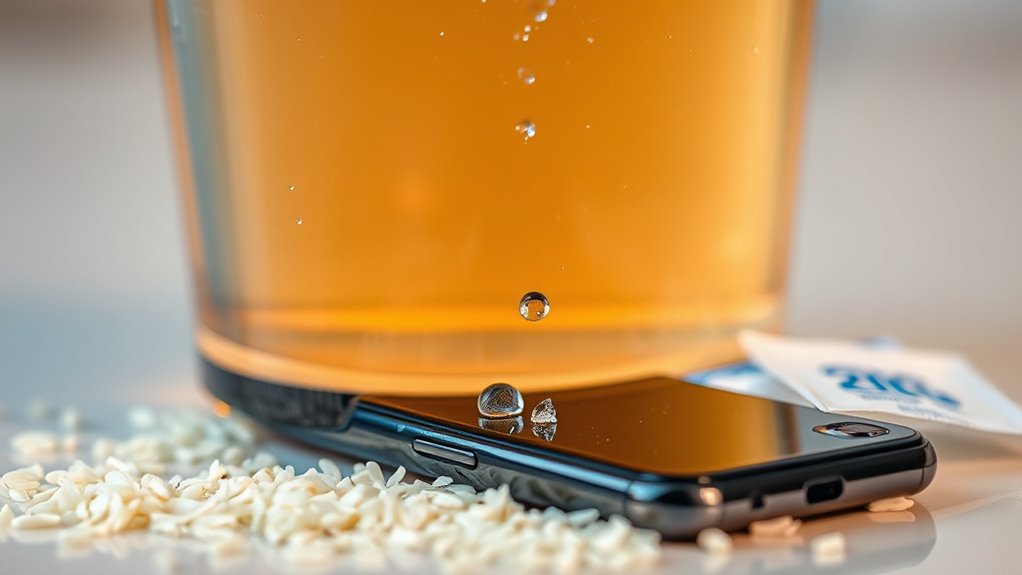
To speed up water evaporation and facilitate quick recovery, consider placing your device in a container of uncooked rice or silica gel packets. These desiccants absorb moisture effectively. Keep your device immersed for at least 24-48 hours, but do not shake or move it excessively during this period. This method isn’t foolproof but can markedly reduce water trapped inside and improve your chances of restoring your phone. Additionally, understanding the importance of proper water damage mitigation can enhance your recovery efforts.
If you want to increase your chances of a successful quick recovery, avoid common mistakes like turning your device on prematurely or using heat sources like ovens or microwaves. These can cause additional damage. Instead, after drying, you might consider consulting a professional technician. They can open your device carefully, clean internal components, and assess the extent of water damage. Sometimes, corrosion or residue remains even after drying, which can lead to long-term issues if left untreated.
Throughout this process, patience is key. Rushing to turn your device back on can undo your efforts and cause permanent damage. Remember, time is your ally in water damage situations. By acting swiftly, drying thoroughly, and seeking professional help if needed, you stand the best chance of a quick recovery. Water damage doesn’t have to be the end — with the right emergency fixes, you can still salvage your device and get back to your day with minimal hassle.
Frequently Asked Questions
How Long Should I Wait Before Turning on My Phone After Water Exposure?
You should wait at least 24 to 48 hours before turning on your water-exposed phone. Patience is key, as proper timing allows internal components to dry thoroughly and reduces the risk of short circuits. During this period, assess if your phone feels dry and free of moisture. Rushing to power it on too soon can cause more damage, so stay cautious and give it ample time to dry completely.
Can Rice Really Dry Out a Water-Damaged Phone Effectively?
Rice isn’t the most effective DIY drying technique for water-damaged phones. Instead, silica gel packs work better at absorbing moisture quickly. While rice might help, it’s not guaranteed to dry out your device completely or prevent corrosion. For the best results, turn off your phone immediately, remove any removable parts, and use silica gel packs if available. Avoid using heat or hairdryers, which can cause further damage.
Is It Safe to Use a Hairdryer to Dry My Phone?
Ever wondered if using a hairdryer to dry your phone is safe? The risks are high—exposing your device to intense heat can damage internal components. Instead, consider alternative drying methods like placing your phone in a bowl of rice or silica gel packets. These options are safer and help absorb moisture without risking further harm. Why take chances with a hairdryer when gentler, more effective methods exist?
What Are the Signs My Phone Has Suffered Permanent Water Damage?
You’ll notice your phone has suffered permanent water damage if you see corrosion signs on the ports or inside the device, or if the screen shows discoloration or strange lines. Additionally, if your phone becomes unresponsive, reboots randomly, or the buttons stop working, these are signs damage is likely irreversible. Act quickly to prevent further harm, but be prepared for the possibility that repairs may not restore full functionality.
Should I Remove the Battery Immediately if Water Gets Inside?
Yes, you should remove the battery immediately if water gets inside your phone. Removing the battery helps prevent further water damage and reduces the risk of short circuits. You can’t always do this yourself, especially with non-removable batteries, so turn off your phone and seek professional repair help. Acting quickly minimizes damage, so don’t delay in disconnecting power and drying out your device.
Conclusion
Remember, acting quickly can make the difference between saving or losing your phone. Think of your device as a fragile treasure — handle it with care and swift action. By following these simple steps, you’re giving your phone the best shot at bouncing back from water damage. Don’t let a splash turn into a permanent splashdown; with the right moves, you can turn a soggy situation into a minor hiccup.