
If your phone’s battery drains quickly, it’s likely due to high screen brightness, unnecessary background apps, or active location, Bluetooth, and Wi-Fi services that you don’t need. Updating your software, limiting notifications, and managing power-hungry features can help. Additionally, checking your battery health and fully calibrating it can extend its lifespan. Keep exploring these tips to discover more ways to boost your battery life efficiently.
Key Takeaways
- Excessive background app activity and notifications can cause rapid battery drain.
- Keeping location services, Bluetooth, Wi-Fi, or mobile data active unnecessarily consumes power.
- High screen brightness and prolonged screen time are major power consumers.
- Outdated software and unoptimized apps may lead to inefficient battery use.
- A degraded battery health reduces capacity, causing faster drain and inaccurate power estimates.
Top picks for "phone battery drain"
Open Amazon search results for this keyword.
As an affiliate, we earn on qualifying purchases.
Check and Manage Your Screen Brightness and Timeout Settings
Since your screen often uses the most power on your phone, managing its brightness and timeout settings can considerably extend your battery life. Lowering the brightness reduces energy consumption, so keep it at a comfortable but minimal level. You can enable auto-brightness, which adjusts the screen based on your environment, saving power automatically. Also, set a shorter screen timeout duration to turn off the display quickly when you’re not using it. This prevents unnecessary battery drain from the screen staying on too long. Regularly review these settings to optimize your phone’s power use. Remember, a bright, active screen consumes a lot of battery, so controlling it is one of the simplest ways to make your battery last longer throughout the day.
Close Unnecessary Background Apps and Processes
Many apps continue running in the background even when you’re not actively using them, which drains your battery unnecessarily. These apps can consume CPU power, sync data, and update content without your knowledge, all of which use energy. To save battery, close apps you’re not using. On most devices, swipe up or tap the app switcher to see open apps, then swipe away or tap close. You can also go into Settings > Apps or Applications to manually stop background processes. Be cautious with this, as stopping essential apps may affect device functionality. Regularly closing unused apps reduces background activity and conserves battery life, helping your phone last longer throughout the day. Make it a habit to review your open apps periodically.
Turn Off Location Services When Not Needed
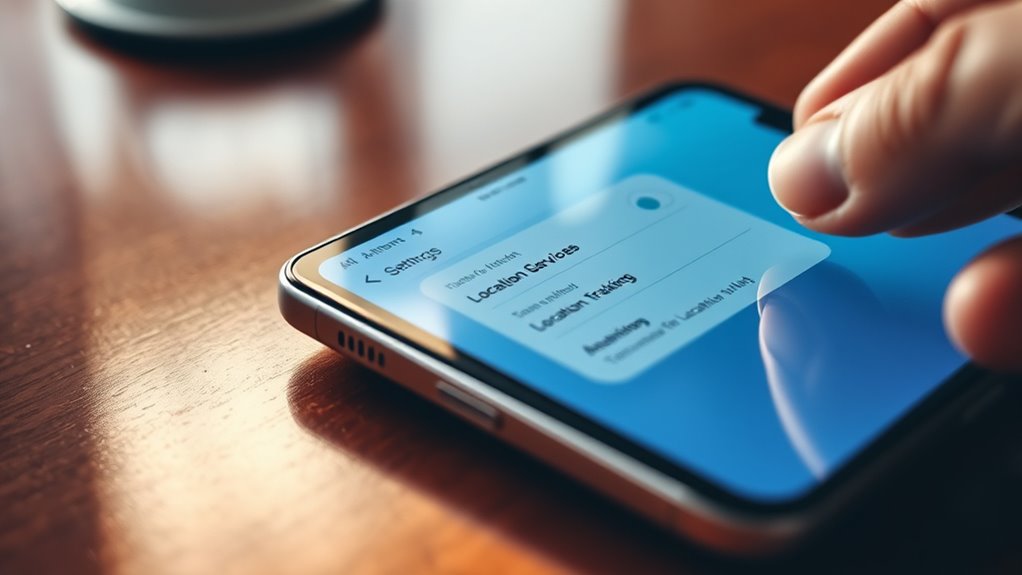
Turning off location services when you don’t need them can substantially extend your battery life. By reducing unnecessary GPS usage, especially during travel, you prevent your phone from constantly searching for signals. Limiting app access to your location also helps conserve power and keeps your battery lasting longer.
Reduce Unnecessary GPS Usage
GPS consumes significant battery power, especially when it’s running constantly in the background. To save energy, turn off location services when you don’t need them. You can do this by disabling GPS in your settings or only enabling it for specific apps. Be mindful of apps that request location access unnecessarily, like social media or fitness trackers. Limiting GPS usage reduces power drain and extends your battery life.
- Turn off GPS when not in use
- Disable location services for apps that don’t need it
- Use “Battery Saver” mode with GPS turned off
- Avoid keeping location on during long idle periods
- Check app permissions regularly to revoke unnecessary access
Save Battery During Travel
When you’re traveling, keeping your location services off when they’re not needed can considerably extend your device’s battery life. Location services actively use GPS and network data, which drain your battery quickly. To conserve power, disable these services when you don’t need real-time location updates, such as when browsing offline maps or listening to music. You can turn off location services in your device settings or control center. Doing so reduces background activity and prevents your phone from constantly searching for signals. Remember, you don’t need location access for most apps all the time, especially during travel. By managing these settings, you ensure your battery lasts longer, keeping your device ready for essential use, navigation, or emergencies while on the move.
Limit App Location Access
Many apps request access to your location even when you don’t need their services, which can substantially drain your battery. To save power, turn off location services when they’re not needed. You can do this by adjusting app permissions or disabling location tracking entirely. Limiting access prevents apps from constantly using GPS, saving battery life. Here are some tips to help you manage location access:
- Check app permissions regularly and revoke unnecessary access
- Use “While Using the App” instead of “Always” for location sharing
- Disable location services when not actively using navigation or maps
- Turn off location tracking in the system settings
- Use battery saver mode, which often restricts background location access
Implementing these steps keeps your battery from draining faster due to unnecessary location access.
Disable Bluetooth, Wi-Fi, and Mobile Data When Not in Use
To conserve your phone’s battery, it’s essential to turn off Bluetooth, Wi-Fi, and mobile data when you’re not actively using them. These features constantly search for connections, draining power even if you’re not actively connected. If you’re at home or in a place with a stable Wi-Fi network, disable mobile data to reduce unnecessary battery use. Similarly, turn off Bluetooth when you’re not pairing devices or using wireless accessories, as it also consumes power by scanning for devices. You can quickly toggle these settings in your phone’s control center or settings menu. Making this habit prevents your phone from wasting energy on background searches, helping your battery last much longer throughout the day.
Update Your Phone’s Software and Apps Regularly
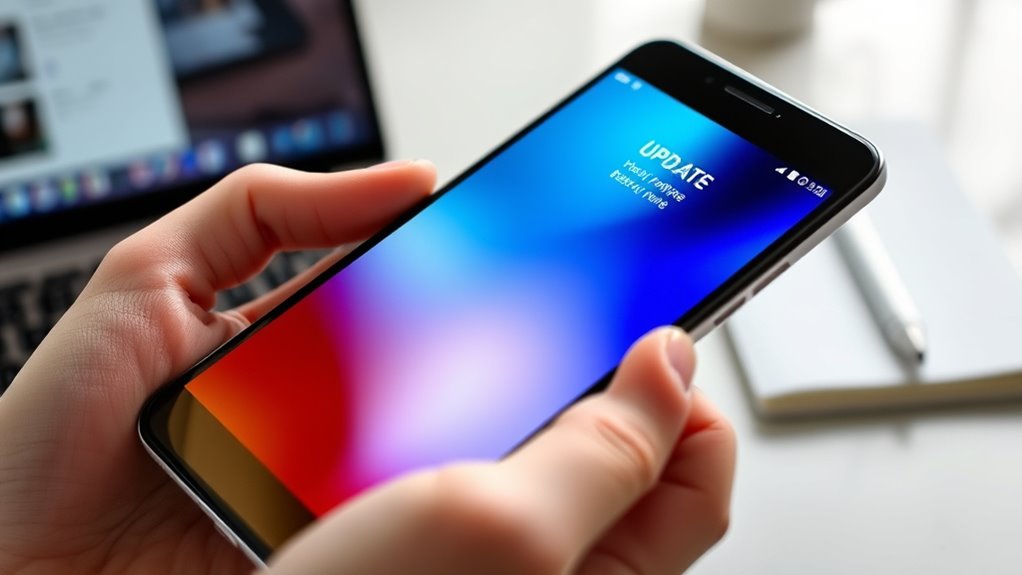
Keeping your phone’s software and apps up to date is essential for maximizing battery life. Developers often release updates that fix bugs, improve efficiency, and enhance power consumption. Ignoring updates can cause apps to run unnecessarily in the background, draining your battery faster. To stay efficient, enable automatic updates or check regularly for new versions.
Regularly updating your phone’s software and apps boosts battery life and security.
Here are some key benefits:
- Fixes security vulnerabilities that can cause extra background activity
- Improves app performance and stability
- Enhances battery efficiency with refined code
- Adds new features that may reduce power usage
- Addresses bugs that cause excessive battery drain
Updating regularly ensures your phone runs smoothly, securely, and with maximum battery life. Don’t delay—keep your device current for top performance.
Limit or Remove Battery-Intensive Features and Notifications
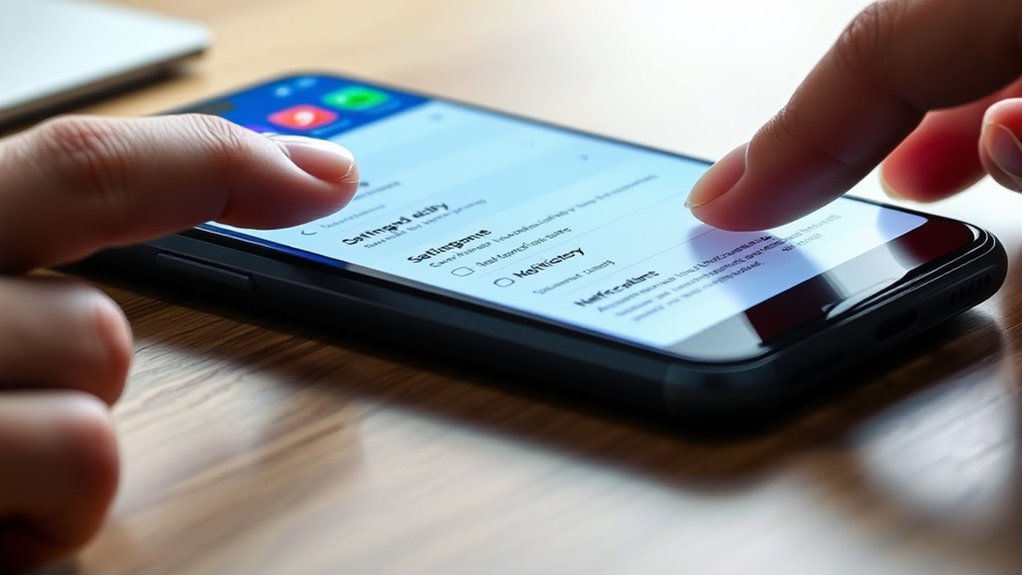
You can save battery by disabling background apps that drain power even when you’re not using them. Turning off unnecessary notifications also helps prevent your screen and processor from working harder than needed. Managing these features lets you extend your battery life considerably.
Disable Background Apps
Background apps often run silently in the background, consuming significant battery power without your awareness. By disabling or restricting these apps, you can conserve energy and extend your phone’s battery life. Start by closing apps you’re not using and restrict background activity for apps that don’t need to update constantly. Turn off auto-refresh for social media feeds, email, and news apps. Use your device settings to limit background activity for specific apps or disable background data altogether. This prevents apps from draining power when you’re not actively using them.
- Close unused apps regularly
- Restrict background activity in settings
- Disable auto-sync for apps
- Turn off background data for non-essential apps
- Use battery saver mode to limit background processes
Turn Off Unneeded Notifications
Notifications can be a major drain on your phone’s battery, especially when they activate features like sound, vibration, or flashing lights. To save power, turn off notifications for apps that aren’t essential. Go to your settings and review which apps send alerts. Disable notifications for those that don’t require immediate attention. You can also customize notification settings to limit their impact, such as turning off sound or vibration while still receiving alerts visually. This reduces the frequency of battery-draining features activating unnecessarily. Additionally, consider muting or disabling notifications during certain hours or when using power-saving modes. By controlling notifications, you prevent your phone from constantly waking up or engaging features that consume extra battery life. This simple step can appreciably extend your device’s battery longevity.
Perform a Battery Health Check and Calibrate Your Battery

To guarantee your phone’s battery is functioning at its best, it’s important to perform a battery health check and calibrate it if necessary. Start by checking your device’s battery health through the settings or a third-party app. If your battery’s capacity is markedly reduced, calibration can help improve accuracy. To calibrate, fully drain your battery until the phone turns off, then charge it uninterrupted to 100%. This process resets the battery indicator, providing more accurate readings. Regular calibration ensures your battery life estimates are reliable. Additionally, monitoring battery health helps identify if a replacement is needed before performance worsens. Keep your battery in good shape to extend its lifespan and prevent unexpected drains.
Regularly calibrate your battery to ensure accurate readings and extend its lifespan.
- Use built-in battery health tools or apps
- Fully drain and recharge your battery periodically
- Avoid overcharging or letting it die completely
- Check for abnormal battery drain patterns
- Consider replacing the battery if health is poor
Frequently Asked Questions
How Can I Extend My Phone’s Battery Life Throughout the Day?
To extend your phone’s battery life, start by dimming the screen brightness and enabling battery saver mode. Turn off Wi-Fi, Bluetooth, and location services when you’re not using them. Close unused apps and avoid heavy gaming or video streaming. Keep your software updated for efficiency, and consider turning off push notifications for non-essential apps. These steps help conserve power and keep your phone running longer throughout the day.
Why Does My Battery Drain Faster After a Recent Update?
Your battery probably drains faster after an update because the new software is causing your phone to overwork, like a marathon runner pushing beyond limits. It might be running background apps, syncing data constantly, or using more power-hungry features. You can fix this by closing unnecessary apps, disabling background activity, or waiting for a future update that optimizes the system. These steps can help bring your battery life back to normal.
Are There Any Hidden Apps Consuming Excessive Power?
Yes, hidden apps can be secretly draining your battery. To check, go to your phone’s settings and look at the battery usage section. It shows which apps consume the most power. If you see unfamiliar or unnecessary apps using a lot of battery, consider uninstalling or disabling them. Also, keep your apps updated and restart your device regularly to prevent hidden apps from running in the background.
How Do I Identify the Most Draining Apps on My Device?
Did you know that apps can drain up to 80% of your battery during heavy use? To identify the biggest culprits, go to your phone’s Settings, then Battery or Power Usage. Here, you’ll see a list of apps ranked by power consumption. Tap on each to get detailed info and see which apps are the biggest drain. This helps you decide which apps to limit or uninstall to extend your battery life.
What Are the Signs of a Failing or Degraded Battery?
You’ll notice your battery drains quickly even when you’re not using your phone, and it may feel unusually warm. Your device might shut down unexpectedly or show reduced battery life after a full charge. You may also see swollen or bulging battery cases, which indicate damage. If your phone’s battery performance worsens over time despite charging, it’s a sign that the battery is failing and needs replacing.
Conclusion
By taking these simple steps, you can breathe new life into your phone’s battery—like giving it a fresh start on a sunny day. Remember, your device’s battery is the heart of your smartphone’s importance. Treat it well, and it’ll serve you faithfully. Don’t let a draining battery turn your day into a struggle; instead, empower your phone to keep up with you. After all, a well-cared-for battery is the key to endless possibilities.