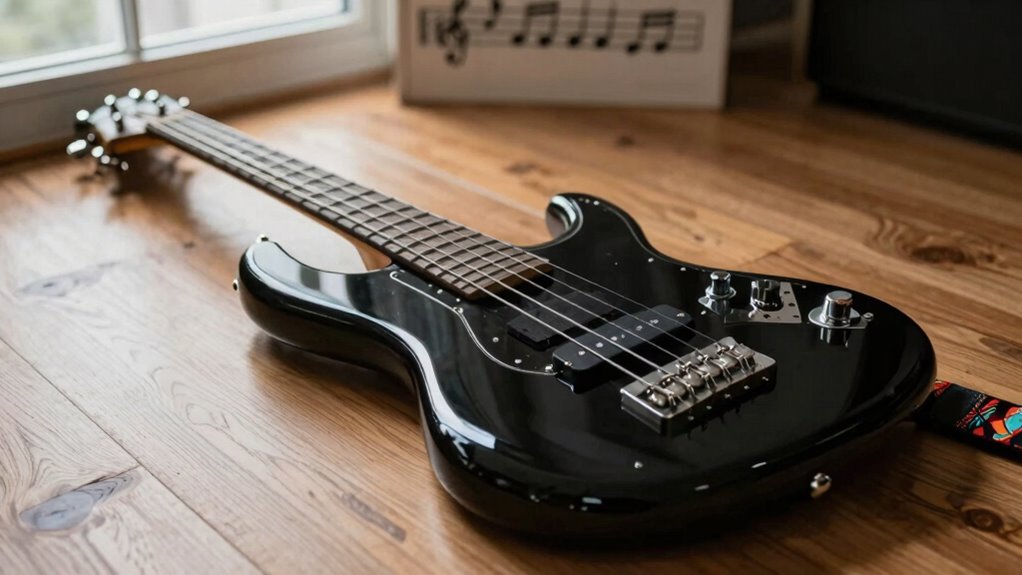

When buying your first bass guitar, focus on comfort and proper setup. Choose an instrument with a neck that’s easy to hold and strings that aren’t too hard to press. Learn basic techniques like finger positioning and how to tune your bass regularly for the best sound. Keep your instrument clean and stored safely to prevent damage. As you practice basics, you’ll discover tips for troubleshooting and maintaining your bass for the best performance. Keep going to explore more helpful advice.
Key Takeaways
- Choose a comfortable, beginner-friendly bass with a manageable size and simple controls.
- Learn basic techniques like proper hand positioning, finger plucking, and posture.
- Regularly maintain and clean the instrument to ensure optimal sound and longevity.
- Use a tuner to keep the bass accurately in tune for better sound quality.
- Understand essential storage and environmental care to protect the instrument from damage.
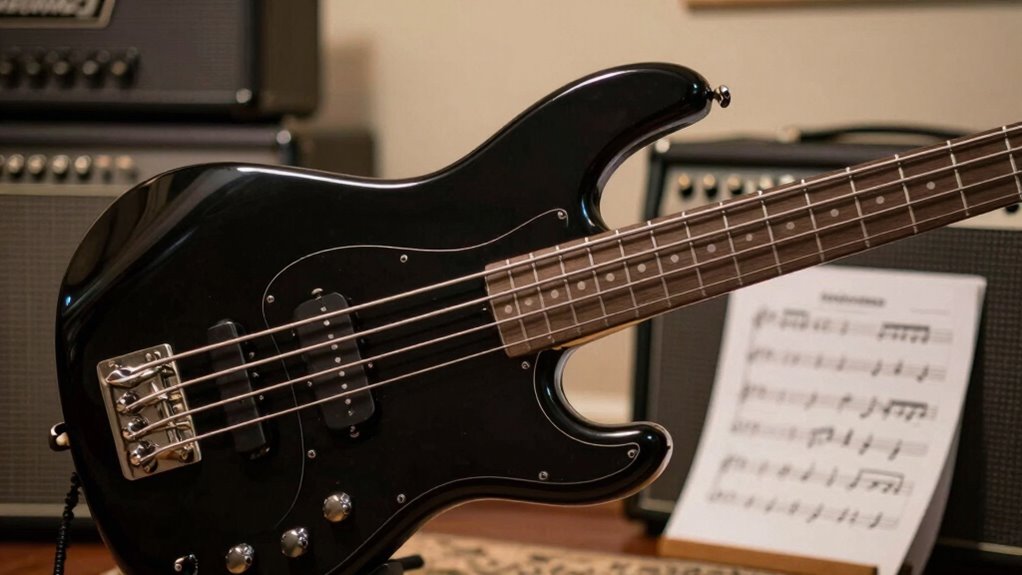
Have you ever wondered what makes the backbone of many bands? It’s the bass guitar, a versatile instrument that provides rhythm, depth, and groove. If you’re just starting out, understanding the basics can feel overwhelming, but don’t worry—you’re about to learn what you need to get going. One of the first things to focus on is developing good technique tips. Proper hand positioning, for example, is essential; keep your fretting hand relaxed and use your fingertips to press down on the strings, which helps produce clear notes and prevents fatigue. When plucking the strings, use your index and middle fingers, aiming for consistent attack and volume. Practicing scales and simple bass lines will improve your finger strength and coordination, making your playing smoother over time. As you progress, pay attention to your posture—standing or sitting with a straight back helps prevent strain and keeps you comfortable during long practice sessions.
Beyond technique tips, understanding maintenance essentials is equally important. Your bass guitar requires regular care to stay in top shape. Always wipe down the strings and body after playing to remove sweat and dirt, which can cause corrosion and damage over time. Changing strings periodically ensures your sound remains bright and clear; old strings tend to sound dull and can be harder to play. Keep your instrument stored properly—preferably in a case or on a stand in a stable environment—away from extreme temperatures and humidity, which can warp the wood. Regularly check the tuning pegs and bridge to make sure they’re secure, and if you notice buzzing or dead notes, it might be time for a setup, which a professional can do to optimize playability. Additionally, understanding the importance of resilient landscaping can help create a stable environment for your instrument, especially if you keep it outdoors or in variable conditions.
Investing in a basic maintenance kit, including string cutters, a tuner, and cleaning cloths, can save you money and extend the lifespan of your bass. Remember, consistency is key; taking a few minutes each week to care for your instrument prevents bigger problems down the road. As you become more familiar with your bass, you’ll develop a natural sense of what adjustments are needed, allowing you to troubleshoot minor issues yourself. Combining solid technique tips with diligent maintenance essentials will not only improve your sound but also guarantee your bass guitar remains a reliable partner in your musical journey. With patience and practice, you’ll find yourself playing with confidence and enjoying the deep, resonant tones that make the bass guitar so essential to any band.
beginner bass guitar with comfortable neck
As an affiliate, we earn on qualifying purchases.
As an affiliate, we earn on qualifying purchases.
Frequently Asked Questions
What Is the Best Bass Guitar for Beginners on a Budget?
You should start with the Squier by Fender Affinity Series Jazz Bass if you’re on a budget. It offers a solid bass tone, ideal for learning beginner techniques, without breaking the bank. This bass is easy to play, helping you develop skills like fingerstyle and plucking. Its affordability and quality make it a popular choice for beginners who want to explore bass guitar fundamentals while enjoying great sound.
How Do I Choose the Right Bass Guitar Size for Me?
You should choose a bass guitar size based on its weight and your comfort. Lighter basses reduce fatigue during long playing sessions. Consider pickup configurations, like single-coil or humbucker, as they influence sound and playability. If you’re small or new to playing, a 30-34 inch scale length suits most beginners. Test different sizes, hold them comfortably, and pick one that feels balanced and easy to handle for your style.
What Accessories Do I Need to Start Playing Bass?
To start your bass journey, you’ll need a few essentials. First, pick accessories that match bass guitar ergonomics—like a comfortable strap and a tuner to keep you sounding sharp. Don’t forget an appropriate amplifier; size and wattage matter to avoid turning your room into a concert hall or library. A cable, picks, and a gig bag complete your beginner kit. Now, go rock those strings—it’s that simple!
How Often Should I Change Bass Guitar Strings?
You should change your bass guitar strings every 3 to 6 months, depending on how often you play. Regular string maintenance helps keep your instrument sounding fresh, and fresh strings make guitar tuning easier and more accurate. If you notice a dull tone, difficulty tuning, or corrosion, it’s time for a change. Consistent string replacement guarantees your bass remains vibrant and easy to play, enhancing your overall sound.
Can I Learn Bass Guitar Without a Music Background?
Absolutely, you can learn bass guitar without a music background; think of it as planting a seed and watching it grow. Start with simple practice routines, and don’t worry if music theory feels like a foreign language at first. Consistency is your compass, guiding you through the musical landscape. With patience, your skills will blossom, turning you into a confident bassist, even without prior musical knowledge.
As an affiliate, we earn on qualifying purchases.
Conclusion
Now that you know the basics, you’re ready to pick your perfect bass guitar. Remember, patience and practice pave the path to proficiency. Don’t rush the journey—embrace every experience, and enjoy the evolution of your skills. With dedication and a dash of daring, your musical mastery will manifest. So, step forward with confidence, and let your passion propel your progress. Your bass adventure begins now—bold, bright, and beautifully yours.
As an affiliate, we earn on qualifying purchases.
As an affiliate, we earn on qualifying purchases.