
Netflix’s password sharing crackdown now ties your account to a primary household location and managed devices. If you try to log in outside that household, you’ll need re-authentication, and sharing across households becomes more restricted. You can add extra members with a fee or create new accounts, making sharing more secure and legal. For viewers, this means changes in how you access and share content—continue exploring to understand all the changes and options available.
Key Takeaways
- Access is now linked to a primary household location, requiring re-authentication for login outside that area.
- Sharing accounts across households is more restricted, often needing paid member slots or new accounts.
- Users can manage authorized devices and review access through the “Manage Access and Devices” page.
- Netflix offers paid sharing options for additional members, providing a legal alternative to traditional password sharing.
- These measures aim to increase revenue, improve streaming quality, and encourage converting casual viewers into paying subscribers.

No Rules Rules: Netflix and the Culture of Reinvention
As an affiliate, we earn on qualifying purchases.
As an affiliate, we earn on qualifying purchases.
How the Policy Changes Impact Account Access and Sharing
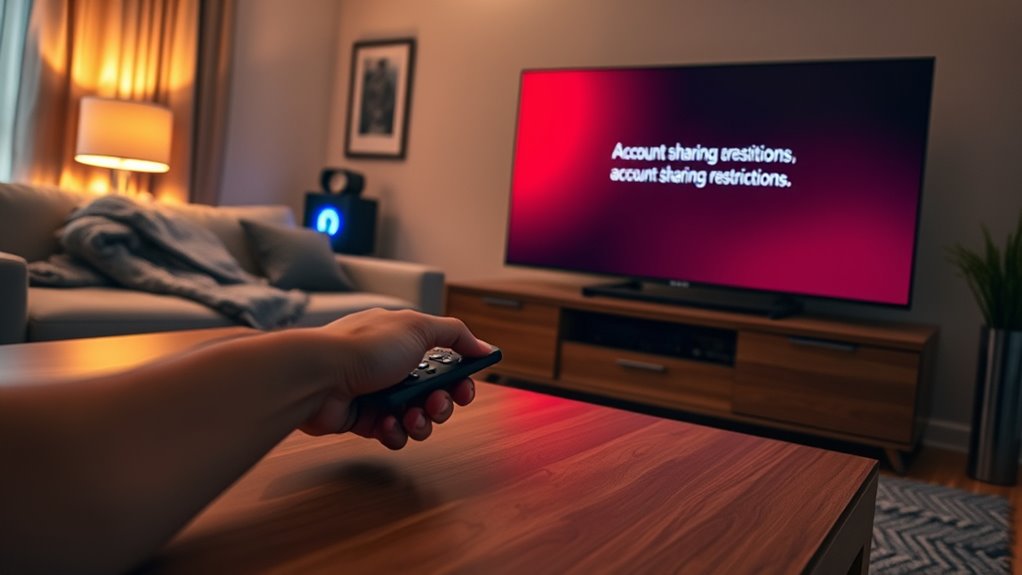
The policy changes considerably alter how you can share your Netflix account. Now, your access is tied to a designated primary household location. If you try to log in from outside that area, you’ll be prompted to re-authenticate, and sharing across different households becomes more difficult. You’ll need to set a primary location when you first create your account, and all users within that region can stream freely. For anyone outside your household, access may be restricted unless you purchase an additional member slot or create a new account. The new system emphasizes device management and household verification, making it clear who can use your account. This means sharing with friends or family members outside your household may require adjustments, potentially limiting your flexibility while encouraging paid options. Additionally, privacy and data protection are important aspects of these changes, as Netflix aims to ensure user information is kept secure while managing account sharing restrictions.

Prox PRD – Phone Separation Alert Device | Stop Forgetting or Leaving Phone Behind at Home, Work, Restaurant, or Car | Proximity Alert Notification Approx 50-150ft | Stay Connected | No Subscription
☑️ STOP FORGETTING YOUR PHONE – GET A RELIABLE PHONE SEPARATION ALERT BEFORE YOU LEAVE YOUR PHONE BEHIND…
As an affiliate, we earn on qualifying purchases.
As an affiliate, we earn on qualifying purchases.
The Role of Household Verification and Device Management
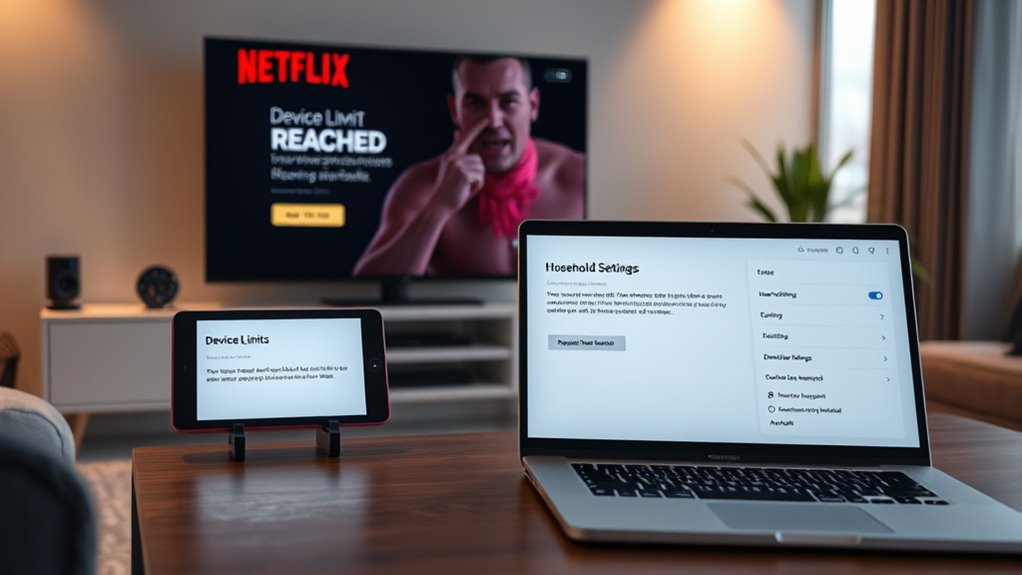
Household verification and device management are at the core of Netflix’s new approach to controlling account sharing. You’re now asked to confirm your primary location by setting a home device or address, which defines your household. Devices connected within this designated space are trusted, allowing seamless access. If you try to log in from outside, you’ll need to re-authenticate or create a new account. To make this easier, Netflix provides a “Manage Access and Devices” page where you can review authorized devices and remove or add users. Here’s a quick overview:
| Household Verification | Device Management | Access Control |
|---|---|---|
| Set primary location | Link trusted devices | Re-authenticate outsiders |
| Confirm address | Remove unauthorized devices | Transfer profiles easily |
| Limit access outside home | Manage device list | Monitor device activity |
Additionally, Netflix may use account security protocols to further verify user identities and prevent unauthorized access.

Roku Streaming Stick HD — HD Streaming Device for TV with Roku Voice Remote, Free & Live TV
HD streaming made simple: With America’s TV streaming platform, exploring popular apps—plus tons of free movies, shows, and…
As an affiliate, we earn on qualifying purchases.
As an affiliate, we earn on qualifying purchases.
Financial Benefits for Netflix and Its Subscribers

Implementing password sharing restrictions has directly benefited Netflix’s financial performance by boosting subscriber numbers and revenue. As a result, you, as a subscriber, may see better content and service quality because of increased income. Here are three key benefits:
Password sharing restrictions have helped Netflix grow revenue and improve your viewing experience.
- Higher Revenue: More paying subscribers mean Netflix can invest in exclusive, high-quality shows and movies you love.
- Pricing Stability: Increased earnings help keep subscription prices competitive, avoiding the need for sudden hikes.
- Enhanced Features: Additional revenue supports better app features, smoother streaming, and improved user experience for you. Additionally, this revenue growth can lead to investments in projector technology, enhancing the overall quality of streaming visuals and user engagement.
Netflix profile transfer tool
As an affiliate, we earn on qualifying purchases.
As an affiliate, we earn on qualifying purchases.
New Paid Sharing Options and How They Work
How does Netflix’s new paid sharing feature work? You can add extra member slots to your account for people outside your household, paying a monthly fee that ranges from $7.99 to $10.00 depending on your plan. This option gives you a way to share your account without violating the new policies, allowing friends or family to access content legally. To set this up, you’ll use the “Manage Access and Devices” page, where you can invite users or purchase additional slots. The added members can stream on their own devices, but they’ll need to be linked to your account via an invite or payment. This system offers a flexible alternative to outright account sharing bans, generating extra revenue while keeping outside users connected legally. Additionally, organizations are exploring account security measures like multi-factor authentication to protect user data amid these changes.
Broader Industry Trends and Future Implications
The rise of paid sharing options signals a shift in the streaming industry’s approach to account management, reflecting broader trends toward monetizing user access and controlling revenue streams. This shift indicates that companies are prioritizing direct monetization over traditional subscription models. You can expect:
Paid sharing options mark a shift toward monetizing user access and controlling revenue streams in streaming services.
- Increased industry adoption of household verification and paid sharing features, as seen with Disney+ and Warner Bros.
- Greater emphasis on turning casual or shared viewers into paying customers through flexible options.
- Potential fragmentation of streaming services, leading to more subscription tiers and personalized access controls.
- Account security measures and stricter enforcement policies are likely to become more prevalent as providers aim to reduce unauthorized sharing and protect their revenue.
Looking ahead, these trends suggest a focus on maximizing revenue while balancing user convenience. As services tighten access controls, you may see more competitive pricing and innovative features to retain users and attract new subscribers.
Frequently Asked Questions
How Does Netflix Verify a User’s Primary Household Location?
Netflix verifies your primary household location by having you set a designated address when you log in. The service uses your IP address, device location data, and account activity to confirm where you’re accessing from. If you’re outside your primary household, you’ll need to re-authenticate or create a new account. This helps Netflix guarantee that only authorized users within your household can access your account.
Can Users Still Share Accounts With Family Members in Different Countries?
No, you can’t share your Netflix account with family members in different countries under the new policies. Netflix verifies primary household locations based on internet connection and device activity, so sharing across borders likely triggers re-authentication prompts or restrictions. If family members live abroad, they’ll need their own accounts or pay for extra member slots through the paid sharing feature. This way, Netflix guarantees account access stays within designated households.
What Measures Are in Place to Prevent Account Sharing Outside Households?
You might think sharing with friends in different households is easy, but Netflix now uses household verification to prevent this. They require you to set a primary location and re-authenticate devices outside your household. If someone tries to access your account from afar, they’ll need to verify their identity or get a new login. These steps keep account sharing within authorized users and protect your subscription.
Will the Crackdown Affect Existing Family Plans or Bundles?
The crackdown won’t affect existing family plans or bundles you already have. If you’re on a family or multi-user plan, you can continue using it as usual. However, if you’re sharing outside your household, you might need to pay for extra member slots or create new accounts for those users. Netflix aims to protect legitimate subscriptions while allowing authorized sharing within plans, so your current setup should remain unaffected unless you expand sharing outside your plan.
How Will Netflix Address User Privacy Concerns With Household Verification?
You might think Netflix is invading your privacy with household verification, but actually, they’re just trying to protect your data from third-party breaches. They use secure methods like IP addresses and device recognition, not invasive personal info, to confirm your household. While it may feel intrusive, their goal is to balance user privacy with preventing unauthorized access, ensuring your streaming experience stays safe and private—just not as private as you’d like.
Conclusion
As Netflix tightens its rules, you might wonder how it’ll change your streaming habits. Will you stick with shared accounts or pay for extra options? Think of it like a neighborhood where everyone’s got their own key—does that make your viewing experience more secure or just more complicated? While these changes aim to boost Netflix’s value, they also reshape how you enjoy shows. Are you ready to adapt to this new streaming landscape?