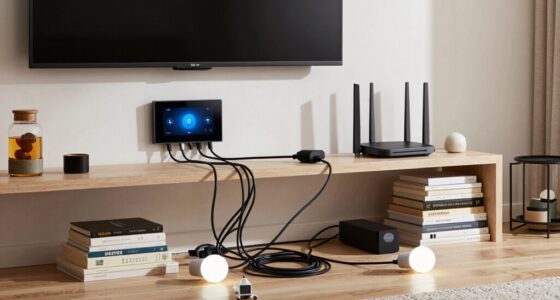
Choosing between smart and dumb appliances depends on your priorities. If you value energy efficiency, remote control, and automation, smart devices can make life easier and save money over time. However, if you prefer simplicity, reliability, and lower upfront costs, dumb appliances might be the way to go. Consider what fits your lifestyle and budget — exploring these options further will help you make the best choice.
Key Takeaways
- Smart appliances offer energy savings and remote control, while dumb appliances are simpler and more reliable.
- Upfront costs for smart devices are higher, but they can reduce long-term utility expenses.
- Dumb appliances require no internet or updates, making them easier to maintain and troubleshoot.
- Choose smart appliances if you value convenience, automation, and modern features; opt for dumb if simplicity is preferred.
- Your decision depends on budget, tech comfort level, and whether energy efficiency or straightforward use is more important.
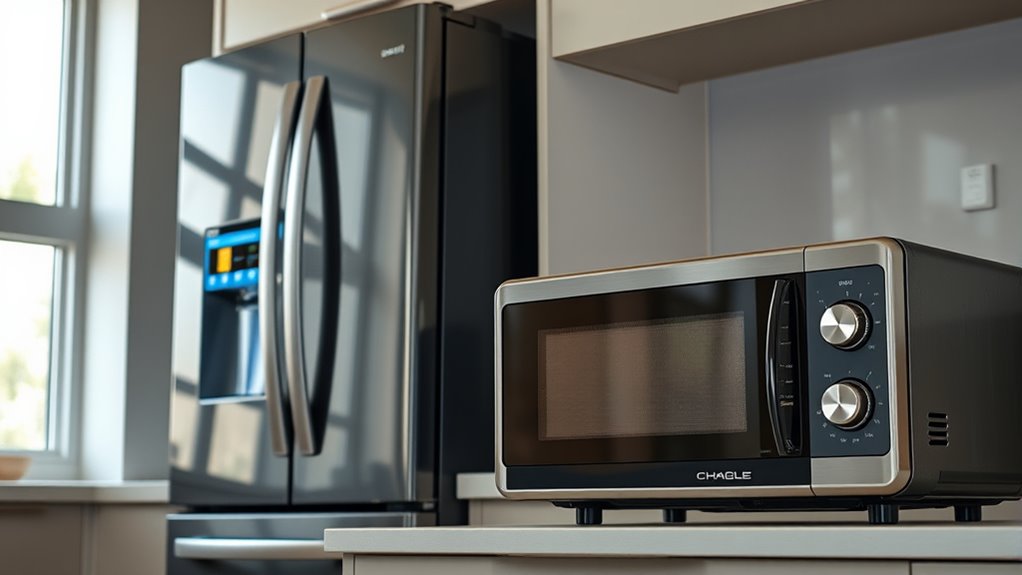
In today’s increasingly connected world, the debate between smart and dumb appliances is more relevant than ever. You’re faced with a choice: do you want devices that can connect, learn, and adapt, or are simple, straightforward appliances enough? When considering this decision, think about how energy efficiency and user convenience come into play. Smart appliances are designed to optimize energy consumption, often providing you with real-time data and control options that can lead to lower utility bills. For example, a smart thermostat can learn your schedule, adjusting temperatures automatically to save energy when you’re away or asleep. This means you’re not just saving money but also reducing your environmental footprint. On the other hand, dumb appliances tend to be less complex, often consuming more energy because they don’t have adaptive features. However, they also don’t require updates, troubleshooting, or internet connectivity, which some users find simpler and more reliable. Additionally, the contrast in technology impacts maintenance needs and long-term performance considerations.
User convenience is another critical factor. Smart appliances excel here because they allow remote control via smartphones or voice commands, giving you flexibility and ease of use. Imagine starting your washing machine from work or adjusting your oven’s temperature on the fly—you don’t have to be physically present. Plus, many smart devices integrate with home automation systems, creating a seamless experience. But, that convenience comes with a caveat: the need for a stable internet connection and a learning curve to understand how to operate the devices effectively. Dumb appliances, in contrast, offer straightforward functionality—they do what they’re designed to do without additional features or connectivity. If you prefer simplicity and reliability without the fuss of updates or compatibility issues, these might suit you better.
Cost is another consideration. Smart appliances typically come with a higher upfront price, justified by their advanced features and energy-saving capabilities. If you’re willing to invest more initially for potential long-term savings and convenience, they make an attractive choice. Conversely, dumb appliances are generally less expensive, which appeals if you’re on a tight budget or don’t see the need for extra tech. However, keep in mind that while they might save you money upfront, they could cost more over time due to higher energy use and lack of automation features.
Ultimately, your decision boils down to your priorities. If you value energy efficiency and modern user convenience, smart appliances are likely the better fit. But if you prefer simplicity, affordability, and reliability, you might lean toward traditional, dumb appliances. Consider how much you’re willing to invest, your comfort with technology, and how much convenience matters in your daily routine. This way, you can choose appliances that truly match your lifestyle and needs.
smart thermostat with energy saving features
As an affiliate, we earn on qualifying purchases.
As an affiliate, we earn on qualifying purchases.
Frequently Asked Questions
Are Smart Appliances More Energy-Efficient Than Dumb Appliances?
Smart appliances generally offer better energy savings than dumb appliances because they can be programmed or controlled remotely, optimizing their operation. This efficiency reduces your energy consumption, which in turn lowers your environmental impact. You’ll find that smart devices adapt to your habits, turning off or adjusting automatically. However, they might use a bit more energy during standby mode, so weigh these factors when considering their overall environmental benefits.
Do Smart Appliances Require a Stable Internet Connection?
Like a heartbeat keeps a body alive, your smart appliances need a stable internet connection to function properly. Without reliable internet, connectivity issues can turn your smart devices into unresponsive tools, disrupting your daily routine. If your internet stability falters, smart appliances may freeze or lose sync, making them less reliable. So, make certain your network is steady; otherwise, the convenience of smart tech fades into frustration.
Can Smart Appliances Be Hacked or Compromised?
Yes, smart appliances can be hacked or compromised due to cybersecurity risks and hacking vulnerabilities. You should be aware that cybercriminals sometimes target connected devices to access personal data or take control. To reduce these risks, make sure your appliances have strong, unique passwords, keep firmware updated, and use secure Wi-Fi networks. Staying vigilant about cybersecurity helps protect your smart home from potential threats.
Are Smart Appliances Compatible With All Home Automation Systems?
Did you know over 60% of smart home users struggle with device compatibility? Smart appliances aren’t compatible with all home automation systems, but many support popular platforms like Alexa, Google Assistant, or Apple HomeKit. Voice control makes managing your devices easier, but check compatibility first. Confirm your appliances work seamlessly with your existing system to avoid frustration and maximize your smart home experience.
Do Smart Appliances Have a Longer Lifespan Than Traditional Appliances?
Smart appliances generally don’t have a longer lifespan than traditional ones, mainly due to faster technical obsolescence. Their advanced features and tech updates can make them less durable over time, especially if software updates become unavailable. You might find that traditional appliances offer better appliance durability, as they’re built with simpler technology designed to last longer without frequent upgrades. So, consider your needs for longevity versus smart features.
dumb washing machine reliable simple
As an affiliate, we earn on qualifying purchases.
As an affiliate, we earn on qualifying purchases.
Conclusion
Choosing between smart and dumb appliances is like picking a travel companion—you want reliability or innovation? I once thought I’d prefer the latest smart fridge, but after a tech glitch left my groceries spoiled, I realized sometimes, simple appliances are the steady friends you need. According to a recent survey, 70% of users find basic appliances more dependable. So, weigh your needs carefully; whether you value convenience or simplicity, the right choice makes your home a true sanctuary.
smart home automation devices
As an affiliate, we earn on qualifying purchases.
As an affiliate, we earn on qualifying purchases.
energy-efficient dumb appliances
As an affiliate, we earn on qualifying purchases.
As an affiliate, we earn on qualifying purchases.