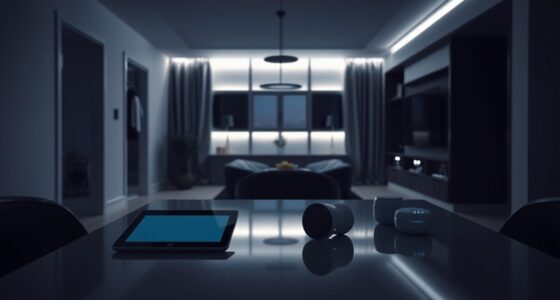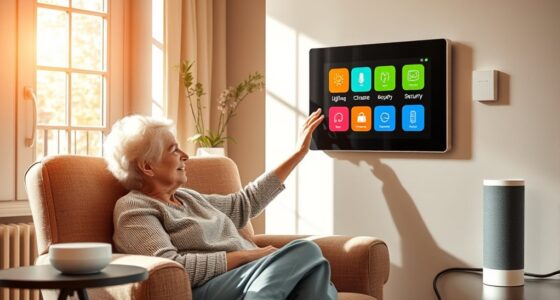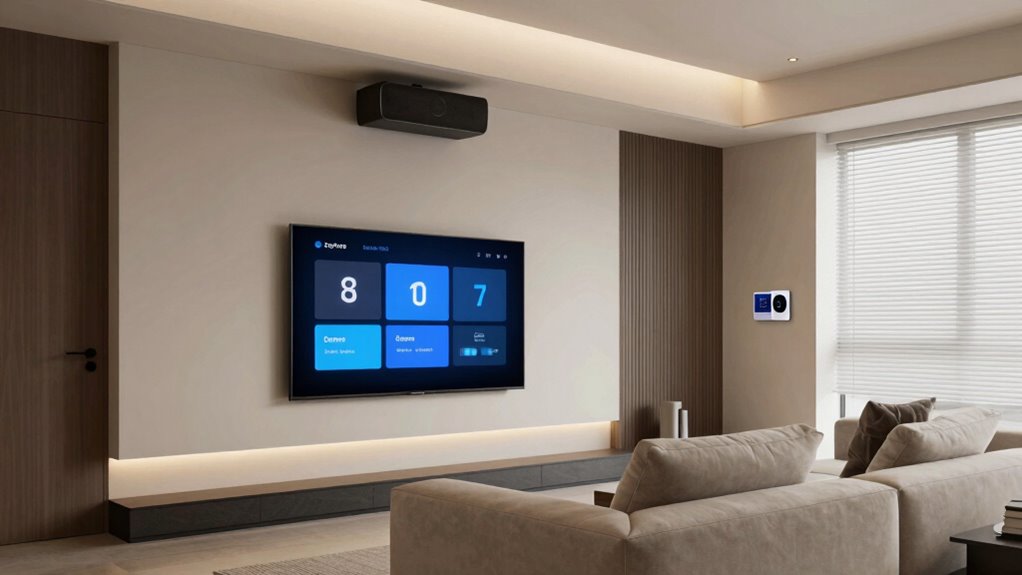

Start by evaluating each room’s functions and security needs. In living areas, focus on voice assistants, smart lighting, and security systems. For the bedroom, prioritize smart thermostats, lighting, and locks for comfort and safety. In the kitchen, consider smart appliances, cameras, and voice control for efficiency. Break down the process room by room to guarantee each space gets tailored automation. Keep exploring to discover more tips on creating a seamless, secure smart home experience.
Key Takeaways
- Assess each room’s specific functions and automation needs (lighting, security, entertainment).
- Prioritize security features like sensors and cameras for vulnerable areas.
- Integrate voice assistants for centralized control and seamless device automation.
- Plan device placement to maximize convenience, efficiency, and security.
- Develop a cohesive ecosystem by linking devices across rooms for unified automation.
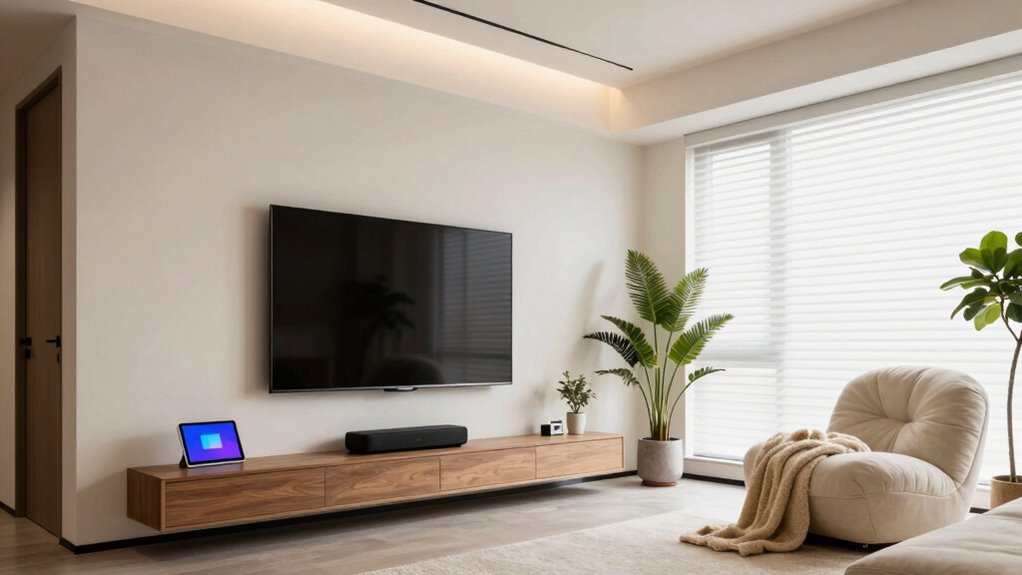
Creating a smart home can seem overwhelming, but breaking it down room by room makes the process manageable and tailored to your needs. Start by considering what you want each space to accomplish. For example, in your living room, a voice assistant like Alexa or Google Assistant can serve as the hub for controlling other devices. It allows you to adjust lighting, play music, or get weather updates with simple voice commands, making the space more functional and user-friendly. Think about how often you use the room and what tasks could be simplified with automation.
In terms of security, your living room can also house smart security systems that offer peace of mind. You might install cameras that you can monitor remotely or smart doorbells to see who’s at your door from anywhere. These security features can be integrated with voice assistants, enabling you to check on your home hands-free. When planning your security setup, consider sensors and alarms that notify you of unusual activity or potential intrusions, especially if the room is a main entry point. Additionally, integrating smart security features can provide comprehensive protection and peace of mind, and understanding the different types of sensors available can help you choose the best options for your home.
Moving to your bedroom, focus on comfort and convenience. Smart lighting that adjusts based on the time of day or your preferences can enhance your sleep routine. Smart thermostats can help regulate temperature for *ideal* sleep conditions, and voice assistants can set alarms or play relaxing sounds. You might also add smart blinds or curtains that open or close automatically, providing privacy and energy efficiency. For security, *guarantee* your bedroom has sensors for windows or doors, and consider integrating smart locks on your doors for added safety, especially if you want to control access remotely. Incorporating adaptive lighting technology can further improve your sleep quality by supporting your circadian rhythms.
In the kitchen, your planning should prioritize efficiency. Smart appliances like refrigerators, ovens, or coffee makers can be controlled via voice commands or smartphone apps, saving you time. A smart security system in the kitchen might involve motion detectors or cameras to monitor activity, especially if you have children or pets. Voice assistants can help you set timers, create shopping lists, or get recipe ideas hands-free, making cooking and cleaning more streamlined. Additionally, understanding the importance of projector technology can enhance your home’s entertainment setup, allowing for seamless integration of visual and audio features to create a more connected and enjoyable space. Think about how the smart home automation ecosystem can work together to maximize convenience and efficiency in your daily routines.

Blink Outdoor 4 – Wireless smart security camera, two-year battery life, 1080p HD day and infrared night live view, two-way talk. Sync Module Core included – 3 camera system
Outdoor 4 is our most affordable wireless smart security camera yet, offering up to two-year battery life for…
As an affiliate, we earn on qualifying purchases.
As an affiliate, we earn on qualifying purchases.
Frequently Asked Questions
What Is the Best Budget for a Smart Home Setup?
You should plan a budget of around $1,000 to $3,000 for a smart home setup, depending on your goals. Focus on energy efficiency and device integration to get the most value. Prioritize essential gadgets first, like smart thermostats and lighting, then expand gradually. Keep in mind that investing wisely can help you save money long-term through reduced energy costs and seamless device compatibility.
How Do I Ensure My Smart Devices Are Secure?
Ironically, the easiest way to keep your smart devices secure is to forget about them—just kidding! You should regularly update firmware, use strong, unique passwords, and enable two-factor authentication. Be mindful of security vulnerabilities and privacy concerns, like sharing too much data with manufacturers. Also, segment your network, avoiding connected devices on your main Wi-Fi. These steps help protect your smart home from hackers and safeguard your privacy.
Can I Automate My Smart Home Remotely?
Yes, you can automate your smart home remotely using secure remote access features provided by your smart devices or hub. Make sure you enable strong automation security measures, like two-factor authentication and encrypted connections, to protect your system. Regularly update device firmware and passwords to prevent unauthorized access. This way, you maintain control over your smart home while ensuring your automation remains safe and secure, even when you’re away.
What Compatibility Issues Should I Watch For?
Did you know that 40% of smart home users face compatibility issues? You should watch for device interoperability and brand compatibility when planning your setup. Not all devices work seamlessly together, especially if they’re from different brands. Check each device’s specifications and make sure they support common protocols like Zigbee or Z-Wave. This way, you avoid frustrations and create a truly integrated, smart home experience.
How Do I Prioritize Which Rooms to Upgrade First?
You should prioritize rooms where smart lighting and voice assistants will make the biggest impact, like the living room or kitchen. Start with spaces where you spend most of your time or need convenience, then expand to bedrooms and bathrooms. Upgrading high-traffic areas first guarantees you get immediate benefits, and later, you can easily add more devices as you become comfortable with your smart home system.

OIYN Smart RGBICW LED Corner Floor Lamp – 16 Million DIY Colors, 68+ Scenes, Music Sync, App & Remote Control, Color-Changing Ambient Lighting for Living Rooms, Bedrooms, and Gaming Rooms
Dynamic RGBICW Color Technology:Unleash your creativity with our RGBICW LED floor lamp, offering customizable colors for each segment…
As an affiliate, we earn on qualifying purchases.
As an affiliate, we earn on qualifying purchases.
Conclusion
Now that you know how to plan each room in your smart home, you’re well on your way to creating a seamless, efficient space. Just remember, Rome wasn’t built in a day, so take it step by step and don’t rush the process. With careful planning and a clear vision, your smart home will soon be the envy of all. Keep your eyes on the prize, and enjoy the journey to a smarter, more comfortable living space.

Amazon Smart Thermostat – Save money and energy – Works with Alexa and Ring – C-wire required
Smart upgrade – Amazon Smart Thermostat is an easy way to switch from a traditional thermostat and help…
As an affiliate, we earn on qualifying purchases.
As an affiliate, we earn on qualifying purchases.

Desk Stand and Dock Compatible with Home Assistant Voice Preview Edition, Stable Desktop Holder for Smart Voice Control and Daily Use (White)
Important Note: This is a third-party replacement part, Brand names are used only to indicate Compatible with Home…
As an affiliate, we earn on qualifying purchases.
As an affiliate, we earn on qualifying purchases.