Smart plugs do use some electricity even when turned off, known as standby or phantom power, but the amount is usually very small. While this minimal waste can add up over time, choosing models with ultra-low standby consumption and energy-saving features makes a difference. Proper device management and compatibility also help reduce unnecessary power use. If you want to learn simple ways to minimize waste and boost your energy efficiency, there’s more to discover.
Key Takeaways
- Smart plugs can draw some power in standby mode, known as phantom or vampire energy, but typically minimal.
- Choosing low-standby smart plugs reduces unnecessary energy drain and enhances overall efficiency.
- Features like automatic power-off and ultra-low standby modes help minimize power waste.
- Proper compatibility with home automation protocols ensures devices function efficiently without extra power consumption.
- Effective device management, such as scheduling or unplugging unused devices, maximizes energy savings and reduces waste.
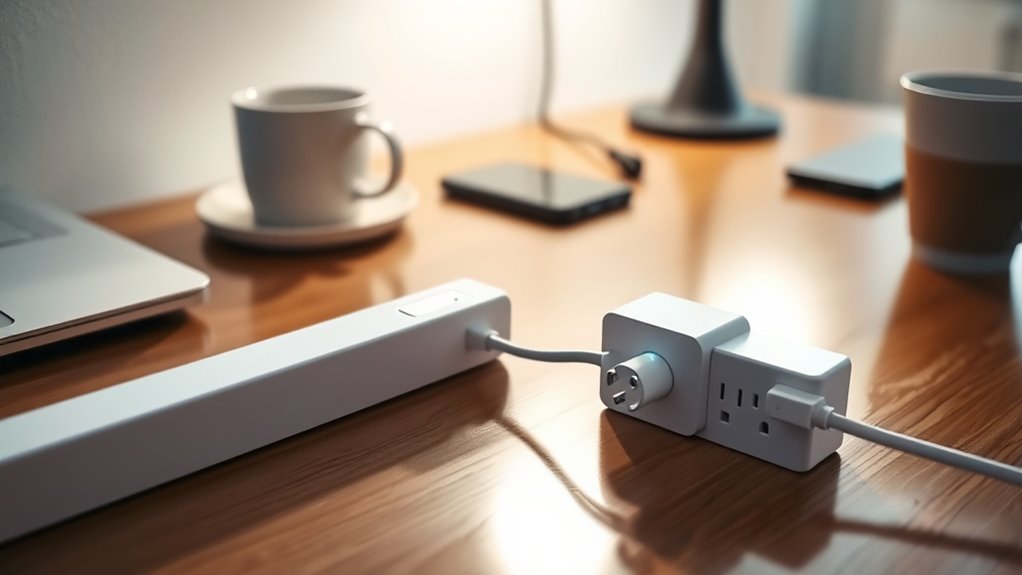
Have you ever wondered how to make your home more energy-efficient and convenient? Smart plugs can be a game-changer, offering an easy way to control your devices remotely and automate routines. But a common concern is whether these devices waste electricity, especially when they’re turned off but still plugged in. The truth is, many smart plugs do draw some standby power, known as phantom or vampire energy, but the impact is usually minimal. If you’re aiming for energy savings, it’s important to choose smart plugs that are designed with low standby consumption and are compatible with your existing devices. Device compatibility matters because not all smart plugs work with every appliance or home automation system. Ensuring your chosen smart plug seamlessly integrates with your smartphone, voice assistant, or smart home hub can maximize efficiency and prevent unnecessary power drain. Additionally, some smart plugs incorporate power monitoring features, allowing you to track and manage energy usage more precisely.
When considering energy savings, it’s tempting to look solely at how much power a device uses while in operation, but standby power adds up over time. Many smart plugs are engineered to minimize this phantom load. Some models feature an ultra-low standby mode or have an automatic power-off function when the device is not in use. By selecting a smart plug with these features, you can reduce unnecessary energy waste without sacrificing convenience. Additionally, device compatibility ensures you don’t encounter frustrations or inefficiencies. For example, if you want to control your coffee maker or lamp via voice commands or automation routines, your smart plug must support the right protocols, like Wi-Fi, Zigbee, or Z-Wave, and be compatible with your preferred app or voice assistant. This compatibility guarantees that your setup works smoothly, allowing you to manage your devices effectively and avoid energy waste caused by malfunctioning or incompatible hardware.
Being mindful of standby power and device compatibility helps you optimize your smart plug usage for better energy savings. Instead of leaving devices constantly plugged in and drawing power unnecessarily, you can schedule or remotely turn them off when not needed. This practice not only reduces your energy bills but also prolongs the lifespan of your appliances by avoiding constant power stress. Remember, selecting smart plugs with low standby consumption and high compatibility means you get the most out of your investment while reducing waste. In the end, smart plugs are a practical tool for better energy management, but understanding their standby power and ensuring device compatibility is key to truly maximizing their benefits and minimizing any unnecessary energy waste.
Top picks for "smart plug waste"
Open Amazon search results for this keyword.
As an affiliate, we earn on qualifying purchases.
Frequently Asked Questions
Do All Smart Plugs Consume Standby Power Equally?
Not all smart plugs consume standby power equally. Some models are designed with energy efficiency in mind, helping you reduce standby power and dispel energy consumption myths. When choosing a smart plug, look for those with low standby power ratings or features that minimize unnecessary energy use. By doing so, you can effectively reduce standby power and guarantee you’re making an eco-friendly, energy-conscious decision.
How Can I Measure a Smart Plug’s Energy Usage Accurately?
Imagine a tiny detective in your hand, uncovering hidden secrets of energy consumption. To measure your smart plug’s energy use accurately, use a dedicated energy monitor or a smart plug with built-in measurement methods. Plug your device into this tool, then observe real-time data on consumption. This active approach reveals if your smart plug’s standby power adds up, helping you make smarter, more energy-efficient choices.
Are There Eco-Friendly Smart Plug Options Available?
Yes, eco-friendly smart plug options are available, often designed with energy efficiency in mind. Some incorporate solar energy, reducing reliance on grid power, while others integrate energy storage to optimize usage. Look for smart plugs with eco-friendly certifications or features like low standby power consumption. By choosing these options, you can help cut energy waste and support sustainable energy practices in your home.
Can Smart Plugs Cause Electrical Surges or Damage?
Smart plugs generally won’t cause electrical surges or damage if you choose energy-efficient models compatible with your devices. To prevent issues, verify the smart plug matches your device’s power requirements and follows safety standards. Proper device compatibility minimizes risks, and using certified, high-quality smart plugs can help protect your electronics while maintaining energy efficiency. Regularly update firmware and avoid overloading outlets for added safety.
Do Smart Plugs Significantly Increase Electricity Bills Over Time?
Think of smart plugs as tiny guardians that help you save energy, not drain your wallet. They don’t substantially increase your electricity bills if you focus on energy conservation and choose device compatibility wisely. Over time, their minimal standby power use is hardly noticeable. By using smart plugs efficiently, you ensure your home stays smart and cost-effective, rather than letting unnecessary power drain your budget.
Conclusion
So, think of smart plugs like tiny gatekeepers—they control your devices and keep standby power in check. While they do use a little energy themselves, it’s nothing compared to leaving appliances on or unplugged. Using smart plugs wisely is like having a smart, gentle breeze guiding your energy use, saving you money and reducing waste without much effort. With them, you’re steering your home’s energy flow smoothly, making efficiency feel effortless.