
To use a compass and map, start by understanding their parts—like the baseplate, housing, and needle on your compass. Align the map with your surroundings by matching features and pointing north. Hold your compass flat, rotate the housing to match magnetic north, and then turn your body until the needle lines up with the north indicator. Use landmarks for extra confidence. Keep practicing, and you’ll discover how these skills help you navigate confidently through any terrain.
Key Takeaways
- Orient the map by matching landscape features with the map and aligning it with true north using the compass.
- Hold the compass flat, rotate the bezel to align with magnetic north, and turn your body until the needle and housing are aligned.
- Use landmarks and terrain features to confirm your current location and plot a route to your destination.
- Keep the map and compass steady and flat while rotating or adjusting to maintain accurate orientation.
- Regularly check your surroundings and landmarks to stay on course and adjust your navigation as needed.

Land Nav Kit with Lensatic Compass, Protractor, Pace Counter & Map Markers
FIELD READY – Crush your next land navigation course with The Land Nav Kit designed specifically for the…
As an affiliate, we earn on qualifying purchases.
As an affiliate, we earn on qualifying purchases.
Understanding the Parts of a Compass and Map
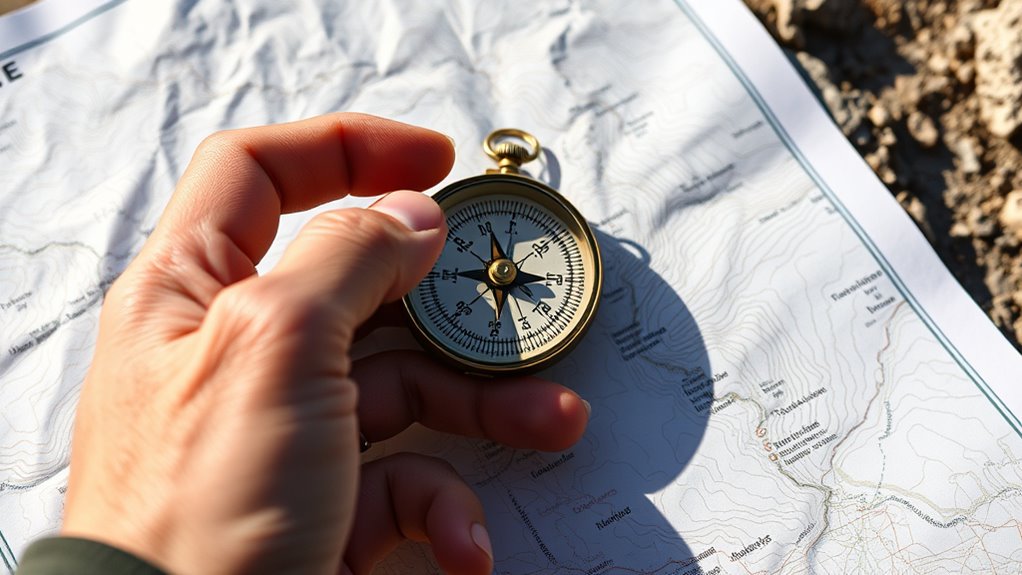
To navigate effectively, it’s essential to understand the key parts of a compass and map. On a compass, you’ll find the baseplate, which holds the housing and the direction of travel arrow. The rotating bezel or compass housing contains degree markings from 0° to 360°, helping you set and follow bearings. The needle points north, with the red end indicating magnetic north, and the orienting arrow aligns with the needle to help you stay on course. On a map, key features include the legend, which explains symbols; the scale, showing distance; and the compass rose, indicating directions. Recognizing these parts allows you to interpret your surroundings accurately and use your compass and map together effectively.

4 Pcs Outdoor Compass with Adjustable Declination,Magnifier,Ruler,Scale. Multifunctional Orienteering Waterproof Compass for Map Reading, Navigation, Hiking (Transparent+Blue+Green+Orange)
Accurate Readings: This outdoor compass features a rotating bezel and precise needle for reliable directional guidance.
As an affiliate, we earn on qualifying purchases.
As an affiliate, we earn on qualifying purchases.
Orienting Your Map Correctly
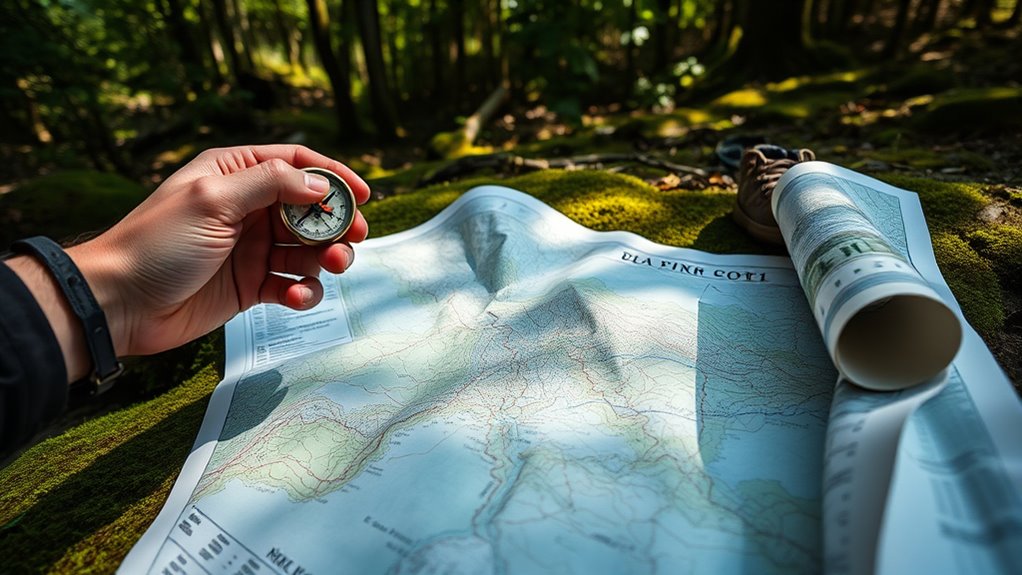
To start orienting your map, match it to the landscape around you by aligning features like roads and rivers. Then, use your compass to determine which way is north and adjust your map accordingly. This guarantees you’re always moving in the right direction.
Aligning Map With Landscape
Before you start steering, it’s crucial to align your map with the actual landscape around you. Find a prominent feature nearby, like a hill, river, or distinct cluster of trees. Hold your map flat in your hands and turn it until the features on the map match what you see in the landscape. The goal is to have the map oriented so that north on the map points toward true north in the environment. This alignment makes it easier to identify landmarks and plan your route. Take your time to double-check that the terrain features on the map line up with those in front of you. Properly aligning your map ensures you stay oriented and prevents confusion, keeping your navigation accurate and straightforward.
Using Compass for Orientation
Using a compass is essential for orienting your map accurately, especially when landmarks are unclear or terrain features are difficult to identify. First, hold the compass flat in your hand, ensuring the direction-of-travel arrow points straight ahead. Rotate the compass housing until the orienting arrow lines up with magnetic north. Keep the compass steady, then turn your entire body until the magnetic needle aligns with the compass’s north needle. This process aligns the compass with the landscape. To orient your map, place it under the compass, rotate the map until its north matches the compass needle, and ensure the map’s top corresponds with the terrain’s direction. This helps you understand your surroundings and navigate confidently, even in featureless or confusing terrain.

Map Reading And Land Navigation – FM 3-25.26 US Army Field Manual FM 21-26 (2001 Civilian Reference Edition): Unabridged Manual On Map Use, … Release) (Military Outdoors Skills Series)
As an affiliate, we earn on qualifying purchases.
As an affiliate, we earn on qualifying purchases.
Identifying Your Current Location and Destination
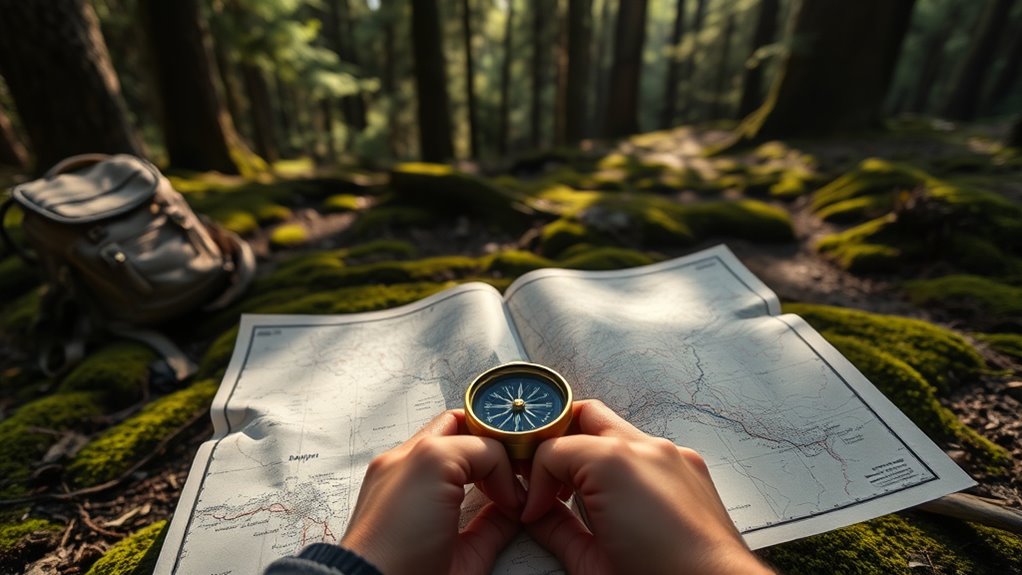
Knowing your current location and destination is essential for effective navigation. First, look around for identifiable landmarks, such as mountains, rivers, or distinctive trees, to help pinpoint where you are. Check your map for nearby features and compare them with your surroundings. Use terrain clues like slopes or water bodies to confirm your position. To determine your destination, identify your endpoint on the map, whether it’s a trailhead, campsite, or landmark. Clarify your route by plotting a direct line from your current spot to your destination. Keep track of your progress as you move, updating your position regularly. This awareness guarantees you stay on course and can adjust if needed. Knowing exactly where you are and where you want to go keeps your navigation precise and confident.
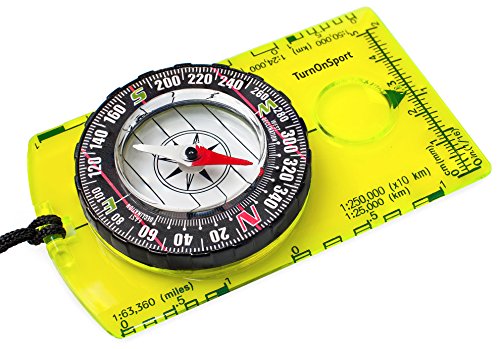
Orienteering Compass – Hiking Backpacking Compass – Advanced Scout Compass for Camping and Navigation – Boy Scout Compass for Kids – Professional Field Compass for Map Reading – Best Survival Gifts
KEY FEATURES: This manual magnet compass consists of Acrylic Baseplate with Azimuth bearing and 360 degree rotating bezel….
As an affiliate, we earn on qualifying purchases.
As an affiliate, we earn on qualifying purchases.
Using a Compass to Determine Direction
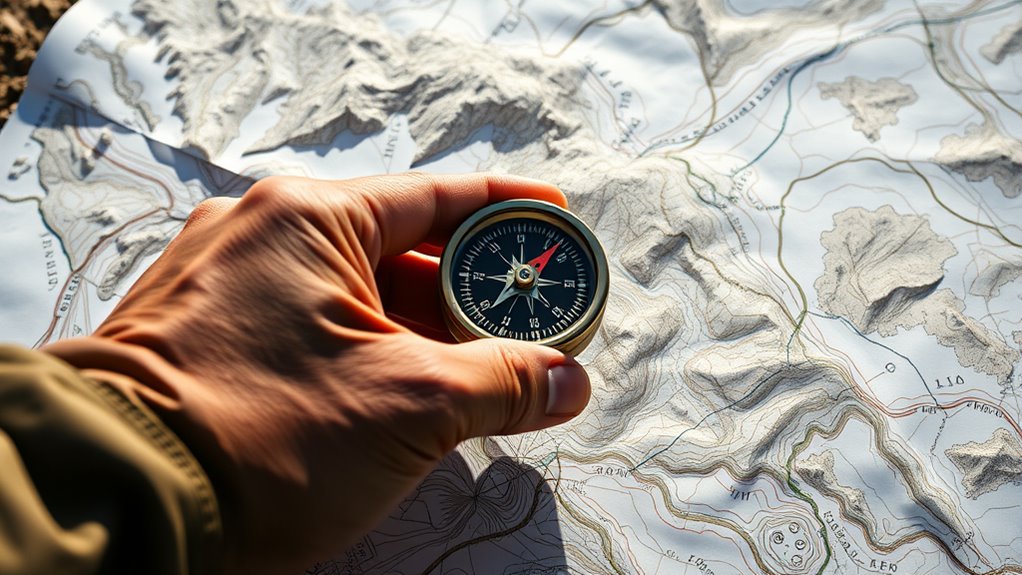
To determine your direction, first align your compass with magnetic north, making sure the needle points to the correct mark. Then, read the compass dial carefully to find your bearing. With these steps, you’ll confidently identify which way to head next.
Aligning Compass and Magnetic North
Aligning your compass with magnetic north is a crucial step in navigation, ensuring you determine accurate directions. To do this:
- Hold your compass flat in your palm, keeping it steady.
- Turn yourself and the compass until the magnetic needle aligns with the orienting arrow.
- Make sure the compass housing’s orienting lines are parallel to the magnetic needle.
- Adjust your body or the compass so the needle points directly to magnetic north on the dial.
This process helps you establish a reliable reference point. Remember, magnetic north can shift slightly depending on your location, so always double-check your alignment before proceeding. Properly aligning your compass ensures your directional readings are precise, making your navigation safer and more effective.
Reading the Compass Dial
Once your compass is properly oriented, you can read the dial to determine your direction. Look at the rotating bezel, which has degree markings from 0° to 360°. The red or luminous arrow inside the housing is your direction of travel, called the “direction of travel arrow.” Turn the bezel until the orienting arrow lines up with the magnetic needle, ensuring the needle points to magnetic north. Now, read the degree mark where the index line intersects the bezel. This number indicates your heading. For example, if it points to 90°, you’re heading east. Remember to adjust your compass reading if you’re using a map with true north, but for general navigation, the magnetic reading is sufficient. This process helps you stay on course confidently.
Navigating Using Landmarks and Features
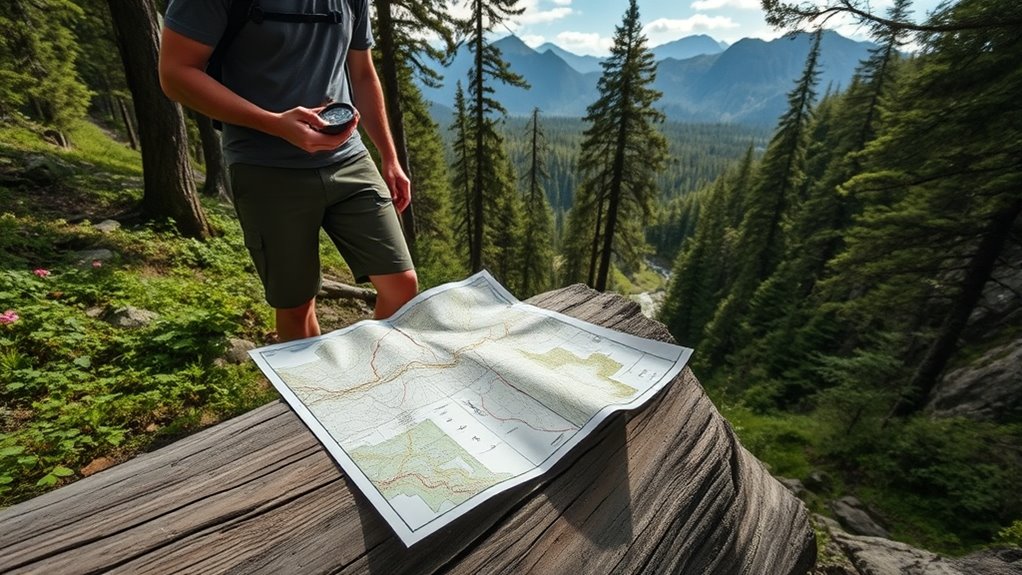
Using landmarks and natural features is a practical way to navigate without a compass or GPS. You can use prominent objects to keep your bearings and confirm your direction. Look for distinguishable features like mountains, rivers, or unique rock formations. These serve as reference points along your route. Keep track of your surroundings and note how landmarks align with your intended path. Use these tips:
- Identify prominent features before you start walking.
- Confirm your position by matching landmarks with your map.
- Observe changes in terrain to stay oriented.
- Remember distinctive objects to avoid confusion later.
Tips for Safe and Effective Navigation Outdoors
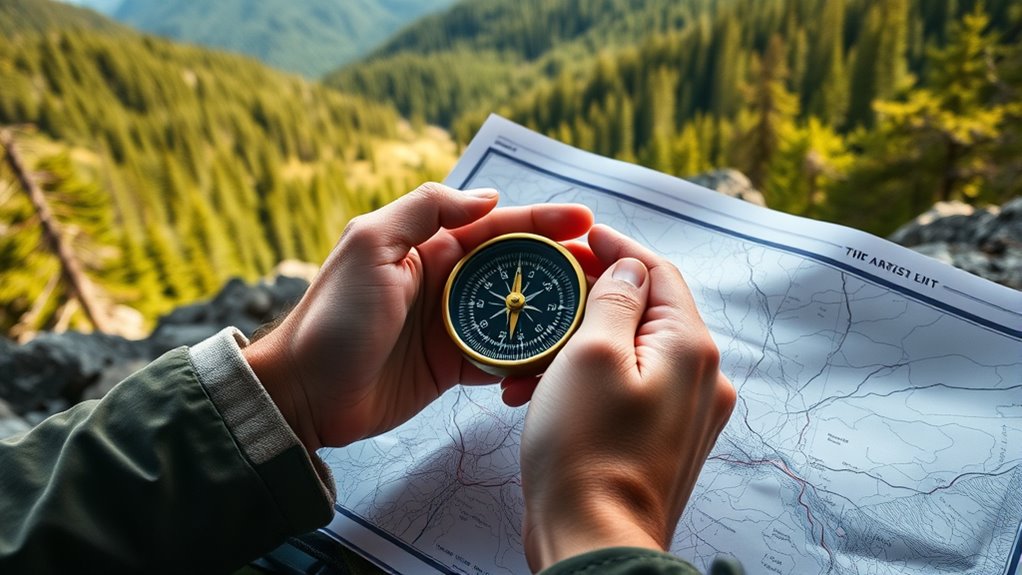
To guarantee your outdoor navigation is safe and effective, always prioritize preparedness and awareness. Before heading out, carry a reliable compass, a detailed map, and extra batteries or power sources. Check the weather forecast and plan your route carefully, noting key landmarks and terrain features. Stay aware of your surroundings and regularly confirm your position using your compass and map. Inform someone about your plans and estimated return time. Keep track of your progress to avoid disorientation. If conditions change unexpectedly, remain calm, and reassess your route. Remember, avoid taking unnecessary risks, and don’t hesitate to turn back if you’re unsure. Staying alert, prepared, and cautious ensures a safer adventure and helps you navigate effectively through unfamiliar outdoor terrain.
Frequently Asked Questions
How Do I Choose the Right Type of Compass for Different Terrains?
You should choose a compass based on the terrain you’re orienting yourself in. For rugged, mountainous areas, opt for a durable, liquid-filled compass with a sighting mirror for accurate bearings. If you’re in open fields or forested regions, a baseplate compass with a clear, easy-to-read bezel works best. Consider a compass with adjustable declination if you’re venturing into areas with significant magnetic variation, ensuring precise navigation regardless of terrain.
What Are Common Mistakes to Avoid When Reading a Map?
Did you know that 60% of navigation errors come from misreading maps? To avoid mistakes, double-check your orientation first, ensuring north lines up correctly. Don’t ignore scale or symbols—they’re essential for accurate directions. Avoid rushing; take your time to interpret contour lines and landmarks. Keep your map flat and well-lit, and cross-reference your surroundings often. Staying attentive prevents confusion and keeps you on track.
How Can I Estimate Distance Traveled Without a GPS?
You can estimate distance traveled by counting your steps and knowing your stride length, then converting steps into miles or kilometers. Alternatively, use landmarks or terrain features as reference points, noting how long it takes to reach them at a steady pace. Keep track of your pace per minute and multiply it by your travel time to get an approximate distance, helping you stay oriented without GPS.
What Should I Do if My Compass or Map Gets Lost or Damaged?
Did you know over 60% of outdoor accidents happen because people lose their navigation tools? If your compass or map gets lost or damaged, stay calm. Use natural cues like the sun, stars, and terrain features to orient yourself. Recall your planned route, estimate your direction, and head toward known landmarks or shelter. Always trust your instincts and stay aware of your surroundings for safe navigation.
How Do Weather Conditions Affect Compass Navigation Accuracy?
Weather conditions can considerably impact your compass navigation. Strong winds, rain, or snow can cause your compass to shift or become difficult to read due to moisture or debris. Extreme temperatures might affect the compass needle’s sensitivity, making it less accurate. Fog or heavy cloud cover won’t directly affect the compass, but poor visibility can make it harder to confirm your direction. Always check your compass carefully before relying on it in bad weather.
Conclusion
Mastering compass and map skills might seem old-fashioned, but some experts argue it’s the most reliable way to navigate. Historically, explorers relied solely on these tools, proving their effectiveness in uncharted territories. So, next time you’re outdoors, remember: knowing how to read a map and use a compass isn’t just nostalgic—it’s a proven method to stay safe and find your way, even when electronic devices fail. Who knows? You might just discover a new sense of adventure.