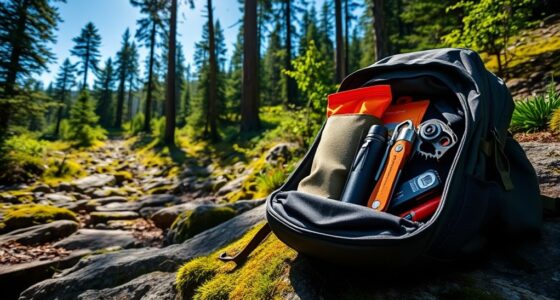
To start a campfire without matches or a lighter, gather dry tinder, small sticks, and larger logs. Use friction methods like a bow drill or hand drill to create heat and an ember, or strike flint against steel for sparks. You can also use a battery and steel wool or focus sunlight with a magnifying glass to ignite your tinder. With patience and practice, you’ll master these techniques—keep going to discover all the ways you can spark a fire.
Key Takeaways
- Use friction methods like bow drills, hand drills, or fire plows to generate heat and create an ember.
- Strike flint against steel or rocks like quartz to produce sparks that ignite tinder.
- Focus sunlight with a magnifying glass or lens to concentrate heat and ignite dry tinder.
- Scrape a ferrocerium rod with a striker or knife to produce sparks and ignite tinder.
- Connect a 9V battery to steel wool to generate sparks that can start a fire.

bayite 4 Inch Survival Ferrocerium Drilled Flint Fire Starter, Ferro Rod Kit with Paracord Landyard Handle and Striker, 4"(Long) x 3/8"(Diameter)
5ft Paracord included, gives you a good grip and never comes off. Comes with a bayite Striker-Pro striker…
As an affiliate, we earn on qualifying purchases.
As an affiliate, we earn on qualifying purchases.
Gathering and Preparing Your Materials
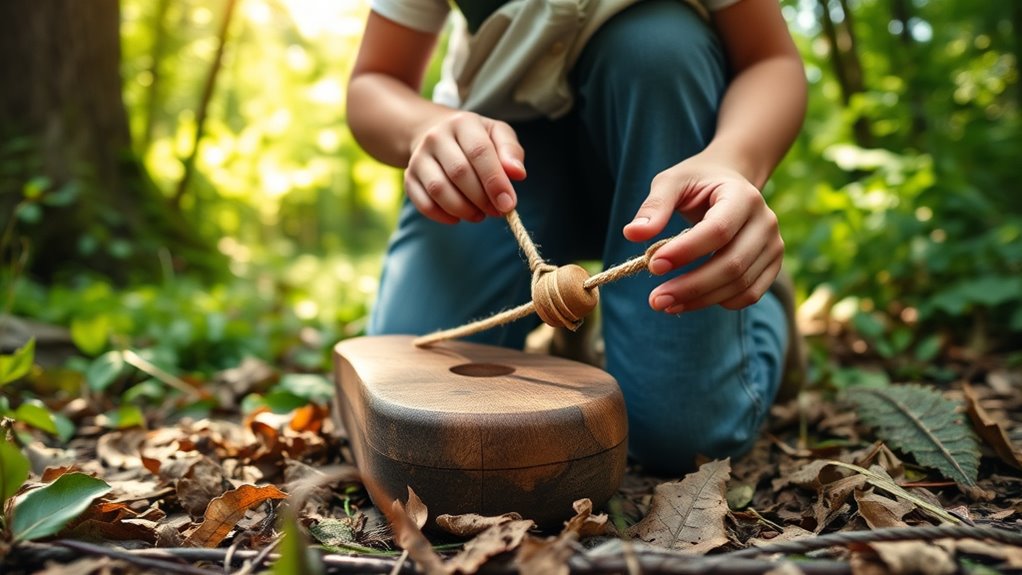
Before you can start a fire without matches, you need to gather the right materials. First, find dry, tinder materials like dry grass, leaves, bark shavings, or pine needles. These ignite easily and help get your fire going. Next, collect small sticks and twigs for kindling; look for thin, dry wood that catches fire quickly. For the fuel, gather larger logs or branches that will sustain the fire once it’s established. Make sure everything is dry—wet wood won’t ignite easily. Prepare your materials beforehand by arranging them in a way that’s easy to access. Break or trim larger pieces into manageable sizes. Having your materials ready and properly prepared increases your chances of successfully starting a fire without matches.

Coopers Bay Pocket Magnifying Lens in Leather Carry Pouch for Fire Making, Tracking, Plant ID, etc.
Great for camping, hiking, and emergency preparedness.
As an affiliate, we earn on qualifying purchases.
As an affiliate, we earn on qualifying purchases.
Using the Bow Drill Method

To successfully start a fire with a bow drill, you need to choose the right wood that creates enough friction without breaking. You also want to make certain your bow string has proper tension so it spins smoothly without slipping. Finally, applying consistent, effective pressure during the rubbing motion is key to generating enough heat for an ember.
Selecting Suitable Wood
Choosing the right wood is essential for effectively using the bow drill method to start a fire. You want soft, dry woods that generate friction easily and produce plenty of fine, powdery shavings. Good options include seasoned cedar, willow, or basswood. Avoid hardwoods like oak or hickory, which are dense and difficult to carve or spin. The spindle and fireboard should be from the same type of wood for consistent friction. Make sure both are dry and free of moisture, mold, or rot, as these can hinder ignition. You also need a softer, more fibrous wood for the fireboard, and a straight, smooth spindle that fits snugly in your hand. Properly selecting and preparing your wood increases your chances of generating enough heat to create an ember.
Proper Bow String Tension
Getting the bow string tension just right is essential for maintaining consistent pressure and speed during the drilling process. If the tension is too loose, the string will slip, making it difficult to spin the spindle effectively. If it’s too tight, it can cause unnecessary strain on your hands and reduce control. To achieve proper tension, pull the string so it’s snug but not overly tight—about a finger’s width of slack when plucking the string. Check that the string is evenly stretched across the bow and that it doesn’t sag or feel overly tight. Adjust the bow’s limb length or reposition the string if needed, ensuring smooth, even rotation when you draw and release. Proper tension keeps the drill consistent and efficient, increasing your chances of starting a fire.
Effective Friction Technique
Mastering effective friction is essential when using the bow drill method to start a fire. To do this, apply steady, consistent pressure as you saw the spindle back and forth. Keep the bow moving smoothly and at a steady pace, ensuring the string maintains proper tension. Focus on maintaining constant contact between the spindle and the fireboard, pressing firmly but not so hard that you stop the spinning. Use your body weight to help sustain pressure without tiring quickly. Pay close attention to the speed and pressure; too fast or too slow won’t generate enough heat. When done correctly, this friction creates fine, black dust that eventually forms an ember. With patience and control, this ember will grow into a flame, igniting your tinder.
steel wool and 9V battery fire starter
As an affiliate, we earn on qualifying purchases.
As an affiliate, we earn on qualifying purchases.
Employing the Hand Drill Technique
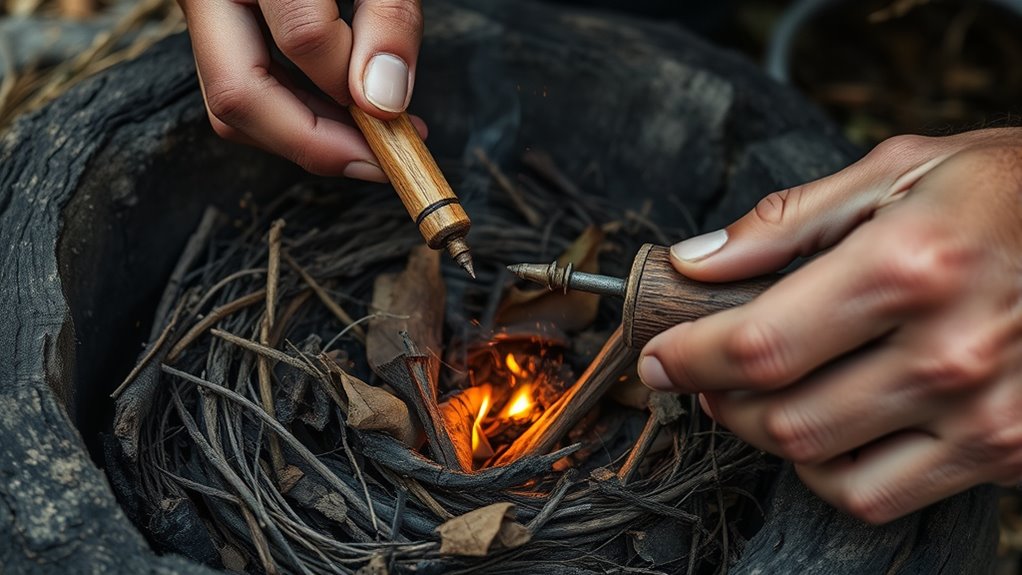
Although it requires patience and practice, employing the hand drill technique is a reliable way to start a fire without matches. You need a spindle and a fireboard, usually made of softwood. Place the spindle vertically on the notch of the fireboard, then spin it rapidly between your palms while applying downward pressure. Keep your hands close together and maintain steady speed. As friction heats the wood, smoke will emerge, forming an ember. Here’s a visual to help:
| Step | Action | Result |
|---|---|---|
| 1 | Position spindle on notch | Contact point established |
| 2 | Spin quickly with palms | Friction increases |
| 3 | Maintain pressure and speed | Ember forms, ready to transfer |
With patience, this method can ignite your tinder.
bayite 4 Inch Survival Ferrocerium Drilled Flint Fire Starter, Ferro Rod Kit with Paracord Landyard Handle and Striker, 4"(Long) x 3/8"(Diameter)
5ft Paracord included, gives you a good grip and never comes off. Comes with a bayite Striker-Pro striker…
As an affiliate, we earn on qualifying purchases.
As an affiliate, we earn on qualifying purchases.
Creating a Fire Plow

To create a fire plow, you need to choose the right type of wood that’s soft and dry. Using proper technique, you’ll press and drag the plow back and forth steadily to generate friction. Focus on consistent pressure and a smooth motion to produce the embers you need to start your fire.
Selecting the Right Wood
Choosing the right wood is essential for successfully creating a fire plow. You want wood that’s dry, soft, and easy to carve. Look for seasoned wood, which has been dried for months, to ensure sparks and friction generate enough heat. Avoid green or wet wood, as it will be tough to create enough friction. The ideal types include:
- Softwood like cedar or balsam for easier carving
- Dry, seasoned wood with no moisture or sap
- Thin, flexible branches that respond well to pressure
- Wood with a smooth, even grain for consistent friction
- Avoid knots or twisted fibers that can hinder your progress
Selecting the right wood makes all the difference—your patience and effort will pay off when sparks finally ignite.
Proper Plow Technique
Mastering the proper plow technique involves maintaining consistent pressure and steady movement along the wood’s surface. Grip your stick firmly and press it down into the softer, dry wood base. Keep your hand steady and push back and forth with a smooth, controlled motion. Focus on creating enough friction to generate heat, but avoid pressing so hard that you stop the movement. Your goal is to produce a continuous, even scrape across the surface, which will create friction and eventually produce an ember. Keep the plow straight and consistent, adjusting pressure as needed. With patience and practice, this steady motion will generate enough heat to ignite the tinder, helping you start your fire without matches or a lighter.
Utilizing a Firesteel or Ferrocerium Rod
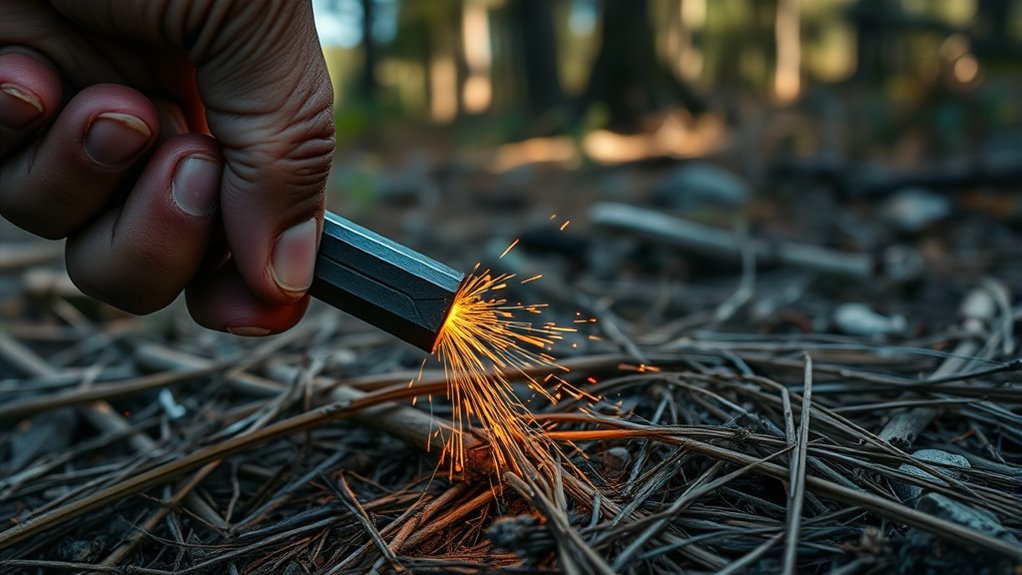
A firesteel or ferrocerium rod is a reliable tool for igniting a fire when matches aren’t available. To use it, hold the rod firmly in one hand and position a piece of tinder nearby. With a sharp, quick scrape of the striker or a knife blade against the rod’s surface, sparks will fly. Aim these sparks toward the tinder until it begins to smolder.
Feel the thrill of your skill and resourcefulness.
Experience the power of a simple spark turning into a warm, flickering flame.
Trust in your ability to create fire with just tools at hand.
Imagine the confidence that comes from mastering this ancient technique.
Embrace the independence that comes with knowing you can start a fire anytime.
Friction-Based Methods With Alternative Tools
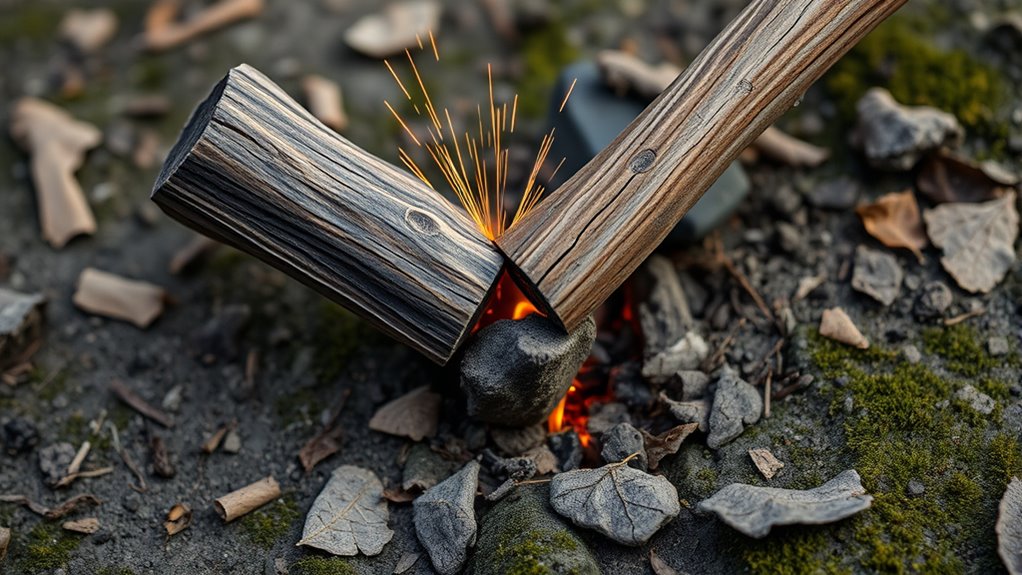
When matches and firesteels aren’t available, friction-based methods can still help you start a fire using alternative tools. You can create friction by rubbing two suitable materials together, like dry wood or certain stones. One effective technique is the hand drill, where you spin a pointed stick (drill) against a fireboard, generating heat through friction. Another option is the bow drill, which uses a bow to rotate the drill more efficiently, increasing the chances of producing an ember. To succeed, guarantee both materials are dry and seasoned, with a prepared notch or groove in the fireboard. Consistent pressure and speed are vital. Patience is key—friction methods often take time and practice, but they’re dependable backup techniques when modern tools aren’t an option.
Using a Battery and Steel Wool
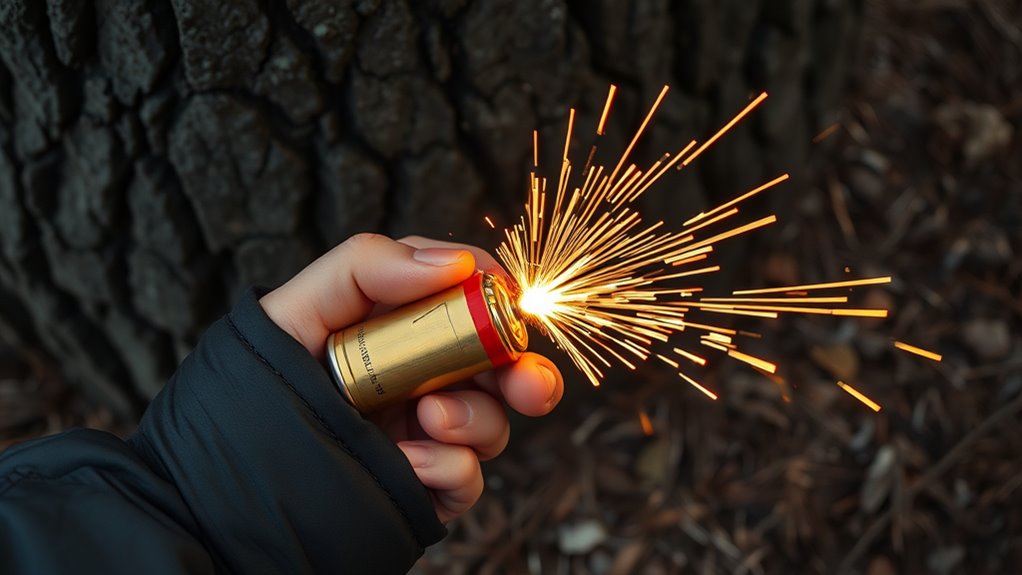
Using a battery and steel wool is an effective way to start a fire when traditional methods aren’t available. You’ll need a battery (preferably 9V) and fine steel wool. Touch the steel wool to both terminals of the battery, and it’ll quickly spark due to the electrical current. Once sparks fly, gently place the wool on your dry tinder to ignite it. This method is reliable, quick, and requires minimal equipment.
Feel the thrill of creating fire with just simple tools:
- The rush of sparks igniting your tinder
- The confidence of controlling fire-starting techniques
- The satisfaction of ingenuity in a survival situation
- The primal connection to ancient fire-making methods
- The empowerment of overcoming challenges with resourcefulness
Focusing Sunlight With a Lens or Magnifying Glass

Focusing sunlight with a lens or magnifying glass is a powerful and straightforward way to start a fire in an emergency. Find a clear, sunny spot and hold the lens steadily over your tinder or dry material. Adjust the angle until sunlight converges into a sharp, bright point. Keep the focus steady, as the concentrated light will generate intense heat. Within seconds, you should see smoke or a small ember forming. Once you see smoke, gently blow on it to encourage the flame. Remember, patience is key—don’t rush the process. Use a lens with a large surface area for better focus, and make sure your tinder is dry and fine for best results. This method can quickly ignite your fire without matches or a lighter.
Making a Fire From Natural Spark Sources

You can create a spark by rubbing two sticks together or using a fire drill to generate friction. Striking flint against steel produces sparks that can ignite tinder, while striking certain rocks together may also produce sparks. Mastering these natural methods gives you reliable options when matches aren’t available.
Friction-based Spark Generation
Friction-based spark generation is one of the most reliable methods for creating a fire without matches, relying on the heat produced by rubbing certain materials together. You need patience and the right technique to succeed, but the effort pays off with a satisfying spark. Use dry, softwood or specialized fire-starting tools like a bow drill or hand drill. Focus on steady, consistent pressure and speed to generate heat. Once you see a tiny ember, gently transfer it to your tinder bundle. Remember, persistence is key—small sparks can turn into a blazing fire if nurtured correctly.
- Feel the thrill of creating fire from nothing but your effort
- Experience the primal satisfaction of survival skills
- Embrace the connection to ancient fire-making techniques
- Overcome frustration with determination and patience
- Celebrate your achievement with a warm, crackling blaze
Flint and Steel Use
Using flint and steel to start a fire is a traditional and effective method that relies on striking a piece of steel against flint to produce a spark. When done correctly, this spark ignites tinder, such as dry grass or wood shavings, helping you begin your fire. To maximize your success, choose a sharp-edged flint and a sturdy steel striker. Position the flint against the tinder bundle and strike downward firmly. Practice the technique to generate consistent sparks. Here’s a quick overview:
| Material | Purpose |
|---|---|
| Flint | Produces sparks when struck |
| Steel | Striker that creates sparks |
Mastering this method requires patience and practice, but it’s a reliable way to start a fire without matches.
Spark From Striking Rocks
When aiming to start a fire from natural spark sources, striking certain rocks together can generate the necessary sparks. Look for rocks with a hard, flinty surface, like quartz or pyrite. Strike them sharply against each other in a controlled motion to produce sparks. Sparks can be small, so aim at dry, tinder-like material to catch quickly. Patience is key—repeated strikes might be needed. Remember, sparks are fleeting, so be ready to nurture the flame immediately. The right technique and materials can turn natural stones into your survival allies. Stay calm, focused, and persistent. With practice, you’ll harness the earth’s raw power to ignite your fire, even in the wildest moments of need.
Tips for Safely Managing and Maintaining Your Fire
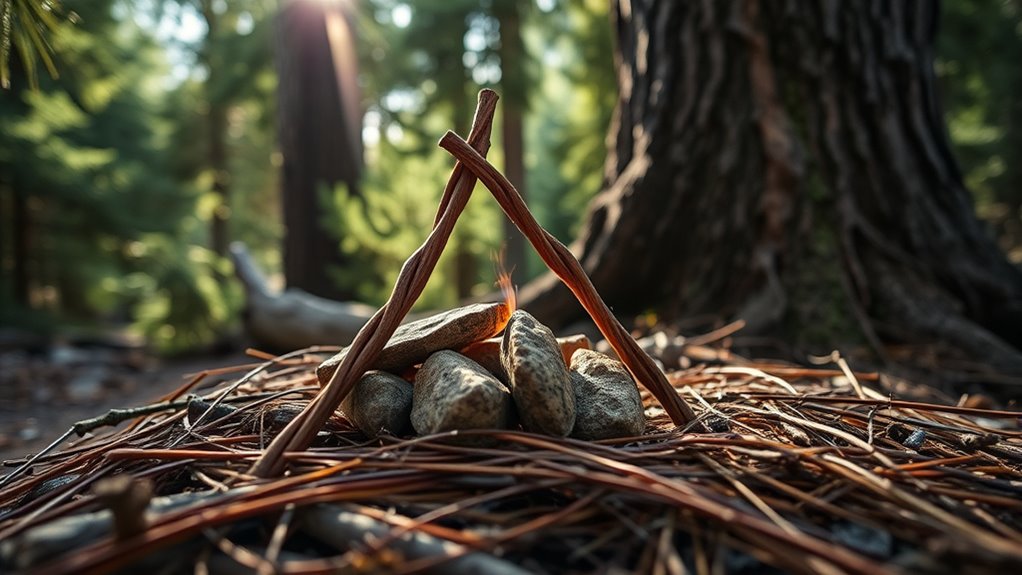
Once your fire is burning steadily, managing it securely and effectively is essential to prevent accidents and guarantee it lasts. Keep a close eye on your flames, adjusting the airflow by gently blowing or covering parts of the fire to control its size. Never leave your fire unattended, especially in dry areas, to avoid wildfires. Use a fire ring or cleared ground area to contain the flames. Add wood gradually, ensuring it’s dry and properly stacked to promote consistent burning. Keep a bucket of water, dirt, or a fire extinguisher nearby for emergencies. As the fire diminishes, rake the ashes to ensure no embers remain hidden. Properly managing your fire not only keeps you safe but also ensures it provides warmth and light throughout your camping experience.
Frequently Asked Questions
What Are the Best Types of Wood for Starting a Fire Without Matches?
You should look for dry, softwoods like cedar, pine, or spruce, as they ignite easily and burn quickly. These woods have a lower ignition point, making them perfect for starting a fire without matches. Avoid wet or hardwoods like oak or maple initially, since they’re harder to ignite and can produce more smoke. Using dry, softwood kindling helps your fire catch quickly and burn steadily.
Can You Start a Fire Using Only Natural Materials Found in the Wild?
You can start a fire using only natural materials by carefully gathering tinder like dry grass, bark, or leaves, which act as kindling. Then, use a bow drill or hand drill to create friction—think of it as igniting a tiny spark from rubbing sticks together. With patience and proper technique, your efforts will spark a flame, like waking a sleeping giant, providing warmth and safety in the wild.
How Do Weather Conditions Affect Fire-Starting Methods Without Matches?
Weather conditions greatly impact your fire-starting success without matches. In damp or rainy weather, you’ll struggle to ignite and sustain a fire because moisture weakens tinder and kindling. Cold, windy conditions can blow out flames or make it harder to generate enough heat. To improve your chances, find dry materials, shield your fire from wind, and choose the driest, most seasoned wood and tinder available.
What Safety Precautions Should Be Taken When Making a Fire Manually?
You should always prioritize safety when making a fire manually. Keep a bucket of water or a fire extinguisher nearby, and clear the area of dry leaves and debris to prevent wildfires. Never leave your fire unattended, and make sure it’s fully extinguished before leaving. Wear protective gear like gloves and goggles, and double-check local regulations. Playing it safe guarantees you enjoy your campfire without any unwanted surprises.
Are There Any Eco-Friendly Alternatives to Traditional Fire-Starting Tools?
Yes, there are eco-friendly alternatives to traditional fire-starting tools. You can use natural materials like birch bark, which ignites easily and is biodegradable. Firestarter cubes made from sustainable ingredients are also effective and eco-conscious. Additionally, using a magnesium fire starter with a flint can be a durable, reusable option that produces minimal waste. These methods help you start a fire while minimizing environmental impact.
Conclusion
With these methods, you can start a fire even without matches or a lighter. Imagine you’re stranded in the woods; by using a magnifying glass to focus sunlight on dry tinder, you create sparks that ignite. Just like a hiker once did to signal for help, mastering these techniques can keep you safe and warm in emergencies. Practice beforehand, and you’ll be ready to light a fire anytime nature challenges you.