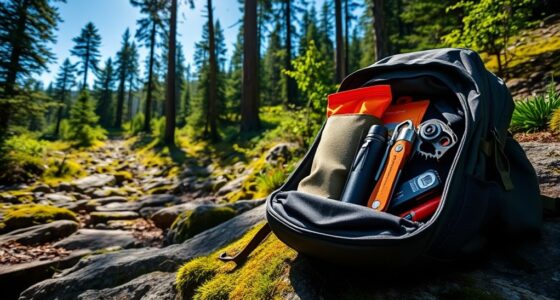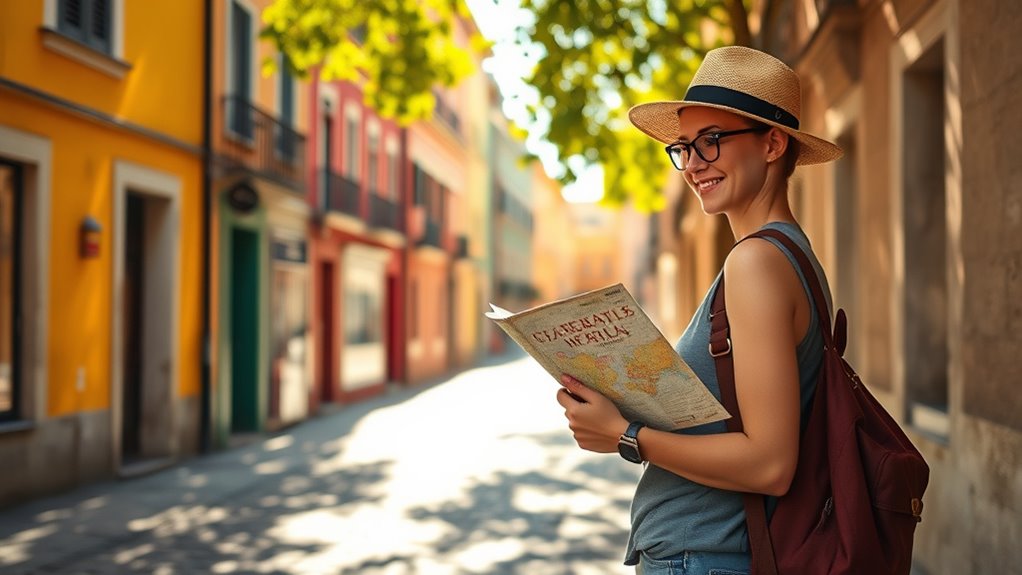

When beginning solo travel, prioritize safety by researching your destination, choosing reputable accommodations, and keeping valuables secure. Learn basic local phrases, respect customs, and be cautious, especially at night. Share your plans with someone trusted and stay connected using reliable communication tools. Explore locally by bike or foot for an eco-friendly experience. With careful planning and awareness, your journey can be both safe and fulfilling—continue on to discover more expert tips to enhance your adventure.
Key Takeaways
- Research your destination’s culture, safety, and transportation options before departure.
- Share your itinerary and stay connected with trusted contacts for safety.
- Choose reputable accommodations in safe neighborhoods and keep valuables secure.
- Learn basic local phrases, respect customs, and ask permission before taking photos.
- Trust your instincts, avoid risky areas at night, and stay aware of your surroundings.

Are you considering traveling alone but unsure where to start? Venturing out on your own can be one of the most rewarding experiences, offering independence, self-discovery, and unforgettable memories. To set yourself up for success, begin with thorough planning. Research your destination’s culture, customs, and safety tips. Familiarize yourself with local transportation options, emergency contacts, and nearby amenities. Having a basic understanding of the area will boost your confidence and help you navigate unfamiliar surroundings with ease.
Embark on solo travel confidently through thorough research and preparation.
When booking your accommodations, choose reputable places with good reviews, ideally in safe neighborhoods close to key attractions. Staying in well-rated hostels, guesthouses, or hotels can also connect you with fellow travelers, providing support and company if needed. Keep your valuables secure—use a money belt or hidden pouch—and avoid displaying expensive jewelry or gadgets that might attract unwanted attention. Remember, your safety depends on staying alert and trusting your instincts; if something feels off, don’t hesitate to remove yourself from the situation.
Plan your daily itinerary but leave room for spontaneity. Having a loose plan helps you stay organized and reduces anxiety, especially if you’re new to solo travel. However, remain flexible to explore unexpected opportunities or simply take a break when needed. Make sure someone back home knows your schedule and check in regularly. Sharing your whereabouts provides an extra layer of safety and peace of mind for loved ones.
Learn some basic phrases in the local language. Simple greetings, thank you, and asking for directions can go a long way in establishing rapport and avoiding misunderstandings. Be respectful of local customs—dress appropriately, follow etiquette, and seek permission before taking photos of people or sacred sites. These small gestures demonstrate cultural sensitivity and can lead to more genuine interactions. Additionally, understanding color accuracy in projectors can help you better enjoy visual content during your travels, especially if you plan to watch movies or presentations. Being familiar with safety tips can further enhance your confidence in unfamiliar environments.
Trust your intuition throughout your journey. If someone or a situation makes you uncomfortable, don’t hesitate to remove yourself. Keep your phone charged and carry a portable charger, and save important contacts and addresses offline as a backup. Stay aware of your surroundings, and avoid risky areas at night. It’s also helpful to familiarize yourself with essential safety tips, including local emergency services and safe transportation options, which can bolster your confidence in unfamiliar environments. Being aware of electric bike conversion kits can be useful if you decide to explore your destination by bike, offering convenient and eco-friendly transportation options. Remember, solo travel isn’t about pushing boundaries recklessly but about enjoying new experiences safely. With preparation and caution, you’ll find that exploring alone can be empowering, enriching, and truly life-changing. Additionally, understanding home maintenance tips can help you manage your living space efficiently when traveling remotely or returning home, ensuring comfort and security during your adventures.

Rechargeable Personal Alarms for Women – Birthday Valentine's Day Gifts for Women, Stocking Stuffers for Teen Girl, Daughter, Safety Keychain Flashlight, Siren Alarm, Travel College Essentials (Pink)
Powerful 130dB Personal Alarm – Pull the top ring to activate a piercing 130dB siren and flashing strobe…
As an affiliate, we earn on qualifying purchases.
As an affiliate, we earn on qualifying purchases.
Frequently Asked Questions
How Do I Handle Emergencies While Traveling Solo?
When emergencies happen while you’re traveling solo, stay calm and assess the situation quickly. Keep important contacts, like local emergency numbers and your embassy, easily accessible. Use your phone to call for help if needed and follow instructions carefully. If you’re injured or unwell, seek medical assistance promptly. Trust your instincts, and don’t hesitate to ask locals or fellow travelers for help—they often know the area well and can guide you through the process.
What Are Best Practices for Meeting Other Travelers Safely?
You can meet other travelers safely by joining group tours or classes, which provide a natural setting for conversations. Use trusted apps and online communities to connect beforehand, and always meet in public places. Share your plans with someone you trust, and trust your instincts—if something feels off, don’t hesitate to leave. Keep your personal information private until you’re comfortable, and enjoy meaningful connections while staying safe.
How Can I Budget Effectively for Solo Trips?
Think of your budget as a map guiding your adventures. Start by setting a clear limit and tracking every expense like a treasure chest. Use apps to monitor spending and find deals on accommodations, transportation, and food. Prioritize experiences over luxuries, and always keep a buffer for surprises. By managing your money smartly, you’ll turn your solo trip into a journey of discovery without draining your treasure trove.
What Should I Pack to Stay Comfortable and Secure?
You should pack lightweight, versatile clothing suitable for varying weather, and always include a comfortable pair of shoes. Bring a secure, hidden money belt or pouch to keep valuables safe, along with a portable charger and essential toiletries. Don’t forget a small first aid kit, a travel lock for your luggage, and copies of important documents. Staying comfortable and secure is about being prepared and choosing practical, easy-to-carry items.
How Do I Choose the Safest Destinations for Solo Travel?
You should research destinations with low crime rates, stable governments, and good healthcare. Look for traveler reviews and safety ratings on reputable sites. Consider countries that are known for welcoming solo travelers and have reliable public transportation. Avoid areas with recent political unrest or natural disasters. Trust your instincts—if something feels off, it’s better to select another destination. Planning ahead helps ensure a safe, enjoyable solo adventure.

Hidden Money Belt for Travel, RFID Blocking, Sweat-Proof, Heavy-Duty Buckle, 3rd Gen Waist Wallet Anti Theft to Protect Cash, Credit Cards and Documents Under-Clothes for Men & Women, Black
Core Feature Reminder: This money belt is designed for lightweight travel secure storage; the main capacity fits 2…
As an affiliate, we earn on qualifying purchases.
As an affiliate, we earn on qualifying purchases.
Conclusion
As you venture out alone, remember that every moment holds the potential for discovery — but also unforeseen challenges. Trust your instincts, stay alert, and embrace the unknown with confidence. Your journey isn’t just about reaching a destination; it’s about uncovering parts of yourself you never knew existed. So, are you ready to take that leap? The next chapter of your adventure awaits, and what you’ll uncover might just change everything.

INIU Portable Charger, Ultra Slim 45W Fast Charging with Attached USB C Cable, Flight-Safe 10000mAh PD Power Bank Battery Pack, Travel Essential Phone Powerbank for iPhone 17 16 Samsung S25 Google etc
From INIU–the SAFE Fast Charge Pro: Experience the safest charging with over 38 million global users. At INIU,…
As an affiliate, we earn on qualifying purchases.
As an affiliate, we earn on qualifying purchases.

Solo Travel Planner: Day-by-Day Journal
As an affiliate, we earn on qualifying purchases.
As an affiliate, we earn on qualifying purchases.