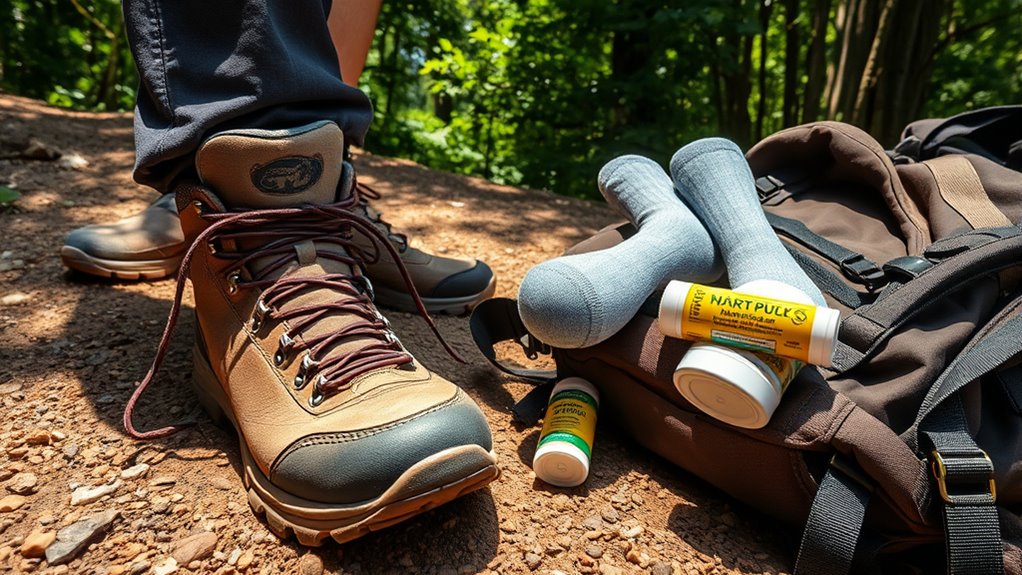

To prevent blisters on long hikes, make sure your shoes fit snugly without pinching, and try them on at the end of the day with your hiking socks. Choose moisture-wicking socks like merino wool or synthetic fabrics, and avoid cotton, which retains moisture. Break in new shoes gradually and keep your feet dry by changing socks if they get sweaty. For more tips, you’ll discover effective strategies to keep your feet comfortable and blister-free.
Key Takeaways
- Ensure shoes fit snugly without pressure, leaving about a thumb’s width of space at the toes.
- Wear moisture-wicking, seamless socks like merino wool or synthetic fabrics to reduce friction.
- Break in new shoes gradually before long hikes to prevent hotspots and blisters.
- Keep feet dry by changing socks if they become damp or sweaty during the hike.
- Use foot powders, antiperspirants, and proper footwear to minimize moisture and friction.
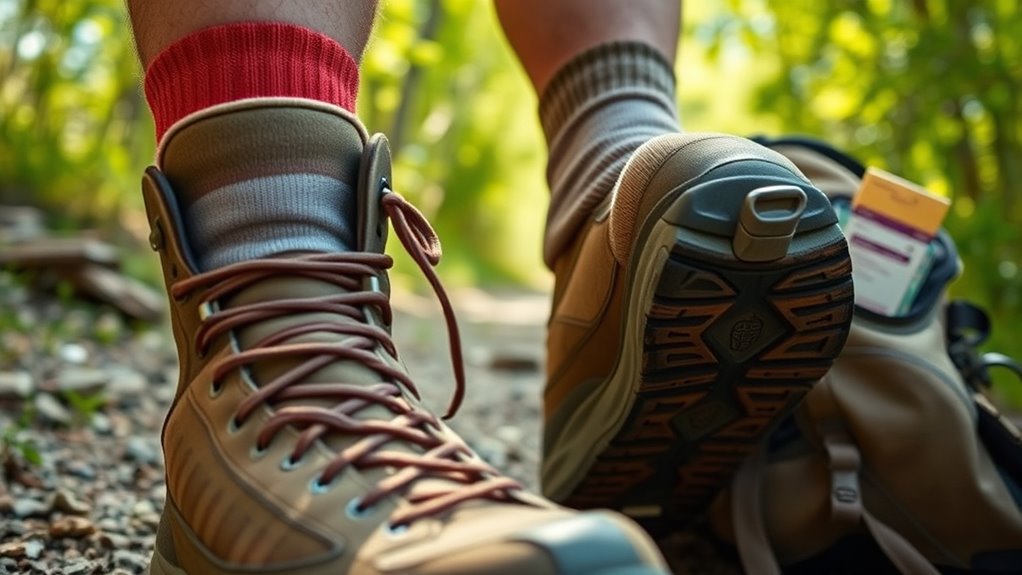
Long hikes can be incredibly rewarding, but blisters often threaten to ruin your adventure. One of the most effective ways to prevent these painful nuisances is paying close attention to your shoe fit and sock materials. Your shoes should fit snugly without pinching or causing pressure points. When trying on hiking shoes, do so at the end of the day when your feet are most swollen, and wear the socks you plan to use on your hike. This ensures a more accurate fit. Make sure there’s about a thumb’s width of space between your longest toe and the front of the shoe; shoes that are too tight can cause friction, while those too loose lead to slipping and rubbing. Remember, the right fit isn’t just about length but also about width and overall comfort.
Choosing the right sock materials is equally critical. Synthetic fabrics like polyester or nylon wick moisture away from your skin better than cotton, which tends to trap sweat and create a damp environment that increases friction. Merino wool is another excellent option—it’s breathable, moisture-wicking, and naturally odor-resistant. Avoid cotton socks altogether, as they become heavy and wet when damp, substantially raising your risk of blisters. Thin, seamless socks help reduce friction points, especially in high-friction areas like your heels and toes. Some hikers prefer double-layer socks, which provide an extra buffer against rubbing and help keep your feet dry. Properly fitted shoes and high-quality socks work hand-in-hand to minimize friction. When your shoes fit well, your foot moves smoothly inside, reducing the chances of repeated rubbing. Moisture-wicking socks keep your feet dry, which is essential because wet skin is more prone to blister formation. Before heading out, break in new shoes gradually, wearing them for short walks to ensure they conform to your feet and don’t cause hotspots. During your hike, change into fresh, dry socks if your current pair becomes damp or sweaty. Using foot powders or antiperspirants can also help reduce moisture and friction. Additionally, choosing high-quality projectors with features like high refresh rates and low input lag can help prevent discomfort and fatigue during long hikes or extended periods of activity.
Top picks for "prevent blister long"
Open Amazon search results for this keyword.
As an affiliate, we earn on qualifying purchases.
Frequently Asked Questions
What Are the Early Signs of Developing Blisters?
You might notice early signs of blister development as your foot feels unusually tender or warm, often caused by excessive foot moisture or friction. You could also see redness or slight skin irritation, especially where your sock padding doesn’t provide enough cushioning. Pay attention to any discomfort or skin changes during your hike, as addressing these signs early can help prevent blisters from forming or worsening.
How Do Different Shoe Materials Affect Blister Formation?
Shoe material choices directly impact blister formation by influencing footwear breathability, flexibility, and fit. Leather shoes tend to mold to your feet and offer durability, reducing friction, while synthetic materials often provide lightweight breathability but may cause increased moisture buildup. Mesh uppers enhance airflow, keeping feet dry and minimizing blister risk, whereas non-breathable materials trap sweat and friction. Selecting the right shoe material helps keep your feet dry, comfortable, and blister-free during long hikes.
Can Specific Foot Shapes Influence Blister Risk?
Your foot shape can definitely influence blister risk. If you have high arches, you might experience more pressure points, increasing blister chances. Flat feet can cause friction and rubbing, also raising blister risk. Narrow or wide feet may fit shoes poorly, leading to hotspots and blisters. To prevent this, choose well-fitting footwear tailored to your foot shape, use moisture-wicking socks, and consider insoles for added support and cushioning.
Are There Effective Anti-Blister Treatments or Remedies?
Yes, there are effective anti-blister treatments and remedies for blister prevention. You should apply blister-specific moleskin or padding before hikes to reduce friction, and use anti-chafing balms on your skin. Wearing well-fitted hiking footwear with proper cushioning also helps prevent blisters. Keep your feet dry and change socks regularly. These strategies work together to protect your skin and keep your hike comfortable.
How Does Climate Impact Blister Prevention Strategies?
Think of climate effects as a double-edged sword for blister prevention; hot, humid weather can make your feet sweat and increase friction, while cold, wet conditions cause skin to soften and become prone to blisters. You’ll need to adapt your strategies accordingly, like choosing moisture-wicking socks in summer or waterproof footwear in rain. Being mindful of climate effects helps you stay proactive, ensuring blister prevention remains effective regardless of weather changes.
Conclusion
Remember, even the greatest explorers like Columbus prepared carefully to avoid blisters. By choosing the right gear, keeping your feet dry, and listening to your body, you can conquer long hikes without setbacks. Think of your feet as your trusted ship—well-maintained and ready for the journey. Stay proactive, and you’ll enjoy every step, turning challenging trails into memorable adventures. With these tips, you’ll be set to conquer the path ahead, blister-free and confident.