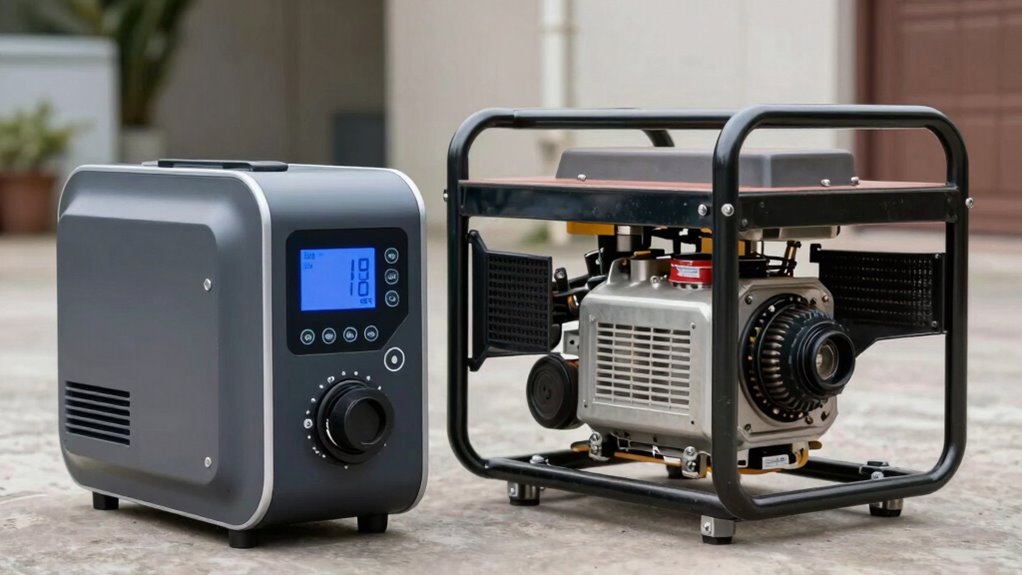

Inverter generators produce cleaner, stable power, making them safer for sensitive electronics like laptops and cameras. They adjust engine speed based on demand, which saves fuel and results in quieter operation compared to traditional models that run at a constant, higher speed. While conventional generators are more durable and suited for heavy-duty tasks, inverter units excel in outdoor activities and emergencies where portability and low noise matter. To learn about the full differences and best use cases, keep exploring the details.

Get the little things that make your day delivered free — and shop member deals
- Fast, free delivery on millions of items
- Access to Prime Big Deal Days deals on October 6–7
- Prime Video, Amazon Music and more included
Key Takeaways
- Inverter generators produce clean, stable power ideal for sensitive electronics, while conventional models offer steady, less stable power.
- They adjust engine speed based on demand, making inverter generators more fuel-efficient than traditional fixed-speed units.
- Inverter generators operate quietly due to variable engine speeds, whereas conventional generators run continuously at high RPM, producing more noise.
- Conventional generators are generally more durable and easier to maintain, suitable for heavy-duty, continuous use.
- Inverter models are portable and perfect for outdoor activities, while conventional generators are better for heavy-scale or continuous power needs.
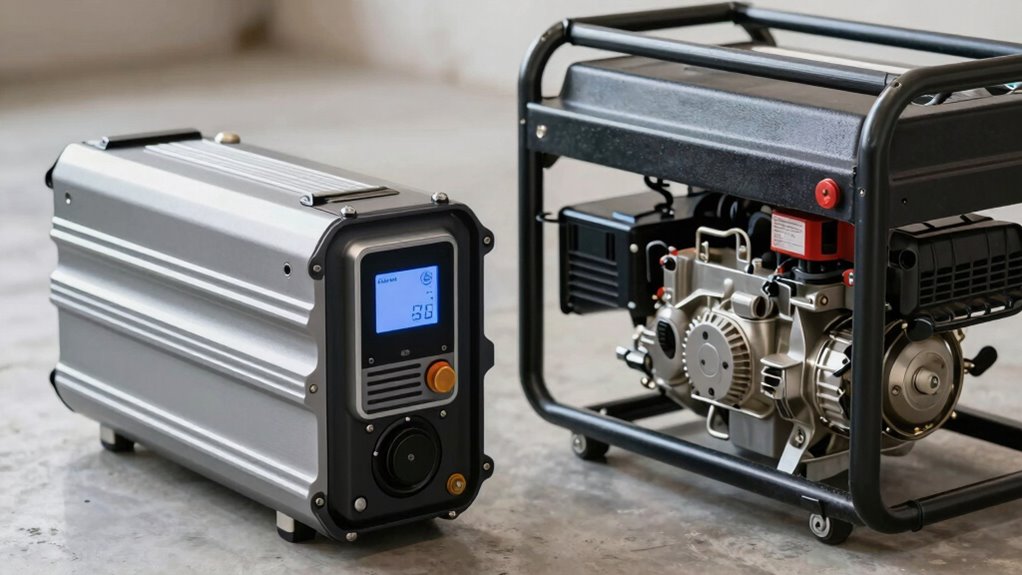
When selecting a power source for your outdoor adventures or emergency needs, understanding the differences between inverter and traditional generators is crucial. These two types of generators serve the same purpose but operate quite differently, impacting your experience based on factors like fuel efficiency and noise levels. Inverter generators are known for their ability to produce clean, stable power suitable for sensitive electronics like laptops, smartphones, and cameras. They use advanced technology to modify the engine speed according to the power demand, which makes them much more efficient in conserving fuel compared to conventional models. This means you’ll spend less money on fuel over time, especially during extended camping trips or power outages. Additionally, inverter generators tend to be quieter because they run at lower speeds when full power isn’t needed. This is a significant advantage if you want to enjoy a peaceful outdoor environment or avoid disturbing neighbors during a blackout.
Conventional generators, on the other hand, operate at a constant speed, usually around 3600 RPM, regardless of the load. This simplicity makes them generally more durable and easier to maintain, but it also means they consume more fuel and generate higher noise levels. They’re often used in construction sites or large-scale power backup scenarios where the focus is on producing maximum power reliably. Since they run at a steady, high speed, traditional generators tend to be noisier, which can be disruptive in quiet environments. They are also less efficient in terms of fuel consumption when the power demand fluctuates, making them less suitable for situations where you need a portable, quiet, and fuel-conscious solution.
best inverter generator for camping
As an affiliate, we earn on qualifying purchases.
As an affiliate, we earn on qualifying purchases.
Frequently Asked Questions
Which Generator Type Is More Eco-Friendly?
You’ll find inverter generators more eco-friendly because they produce cleaner energy, helping you support renewable energy goals. They’re designed to reduce emissions and improve fuel efficiency, making them ideal for emissions reduction. Unlike conventional generators, inverter models adjust their power output based on your needs, minimizing waste and pollution. By choosing an inverter generator, you actively contribute to a greener environment while enjoying reliable power, aligning with sustainable energy practices.
How Long Do Inverter Generators Typically Last?
Your inverter generator typically lasts around 10,000 to 20,000 hours, like a reliable marathon runner. Its lifespan depends on factors like maintenance and usage. You’ll love its fuel efficiency, which conserves fuel and extends its life. Plus, it starts quickly—almost like flipping a switch—so you’re up and running in no time. Proper care guarantees your inverter generator remains a steadfast companion for many adventures ahead.
Can Inverter Generators Run on Alternative Fuels?
Yes, inverter generators can run on alternative fuels like propane or natural gas, enhancing fuel efficiency and reducing emissions. However, you’ll need to check if your model supports these fuels, as startup procedures might vary. Switching fuels may require specific adapters or modifications, so always follow the manufacturer’s instructions carefully to guarantee safe operation. Using alternative fuels can extend your generator’s runtime and offer more flexible, eco-friendly power options.
Are Inverter Generators Quieter Than Conventional Ones?
You’ll be amazed at how quiet inverter generators are—they’re practically whispering compared to conventional models. In the noise comparison, inverter generators produce considerably less sound, making them perfect for camping or quiet work environments. Their portability factors also shine, as their compact design and lower noise levels make them easier to carry and operate without disturbing your surroundings. So, yes, inverter generators are definitely quieter, enhancing your overall experience.
What Maintenance Is Required for Each Type?
You need to perform regular maintenance on both types, but inverter generators generally require less maintenance frequency due to their advanced components. Keep the air filters clean, change oil as recommended, and check spark plugs periodically for both. Inverter generators often have better fuel efficiency, meaning you’ll refill them less often, but stay attentive to manufacturer guidelines to guarantee ideal performance and longevity for either type.
quiet portable inverter generator
As an affiliate, we earn on qualifying purchases.
As an affiliate, we earn on qualifying purchases.
Conclusion
So, whether you’re team inverter or loyal to the conventional generator, just remember: one’s a sleek, whisper-quiet genius, and the other’s the old reliable workhorse. If you want your gadgets to hum along smoothly without waking up the neighbors, go inverter. But if you’re okay with some noise and a bit more fuss, conventional still gets the job done. Either way, just don’t expect magic—power’s power, after all, whether it’s tiny or thunderous.
conventional generator for home backup
As an affiliate, we earn on qualifying purchases.
As an affiliate, we earn on qualifying purchases.
fuel-efficient inverter generator
As an affiliate, we earn on qualifying purchases.
As an affiliate, we earn on qualifying purchases.
NFL season / tailgating Picks
team gear
As an affiliate, we earn on qualifying purchases.