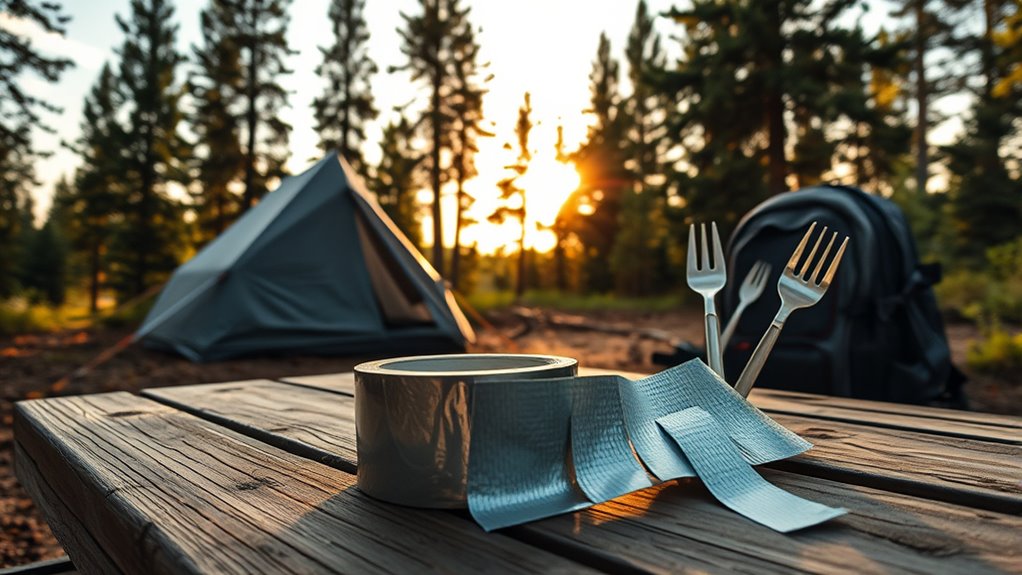

When camping, your duct tape becomes a multi-tool miracle. It quickly patches tears and leaks in your tent, creating instant waterproof repairs. Wrap it around pot handles for a safe, makeshift grip, or secure loose gear during windstorms. Use it to fix broken gear temporarily, like torn tents or zippers, and craft signals for rescue with large markings on trees or ground. Curious? Discover even more creative ways to make duct tape your camping essential.
Key Takeaways
- Quickly repair tent tears and leaks to maintain shelter integrity.
- Create makeshift pot handles or grips for hot cookware.
- Secure lightweight gear and prevent items from flying away during storms.
- Temporarily fix broken gear like zippers, water bottles, or sleeping pads.
- Craft visible signals or markers to attract rescuers in emergencies.
Repairing Tent Tears and Leaks
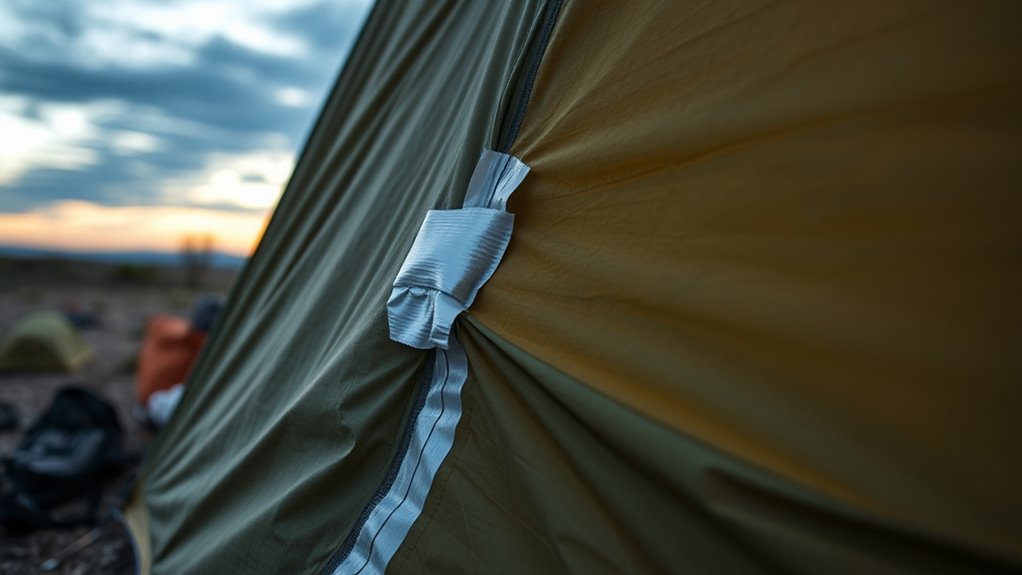
When your tent sustains tears or leaks, duct tape can be a quick and effective fix. You can seal small rips in the fabric or patch leaks around zippers and seams, preventing water from seeping inside. First, clean the damaged area thoroughly to remove dirt and moisture, ensuring the tape adheres properly. Cut a piece of duct tape slightly larger than the tear or leak, then press it firmly over the problem spot. Smooth out any air bubbles to maximize adhesion. For added durability, consider applying multiple layers or reinforcing the edges. Duct tape’s waterproof nature makes it ideal for temporary repairs, helping you stay dry until you can make a proper fix or replace the tent fabric.
Creating a Makeshift Pot Holder or Handle

After repairing your tent, duct tape can also serve a practical purpose in the camp kitchen. If your pot handle breaks or gets too hot to touch, use duct tape to create a makeshift handle. Wrap a sturdy strip of tape around the handle and fold it over to form a grip. For added insulation, layer multiple strips or fold the tape for a thicker hold. This temporary handle allows you to safely lift hot pots without risking burns or spills. You can also use duct tape to reinforce handles on cookware or securely attach a piece of scrap material as a heat shield. It’s a simple fix that keeps your cooking safe and efficient until you can replace or repair the original handle.
Securing Items During a Windstorm

During a windstorm, loose items can become dangerous projectiles, risking injury or damage to your campsite. To prevent this, use duct tape to secure essential gear. Here are four ways to do it:
Secure loose campsite items with duct tape to prevent wind damage and ensure safety.
- Tape down lightweight chairs and tables to the ground or nearby sturdy objects.
- Wrap duct tape around loose tarps or tents to reinforce seams and prevent flapping.
- Secure hanging lanterns or lights by taping their cords to stable surfaces.
- Attach loose gear like cookware or tools to your tent or nearby logs to keep them from flying away.
Always double-check your bonds before the storm hits, ensuring everything stays put. Duct tape provides quick, reliable fixes to keep your campsite safe during high winds.
Making a Quick Fix for Broken Gear
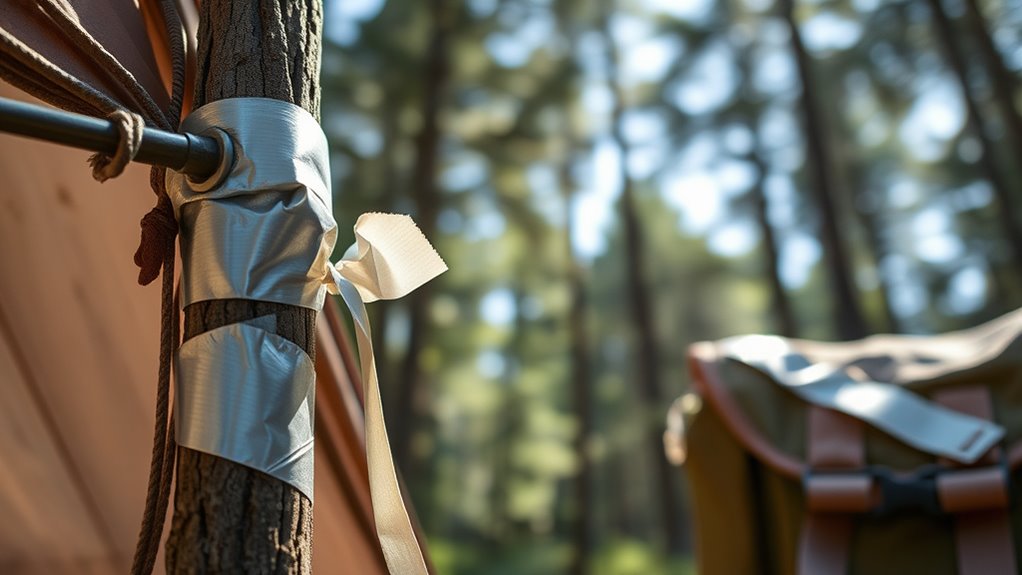
If your camping gear breaks unexpectedly, duct tape can be a lifesaver for a quick fix. Wrap the tape tightly around tears in tents, torn rain jackets, or cracked water bottles. It creates an instant seal that keeps water, dirt, and insects out. For broken backpack straps or zippers, apply duct tape to hold everything together temporarily. If a sleeping pad deflates, patch the hole with a small piece of duct tape until you can make a more permanent repair. Remember, duct tape isn’t a permanent fix, but it buys you time and prevents minor issues from turning into major problems. Keep a roll handy in your gear bag, and you’ll be surprised how often it comes to the rescue.
Crafting a Simple Survival Signal or Marker
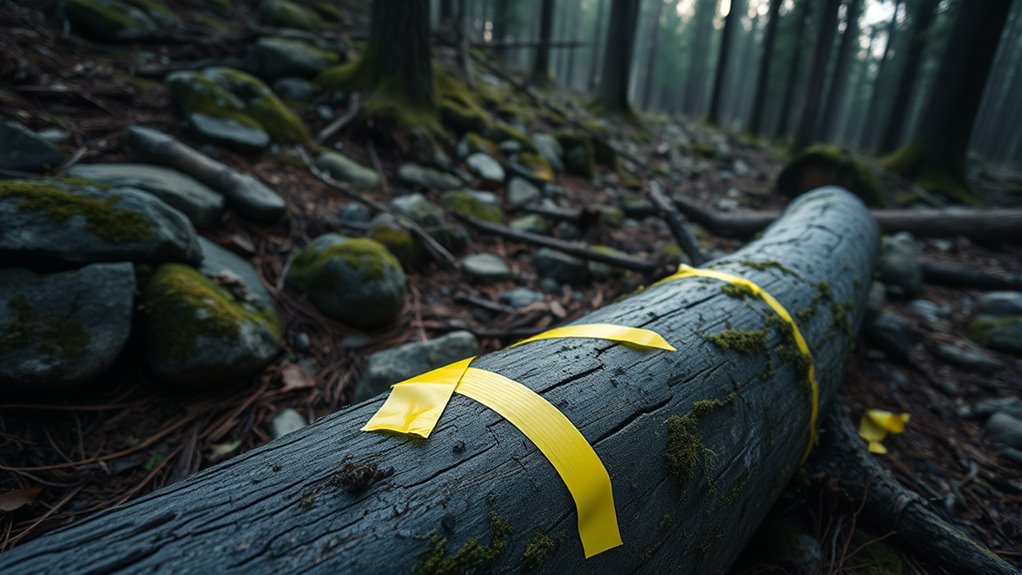
When you’re stranded or lost in the wilderness, signaling for help quickly becomes a top priority. Duct tape can help you create a simple survival signal or marker. Here’s how:
- Cut a large piece of duct tape and write “HELP” or your location with a marker.
- Attach the tape to a visible tree or rock at eye level.
- Use the tape to create a large, reflective “X” on the ground by laying strips in crossing directions.
- Stick brightly colored objects or fabric to the tape for added visibility.
These quick fixes can attract the attention of rescuers or passing aircraft, increasing your chances of being found. Duct tape’s versatility makes it invaluable for signaling in emergencies.
Frequently Asked Questions
Can Duct Tape Be Used to Waterproof Clothing or Gear?
Yes, duct tape can be used to waterproof clothing or gear temporarily. You simply wrap or cover the area with the tape, pressing down firmly to seal out moisture. It works well for quick fixes like torn rain jackets or leaky tents. However, keep in mind that duct tape isn’t designed for long-term waterproofing, so it’s best to replace or reapply it as needed to stay dry during your camping trip.
Is Duct Tape Safe for Skin Contact or First Aid Purposes?
Duct tape isn’t safe for prolonged skin contact or first aid purposes. It can cause skin irritation, especially if you have sensitive skin or allergies. If you need to cover a wound, use sterile bandages and medical tape instead. Duct tape’s adhesive is strong and not designed for skin, so it can trap moisture and bacteria, potentially leading to infection. Always choose appropriate medical supplies for first aid.
How Long Does Duct Tape Typically Last Outdoors Before Degrading?
Duct tape usually lasts about 6 months to a year outdoors before it starts degrading, but this depends on weather conditions like rain, sun, and temperature. If exposed to continuous moisture or extreme heat, it may break down sooner. To maximize its lifespan, keep it in a shaded, dry spot when not in use. Regularly check for signs of wear or peeling, especially if you rely on it for critical fixes.
Can Duct Tape Be Used to Repair a Leaking Water Container?
Absolutely, duct tape can work wonders on a leaky water container. You just need to clean and dry the area thoroughly to guarantee a good seal. Apply the tape tightly around the leak, pressing down firmly to secure it. Keep in mind, while this fix can hold temporarily, it’s best to replace the container or repair it properly when you get the chance. It’s a quick fix that keeps you going.
Does Duct Tape Leave Residue on Surfaces or Gear?
Duct tape can leave residue on surfaces or gear, especially if it’s used for a long time or on delicate materials. You might notice a sticky film or a slight discoloration once you remove it. To minimize residue, press down firmly when applying and peel it off slowly. If residue remains, rubbing alcohol or adhesive removers can help clean your gear without causing damage.
Conclusion
So, next time you’re out in the wild, remember that duct tape isn’t just for quick fixes; it’s your silent partner in tough times. Its true strength lies in helping you adapt and persevere, even when things seem a bit unraveled. With a little creativity, you can turn simple patches into moments of reassurance. After all, sometimes the best solutions come from the most unexpected places—like a roll of tape waiting to lend a hand.